Maori History
Ancient stories tell the origins of southern Maori, with the waka of Aoraki becoming Te Wai Pounamu (the South Island), and its sternpost, Te Taurapa a Te Waka o Aoraki becoming Bluff Hill (also known as Motupohue). The Maui traditions are told in the south, with Maui arriving in his waka Maahunui, and pulling up the stone to be used as an anchor - Te Puka o Te Waka a Maui (Rakiura). Maui's achievements are recognised in place names in the south, including Omaui near Bluff, and Te Tapuwae o Maui and Te Rereka o Maui in Fiordland (Maui's footstep and Maui's leap).
Stories of the original explorers of the south are also told. The explorer Rakaihautu journeyed through the south with place names recalling his journey.
After Rakaihautu came the Takitimu waka with Tamatea Pokai Whenua. The waka was overcome by three waves O-te-wao, O-roko and O-kaka, coming to rest near the mouth of the Waiau (Waimeha). The three waves continued across the low lying lands and ended up as features of the landscape.
The early generations learnt about the land and its resources: stone sources were found, and stone (especially pounamu) became an important trading item. Kaika were established close to resources. Rights and resources and places were established, and traditions established which protected the manawhenua.
When traditions were written down Kati Mamoe and Kai Tahu dominate the history after Waitaha, with stories of war and peace, and intermarriage that spread through the south. In the early 1820s there was further fighting, with muskets first being used at this time, with major sieges in the more northern area of the South Island leading a retreat to the south. Ruapuke Island became the centre of leadership in the south, its isolation giving a measure of security. The final fight with the northern taua of Te Puoho and his followers at Tuturau in 1835-1836, where Te Puoho was defeated, saw the end of warfare in the region.
According to the Ngai Tahu Statutory acknowledgments in the settlement important villages along the south coast included: Te Wae Wae (Waiau), Taunoa (Orepuki), Kawakaputaputa (Wakapatu), Oraka (Colac bay), Aparima, Turangiteuaru, Awarua (Bluff), Te Whera, Toe Toe (mouth of the Mataura River) and Waikawa. Mokamoka (also known as Mokemoke or Mokomoko) was a settlement at the Invercargill estuary sustained by the rich resources found there. Tauranga waka occur up and down the coast linking land and sea trails with mahinga kai resources. Whaling boats plied the waters from the 1820s leading to changes in settlement patterns and resource use.
1853 saw the Murihiku purchase which left Maori south of the Waitaki (excluding the Otakou Block) with only 4,630 acres, the start of a long quest by southern Maori for justice questioning the legality of the purchase as well as the inadequacy of the land reserved.
Early Pakeha Settlement
Invercargill Township was laid out by chief surveyor John Turnbull Thomson in 1856, Thomson choosing the location for its centrality for both sea-based and land-based traffic, though the surrounding low lying swampy ground made the new settlement practically inaccessible. As with Dunedin further north, the development of the town was given an enormous boost with the gold rushes of the early 1860s. The fledgling settlement put down more substantial roots. With the bursting of the gold bubble in the mid 1860s it was realised that the wealth of the province was to rest more on the land itself rather than the precious metal extracted from it. Consequently run holders and the like became prominent in the development of Southland, and this is reflected in the social institutions, such as the soon-to-be-formed Invercargill Club.
Gentlemen's Clubs
Gentlemen's Clubs grew out of the London tradition of coffee houses of the late seventeenth century, and developed into exclusive men-only clubs that provided 'a means of establishing gentlemanly status and of making useful connection' and which went through a growth period in the second half of the nineteenth century. Gentlemen's Clubs created an 'Eveless Eden' for ‘searchers after solitude or intercourse with their fellows' based on a set of commonly understood rules.
Most London clubs had luxurious premises offering a range of facilities, including reading rooms, a games room (for such pastimes as cards or billiards) and a dining room, which all came together as the provision of a private meeting place. Membership was carefully selected as the quality of a club was ‘defined by its members.' Clubs were owned by the members and they were responsible for its management and continuation, a committee adopting a written constitution and rules about admission etc. Membership was by nomination and seconding by existing members or the committee.
Clubs provided a means of reaching members from outside the urban areas, they were semi-private with less commitment than an invitation to call at a gentleman's house, built up a circle of like-minded acquaintances, and often provided accommodation. Membership conferred the status of ‘gentleman' which implied not only wealth but a standard of behaviour. In the middle of the nineteenth century the high status individuals were members of the landed nobility and gentry, but as their wealth was challenged by the new merchant industrialists the membership changed and wealth became an important criterion for admission.
The separation from the outside world was also reflected in the architecture. As a Club was considered a man's private space visitors or guests were referred to as ‘strangers'. Strangers were often excluded from the club rooms, and their access was limited to apartments which had little or no communication with the members' rooms. ‘Strangers' Rooms' became common, starting with a small alcove off the main hall where members could chat with visitors, and gradually access was granted to some other rooms, such as the dining room (with visitors carefully monitored through a visitor's book).
Historian Amy Milne-Smith writes that Gentlemen's Clubs were essentially a surrogate home providing privacy in an era where interactions in the home were tightly prescribed by etiquette. Clubhouses provided a space to eat, meet, study, sleep, bathe, read and talk; an alternative domestic life. The domestic relationship was emphasised in the architecture as well, ‘mimicking the home in the grandest sense.' The design was important, as one British architect noted of clubs: ‘a beautiful building goes a long way in the adornment of society with the character of respectability and importance.' The interior design was important in creating a comfortable interior emphasising seclusion and privacy, the luxury of ‘not being disturbed.'
Clubs also had significant international links, with (some) reciprocal membership rights in other countries, providing a familiar environment in which to stay ‘replicating the civil society of the British metropolis.' This context forms the background to New Zealand's Gentlemen's Clubs.
In British colonies the formation of Gentlemen's Clubs is more complex than merely transplanting a British institution into a foreign land. The negotiation of status and identity (be it racial, gender or class) was still being established in the colonies, and while there has been some research on clubs and imperialism, more work is needed on the construction of the idea of ‘gentleman' in Victorian New Zealand.
While it was recognised that clubs were an English idea (‘wherever a knot of Englishmen gather themselves together in the uttermost parts of the earth, they incontinently proceed to form clubs'), there was a sense of division between those ‘snobbish' colonial clubs and those with less pretension which had a wider membership. A writer in the liberal newspaper the Observer, for example, wrote of the difference between two Auckland clubs, one of which considered itself superior, blackballing those people they considered inappropriate members: ‘It is when such people [the blackballers: lawyers and merchants and the like] and their progeny develope [sic] purse-pride and haughty contempt for the class from which they sprang, and in their ignorant and ludicrous attempt to ape the manners of a class of which they have no knowledge beyond the silly serial stories they read in their newspapers, make howling snobs of themselves, it is then that one's bile rises in contempt and loathing.'
The first Gentlemen's Club in New Zealand was the Wellington Club, founded in December 1841, with its club house on The Terrace. Other towns followed suit with the Christchurch Club (1856), Dunedin Club (1859), and the Auckland Club (1869) providing meeting places for gentlemen. Provincial towns also had similar clubs with the Hawke's Bay Club (1863), the Poverty Bay Club (1874) being early examples. Some towns had more than one club with the Canterbury Club, for example, formed in 1872, to match the backgrounds and interests of the professionals and businessmen of the town, as opposed to the largely rural gentrified Christchurch Club.
The design of Gentlemen's Club houses in New Zealand, like those in London, reflected the status of members. The Christchurch Club, designed by Benjamin Mountfort (1862, NZHPT Category I, Record. No. 292) is an ornate and handsome Italianate building, with spacious, comfortable and opulent facilities, and has stylistic links to two London Gentlemen's Clubs, the Travellers' Club and the Reform Club. Others such as the Canterbury Club and the Hawke's Bay Club are also notable for their designs (by Frederick Strouts and Walter Finch respectively). Other Clubs, like the Wellington Club, still operate from their original site, but in modern premises.
Invercargill Social Institutions
In isolated communities such as Invercargill, settlers had to create their own society and they ‘set about creating a network of interdependence and support based initially on shared interests and meeting basic needs.' Such institutions included lodges and friendly societies which pooled members' money for use in times of need, as well as social gatherings, and the support of charitable causes. In the twentieth century social service organisations were formed such as Rotary (1924) and Lions (1950s).
Formed in 1879 the Invercargill Club was the first Gentlemen's Club formed in Invercargill, but others included the Southern Club (which later merged with the Invercargill Club) and the Coldstream Club. Other clubs represented particular occupations or class groups such as the Civil Service Club, the Commercial Travellers' Club and the Invercargill Working Men's Club (founded prior to World War Two). Groups for women included the Women's Christian Temperance Union (1884), National Council of Women (a branch in Invercargill was formed in 1924), and the Women's Division of Federated Farmers (1925). The Southland Women's Club, which provides a centre for women interested in social, professional, scientific and cultural affairs, was established in 1921, and still occupies its purpose built clubrooms.
The 1860s had been a decade of prosperity with hotels, boarding houses, restaurants, stores and shops being established. In light of this prosperity, the formation of a gentlemen's club where men could meet in convivial surroundings for social and business purposes, was an obvious development as similar establishments sprang up around New Zealand from the 1850s onwards.
The Foundation of the Invercargill Club
Two decades after Invercargill was officially founded, ‘a meeting of gentlemen desirous of forming a private club in Invercargill' was held in the city's Albion Hotel. From that inaugural meeting a membership of 21 from the Southland province, including runholders, bankers and professionals signified the economic development of a city where by the mid-1870s substantial double-storied brick buildings started to appear, replacing the ‘rickety shanties' built during the town's emergence.
In October 1879, after accepting an offer from the Imperial Hotel to lease ‘the billiard room, lavatory and reading room for Club purposes' at £3/15/- per week, the Invercargill Club moved to this new venue and, by June 1880, it was renting the whole hotel (except the bar) for a total of £5/10/- a week. The provisional committee was congratulated on their efforts, and it was hoped that these efforts ‘may lead to a Club of greater pretentions [sic].'
Gentlemen's Clubs maintained the elitist spirit of their British equivalent in that membership ‘reflected and conferred social status.' The positions held by the foundation members of the Invercargill Club attested to their status in the community: Chairman elect was F.W. Wade, a well-known solicitor; J.C.Ellis was runholder of Merrivale while his brother; T.C. Ellis was owner of the Five Rivers Station near Lumsden, and Captain E.M. Hankinson owned the Lynwood Run in Te Anau. Another professional gentleman who was ‘vouched for' was F.W. Burwell, one of Invercargill's prominent architects.
Other well-known Southlanders who were members included John Gilkinson, OBE, and former All Black and Taramoa racehorse owner, W.E. Hazlett who was permitted to join in 1927 (IC Visitors Book) and former Invercargill mayor, James Hargest, whose exceptional abilities as a soldier during last century's World Wars saw his rise to the rank of Lieutenant-Colonel at the age of 26. The first elected Club President was John Turnbull, manager of the NZ Loan & Mercantile Co. following the first AGM in November 1880.
Many significant figures have visited the Club including HRH Prince of Wales in 1920 during his nationwide tour. Many other nationally significant men have visited including Sir George Grey, Sir James McKerrow, and Sir Arthur Porritt.
By January 1884 the Club had changed venue again, this time to purpose built rooms in the new Crescent Hotel at an annual rent of £250. The rooms were officially opened on 4 November 1884. There were rumblings of discontent at the new rooms and in 1890 a subcommittee was elected to investigate new premises.
In October 1884 the Club received its charter, signed by the Colonial Secretary. The Club was a ‘voluntary association of persons combined for promoting the common object of private social intercourse, convenience, and comfort, and providing its own liquors, and not for the purposes of gain.' These qualities satisfied the requirements of The Licensing Act, 1881.The Club took its provision of liquor seriously and by the end of the nineteenth century it was importing whisky by the cask direct from Scotland to its own blend (preferably matching that served at Bellamys at Parliament House), and later importing casks of wine and sherry from London. These liquors were bottled on the premises and were sold at competitive rate, making the locally made soda water a comparatively expensive mixer.
At a meeting in January 1891, the Club's building committee recommended the purchase of a quarter-acre section in Don St for £400. Plans for the new clubhouse were provided by Charles Gilbertson [?1856-1938], and were designed to be ‘at once adequate to [the club's] requirement and architecturally a credit to the town.'
Little is known about Gilbertson except that he was in partnership in the firm McKenzie & Gilbertson between 1882 and 1897, and subsequently practiced on his own account. During that time the firm built residential and commercial properties in the town such as the St John's Anglican Church (1887), and the residence Altrive (1894) at Waipounamu, as well as the Invercargill Club on Don Street. In January 1897, the Weekly Times reported that Mr C.Gilbertson was due to leave Invercargill and had transferred his interests in the architectural firm to Mr E. R. Wilson. It is not clear if Gilbertson left, as he is reported to have designed Invercargill's Victoria Railway Hotel in 1907.
Tenders for the Invercargill Club were advertised in the Southland Times on 8 June 1891. The building contract went to John Crowther who submitted the lowest tender although the final cost (£2,459-14-5) was almost the same as the highest tender's estimate. John Crowther and Charles Gilbertson also worked together on the Railway Hotel in Invercargill.
Construction of the Invercargill Club Building
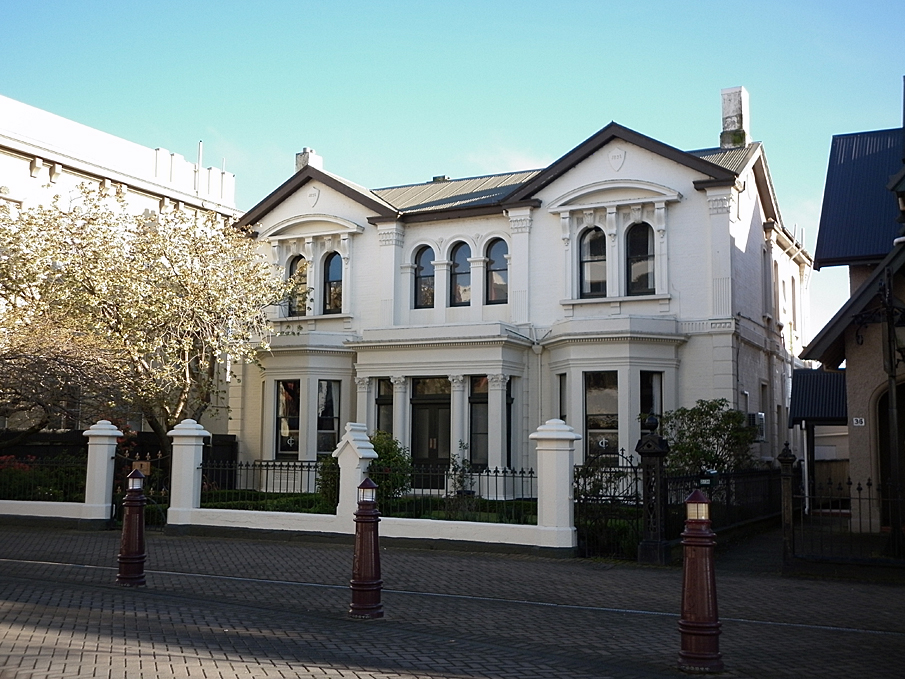
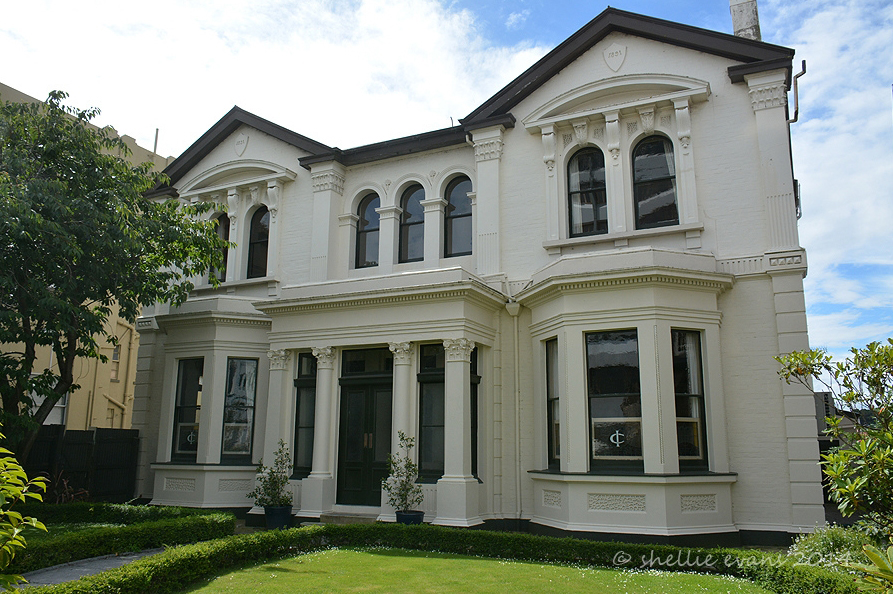
Construction began in mid-1891. Close to completion it was already admired as a ‘handsome two storey building' with ‘a neat wrought iron and concrete fence, duly furnished with gates' and a ‘broad concrete entrance path.' The building was described as ‘at once elegant and striking.' The main part of the building was two-storeyed and constructed of ‘machine pressed bricks', cement and concrete. The roof of the main entrance portico was in the form of a balcony with access through a ‘short passage' from the first floor.
The Southland Times provided a detailed description of the interior. The main features on the ground floor were the ‘wide and easy' main staircase, with a ‘telephone room' underneath, the smoking room, a ‘visitor's room', ‘handsomely fitted up bar', and billiard room with raised seating. The fireplaces had ‘handsome register grates, with tiled hearths, and mantelpieces of enamelled slate.' The rooms and the hall had panelled dadoes constructed out of specially selected native timbers. On the first floor there were card-rooms, a bathroom, sitting and bedrooms. The bedrooms were provided with electric bells. The card rooms had speaking tubes. The Southland Times pronounced that ‘every convenience that experience or ingenuity could suggest has been supplied.' The Club was ‘luxuriously furnished' and had all the latest reading matter. The billiards tables were shifted from the Crescent Hotel. A table was purchased from W.J. Muir. The opening of the Club was celebrated with a ball.
The Cyclopaedia of New Zealand in 1905 described the Invercargill Club as being situated to ‘secure the quiet retirement regarded as essential qualities in connection with such an institution.' A photograph from the Cyclopaedia shows that at that time the Invercargill Club was unpainted brick, with details such as the balusters on the first floor bay windows and the balcony constructed of concrete. The ornamentation is rendered giving the building substantial presence and lively detail.
In addition to the Club House, a cottage was built at the rear of the property to provide living quarters for the Club Steward. One of the earliest stewards was Frederick Legge who retired in March 1908 after having held the position for twenty-five years and was reputed to have maintained a high standard of service.
In 1904 the Licensing Bill was passed which brought the licensing of clubs into line with that of pubs. The legislative change was met with indignation by clubmen, with the limited sympathy, the Observer reported the ‘superior persons belonging to the Clubs are so choked with indignation that they are scarcely able to articulate, and when they do they talk incoherently.' On 6 December 1905 the prohibitionists won a landslide victory in Invercargill, with ‘no license' carrying for the next 40 years. Almost immediately people began finding ways to get around the law. The institution of a ‘locker system' was a controversial way around an area going dry. Hotels (or clubs) in a dry area had a bank of lockers belonging to individuals in which liquor was kept, and which the barperson on request (and for a small fee covering their work, an appropriate mixer, and glass washing) provided the required alcoholic refreshment.
The Invercargill Club obtained legal advice that there was no law against members keeping their own liquor on the premises. Liquor purchased by members was kept in a locker room which opened each day till midnight but closed on Sundays. The steward used small glass phials to measure quantities of liquor from each member's personal store in the locker room. These were brought back to the bar and transferred into glasses. In this way, Club members could continue enjoying a few drinks at the bar. Later refinements to the system included the bulk purchase of kegs for a community locker and the sale of liquor by coupons, all strictly within the law.
About 1920 a heating system was installed and evidence remains today in the ventilation grilles that are still in position above the picture rails on the walls in some of the main rooms and the two original bedrooms. As part of the coal-powered system, a furnace was installed in the cellar beneath the old bar-parlour. Coal was brought in by a passage originally used for rolling in the barrels of liquor. This hot-air system was most effective but was abandoned because of the unpleasant task of having to stoke the furnace in the cellar.
Plans for an extension to the building were first drawn up by architect and club member, C.J. Brodrick in January 1930 but were set aside during the Depression years. It was not until 1950 that new steward's quarters were built onto the rear of the main building and the old cottage was demolished to make room for a car park. The new quarters were designed by architectural firm Ford, Gray & Derbie and built by A.J. McKenzie at a cost of £3,770. At the same time the billiard room was extended to include a third table and an additional bedroom was added to the upper storey.
Billiards has been a popular activity at the Club, ever since it rented its first billiard room at the Imperial Hotel. When the Club moved from the Crescent Hotel to Don Street, the Club brought its two billiard tables with it at a cost of five guineas for the removal and refitting. Its third table was purchased from the estate of a past-president Sir Robert Anderson and his wife, Lady Anderson.
By the end of the 1960s the Invercargill Club relaxed its stand on being a male bastion, and in 1967 opened its doors to the wives of members. Access was carefully controlled, with only some rooms to be used by women, and members were held responsible for the behaviour of their guests. In 1998 women were admitted as members of the Club.
On Sunday morning of 2 February 1975 fire broke out in the bar area of the Club causing extensive damage so that a new bar facility had to be built. The architects were Smith, Rice, Lawrence & Mollison and the estimated cost was $10,700.
In 1979, as part of the Club's centennial celebrations, a new lighting system was installed in the billiard room and the Clubhouse was re-carpeted.
A few other alterations/repairs have been carried out on the building, including re-roofing projects in March 1982 and May 1984 replacing some of the sashes from some of the windows and replacing them with clear anodised aluminium sashes in 1977.
The Invercargill Club continues to be used for the same social and networking functions as it was originally intended, with many long standing members from Invercargill itself and the rural hinterland. The Club maintains its atmosphere of ‘quiet and retirement regarded as essential qualities in connection with such an institution.'