

Broadgreen Historic House was constructed for Martha and Edmund Buxton [1805-1882], and their family of six daughters. The exact date Broadgreen was completed is uncertain. In 1854, Buxton purchased the 40 hectares [100 acres] of land on which Broadgreen was erected for £200 from absentee owner W. H. Rawson. By 1857, the high rates charged on the property suggest that a house had been constructed on it by this date. The house is therefore likely to have been erected between 1854 and 1857.
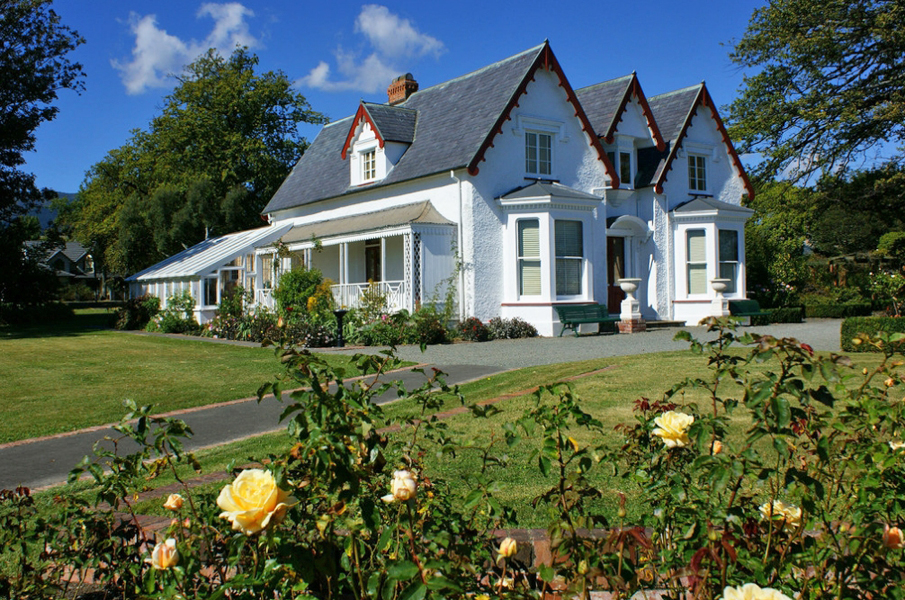
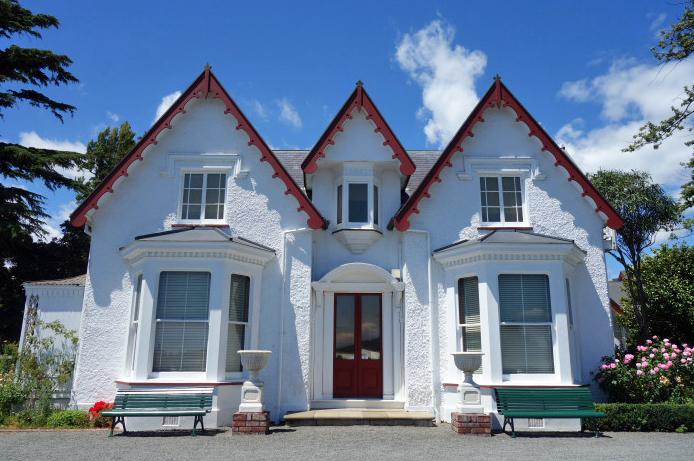
Broadgreen Historic House is made of 'cob', or 'clom' as it was called in Lancashire where Buxton was born. Cob houses were a common choice among early New Zealand settlers as they were cheap, easy to construct, and required very few tools. Cob is a wet mixture of clay, dung and straw or horsehair that dries hard, like concrete. The clay used in Broadgreen was excavated from the cellar area underneath the house. The walls of Broadgreen were formed in thick layers that taper slightly towards the top of the building. All the outside corners of the house were rounded off, to prevent the cob from cracking when it dried. As cob is vulnerable to the damp and can collapse if too wet, the house was covered with roughcast plaster on the outside, and smooth plaster on the inside. Further protection from the weather was provided by the overhanging roof, which was made of tiles.
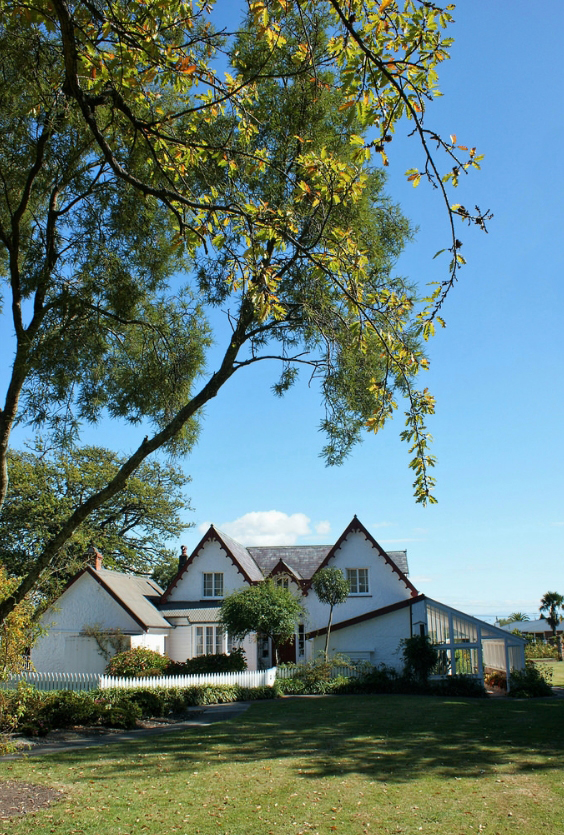
Thought to have been modelled on a Devonshire farmhouse, Broadgreen was designed by architect Mr Beatson. With two-storeys and eleven rooms, it is unusually large for a New Zealand cob building and is a symbol of the Buxton family's prosperity. The original layout of the house reflects the Victorian distinction between public and private space that was noticeable in larger residences from that period. When first constructed, the rooms in the upper storey were used as four private bedrooms and a nursery. The dining room and parlour, both areas where visitors were invited to enter, were elaborately decorated and located at the front of the house. Utility rooms such as the kitchen and scullery were tucked away from sight in the rear of the house. The servants who ran the Buxton household may have been accommodated in the attic above the scullery.
The Buxton family lived in Broadgreen until Edmund Buxton's death in 1882. The following year the house was purchased by Buxton's third daughter Cordelia, then aged 51 years. Cordelia Buxton remained in the house, living off rents from the estate, until 1901. Seven years later, in 1908, the house was sold to Mary and Fritz [Fred] Langbein. The Langbeins developed the estate grounds but left the house largely unchanged. The property was passed to their son Edward in 1943 and to his son, David, eight years later. David Langbein held the property until 1965 when an agreement was made to sell the house and five acres of land to the Nelson City Council. In 1968, after three years of renovations, the 'Friends of Broadgreen' opened the former Buxton residence as a museum. Stocked with items from the nineteenth-century donated by local residents, the museum is arranged to appear as though the Buxtons were still living in the house.
Broadgreen Historic House is of historic and architectural significance as a rare remaining example of a form of house construction once typical of the region, and used throughout New Zealand in the nineteenth-century. The house retains most of its original character and is in excellent condition. Broadgreen is physically significant for the insight it provides into the nature of cob houses and cob construction techniques. The educational value of the house is enhanced by the deliberate effort to highlight this characteristic of the house for museum visitors. Broadgreen is noteworthy for its conversion into a museum and reflects the development of the national trend towards the creation of such museums between 1960 and 1980.The park-like setting of the house, together with the retention of original wallpaper and the inclusion of items that belonged to the residents of the house, adds to the authenticity of the building and enhances its value as a historic resource. The collection of period furniture from local residents adds to the local significance and cultural value of the building. The house is a popular tourist attraction and a valuable educational tool.
List Entry Information
Status
Listed
List Entry Status
Historic Place Category 1
Access
Able to Visit
List Number
252
Date Entered
2nd April 1985
Date of Effect
2nd April 1985
City/District Council
Nelson City
Region
Nelson Region
Legal description
Lot 3 DP 7254 RT 3A/178
Status
Listed
List Entry Status
Historic Place Category 1
Access
Able to Visit
List Number
252
Date Entered
2nd April 1985
Date of Effect
2nd April 1985
City/District Council
Nelson City
Region
Nelson Region
Legal description
Lot 3 DP 7254 RT 3A/178
Construction Details
Start Year
1965
Finish Year
1968
Type
Restoration
Description
Restoration
Start Year
1854
startYearCirca
Finish Year
1857
finishYearCirca
Type
Original Construction
Start Year
1901
Type
Modification
Description
Upstairs bedroom converted into a bathroom; some floors replaced
Type
Addition
Description
conservatory; weatherboard pantry on south side, bay windows on west, scullery
Construction Materials
Two storey house of 11 rooms built of cob and roofed with slate tiles
Notable Features
Wall paper in parlour (1880)
Construction Details
Start Year
1965
Finish Year
1968
Type
Restoration
Description
Restoration
Start Year
1854
startYearCirca
Finish Year
1857
finishYearCirca
Type
Original Construction
Start Year
1901
Type
Modification
Description
Upstairs bedroom converted into a bathroom; some floors replaced
Type
Addition
Description
conservatory; weatherboard pantry on south side, bay windows on west, scullery
Construction Materials
Two storey house of 11 rooms built of cob and roofed with slate tiles
Notable Features
Wall paper in parlour (1880)
Historical and Associated Iwi / Hapū / Whānau
Completion Date
28th February 2003
Report Written By
Rebecca O'Brien
Information Sources
Le Cren, 1997
H. Le Cren, Broadgreen Historic House, Nelson, 1997
Salmond, 1986
Jeremy Salmond, Old New Zealand Houses 1800-1940, Auckland, 1986, Reed Methuen
Trapeznik, 2000
A. Trapeznik (ed.), Common Ground? Heritage and Public Places in New Zealand, Wellington, 2000
Other Information
This place was identified as significant under previous legislation with different information requirements. It remains significant under the current legislation. There is opportunity under our legislation and policies to add to this information. Further information about this place may be available from the Central Regional Office of Heritage New Zealand Pouhere Taonga. A fully referenced version of this report is available from the NZHPT Central Region Office Broadgreen Historic House won the New Zealand Tourism Award for 'Authentic and Meticulous Restoration' in 1978 The house is open from 10.30am to 4.30pm daily except on Christmas Day and Good Friday (entry fee charged) Please note that entry on the New Zealand Heritage List/Rarangi Korero identifies only the heritage values of the property concerned, and should not be construed as advice on the state of the property, or as a comment of its soundness or safety, including in regard to earthquake risk, safety in the event of fire, or insanitary conditions.
Historical and Associated Iwi / Hapū / Whānau
Completion Date
28th February 2003
Report Written By
Rebecca O'Brien
Information Sources
Le Cren, 1997
H. Le Cren, Broadgreen Historic House, Nelson, 1997
Salmond, 1986
Jeremy Salmond, Old New Zealand Houses 1800-1940, Auckland, 1986, Reed Methuen
Trapeznik, 2000
A. Trapeznik (ed.), Common Ground? Heritage and Public Places in New Zealand, Wellington, 2000
Other Information
This place was identified as significant under previous legislation with different information requirements. It remains significant under the current legislation. There is opportunity under our legislation and policies to add to this information. Further information about this place may be available from the Central Regional Office of Heritage New Zealand Pouhere Taonga. A fully referenced version of this report is available from the NZHPT Central Region Office Broadgreen Historic House won the New Zealand Tourism Award for 'Authentic and Meticulous Restoration' in 1978 The house is open from 10.30am to 4.30pm daily except on Christmas Day and Good Friday (entry fee charged) Please note that entry on the New Zealand Heritage List/Rarangi Korero identifies only the heritage values of the property concerned, and should not be construed as advice on the state of the property, or as a comment of its soundness or safety, including in regard to earthquake risk, safety in the event of fire, or insanitary conditions.
Current Usages
Uses: Civic Facilities
Specific Usage: Museum
Former Usages
General Usage: Accommodation
Specific Usage: House
Current Usages
Uses: Civic Facilities
Specific Usage: Museum
Former Usages
General Usage: Accommodation
Specific Usage: House
Location
Sign up to hear more
Get the latest heritage news, features and events delivered
straight to your inbox.
