

Constructed circa 1903, Wilson House is an Edwardian Tudor revival style residence designed by prominent Invercargill architect, Edmund Richardson Fitz Wilson (1871-1941) for his family. Wilson’s hand is also present in the garden layout and structures within which this two-storey predominantly brick house is set.
Invercargill was settled in the late 1850s, only a few years prior to the arrival of Wilson’s parents. Wilson and all of his siblings were born in Invercargill and it was here that Wilson was apprenticed into the architectural firm of Mackenzie and Gilbertson. He would go onto become a partner in Mackenzie and Wilson in 1897, and spent the rest of his career based in the town, creating some of its key buildings. Newly married with rising popularity as a local architect, Wilson was able to build a large home for his young, and growing, family in the early twentieth century, which he owned until his death in 1941. Wilson became well-known nationally in the architectural profession through his governance roles in the New Zealand Institute of Architects.
This large four bedroom house with double brick interior and exterior walls, is set within a suitably sized garden area which was also initially landscaped by Wilson. Therefore there are several near contemporary structures, such as the west wall and gateway, which remain and are linked by a concrete sphere motif, as well as an original garden shed. The house has a typical Elizabethan/Tudor revival style form with interconnecting sizable gables which have stickwork gable ends which serve to soften the robustness of the red brick and expansive tile roof. There have been few instances of significant change to the original form of the building with the exception of a small addition to the northwest corner which may have been undertaken by Wilson late in life.
Wilson House has considerable local importance. From an early Invercargill family, Wilson remained based there, and in his role as a popular architect contributed many important buildings to Invercargill throughout his life. Wilson House is also a characteristic example of the Tudor revival style fashionable in New Zealand’s upper echelon domestic architecture of the late Victorian and early Edwardian period. Being a house designed by the architect who lived there for the majority of his lifetime, Wilson House also has architectural significance as the exemplar of Wilson’s domestic architectural approach in the early twentieth century.
Invercargill was settled in the late 1850s, only a few years prior to the arrival of Wilson’s parents. Wilson and all of his siblings were born in Invercargill and it was here that Wilson was apprenticed into the architectural firm of Mackenzie and Gilbertson. He would go onto become a partner in Mackenzie and Wilson in 1897, and spent the rest of his career based in the town, creating some of its key buildings. Newly married with rising popularity as a local architect, Wilson was able to build a large home for his young, and growing, family in the early twentieth century, which he owned until his death in 1941. Wilson became well-known nationally in the architectural profession through his governance roles in the New Zealand Institute of Architects.
This large four bedroom house with double brick interior and exterior walls, is set within a suitably sized garden area which was also initially landscaped by Wilson. Therefore there are several near contemporary structures, such as the west wall and gateway, which remain and are linked by a concrete sphere motif, as well as an original garden shed. The house has a typical Elizabethan/Tudor revival style form with interconnecting sizable gables which have stickwork gable ends which serve to soften the robustness of the red brick and expansive tile roof. There have been few instances of significant change to the original form of the building with the exception of a small addition to the northwest corner which may have been undertaken by Wilson late in life.
Wilson House has considerable local importance. From an early Invercargill family, Wilson remained based there, and in his role as a popular architect contributed many important buildings to Invercargill throughout his life. Wilson House is also a characteristic example of the Tudor revival style fashionable in New Zealand’s upper echelon domestic architecture of the late Victorian and early Edwardian period. Being a house designed by the architect who lived there for the majority of his lifetime, Wilson House also has architectural significance as the exemplar of Wilson’s domestic architectural approach in the early twentieth century.
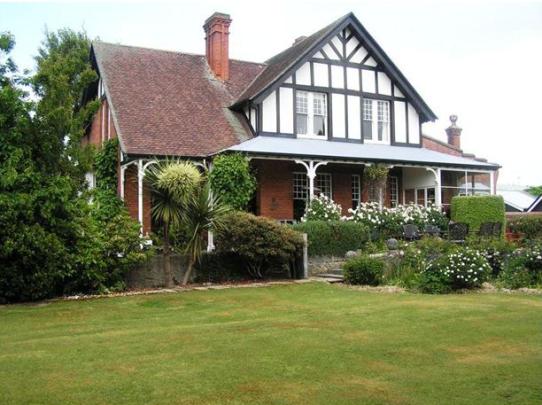
Wilson House | Karen Astwood | 12/11/2010 | Heritage New Zealand Pouhere Taonga
Wilson House | Karen Astwood | 12/11/2010 | Heritage New Zealand Pouhere Taonga
