DonateSupporterVisit Heritage
  • Tūrangawaewae
    Places
  • Tira Māori
    Māori Heritage
  • Poutairangahia
    Archaeology
  • Rauemi
    Resources
  • Mō Tātou
    About Us
  • New Zealand Heritage List
  • Nominate and submit
  • Explore the List
  • National Historic Landmarks
  • Plaques
  • Rainbow List Project
  • Lost heritage
  • Visit Heritage
  • Our properties
  • Turnbull House Project
  • Collections
  • Shop
  • Tohu Whenua
  • Tira Māori
  • Conserving Māori heritage
  • Marae built heritage
  • Māori heritage on the List
  • Hinemihi—Te Hokinga Mai
  • What is archaeology?
  • Is there a site on my property?
  • What are my legal requirements?
  • Affecting an archaeological site
  • Declaring an archaeological site
  • Archaeology FAQs
  • Archaeology Digital Library
  • Archaeology guidelines and templates
  • Resources
  • Funding
  • Publications
  • Sustainable management guides
  • Disaster recovery
  • Podcasts & digital resources
  • Education Hub
  • Conservation plans
  • About
  • Board
  • Māori Heritage Council
  • Senior Staff
  • Offices
  • Contact us
  • Careers
  • Covenants
  • Fast-track
  • Corporate documents
  • Currently consulting on
  • Our submissions
  • News
Quick links
Rārangi Kōrero | The List
Explore the List
National Historic Landmarks
Ngā Manawhenua o Aotearoa me ōna Kōrero Tūturu
Quick links
Tapuwae
A Vision for Places of Māori Heritage
Funding for Māori Heritage
Resources
Quick links
Archaeological Authority Portal
Applying for an archaeological authority
Archaeology FAQs
Browse the most frequently asked questions about archaeological authorities and the archaeological process.
Quick links
Quick links
Contact us
Offices
DonateSupporterVisit Heritage
  • Tūrangawaewae
    Places
  • Tira Māori
    Māori Heritage
  • Poutairangahia
    Archaeology
  • Rauemi
    Resources
  • Mō Tātou
    About Us
  • New Zealand Heritage List
  • Nominate and submit
  • Explore the List
  • National Historic Landmarks
  • Plaques
  • Rainbow List Project
  • Lost heritage
  • Visit Heritage
  • Our properties
  • Turnbull House Project
  • Collections
  • Shop
  • Tohu Whenua
  • Tira Māori
  • Conserving Māori heritage
  • Marae built heritage
  • Māori heritage on the List
  • Hinemihi—Te Hokinga Mai
  • What is archaeology?
  • Is there a site on my property?
  • What are my legal requirements?
  • Affecting an archaeological site
  • Declaring an archaeological site
  • Archaeology FAQs
  • Archaeology Digital Library
  • Archaeology guidelines and templates
  • Resources
  • Funding
  • Publications
  • Sustainable management guides
  • Disaster recovery
  • Podcasts & digital resources
  • Education Hub
  • Conservation plans
  • About
  • Board
  • Māori Heritage Council
  • Senior Staff
  • Offices
  • Contact us
  • Careers
  • Covenants
  • Fast-track
  • Corporate documents
  • Currently consulting on
  • Our submissions
  • News
Quick links
Rārangi Kōrero | The List
Explore the List
National Historic Landmarks
Ngā Manawhenua o Aotearoa me ōna Kōrero Tūturu
Quick links
Tapuwae
A Vision for Places of Māori Heritage
Funding for Māori Heritage
Resources
Quick links
Archaeological Authority Portal
Applying for an archaeological authority
Archaeology FAQs
Browse the most frequently asked questions about archaeological authorities and the archaeological process.
Quick links
Quick links
Contact us
Offices
  • Places
  • Nominate and submit
  • National Historic Landmarks
  • Places
  • Nominate and submit
  • National Historic Landmarks
  • Tira Māori
  • Conserving Māori heritage
  • Marae built heritage
  • Tira Māori
  • Conserving Māori heritage
  • Marae built heritage
  • Archaeological authorities
  • Archaeology Digital Library
  • Archaeological authorities
  • Archaeology Digital Library
  • All resources
  • Publications
  • Funding
  • All resources
  • Publications
  • Funding
  • FAQs
  • FAQs
Follow us on:
Places
  • Places
  • Nominate and submit
  • National Historic Landmarks
Tira Māori
  • Tira Māori
  • Conserving Māori heritage
  • Marae built heritage
Archaeology
  • Archaeological authorities
  • Archaeology Digital Library
Resources
  • All resources
  • Publications
  • Funding
FAQs
  • FAQs
Follow us on
HomePrivacyTerms and conditionsAbout this site
© Heritage New Zealand Pouhere Taonga 2026.
 
Ohoka Homestead

21 Jacksons Road, OHOKA

Private

Historic Place Category 1

List No. 274

Quick links:
List GalleryLocationDetails
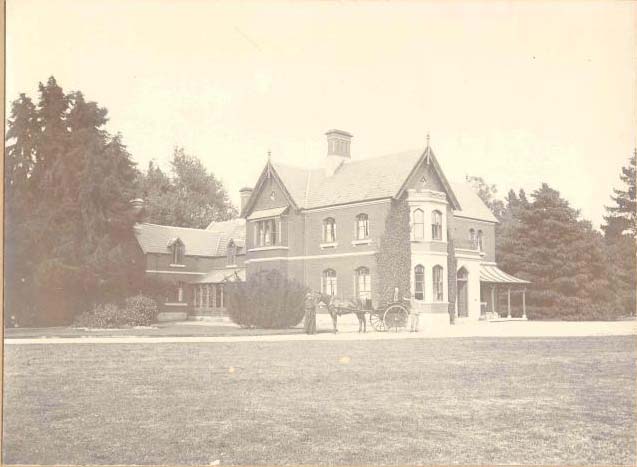
This two-storey brick homestead was built in the early 1870s for a man many knew as 'Bully' White. Josiah Senior Woodhouse (1834-1905), or as he was more commonly known, Joseph Senior White, arrived in Canterbury from Australia and it was rumoured that he had been involved in some controversy there, which historian Pauline Wood suggests might have been the Eureka stockade incident, where goldminers revolting against the government were suppressed by armed troops. Other stories suggest that he was involved in a financial scandal or that he was a member of outlaw Ned Kelly's gang. Whatever the truth of these rumours White established became a successful businessman in New Zealand, and a noted local figure. He owned a number of businesses in Kaiapoi and Saltwater Creek including a chain of stores known as 'Beehive Emporiums' located throughout North Canterbury.

White established his farm at Ohoka in 1867, planting around 100,000 exotic trees and erecting a brickmaking kiln, which produced the bricks for the homestead. He designed his house around an Australian homestead he particularly admired and hired Thomas Ayers and his sons, noted local bricklayers, to build Ohoka. The first part of Ohoka to be constructed was the service wing which housed kitchens, stables and other 'offices' grouped around a courtyard. This was completed by around 1870. The main two-storey block of the homestead was finished by 1872. Ohoka is Gothic in style with steeply pitched slate roofs, fretted bargeboards, finials and arched windows and has been compared stylistically with Victorian vicarages. Altogether the building consisted of twenty-two rooms and is an extremely early example of cavity brick construction in New Zealand.

Cavity brick construction was developed to combat the problems with damp that brick walls were liable to suffer from. With this method two walls are built, an external and an internal one, divided by a gap of at least 50 millimetres and connected by metal ties. Drainage holes are left at the bottom of the external wall, and any moisture that seeps through the external wall drains out of the central space. This method of constructing brick walls was noted in Britain from the beginning of the nineteenth century, and was introduced to the United States from 1850. In both cases this method of construction did not become widely used until the early part of the twentieth century. The earliest noted use of cavity wall construction in Australia is 1870. In New Zealand 'Chadwell' at Kaiapoi is thought to be the earliest example of this method of construction, dating from 1865-1866. The number of early examples of cavity brick construction in North Canterbury are a result of one family of bricklayers, the Ayers, who....

Ohoka shows the esteem in which nineteenth-century landowners of Canterbury were viewed and how their large estates were aped by merchants and professionals, who often bought land after they had made their money in other areas. It is locally significant as the former house of a noted local personality. The homestead is important as one of the earliest buildings in New Zealand to be constructed using the cavity brick method of construction and is an important example of Ayers' work.
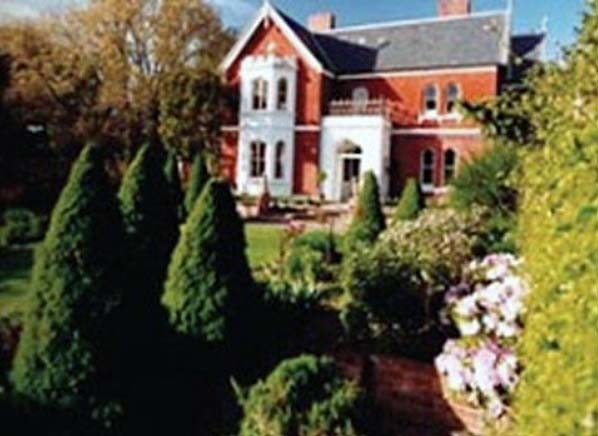
Ohoka Homestead, Ohoka | Heritage New Zealand Pouhere Taonga
Ohoka Homestead, Ohoka. Image courtesy of Kaiapoi Museum. Copyright Kaiapoi Museum | Kaiapoi Museum
Ohoka Homestead, Ohoka | Heritage New Zealand Pouhere Taonga
Ohoka Homestead, Ohoka. Image courtesy of Kaiapoi Museum. Copyright Kaiapoi Museum | Kaiapoi Museum

List Entry Information

Overview

Status
Listed

List Entry Status
Historic Place Category 1

Access
Private/No Public Access

List Number
274

Date Entered
2nd April 1985

Date of Effect
2nd April 1985

City/District Council
Waimakariri District

Region
Canterbury Region

Extent of List Entry

Extent includes part of the land described as Lot 1 DP 81869 (RT CB47B/270), Canterbury Land District and the building known as Ohoka Homestead thereon. Refer to the extent map tabled at the Heritage New Zealand Board meeting on 23 October 2014.

Legal description

Lot 1 DP 81869 (RT CB47B/270), Canterbury Land District

Detailed List Entry

Construction Professional

Name

Ayers, Thomas and Sons.

Type

Builder

Biography

North Canterbury bricklayers.

Construction Details

Start Year

1872

Type

Original Construction

Notable Features

The garden still retains a number of the exotic trees planted by White and is a typical estate garden. The wooden stables and dovecote are also registered Category II with the New Zealand Historic Places Trust/Pouhere Taonga, as is the Gothic lodge.

Reference

Completion Date

10th June 2002

Report Written By

Melanie Lovell-Smith

Information Sources

Wood, 1993

Pauline Wood, Kaiapoi: A Search for Identity, Rangiora, 1993

MacDonald Biographies

G.R. MacDonald, Dictionary of Canterbury Biographies, Canterbury Museum, n.d.

Historic Places in New Zealand

Historic Places in New Zealand

Porter, 1983

Frances Porter (ed), Historic Buildings of Dunedin, South Island, Methuen, Auckland, 1983.

Report Written By

This place was identified as significant under previous legislation with different information requirements. It remains significant under the current legislation. There is opportunity under our legislation and policies to add to this information. Further information about this place may be available from the Southern Regional Office of Heritage New Zealand Pouhere Taonga. Please note that entry on the New Zealand Heritage List/Rarangi Korero identifies only the heritage values of the property concerned, and should not be construed as advice on the state of the property, or as a comment of its soundness or safety, including in regard to earthquake risk, safety in the event of fire, or insanitary conditions.

Further Information

Current Usages

Uses: Accommodation

Specific Usage: House

Former Usages

General Usage:: Accommodation

Specific Usage: House

Themes

Web Links

Overview

Status

Listed

List Entry Status

Historic Place Category 1

Access

Private/No Public Access

List Number

274

Date Entered

2nd April 1985

Date of Effect

2nd April 1985

City/District Council

Waimakariri District

Region

Canterbury Region

Extent of List Entry

Extent includes part of the land described as Lot 1 DP 81869 (RT CB47B/270), Canterbury Land District and the building known as Ohoka Homestead thereon. Refer to the extent map tabled at the Heritage New Zealand Board meeting on 23 October 2014.

Legal description

Lot 1 DP 81869 (RT CB47B/270), Canterbury Land District

Status

Listed

List Entry Status

Historic Place Category 1

Access

Private/No Public Access

List Number

274

Date Entered

2nd April 1985

Date of Effect

2nd April 1985

City/District Council

Waimakariri District

Region

Canterbury Region

Extent of List Entry

Extent includes part of the land described as Lot 1 DP 81869 (RT CB47B/270), Canterbury Land District and the building known as Ohoka Homestead thereon. Refer to the extent map tabled at the Heritage New Zealand Board meeting on 23 October 2014.

Legal description

Lot 1 DP 81869 (RT CB47B/270), Canterbury Land District

Construction Information

Construction Professional

Name

Ayers, Thomas and Sons.

Type

Builder

Biography

North Canterbury bricklayers.

Construction Details

Start Year

1872

startYearCirca

Type

Original Construction

Notable Features

The garden still retains a number of the exotic trees planted by White and is a typical estate garden. The wooden stables and dovecote are also registered Category II with the New Zealand Historic Places Trust/Pouhere Taonga, as is the Gothic lodge.

Construction Professional

Name

Ayers, Thomas and Sons.

Type

Builder

Biography

North Canterbury bricklayers.

Construction Details

Start Year

1872

startYearCirca

Type

Original Construction

Notable Features

The garden still retains a number of the exotic trees planted by White and is a typical estate garden. The wooden stables and dovecote are also registered Category II with the New Zealand Historic Places Trust/Pouhere Taonga, as is the Gothic lodge.

Reference

Historical and Associated Iwi / Hapū / Whānau

Completion Date

10th June 2002

Report Written By

Melanie Lovell-Smith

Information Sources

Wood, 1993

Pauline Wood, Kaiapoi: A Search for Identity, Rangiora, 1993

MacDonald Biographies

G.R. MacDonald, Dictionary of Canterbury Biographies, Canterbury Museum, n.d.

Historic Places in New Zealand

Historic Places in New Zealand

Porter, 1983

Frances Porter (ed), Historic Buildings of Dunedin, South Island, Methuen, Auckland, 1983.

Other Information

This place was identified as significant under previous legislation with different information requirements. It remains significant under the current legislation. There is opportunity under our legislation and policies to add to this information. Further information about this place may be available from the Southern Regional Office of Heritage New Zealand Pouhere Taonga. Please note that entry on the New Zealand Heritage List/Rarangi Korero identifies only the heritage values of the property concerned, and should not be construed as advice on the state of the property, or as a comment of its soundness or safety, including in regard to earthquake risk, safety in the event of fire, or insanitary conditions.

Historical and Associated Iwi / Hapū / Whānau

Completion Date

10th June 2002

Report Written By

Melanie Lovell-Smith

Information Sources

Wood, 1993

Pauline Wood, Kaiapoi: A Search for Identity, Rangiora, 1993

MacDonald Biographies

G.R. MacDonald, Dictionary of Canterbury Biographies, Canterbury Museum, n.d.

Historic Places in New Zealand

Historic Places in New Zealand

Porter, 1983

Frances Porter (ed), Historic Buildings of Dunedin, South Island, Methuen, Auckland, 1983.

Other Information

This place was identified as significant under previous legislation with different information requirements. It remains significant under the current legislation. There is opportunity under our legislation and policies to add to this information. Further information about this place may be available from the Southern Regional Office of Heritage New Zealand Pouhere Taonga. Please note that entry on the New Zealand Heritage List/Rarangi Korero identifies only the heritage values of the property concerned, and should not be construed as advice on the state of the property, or as a comment of its soundness or safety, including in regard to earthquake risk, safety in the event of fire, or insanitary conditions.

Further Information

Current Usages

Uses: Accommodation

Specific Usage: House

Former Usages

General Usage: Accommodation

Specific Usage: House

Current Usages

Uses: Accommodation

Specific Usage: House

Former Usages

General Usage: Accommodation

Specific Usage: House

Location

Loading
Related listings
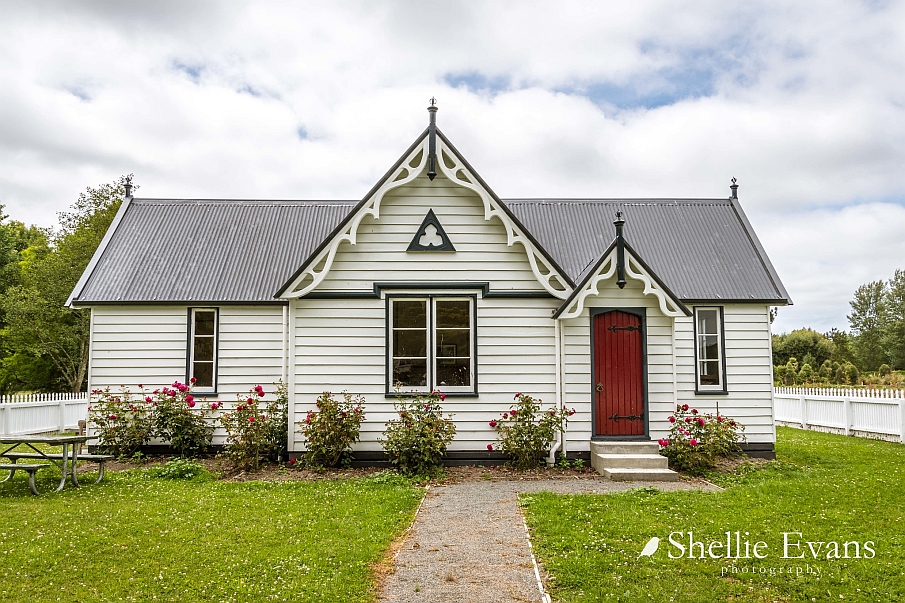
Ohoka Gate Keeper's Lodge (Former), Ohoka. Image courtesy of www.flickr.com
Ohoka Gate Keeper’s Lodge (Former)
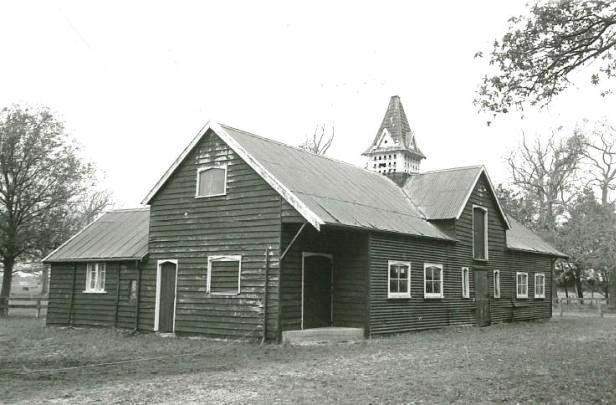
Ohoka Station Stables & Dovecot, Ohoka. CC BY-SA 4.0 Image courtesy of commons.wikimedia.org
Ohoka Station Stables and Dovecot
Ohoka Station Stables & Dovecot, Ohoka. CC BY-SA 4.0 Image courtesy of commons.wikimedia.org
Ohoka Station Stables and Dovecot
Ohoka Gate Keeper's Lodge (Former), Ohoka. Image courtesy of www.flickr.com
Ohoka Gate Keeper’s Lodge (Former)
Sign up to hear more

Get the latest heritage news, features and events delivered
straight to your inbox.

Subscribe