Karamu Homestead, built for John Davies Ormond (1831?-1917) in 1876, has historical and architectural significance as an early Hawke’s Bay homestead. Its connection with Ormond, a provincial leader variously described as ‘one of the giants of New Zealand’s early history’, ‘The Master’, and an ‘anti-social, taciturn man’, helps demonstrate the impact wealthy landowners had on the early development of colonial New Zealand.
Tangata whenua settled in Hawke’s Bay around 1250-1300 AD. The people who became known as Ngāti Kahungunu arrived in the 1500s. The Heretaunga plains were rich in food, medicine and materials, plus arable land. Pākehā established whaling and trading stations in the region from the 1830s, and the government began purchasing vast quantities of land from Ngāti Kahungunu in the 1850s, mainly leasing or selling to settlers who established sheep or cattle stations.
In 1864, Thomas Tanner, leader of a group of wealthy settlers known as the Twelve Apostles, illegally leased the Heretaunga block of over 17,000 acres from Hēnare Tomoana, a Ngāti Kahungunu and Ngāti Te Whatu-i-āpiti leader. By 1870 the syndicate had purchased the valuable land through persuasion and force. Ormond acquired a 1,200-acre share in this land and it became Karamu, one of Hawke’s Bay’s early stations and regarded as ‘one of the best known racing studs in Australasia’.
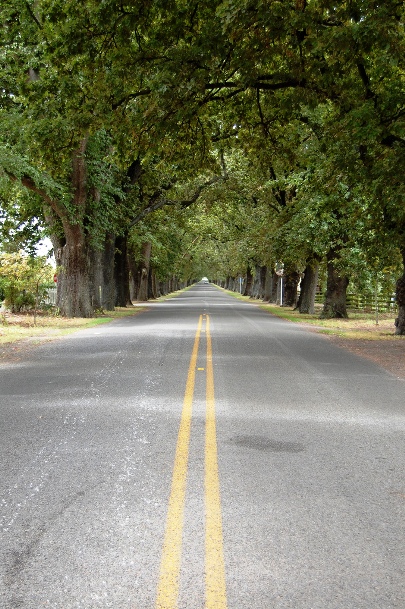
Ormond served his province in the House of Representatives, Legislative Council and as Superintendent. Hannah Richardson married him in 1860. Karamu Homestead was built in 1876, amongst five acres of orchards. The two-storeyed residence had a hipped roof and was made of heart kauri. It was serviced by an adjoining cottage which housed the kitchen, and staff accommodation. Oak Avenue Historic Area (List No. 7021) was planted for Ormond as the property’s picturesque 1.5-kilometre driveway.
It has been claimed that Hannah Ormond spent one night at Karamu and refused to spend another, preferring their town house, Tintagel, in Napier. Ormond, by contrast, spent his final years at both Tintagel and Karamu, visiting the latter on alternate days. Most of the property was sold in 1920, three years after Ormond’s death, and the farm, homestead and stables were left in the possession of Ormond’s son Francis (known as Frank), who continued the horse stud. The property has remained in Ormond family ownership. In 2011 the cottage, originally sited two metres from the main house with adjoining doors, was shifted 50 metres to the west and incorporated into a new dwelling. In 2021 additions and alterations were made to the rear of the main homestead to upgrade kitchen and bathroom facilities; the verandah was also extended along the western elevation.
Tangata whenua settled in Hawke’s Bay around 1250-1300 AD. The people who became known as Ngāti Kahungunu arrived in the 1500s. The Heretaunga plains were rich in food, medicine and materials, plus arable land. Pākehā established whaling and trading stations in the region from the 1830s, and the government began purchasing vast quantities of land from Ngāti Kahungunu in the 1850s, mainly leasing or selling to settlers who established sheep or cattle stations.
In 1864, Thomas Tanner, leader of a group of wealthy settlers known as the Twelve Apostles, illegally leased the Heretaunga block of over 17,000 acres from Hēnare Tomoana, a Ngāti Kahungunu and Ngāti Te Whatu-i-āpiti leader. By 1870 the syndicate had purchased the valuable land through persuasion and force. Ormond acquired a 1,200-acre share in this land and it became Karamu, one of Hawke’s Bay’s early stations and regarded as ‘one of the best known racing studs in Australasia’.
Ormond served his province in the House of Representatives, Legislative Council and as Superintendent. Hannah Richardson married him in 1860. Karamu Homestead was built in 1876, amongst five acres of orchards. The two-storeyed residence had a hipped roof and was made of heart kauri. It was serviced by an adjoining cottage which housed the kitchen, and staff accommodation. Oak Avenue Historic Area (List No. 7021) was planted for Ormond as the property’s picturesque 1.5-kilometre driveway.
It has been claimed that Hannah Ormond spent one night at Karamu and refused to spend another, preferring their town house, Tintagel, in Napier. Ormond, by contrast, spent his final years at both Tintagel and Karamu, visiting the latter on alternate days. Most of the property was sold in 1920, three years after Ormond’s death, and the farm, homestead and stables were left in the possession of Ormond’s son Francis (known as Frank), who continued the horse stud. The property has remained in Ormond family ownership. In 2011 the cottage, originally sited two metres from the main house with adjoining doors, was shifted 50 metres to the west and incorporated into a new dwelling. In 2021 additions and alterations were made to the rear of the main homestead to upgrade kitchen and bathroom facilities; the verandah was also extended along the western elevation.
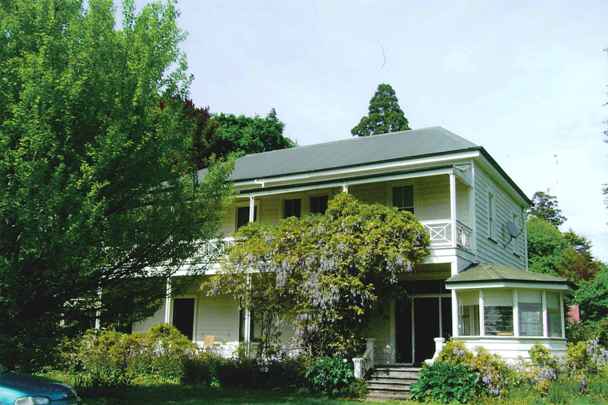
Karamu | Patricia Dick | Patricia Dick
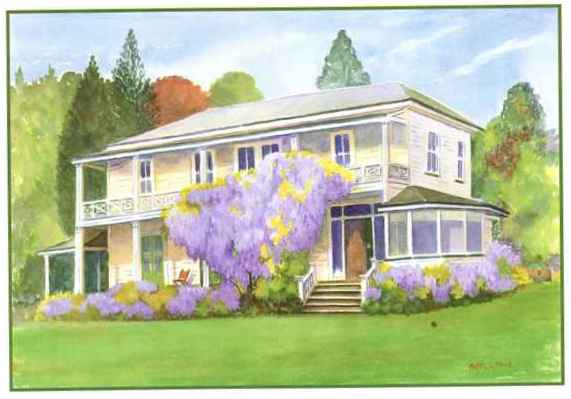
Watercolour by Patricia Dick | Patricia Dick
Karamu | Patricia Dick | Patricia Dick
Watercolour by Patricia Dick | Patricia Dick