

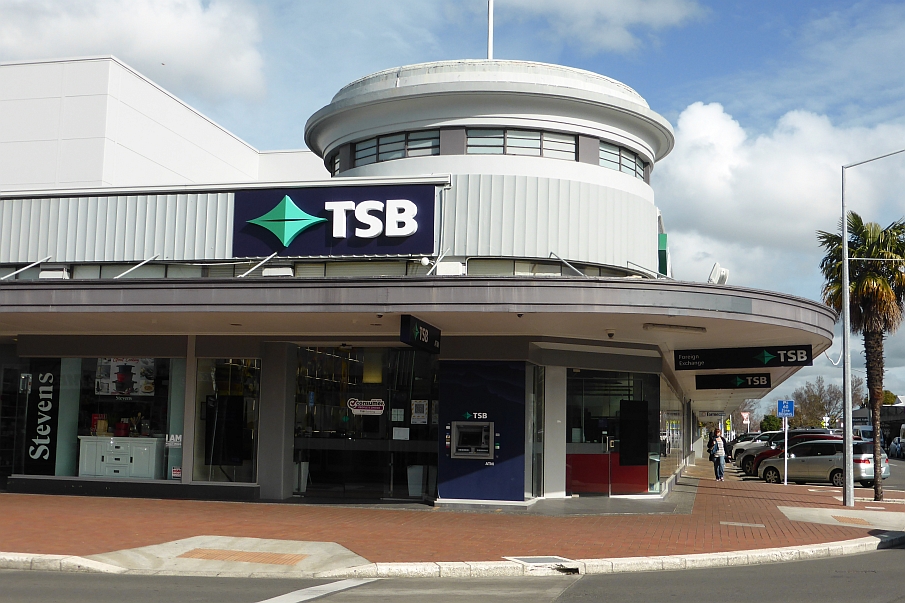
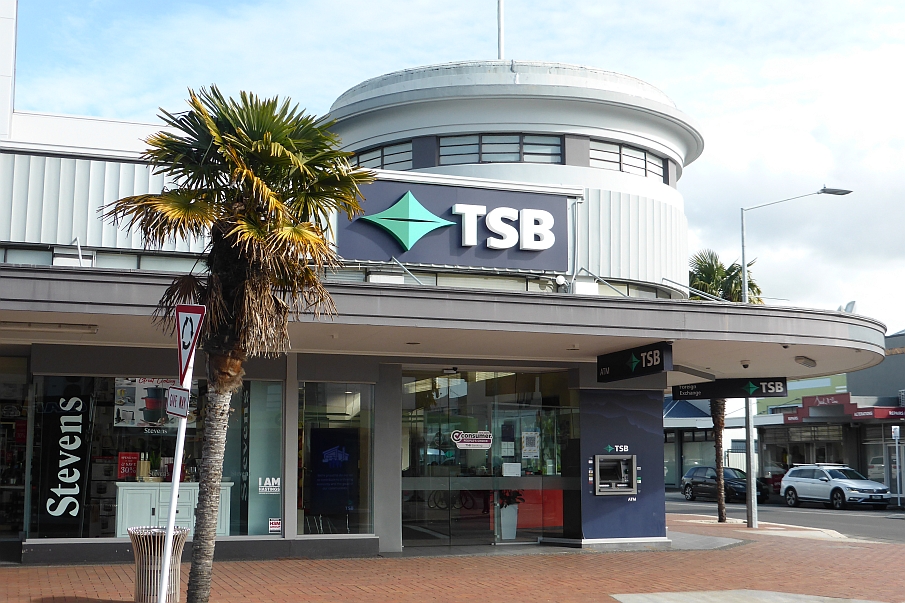
The former Roachs' Building is a single storey building, built in reinforced concrete, and with a concrete roof over half of its floor area. It is oriented to Heretaunga Street, with the main entrance doors to retail spaces on this side; a verandah wraps around the corner and a little more than half way down the long King Street elevation.
The building has historical significance for its association with Roachs', once the premier department store in Hastings, which operated out of four buildings over a 95-year history. Despite the change of ownership in 1979, the building remains a retailing outlet. The building is one of the most striking of all of Hastings' post-earthquake buildings. The circular room on the roof, and the internal arcade, with its coloured glass skylight, are significant features of the building. The building's form is quite dramatic in the streetscape for its size and clean, streamlined Moderne style; the circular room is a very unusual feature, giving it some landmark quality.
List Entry Information
Status
Listed
List Entry Status
Historic Place Category 2
Access
Private/No Public Access
List Number
2787
Date Entered
27th June 2008
Date of Effect
27th June 2008
City/District Council
Hastings District
Region
Hawke's Bay Region
Extent of List Entry
The registration includes Pt Lot 1 DP 6230, Hawkes Bay Land District, (as shown on the 'Extent of Registration' plan in Appendix 2) and the building and its fittings and fixtures thereon.
Legal description
Pt Lot 1 DP 6230 (RT HBD1/660), Hawkes Bay Land District
Location Description
Corner of Heretaunga Street West and King Street South.
Status
Listed
List Entry Status
Historic Place Category 2
Access
Private/No Public Access
List Number
2787
Date Entered
27th June 2008
Date of Effect
27th June 2008
City/District Council
Hastings District
Region
Hawke's Bay Region
Extent of List Entry
The registration includes Pt Lot 1 DP 6230, Hawkes Bay Land District, (as shown on the 'Extent of Registration' plan in Appendix 2) and the building and its fittings and fixtures thereon.
Legal description
Pt Lot 1 DP 6230 (RT HBD1/660), Hawkes Bay Land District
Location Description
Corner of Heretaunga Street West and King Street South.
Why is this place significant?
Cultural Significance
SOCIAL: The former Roachs' Building has been a prominent retailing attraction since 1934, with several generations of local residents having shopped at the store. The social significance can be extended to the previous buildings located there, giving the site on the corner of Heretaunga West and King Street added importance for its long association with Roachs' Department Store.
Historic Significance
Historical Significance or Value The former Roachs' Building is historically significant for its association with Roachs' Department Store, one of the longest running and most successful of Hastings retailing concerns. The present building was the fifth occupied by Roachs' and the fourth on this site, which the firm traded from for over 90 years. Roachs' was one of a number of businesses directly affected by the Hawkes Bay earthquake, but in its case the impact was especially severe; the deaths of 17 people represented the biggest single loss of life in one building. The building is also significant for its association with Davies and Phillips, one of the most significant architectural practices in Hastings' history and key figures in the city's post-earthquake rejuvenation. In the period since its closure the building has remained a significant feature of Hastings' retailing.
Physical Significance
AESTHETIC VALUE: The former Roachs' Building is a very strong building in the townscape - it occupies a prominent central CBD intersection and stands out for its streamlined, simple shapes. It is compatible with adjacent buildings, with which it shares qualities of compatible scale, visual interest and construction materials. Aesthetic values of the building are also high as an example of the Moderne style - see below. ARCHITECTURAL VALUE: The building is an excellent example of the Moderne style, perhaps the best in the city and of modest national interest. It is characterised by a complete absence of period details, by strong and simple horizontal shapes and proportions, by narrow bands of glazing, and curved shapes that fit naturally with the corner site. It is a good example of the work of local architects Davies and Phillips, somewhat different from their other buildings of the same period, and extends our understanding of their work. TECHNOLOGICAL VALUE: The building has technical interest for its post-earthquake design in reinforced concrete, including post and beam, floor and roof construction. This value is enhanced by the existence of the complete set of original architectural drawings, which document the structural design in some detail. It is a well executed building of the 1930s, a good example of the building materials and technology of the time.
Why is this place Category 1 / Category 2?
Detail Of Assessed Criteria
Category of historic place (section 23(2)): This place was assigned a category status having regard to the following criteria: b, g, k (b) The association of the place with events, persons, or ideas of importance in New Zealand history This building is most closely associated with the name of Roach and the department store that occupied this site for over 90 years. The founder of the family business, G.H. Roach, and his descendants, built up a significant business. Despite its status in Hawkes Bay, the name of the business was not necessarily well known outside the province, so the significance of the association is local / regional. The building is directly associated with one of the biggest natural disasters in New Zealand history - the Hawkes Bay earthquake - as it would not have been built were it not for that event. Roachs' Building (Former) is also associated with architects Davies and Phillips, who played a significant role in the rebuilding of Hastings's commercial sector in the wake of the Hawkes Bay earthquake. g) The technical accomplishment or value, or design of the place: The building has technical interest for its post-earthquake design in reinforced concrete, including post and beam, floor and roof construction. It has high design values, as a very competent, indeed innovative, example of the Moderne style of architecture. This style was popular during the 1930s, and is seen as a precursor of the modern movement, in that it exhibits a rational use of concrete and stands free of period detail. (k) The extent to which the place forms part of a wider historical and cultural complex or historical and cultural landscape: As a city substantially shaped by the one event - the Hawkes Bay earthquake in 1931 - Hastings is full of buildings that were entirely or partially rebuilt in the wake of the earthquake. This building is just one of many significant buildings that are identifiably from the same period and which so strongly define the character of the city. Category: Category II
Why is this place significant?
Cultural Significance
SOCIAL: The former Roachs' Building has been a prominent retailing attraction since 1934, with several generations of local residents having shopped at the store. The social significance can be extended to the previous buildings located there, giving the site on the corner of Heretaunga West and King Street added importance for its long association with Roachs' Department Store.
Historic Significance
Historical Significance or Value The former Roachs' Building is historically significant for its association with Roachs' Department Store, one of the longest running and most successful of Hastings retailing concerns. The present building was the fifth occupied by Roachs' and the fourth on this site, which the firm traded from for over 90 years. Roachs' was one of a number of businesses directly affected by the Hawkes Bay earthquake, but in its case the impact was especially severe; the deaths of 17 people represented the biggest single loss of life in one building. The building is also significant for its association with Davies and Phillips, one of the most significant architectural practices in Hastings' history and key figures in the city's post-earthquake rejuvenation. In the period since its closure the building has remained a significant feature of Hastings' retailing.
Physical Significance
AESTHETIC VALUE: The former Roachs' Building is a very strong building in the townscape - it occupies a prominent central CBD intersection and stands out for its streamlined, simple shapes. It is compatible with adjacent buildings, with which it shares qualities of compatible scale, visual interest and construction materials. Aesthetic values of the building are also high as an example of the Moderne style - see below. ARCHITECTURAL VALUE: The building is an excellent example of the Moderne style, perhaps the best in the city and of modest national interest. It is characterised by a complete absence of period details, by strong and simple horizontal shapes and proportions, by narrow bands of glazing, and curved shapes that fit naturally with the corner site. It is a good example of the work of local architects Davies and Phillips, somewhat different from their other buildings of the same period, and extends our understanding of their work. TECHNOLOGICAL VALUE: The building has technical interest for its post-earthquake design in reinforced concrete, including post and beam, floor and roof construction. This value is enhanced by the existence of the complete set of original architectural drawings, which document the structural design in some detail. It is a well executed building of the 1930s, a good example of the building materials and technology of the time.
Why is this place Category 1 / Category 2?
Detail Of Assessed Criteria
Category of historic place (section 23(2)): This place was assigned a category status having regard to the following criteria: b, g, k (b) The association of the place with events, persons, or ideas of importance in New Zealand history This building is most closely associated with the name of Roach and the department store that occupied this site for over 90 years. The founder of the family business, G.H. Roach, and his descendants, built up a significant business. Despite its status in Hawkes Bay, the name of the business was not necessarily well known outside the province, so the significance of the association is local / regional. The building is directly associated with one of the biggest natural disasters in New Zealand history - the Hawkes Bay earthquake - as it would not have been built were it not for that event. Roachs' Building (Former) is also associated with architects Davies and Phillips, who played a significant role in the rebuilding of Hastings's commercial sector in the wake of the Hawkes Bay earthquake. g) The technical accomplishment or value, or design of the place: The building has technical interest for its post-earthquake design in reinforced concrete, including post and beam, floor and roof construction. It has high design values, as a very competent, indeed innovative, example of the Moderne style of architecture. This style was popular during the 1930s, and is seen as a precursor of the modern movement, in that it exhibits a rational use of concrete and stands free of period detail. (k) The extent to which the place forms part of a wider historical and cultural complex or historical and cultural landscape: As a city substantially shaped by the one event - the Hawkes Bay earthquake in 1931 - Hastings is full of buildings that were entirely or partially rebuilt in the wake of the earthquake. This building is just one of many significant buildings that are identifiably from the same period and which so strongly define the character of the city. Category: Category II
Construction Professional
Name
Davies & Phillips
Type
Architectural Partnership
Biography
Harold Davies (1888-1976) and Eric Phillips (1897-1980) worked independently before forming a partnership with Albert Garnett in the late 1920s or early 1930s. The three were particularly active as part of efforts to rebuild Hastings following the Hawkes Bay earthquake of 1931. Garnett left to work on his own account in 1933 and Davies and Phillips carried on their partnership, which went on to become one of the most successful in the city's history. Davies and Phillips were responsible for the design of a broad range of buildings throughout the Hawkes Bay, although the majority of their work was in Hastings. Among the most important buildings the partnership was responsible for in that city were the former Commercial Bank of Australia Building (1933), Roachs' Building (1934), Las Palmas (1935), and Hastings War Memorial Library (1959), the latter as Davies, Phillips and Chapman.
Name
Palmer, Charles S
Type
Builder
Biography
No biography is currently available for this construction professional
Construction Details
Start Year
1884
Type
Other
Description
G.H. Roach opens a drapery business between the Hastings Hotel and Market Street.
Start Year
1886
Type
Other
Description
Roach opens new premises on the corner of Heretaunga Street West and King Street.
Start Year
1909
Type
Other
Description
Two storied brick building designed by Christchurch architect Sydney Lutterell built on the site of the previous building.
Start Year
1931
Type
Other
Description
Hawkes Bay earthquake destroys Roachs' building, killing 17 people. Temporary building erected on the site.
Start Year
1934
Type
Original Construction
Description
Present building constructed, to a design by Davies and Phillips. Built by C.S. Palmer at a cost of ₤12,498.
Start Year
1958
Type
Modification
Description
Roachs' building was converted into a shopping arcade.
Start Year
1979
Type
Other
Description
Roachs' sells the building to David Winter and Glynn Pointon for the business Winter Pointon Fashions (later Hilary Pointon Fashions).
Start Year
1981
Type
Modification
Description
Building converted into the Westpoint Plaza Shopping Centre.
Start Year
1984
Type
Other
Description
Building consent issued for re-roofing, along with major changes to internal partitions, counters and displays.
Start Year
1987
Type
Other
Description
Building consent issued for alterations to a commercial building
Start Year
1994
Type
Modification
Description
New canopy and frontage erected.
Start Year
1999
Type
Modification
Description
More internal alterations.
Start Year
2000
Type
Modification
Description
Two shops fitted out.
Start Year
2003
Type
Modification
Description
Original canopy reinstated.
Construction Materials
The former Roachs' Building is in reinforced concrete construction, basically post and beam, with concrete foundations and floor, also a concrete roof over the front half of the building to Heretaunga Street. Timber trusses support the roof of the rear part of the building.
Construction Professional
Name
Davies & Phillips
Type
Architectural Partnership
Biography
Harold Davies (1888-1976) and Eric Phillips (1897-1980) worked independently before forming a partnership with Albert Garnett in the late 1920s or early 1930s. The three were particularly active as part of efforts to rebuild Hastings following the Hawkes Bay earthquake of 1931. Garnett left to work on his own account in 1933 and Davies and Phillips carried on their partnership, which went on to become one of the most successful in the city's history. Davies and Phillips were responsible for the design of a broad range of buildings throughout the Hawkes Bay, although the majority of their work was in Hastings. Among the most important buildings the partnership was responsible for in that city were the former Commercial Bank of Australia Building (1933), Roachs' Building (1934), Las Palmas (1935), and Hastings War Memorial Library (1959), the latter as Davies, Phillips and Chapman.
Name
Palmer, Charles S
Type
Builder
Biography
No biography is currently available for this construction professional
Construction Details
Start Year
1884
Type
Other
Description
G.H. Roach opens a drapery business between the Hastings Hotel and Market Street.
Start Year
1886
Type
Other
Description
Roach opens new premises on the corner of Heretaunga Street West and King Street.
Start Year
1909
Type
Other
Description
Two storied brick building designed by Christchurch architect Sydney Lutterell built on the site of the previous building.
Start Year
1931
Type
Other
Description
Hawkes Bay earthquake destroys Roachs' building, killing 17 people. Temporary building erected on the site.
Start Year
1934
Type
Original Construction
Description
Present building constructed, to a design by Davies and Phillips. Built by C.S. Palmer at a cost of ₤12,498.
Start Year
1958
Type
Modification
Description
Roachs' building was converted into a shopping arcade.
Start Year
1979
Type
Other
Description
Roachs' sells the building to David Winter and Glynn Pointon for the business Winter Pointon Fashions (later Hilary Pointon Fashions).
Start Year
1981
Type
Modification
Description
Building converted into the Westpoint Plaza Shopping Centre.
Start Year
1984
Type
Other
Description
Building consent issued for re-roofing, along with major changes to internal partitions, counters and displays.
Start Year
1987
Type
Other
Description
Building consent issued for alterations to a commercial building
Start Year
1994
Type
Modification
Description
New canopy and frontage erected.
Start Year
1999
Type
Modification
Description
More internal alterations.
Start Year
2000
Type
Modification
Description
Two shops fitted out.
Start Year
2003
Type
Modification
Description
Original canopy reinstated.
Construction Materials
The former Roachs' Building is in reinforced concrete construction, basically post and beam, with concrete foundations and floor, also a concrete roof over the front half of the building to Heretaunga Street. Timber trusses support the roof of the rear part of the building.
In 1884, G.H. Roach opened a drapery between the Hastings Hotel and Market Street. Roach, born in London, was educated in Birmingham. On completing his education he returned to London and after working with the drapery firm of Shoolbread and Co. he went to Australia in 1857. He moved to Dunedin in 1862, where he married Hannah O'Connell. The couple moved to Christchurch and then on to Wellington before eventually settling in Hawkes Bay. In 1886 Roach opened premises in a store on the corner of Heretaunga Street West and King Street. It comprised, among other things, a grocery, ironmongery, glassware and crockery. This part of the business was taken over by his son George F. Roach in 1900 and then in 1904 Roach snr. retired. George and his brother Victor carried on the two arms of the business as Roach Brothers, until George bought Victor out. In 1909, a two storied brick building designed by Christchurch architect Sydney Lutterell was built on the site of the previous building and the two businesses were combined under the one roof. When George F. Roach successfully ran for Mayor of Hastings in 1929, his son Gordon took over the business. During the early 1920s, James Wattie was an accountant for Roachs'. The Hawkes Bay earthquake of 1931 had a devastating effect on the 1909 building. 'The front of the building rose in the air' before the structure collapsed in a heap...'. There were about 50 people in the store at the time and 17 of them died, the largest number of fatalities in a single building, many of them customers and employees. One was a boy who had gone to buy a school cap. The company, not having held earthquake insurance, found itself insolvent after the earthquake. A new company (Roachs' (1931) Limited) was quickly formed and in April 1931 they opened three temporary stores, one on the site of the original Roachs' building, one in Warren Street and one opposite Grays Road. This allowed Roachs' to keep trading until a more permanent building was erected. George F. Roach, now Mayor, suggested that when landowners on Heretaunga Street rebuilt they set their building five feet further back to allow the street to be widened. Roachs' temporary Heretaunga Street store was set back accordingly. The proposed scheme was eventually dropped after vocal opposition from some of the landowners in Heretaunga Street. In 1934, Roachs' temporary premises were replaced with the present building, a strikingly modern design by Davies and Phillips. The Moderne style of the building was somewhat different from other Davies and Phillips buildings of the same period which were mainly Stripped Classical (Ebbetts Building and Karamu Chambers) or Art Deco in style. It was built at a cost of ₤12,498 by Charles S Palmer, financed with the aid of a loan from the Rehabilitation Committee. Post-earthquake, Roachs', like a number of other shops, had suffered from burglaries. Since the 1890s shopkeepers had employed a night-watchman, who, along with the policeman, had keys to the retailers' premises, including Roachs'. A suspicious George Roach, who had lost as much as ₤5,000 over the five years since the earthquake, noticed the disappearance of a small pair of men's shoes and then, later, how small the night-watchman's feet were. He stayed overnight in his shop and caught the night-watchman and the on-duty policemen red handed. The ensuing scandal led to the removal or resignation of other policemen. Other retailers presented Roach with a clock as a mark of appreciation. Over the period of its history, Roachs' had developed into a fully fledged department store, carrying a large range of products and becoming one of the Hastings' best known retailing landmarks. This tradition continued on in the new building, but file information from the Hastings District Council suggests that in 1958, in a response to changing retailing fashions, Roachs' converted their building into a shopping arcade. However, no permit records have been located to confirm this change, nor the extent of any alterations required. Roachs' continued on until 1979, when the company sold the building to David Winter and Glynn Pointon for the business Winter Pointon Fashions (later Hilary Pointon Fashions). In 1981, the building was converted into the Westpoint Plaza Shopping Centre. The first recorded alteration to the building came in 1962, when there were changes to the shop display areas. Since Westpoint Plaza was established there have been a number of building alterations. The building was re-roofed in the mid-1980s, along with undergoing major changes to internal partitions, counters and displays. In 1994 a new canopy and frontage were built and there were further internal alterations in 1999. Two shops were fitted out in 2000 and a canopy was reinstated in 2003. The main occupier when the building was converted into the Westpoint Plaza was Hillary Pointon Fashions. Among other occupants since the Plaza's establishment have been Moy's Jewellers, Jo Jo's Restaurant, Spex Eyewear, J.A. Simons Ltd, Sophies and Arthur Toye. Hillary Pointon Fashions remains in the building today, though TSB Bank now occupies the prominent corner site it once occupied.
In 1884, G.H. Roach opened a drapery between the Hastings Hotel and Market Street. Roach, born in London, was educated in Birmingham. On completing his education he returned to London and after working with the drapery firm of Shoolbread and Co. he went to Australia in 1857. He moved to Dunedin in 1862, where he married Hannah O'Connell. The couple moved to Christchurch and then on to Wellington before eventually settling in Hawkes Bay. In 1886 Roach opened premises in a store on the corner of Heretaunga Street West and King Street. It comprised, among other things, a grocery, ironmongery, glassware and crockery. This part of the business was taken over by his son George F. Roach in 1900 and then in 1904 Roach snr. retired. George and his brother Victor carried on the two arms of the business as Roach Brothers, until George bought Victor out. In 1909, a two storied brick building designed by Christchurch architect Sydney Lutterell was built on the site of the previous building and the two businesses were combined under the one roof. When George F. Roach successfully ran for Mayor of Hastings in 1929, his son Gordon took over the business. During the early 1920s, James Wattie was an accountant for Roachs'. The Hawkes Bay earthquake of 1931 had a devastating effect on the 1909 building. 'The front of the building rose in the air' before the structure collapsed in a heap...'. There were about 50 people in the store at the time and 17 of them died, the largest number of fatalities in a single building, many of them customers and employees. One was a boy who had gone to buy a school cap. The company, not having held earthquake insurance, found itself insolvent after the earthquake. A new company (Roachs' (1931) Limited) was quickly formed and in April 1931 they opened three temporary stores, one on the site of the original Roachs' building, one in Warren Street and one opposite Grays Road. This allowed Roachs' to keep trading until a more permanent building was erected. George F. Roach, now Mayor, suggested that when landowners on Heretaunga Street rebuilt they set their building five feet further back to allow the street to be widened. Roachs' temporary Heretaunga Street store was set back accordingly. The proposed scheme was eventually dropped after vocal opposition from some of the landowners in Heretaunga Street. In 1934, Roachs' temporary premises were replaced with the present building, a strikingly modern design by Davies and Phillips. The Moderne style of the building was somewhat different from other Davies and Phillips buildings of the same period which were mainly Stripped Classical (Ebbetts Building and Karamu Chambers) or Art Deco in style. It was built at a cost of ₤12,498 by Charles S Palmer, financed with the aid of a loan from the Rehabilitation Committee. Post-earthquake, Roachs', like a number of other shops, had suffered from burglaries. Since the 1890s shopkeepers had employed a night-watchman, who, along with the policeman, had keys to the retailers' premises, including Roachs'. A suspicious George Roach, who had lost as much as ₤5,000 over the five years since the earthquake, noticed the disappearance of a small pair of men's shoes and then, later, how small the night-watchman's feet were. He stayed overnight in his shop and caught the night-watchman and the on-duty policemen red handed. The ensuing scandal led to the removal or resignation of other policemen. Other retailers presented Roach with a clock as a mark of appreciation. Over the period of its history, Roachs' had developed into a fully fledged department store, carrying a large range of products and becoming one of the Hastings' best known retailing landmarks. This tradition continued on in the new building, but file information from the Hastings District Council suggests that in 1958, in a response to changing retailing fashions, Roachs' converted their building into a shopping arcade. However, no permit records have been located to confirm this change, nor the extent of any alterations required. Roachs' continued on until 1979, when the company sold the building to David Winter and Glynn Pointon for the business Winter Pointon Fashions (later Hilary Pointon Fashions). In 1981, the building was converted into the Westpoint Plaza Shopping Centre. The first recorded alteration to the building came in 1962, when there were changes to the shop display areas. Since Westpoint Plaza was established there have been a number of building alterations. The building was re-roofed in the mid-1980s, along with undergoing major changes to internal partitions, counters and displays. In 1994 a new canopy and frontage were built and there were further internal alterations in 1999. Two shops were fitted out in 2000 and a canopy was reinstated in 2003. The main occupier when the building was converted into the Westpoint Plaza was Hillary Pointon Fashions. Among other occupants since the Plaza's establishment have been Moy's Jewellers, Jo Jo's Restaurant, Spex Eyewear, J.A. Simons Ltd, Sophies and Arthur Toye. Hillary Pointon Fashions remains in the building today, though TSB Bank now occupies the prominent corner site it once occupied.
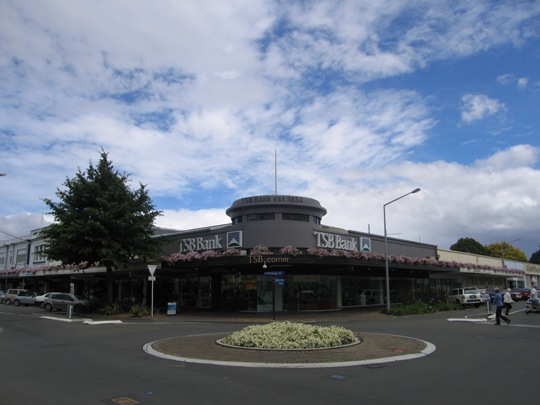
The former Roachs' Building is a single storey building with a large floor plate, on the corner of Heretaunga and King Streets. It is a dramatic building on this prominent site, because of the circular first floor room on the corner and the very long parapet that extends along both street elevations; this gives the building a spread out, horizontal form. Although the corner room is very prominent, it is not a tower, because it does not rise significantly above the level of the parapet; it does however build on the horizontals of the main composition because of its very narrow band of windows and strong circular banding of the roof parapet above. There is further horizontal emphasis in the glazing above the verandah, and in the verandah fascia that sweeps in a bold curve around the corner. The style is Moderne, the building being free of period details, and relying for its impact on strong horizontal, streamlined and curved shapes. The building is also unusual in having a concrete roof, at least over the front (Heretaunga Street) half of the building; the roof structure of the rear part is timber and steel trusses. The original drawings show most of the floor in use as 'drapery and showroom', with a grocery department occupying the eastern end of the Heretaunga Street elevation, and with a cluster of offices, stores, a dressmaking room and service spaces behind (see Appendix 5). The circular room above the corner of the building was accessed via a door from the roof; its purpose is not known. The building has seen a number of alterations over time; these include a redesign of the shop frontage, and a new roof over the front half of the building. Other visible external elements maintain a high degree of authenticity. UPDATE: (Based on site visit Imelda Bargas, March 2008) The interior of the building has been cleared of any original fixtures or fittings. At the time of the site visit the rear of the building was being reconfigured with a view to attracting new tenants.
The former Roachs' Building is a single storey building with a large floor plate, on the corner of Heretaunga and King Streets. It is a dramatic building on this prominent site, because of the circular first floor room on the corner and the very long parapet that extends along both street elevations; this gives the building a spread out, horizontal form. Although the corner room is very prominent, it is not a tower, because it does not rise significantly above the level of the parapet; it does however build on the horizontals of the main composition because of its very narrow band of windows and strong circular banding of the roof parapet above. There is further horizontal emphasis in the glazing above the verandah, and in the verandah fascia that sweeps in a bold curve around the corner. The style is Moderne, the building being free of period details, and relying for its impact on strong horizontal, streamlined and curved shapes. The building is also unusual in having a concrete roof, at least over the front (Heretaunga Street) half of the building; the roof structure of the rear part is timber and steel trusses. The original drawings show most of the floor in use as 'drapery and showroom', with a grocery department occupying the eastern end of the Heretaunga Street elevation, and with a cluster of offices, stores, a dressmaking room and service spaces behind (see Appendix 5). The circular room above the corner of the building was accessed via a door from the roof; its purpose is not known. The building has seen a number of alterations over time; these include a redesign of the shop frontage, and a new roof over the front half of the building. Other visible external elements maintain a high degree of authenticity. UPDATE: (Based on site visit Imelda Bargas, March 2008) The interior of the building has been cleared of any original fixtures or fittings. At the time of the site visit the rear of the building was being reconfigured with a view to attracting new tenants.
Historical and Associated Iwi / Hapū / Whānau
Completion Date
10th April 2008
Report Written By
Michael Kelly; Chris Cochran
Information Sources
Alexander Turnbull Library
Alexander Turnbull Library, Wellington
Boyd, 1984
Mary Boyd, City of the Plains, A History of Hastings, Wellington, 1984
Cyclopedia of New Zealand, 1908
Cyclopedia Company, Industrial, descriptive, historical, biographical facts, figures, illustrations, Wellington, N.Z, 1897-1908, Vol. 6, Taranaki, Hawke's Bay, Wellington, 1908
Dictionary of New Zealand Biography
Dictionary of New Zealand Biography
Fowler, 2007
Michael Fowler, From Disaster to Recovery: The Hastings CBD 1931-35, Havelock North: Michael Fowler Publishing, 2007.
Hastings District Council
Hastings District Council building files.
McGregor, 1998
Robert McGregor, The Hawke's Bay Earthquake, New Zealand's Greatest Natural Disaster, Art Deco Trust, Napier, 1998
New Zealand Historic Places Trust (NZHPT)
New Zealand Historic Places Trust
Wright, 1994
M Wright, Hawke's Bay: The History of a Province, Palmerston North: Dunmore Press, 1994
Wright, 2001 (3)
Matthew Wright, Town and Country: The History of Hastings and District, Hastings, 2001.
Other Information
A fully referenced Registration Report is available from the NZHPT Central Region office Please note that entry on the New Zealand Heritage List/Rarangi Korero identifies only the heritage values of the property concerned, and should not be construed as advice on the state of the property, or as a comment of its soundness or safety, including in regard to earthquake risk, safety in the event of fire, or insanitary conditions.
Historical and Associated Iwi / Hapū / Whānau
Completion Date
10th April 2008
Report Written By
Michael Kelly; Chris Cochran
Information Sources
Alexander Turnbull Library
Alexander Turnbull Library, Wellington
Boyd, 1984
Mary Boyd, City of the Plains, A History of Hastings, Wellington, 1984
Cyclopedia of New Zealand, 1908
Cyclopedia Company, Industrial, descriptive, historical, biographical facts, figures, illustrations, Wellington, N.Z, 1897-1908, Vol. 6, Taranaki, Hawke's Bay, Wellington, 1908
Dictionary of New Zealand Biography
Dictionary of New Zealand Biography
Fowler, 2007
Michael Fowler, From Disaster to Recovery: The Hastings CBD 1931-35, Havelock North: Michael Fowler Publishing, 2007.
Hastings District Council
Hastings District Council building files.
McGregor, 1998
Robert McGregor, The Hawke's Bay Earthquake, New Zealand's Greatest Natural Disaster, Art Deco Trust, Napier, 1998
New Zealand Historic Places Trust (NZHPT)
New Zealand Historic Places Trust
Wright, 1994
M Wright, Hawke's Bay: The History of a Province, Palmerston North: Dunmore Press, 1994
Wright, 2001 (3)
Matthew Wright, Town and Country: The History of Hastings and District, Hastings, 2001.
Other Information
A fully referenced Registration Report is available from the NZHPT Central Region office Please note that entry on the New Zealand Heritage List/Rarangi Korero identifies only the heritage values of the property concerned, and should not be construed as advice on the state of the property, or as a comment of its soundness or safety, including in regard to earthquake risk, safety in the event of fire, or insanitary conditions.
Current Usages
Uses: Trade
Specific Usage: Shopping/retail complex
Former Usages
General Usage: Civic Facilities
Specific Usage: Opera House
General Usage: Civic Facilities
Specific Usage: Theatre
General Usage: Trade
Specific Usage: Department Store
Current Usages
Uses: Trade
Specific Usage: Shopping/retail complex
Former Usages
General Usage: Civic Facilities
Specific Usage: Opera House
General Usage: Civic Facilities
Specific Usage: Theatre
General Usage: Trade
Specific Usage: Department Store
