

Napier Hill is known to local Maori as Mataruahou and is a place associated with healing. The outlook, height, sea and the wind are important to the healing process 'to uplift the spirit, the wairua of an ill person.'
During negotiations with the Crown over the purchase of the Ahuriri Block Maori were reluctant to include Mataruahou but it became part of the 1851 agreement. In 1855 a plan of the Town of Napier was submitted by Alfred Domett, Commissioner of Crown Lands in the Hawke's Bay. A number of reserves were set aside for public institutions, including a Hospital Reserve. Domett described the reserve as 'a small suburban section on the hills..the site is healthy and cheerful.' It was situated on Harvey Road, with Sealy Road being constructed at a later date.
The Province of Hawke's Bay was created in 1858 and a Provincial Council was elected in that year to oversee the needs of the Province including healthcare. The 65th Regiment stationed in Napier requested a military hospital and the Council provided the funds to rent a house in Emerson Street which catered for military and civilian patients. However, a purpose built hospital was required and the Provincial Government allocated £250 for its construction.
In 1859 tenders were called for the erection of a hospital on the allocated reserve in Napier. The tender was won by Thomas Shepherd for the sum of £299. Further tenders for the construction of a detached wash house and dead house, a water tank and fencing around the hospital were also awarded. By 3 December 1858 it was reported in the Hawke's Bay Herald that the hospital was 'beginning to 'loom large' on top of the hill'.
By the end of May 1860 the hospital was occupied, with a Mr and Mrs Bell as the first Matron and Master, and Dr Thomas Hitchings, the Provincial Surgeon the attending medical officer. Hitchings was an elected member of the first Hawke's Bay Provincial Council. He was appointed as the Provincial Surgeon, Native Surgeon and for a time, the Coroner for Hawke's Bay.
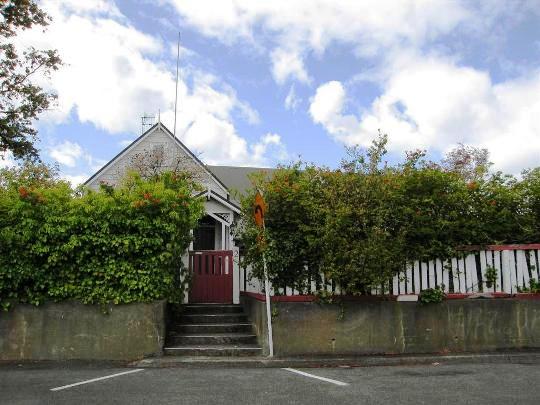
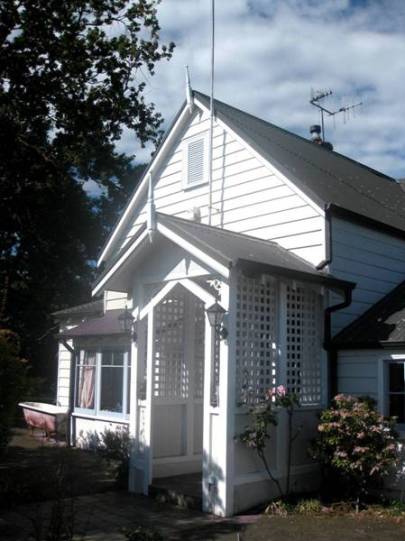
In Dr Hitchings' first report to the Napier Superintendent he described the hospital building as consisting of two wards, one male and one female, each with five beds. The building was one storey, constructed of wooden weather boards with a high stud that allowed for good ventilation. The building had a kitchen, a surgery and accommodation for the Master and Matron.
Hospital services were charged at two shilling a day but were free to those that were destitute and unable to pay. Financial constraints and disputes between the Napier Town Council and the Provincial Government over the levels of funding caused problems for the small hospital that was expected to cater to the health needs of a dispersed and expanding population.
The hospital was stretched to capacity to care for those wounded during the hostilities at Omarunui Pa in 1866. A force of militia, volunteers and friendly Maori commanded by Lieutenant-Colonel G.S. Whitmore engaged Hau Hau fighters who occupied the Pa, and up to twenty five Hau Hau were removed to the hospital and once recovered sent to gaol or shipped to the Chatham Islands. Military settlers and soldiers who fought in battles around Poverty Bay were also treated at the Provincial Hospital in 1868.
By 1875 the inability of the Provincial Hospital to accommodate the needs of its constituents, or the capability to deal with outbreaks of disease, were reported by Dr Hitchings. He discussed the need for more attendants and the use of canvas tents and the absorption of a pre-existing building to accommodate an influx of patients, many of them being sick new immigrants and seaman. The issues of overcrowding and the need for a larger hospital led to the Hospital Trustees offering a prize of £50 for the design of a new building to be erected on the old Barracks Reserve. The new hospital was opened 30 June 1880.
The Hospital Reserve was divided into five lots and offered on 35 year leases. The hospital and associated buildings located on Lot 1 Napier Hospital Reserve were sold to George Scarfe for £175. In 1935 it was noted that the building was constructed of heart-Kauri timber and had stood the test of time. The history of hospital use was evident during work on additions and the dismembering of partitions, where it was noted that the sawdust packing in the walls 'smelt very strongly of ether'. The building has had a number of modifications over the years, including additions and alterations to reflect its use as a private residence.
The building at 2 Sealy Road is historically significant as the first purpose built Hawke's Bay Provincial Hospital which served the community for twenty years before becoming a private residence. Sited on Napier Hill, it was recognised by both Maori and early European settlers as a place of healing and convalescing. An important public and charitable institution, hundreds of patients were treated there including those wounded at the battle of Omarunui Pa. The hospital is historically important for its association with the first Provincial Surgeon, Dr Thomas Hitchings, who was an advocate for health services and a community leader in Hawke's Bay.
List Entry Information
Status
Listed
List Entry Status
Historic Place Category 2
Access
Private/No Public Access
List Number
2797
Date Entered
7th April 1983
Date of Effect
7th April 1983
City/District Council
Napier City
Region
Hawke's Bay Region
Extent of List Entry
The physical extent of the registration includes the land described as Lot 1 DP 16159, Hawkes Bay Land District and the building known as the Hawke's Bay Provincial Hospital (Former) and its fittings and fixtures. (Refer to Extent of Registration Map in Appendix 1 of the Information Upgrade report for further information).
Legal description
Lot 1 DP 16159 (RT HBH4/732), Hawkes Bay Land District.
Status
Listed
List Entry Status
Historic Place Category 2
Access
Private/No Public Access
List Number
2797
Date Entered
7th April 1983
Date of Effect
7th April 1983
City/District Council
Napier City
Region
Hawke's Bay Region
Extent of List Entry
The physical extent of the registration includes the land described as Lot 1 DP 16159, Hawkes Bay Land District and the building known as the Hawke's Bay Provincial Hospital (Former) and its fittings and fixtures. (Refer to Extent of Registration Map in Appendix 1 of the Information Upgrade report for further information).
Legal description
Lot 1 DP 16159 (RT HBH4/732), Hawkes Bay Land District.
Construction Professional
Name
Shepherd, Thomas
Type
Architect
Biography
No biography is currently available for this construction professional
Construction Details
Start Year
1860
Type
Original Construction
Description
Construction of the Provincial Hospital
Start Year
1880
Type
Other
Description
Ceased to be a hospital and became a private residence.
Start Year
1932
Type
Modification
Description
Substantial alterations and additions.
Start Year
1962
Type
Modification
Description
Substantial alterations.
Construction Professional
Name
Shepherd, Thomas
Type
Architect
Biography
No biography is currently available for this construction professional
Construction Details
Start Year
1860
Type
Original Construction
Description
Construction of the Provincial Hospital
Start Year
1880
Type
Other
Description
Ceased to be a hospital and became a private residence.
Start Year
1932
Type
Modification
Description
Substantial alterations and additions.
Start Year
1962
Type
Modification
Description
Substantial alterations.
Historical and Associated Iwi / Hapū / Whānau
Completion Date
14th December 2009
Report Written By
Natasha Naus
Information Sources
Campbell, 1975
M. D. N. Campbell, Story of Napier, 1874-1974; Footprints Along the Shore
Conly, 1992
Geoff Conly, A case history: the Hawke's Bay Hospital Board 1876-1989, Hawke's Bay Area Health Board, Napier, 1992.
Wright, 1994
M Wright, Hawke's Bay: The History of a Province, Palmerston North: Dunmore Press, 1994
Other Information
This place was identified as significant under previous legislation with different information requirements. It remains significant under the current legislation. There is opportunity under our legislation and policies to add to this information. Further information about this place may be available from the Central Regional Office of Heritage New Zealand Pouhere Taonga. A fully referenced Registration Report is available from the NZHPT Central Region office Please note that entry on the New Zealand Heritage List/Rarangi Korero identifies only the heritage values of the property concerned, and should not be construed as advice on the state of the property, or as a comment of its soundness or safety, including in regard to earthquake risk, safety in the event of fire, or insanitary conditions.
Historical and Associated Iwi / Hapū / Whānau
Completion Date
14th December 2009
Report Written By
Natasha Naus
Information Sources
Campbell, 1975
M. D. N. Campbell, Story of Napier, 1874-1974; Footprints Along the Shore
Conly, 1992
Geoff Conly, A case history: the Hawke's Bay Hospital Board 1876-1989, Hawke's Bay Area Health Board, Napier, 1992.
Wright, 1994
M Wright, Hawke's Bay: The History of a Province, Palmerston North: Dunmore Press, 1994
Other Information
This place was identified as significant under previous legislation with different information requirements. It remains significant under the current legislation. There is opportunity under our legislation and policies to add to this information. Further information about this place may be available from the Central Regional Office of Heritage New Zealand Pouhere Taonga. A fully referenced Registration Report is available from the NZHPT Central Region office Please note that entry on the New Zealand Heritage List/Rarangi Korero identifies only the heritage values of the property concerned, and should not be construed as advice on the state of the property, or as a comment of its soundness or safety, including in regard to earthquake risk, safety in the event of fire, or insanitary conditions.
Current Usages
Uses: Accommodation
Specific Usage: House
Former Usages
General Usage: Health
Specific Usage: Hospital
General Usage: Health
Specific Usage: Morgue/mortuary/dead house
Current Usages
Uses: Accommodation
Specific Usage: House
Former Usages
General Usage: Health
Specific Usage: Hospital
General Usage: Health
Specific Usage: Morgue/mortuary/dead house
Location
Stay up to date with Heritage this month
