DonateSupporterVisit Heritage
  • Tūrangawaewae
    Places
  • Tira Māori
    Māori Heritage
  • Poutairangahia
    Archaeology
  • Rauemi
    Resources
  • Mō Tātou
    About Us
  • New Zealand Heritage List
  • Nominate and submit
  • Explore the List
  • National Historic Landmarks
  • Plaques
  • Rainbow List Project
  • Lost heritage
  • Visit Heritage
  • Our properties
  • Turnbull House Project
  • Collections
  • Shop
  • Tohu Whenua
  • Tira Māori
  • Conserving Māori heritage
  • Marae built heritage
  • Māori heritage on the List
  • Hinemihi—Te Hokinga Mai
  • What is archaeology?
  • Is there a site on my property?
  • What are my legal requirements?
  • Affecting an archaeological site
  • Declaring an archaeological site
  • Archaeology FAQs
  • Archaeology Digital Library
  • Archaeology guidelines and templates
  • Resources
  • Funding
  • Publications
  • Sustainable management guides
  • Disaster recovery
  • Podcasts & digital resources
  • Education Hub
  • Conservation plans
  • About
  • Board
  • Māori Heritage Council
  • Senior Staff
  • Offices
  • Contact us
  • Careers
  • Covenants
  • Fast-track
  • Corporate documents
  • Currently consulting on
  • Our submissions
  • News
  • Covid-19 response
Quick links
Rārangi Kōrero | The List
Explore the List
National Historic Landmarks
Ngā Manawhenua o Aotearoa me ōna Kōrero Tūturu
Quick links
Tapuwae
A Vision for Places of Māori Heritage
Funding for Māori Heritage
Resources
Quick links
Archaeological Authority Portal
Applying for an archaeological authority
Archaeology FAQs
Browse the most frequently asked questions about archaeological authorities and the archaeological process.
Quick links
Quick links
Contact us
Offices
DonateSupporterVisit Heritage
  • Tūrangawaewae
    Places
  • Tira Māori
    Māori Heritage
  • Poutairangahia
    Archaeology
  • Rauemi
    Resources
  • Mō Tātou
    About Us
  • New Zealand Heritage List
  • Nominate and submit
  • Explore the List
  • National Historic Landmarks
  • Plaques
  • Rainbow List Project
  • Lost heritage
  • Visit Heritage
  • Our properties
  • Turnbull House Project
  • Collections
  • Shop
  • Tohu Whenua
  • Tira Māori
  • Conserving Māori heritage
  • Marae built heritage
  • Māori heritage on the List
  • Hinemihi—Te Hokinga Mai
  • What is archaeology?
  • Is there a site on my property?
  • What are my legal requirements?
  • Affecting an archaeological site
  • Declaring an archaeological site
  • Archaeology FAQs
  • Archaeology Digital Library
  • Archaeology guidelines and templates
  • Resources
  • Funding
  • Publications
  • Sustainable management guides
  • Disaster recovery
  • Podcasts & digital resources
  • Education Hub
  • Conservation plans
  • About
  • Board
  • Māori Heritage Council
  • Senior Staff
  • Offices
  • Contact us
  • Careers
  • Covenants
  • Fast-track
  • Corporate documents
  • Currently consulting on
  • Our submissions
  • News
  • Covid-19 response
Quick links
Rārangi Kōrero | The List
Explore the List
National Historic Landmarks
Ngā Manawhenua o Aotearoa me ōna Kōrero Tūturu
Quick links
Tapuwae
A Vision for Places of Māori Heritage
Funding for Māori Heritage
Resources
Quick links
Archaeological Authority Portal
Applying for an archaeological authority
Archaeology FAQs
Browse the most frequently asked questions about archaeological authorities and the archaeological process.
Quick links
Quick links
Contact us
Offices
  • Places
  • Nominate and submit
  • National Historic Landmarks
  • Places
  • Nominate and submit
  • National Historic Landmarks
  • Tira Māori
  • Conserving Māori heritage
  • Marae built heritage
  • Tira Māori
  • Conserving Māori heritage
  • Marae built heritage
  • Archaeological authorities
  • Archaeology Digital Library
  • Archaeological authorities
  • Archaeology Digital Library
  • All resources
  • Publications
  • Funding
  • All resources
  • Publications
  • Funding
  • FAQs
  • FAQs
Follow us on:
Places
  • Places
  • Nominate and submit
  • National Historic Landmarks
Tira Māori
  • Tira Māori
  • Conserving Māori heritage
  • Marae built heritage
Archaeology
  • Archaeological authorities
  • Archaeology Digital Library
Resources
  • All resources
  • Publications
  • Funding
FAQs
  • FAQs
Follow us on
HomePrivacyTerms and conditionsAbout this site
© Heritage New Zealand Pouhere Taonga 2026.
 
St Michael and All Angels Belfry (Anglican)

86 Oxford Terrace, CHRISTCHURCH

Private

Historic Place Category 1

List No. 295

Quick links:
List GalleryLocationDetails
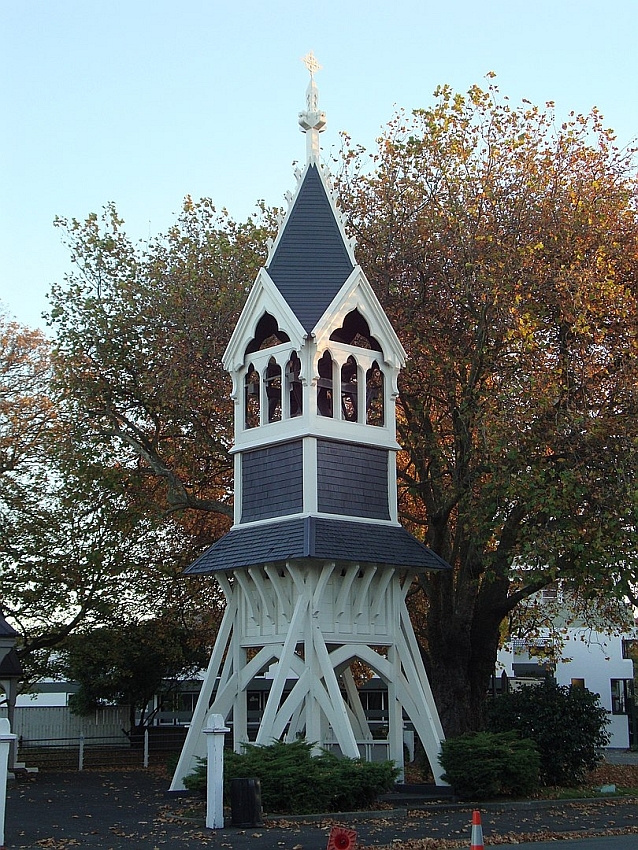
St Michael and All Angels Belfry (Anglican), Christchurch | Bernard Spragg. NZ | 06/09/2014 | Public Domain
St Michael and All Angels Belfry (Anglican), Christchurch | James Eunson | 13/06/2024 | Heritage New Zealand Pouhere Taonga
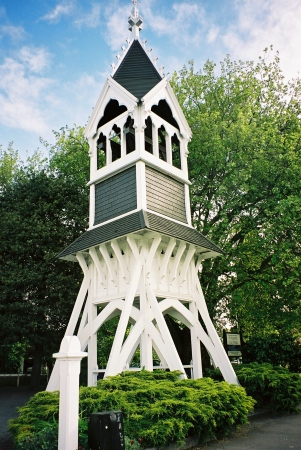
St Michael and All Angels Belfry (Anglican), Christchurch. CC BY-SA 3.0 | Schwede66 | 30/04/2011 | Schwede66 - Wikimedia Commons
St Michael and All Angels Belfry (Anglican), Christchurch | Bernard Spragg. NZ | 06/09/2014 | Public Domain
St Michael and All Angels Belfry (Anglican), Christchurch | James Eunson | 13/06/2024 | Heritage New Zealand Pouhere Taonga
St Michael and All Angels Belfry (Anglican), Christchurch. CC BY-SA 3.0 | Schwede66 | 30/04/2011 | Schwede66 - Wikimedia Commons

List Entry Information

Overview

Status
Listed

List Entry Status
Historic Place Category 1

Access
Private/No Public Access

List Number
295

Date Entered
2nd April 1985

Date of Effect
2nd April 1985

City/District Council
Christchurch City

Region
Canterbury Region

Extent of List Entry

Extent includes part of the land described as Res 7 (RT CB47C/1021), Canterbury Land District and the structure known as St Michael and All Angels Church Belfry (Anglican), thereon.

Legal description

Res 7 (RT CB373/217), Canterbury Land District

Detailed List Entry
Significance

Historic Significance

Historical Significance or Value The Belfry has important historic values as it was built in 1861 alongside the first Church of St. Michael and All Angels, the first church to be built in Christchurch. At that time it provided a notable landmark within the flat environs of the evolving city and it remains a prominent streetscape feature. The bell the structure houses was brought to the province in 1850 with the first group of the Canterbury Association's settlers and represents the Association's plans for the province to develop as an Anglican community.

Physical Significance

Designed by Canterbury's Provincial architect B.W. Mountfort, the belfry illustrates his skills in the Gothic revival style and has considerable architectural value. Its elaborate form and detailing harmonises well with the present church, completed in 1872.

Detail Of Assessed Criteria

The belfry can be assigned Category One status because it has outstanding historic associations with the first years of Canterbury's settlement and it represents the founding fathers' goals for the province to develop as an Anglican community. It is an important example of colonial design by a notable architect, it is part of a group of historic buildings and it is a landmark feature highly regarded by the people of Christchurch.

Construction Professional

Name

Mountfort, Benjamin Woolfield

Type

Architect

Biography

Benjamin Woolfield Mountfort (1825-98) trained as an architect in England, in the office of Richard Cromwell Carpenter, a member of the Cambridge Camden Society (later the Ecclesiological Society). He arrived in Canterbury in 1850. Mountfort was New Zealand's pre-eminent Gothic Revival architect and, according to architectural historian Ian Lochhead, 'did most to shape the architectural character of nineteenth-century Christchurch.' The buildings he designed were almost exclusively in the Gothic Revival style. During his career he designed many churches and additions to churches; those still standing include the Trinity Congregational Church in Christchurch (1874), St Mary's Church in Parnell, Auckland and the Church of the Good Shepherd in Phillipstown, Christchurch (1884). In 1857 he became the first architect to the province of Canterbury. He designed the Canterbury Provincial Council Buildings in three stages from 1858 to 1865. The stone chamber of this building can be considered the greatest accomplishment of his career. He was involved in many important commissions from the 1870s, including the Canterbury Museum (1869-82) and the Clock-tower Block on the Canterbury College campus (1876-77). He was also involved in the construction of Christchurch's Cathedral and made several major modifications to the original design. Mountfort introduced a number of High Victorian elements to New Zealand architecture, such as the use of constructional polychromy, probably first used in New Zealand in the stone tower of the Canterbury Provincial Government Buildings (1859). Overall, his oeuvre reveals a consistent and virtually unerring application of Puginian principles including a commitment to the Gothic style, honest use of materials and picturesque utility. The result was the construction of inventive and impressive buildings of outstanding quality. He died in Christchurch in 1898. A belfry at the Church of the Good Shepherd in Phillipstown, the church he attended for the last ten years of his life, was erected in his honour.

Construction Details

Start Year

1976

Type

Relocation

Description

1976 Relocated to current position due to road widening.

Start Year

1861

Type

Original Construction

Construction Materials

Timber, shingle roof

Reference

Completion Date

10th December 2001

Report Written By

Melanie Lovell-Smith

Information Sources

Lochhead, 1999

Ian Lochhead, A Dream of Spires: Benjamin Mountfort and the Gothic Revival, Christchurch, 1999

New Zealand Historic Places Trust (NZHPT)

New Zealand Historic Places Trust

Peters, 2008

M Peters with J. Mané, Christchurch-St. Michael's: a study in Anglicanism in New Zealand. Christchurch: Canterbury University Press, 1986

Report Written By

A fully referenced version of this report is available from the NZHPT Southern Region Office. Please note that entry on the New Zealand Heritage List/Rarangi Korero identifies only the heritage values of the property concerned, and should not be construed as advice on the state of the property, or as a comment of its soundness or safety, including in regard to earthquake risk, safety in the event of fire, or insanitary conditions.

Further Information

Current Usages

Uses: Religion

Specific Usage: Belfry/Bell tower

Former Usages

General Usage:: Religion

Specific Usage: Belfry/Bell tower

Themes

Web Links

description:

url: http://www.churchandschool.org/

Overview

Status

Listed

List Entry Status

Historic Place Category 1

Access

Private/No Public Access

List Number

295

Date Entered

2nd April 1985

Date of Effect

2nd April 1985

City/District Council

Christchurch City

Region

Canterbury Region

Extent of List Entry

Extent includes part of the land described as Res 7 (RT CB47C/1021), Canterbury Land District and the structure known as St Michael and All Angels Church Belfry (Anglican), thereon.

Legal description

Res 7 (RT CB373/217), Canterbury Land District

Status

Listed

List Entry Status

Historic Place Category 1

Access

Private/No Public Access

List Number

295

Date Entered

2nd April 1985

Date of Effect

2nd April 1985

City/District Council

Christchurch City

Region

Canterbury Region

Extent of List Entry

Extent includes part of the land described as Res 7 (RT CB47C/1021), Canterbury Land District and the structure known as St Michael and All Angels Church Belfry (Anglican), thereon.

Legal description

Res 7 (RT CB373/217), Canterbury Land District

Significance

Why is this place significant?

Historic Significance

Historical Significance or Value The Belfry has important historic values as it was built in 1861 alongside the first Church of St. Michael and All Angels, the first church to be built in Christchurch. At that time it provided a notable landmark within the flat environs of the evolving city and it remains a prominent streetscape feature. The bell the structure houses was brought to the province in 1850 with the first group of the Canterbury Association's settlers and represents the Association's plans for the province to develop as an Anglican community.

Physical Significance

Designed by Canterbury's Provincial architect B.W. Mountfort, the belfry illustrates his skills in the Gothic revival style and has considerable architectural value. Its elaborate form and detailing harmonises well with the present church, completed in 1872.

Why is this place Category 1 / Category 2?

Detail Of Assessed Criteria

The belfry can be assigned Category One status because it has outstanding historic associations with the first years of Canterbury's settlement and it represents the founding fathers' goals for the province to develop as an Anglican community. It is an important example of colonial design by a notable architect, it is part of a group of historic buildings and it is a landmark feature highly regarded by the people of Christchurch.

Why is this place significant?

Historic Significance

Historical Significance or Value The Belfry has important historic values as it was built in 1861 alongside the first Church of St. Michael and All Angels, the first church to be built in Christchurch. At that time it provided a notable landmark within the flat environs of the evolving city and it remains a prominent streetscape feature. The bell the structure houses was brought to the province in 1850 with the first group of the Canterbury Association's settlers and represents the Association's plans for the province to develop as an Anglican community.

Physical Significance

Designed by Canterbury's Provincial architect B.W. Mountfort, the belfry illustrates his skills in the Gothic revival style and has considerable architectural value. Its elaborate form and detailing harmonises well with the present church, completed in 1872.

Why is this place Category 1 / Category 2?

Detail Of Assessed Criteria

The belfry can be assigned Category One status because it has outstanding historic associations with the first years of Canterbury's settlement and it represents the founding fathers' goals for the province to develop as an Anglican community. It is an important example of colonial design by a notable architect, it is part of a group of historic buildings and it is a landmark feature highly regarded by the people of Christchurch.

Construction Information

Construction Professional

Name

Mountfort, Benjamin Woolfield

Type

Architect

Biography

Benjamin Woolfield Mountfort (1825-98) trained as an architect in England, in the office of Richard Cromwell Carpenter, a member of the Cambridge Camden Society (later the Ecclesiological Society). He arrived in Canterbury in 1850. Mountfort was New Zealand's pre-eminent Gothic Revival architect and, according to architectural historian Ian Lochhead, 'did most to shape the architectural character of nineteenth-century Christchurch.' The buildings he designed were almost exclusively in the Gothic Revival style. During his career he designed many churches and additions to churches; those still standing include the Trinity Congregational Church in Christchurch (1874), St Mary's Church in Parnell, Auckland and the Church of the Good Shepherd in Phillipstown, Christchurch (1884). In 1857 he became the first architect to the province of Canterbury. He designed the Canterbury Provincial Council Buildings in three stages from 1858 to 1865. The stone chamber of this building can be considered the greatest accomplishment of his career. He was involved in many important commissions from the 1870s, including the Canterbury Museum (1869-82) and the Clock-tower Block on the Canterbury College campus (1876-77). He was also involved in the construction of Christchurch's Cathedral and made several major modifications to the original design. Mountfort introduced a number of High Victorian elements to New Zealand architecture, such as the use of constructional polychromy, probably first used in New Zealand in the stone tower of the Canterbury Provincial Government Buildings (1859). Overall, his oeuvre reveals a consistent and virtually unerring application of Puginian principles including a commitment to the Gothic style, honest use of materials and picturesque utility. The result was the construction of inventive and impressive buildings of outstanding quality. He died in Christchurch in 1898. A belfry at the Church of the Good Shepherd in Phillipstown, the church he attended for the last ten years of his life, was erected in his honour.

Construction Details

Start Year

1976

Type

Relocation

Description

1976 Relocated to current position due to road widening.

Start Year

1861

Type

Original Construction

Construction Materials

Timber, shingle roof

Construction Professional

Name

Mountfort, Benjamin Woolfield

Type

Architect

Biography

Benjamin Woolfield Mountfort (1825-98) trained as an architect in England, in the office of Richard Cromwell Carpenter, a member of the Cambridge Camden Society (later the Ecclesiological Society). He arrived in Canterbury in 1850. Mountfort was New Zealand's pre-eminent Gothic Revival architect and, according to architectural historian Ian Lochhead, 'did most to shape the architectural character of nineteenth-century Christchurch.' The buildings he designed were almost exclusively in the Gothic Revival style. During his career he designed many churches and additions to churches; those still standing include the Trinity Congregational Church in Christchurch (1874), St Mary's Church in Parnell, Auckland and the Church of the Good Shepherd in Phillipstown, Christchurch (1884). In 1857 he became the first architect to the province of Canterbury. He designed the Canterbury Provincial Council Buildings in three stages from 1858 to 1865. The stone chamber of this building can be considered the greatest accomplishment of his career. He was involved in many important commissions from the 1870s, including the Canterbury Museum (1869-82) and the Clock-tower Block on the Canterbury College campus (1876-77). He was also involved in the construction of Christchurch's Cathedral and made several major modifications to the original design. Mountfort introduced a number of High Victorian elements to New Zealand architecture, such as the use of constructional polychromy, probably first used in New Zealand in the stone tower of the Canterbury Provincial Government Buildings (1859). Overall, his oeuvre reveals a consistent and virtually unerring application of Puginian principles including a commitment to the Gothic style, honest use of materials and picturesque utility. The result was the construction of inventive and impressive buildings of outstanding quality. He died in Christchurch in 1898. A belfry at the Church of the Good Shepherd in Phillipstown, the church he attended for the last ten years of his life, was erected in his honour.

Construction Details

Start Year

1976

Type

Relocation

Description

1976 Relocated to current position due to road widening.

Start Year

1861

Type

Original Construction

Construction Materials

Timber, shingle roof

Reference

Historical and Associated Iwi / Hapū / Whānau

Completion Date

10th December 2001

Report Written By

Melanie Lovell-Smith

Information Sources

Lochhead, 1999

Ian Lochhead, A Dream of Spires: Benjamin Mountfort and the Gothic Revival, Christchurch, 1999

New Zealand Historic Places Trust (NZHPT)

New Zealand Historic Places Trust

Peters, 2008

M Peters with J. Mané, Christchurch-St. Michael's: a study in Anglicanism in New Zealand. Christchurch: Canterbury University Press, 1986

Other Information

A fully referenced version of this report is available from the NZHPT Southern Region Office. Please note that entry on the New Zealand Heritage List/Rarangi Korero identifies only the heritage values of the property concerned, and should not be construed as advice on the state of the property, or as a comment of its soundness or safety, including in regard to earthquake risk, safety in the event of fire, or insanitary conditions.

Historical and Associated Iwi / Hapū / Whānau

Completion Date

10th December 2001

Report Written By

Melanie Lovell-Smith

Information Sources

Lochhead, 1999

Ian Lochhead, A Dream of Spires: Benjamin Mountfort and the Gothic Revival, Christchurch, 1999

New Zealand Historic Places Trust (NZHPT)

New Zealand Historic Places Trust

Peters, 2008

M Peters with J. Mané, Christchurch-St. Michael's: a study in Anglicanism in New Zealand. Christchurch: Canterbury University Press, 1986

Other Information

A fully referenced version of this report is available from the NZHPT Southern Region Office. Please note that entry on the New Zealand Heritage List/Rarangi Korero identifies only the heritage values of the property concerned, and should not be construed as advice on the state of the property, or as a comment of its soundness or safety, including in regard to earthquake risk, safety in the event of fire, or insanitary conditions.

Further Information

Current Usages

Uses: Religion

Specific Usage: Belfry/Bell tower

Former Usages

General Usage: Religion

Specific Usage: Belfry/Bell tower

Web Links

description:
url: http://www.churchandschool.org/

Current Usages

Uses: Religion

Specific Usage: Belfry/Bell tower

Former Usages

General Usage: Religion

Specific Usage: Belfry/Bell tower

Web Links

description:
url: http://www.churchandschool.org/

Location

Loading
Related listings
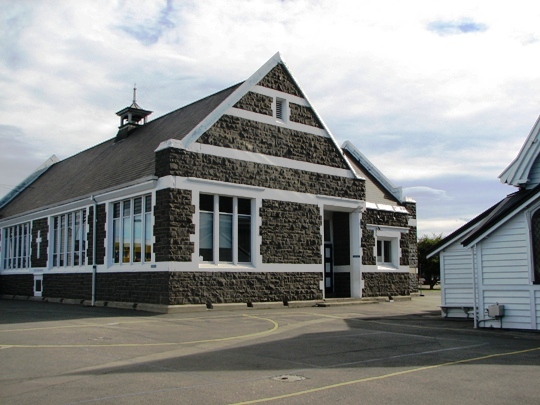
St Michael & All Angels (Stone School Building)
St Michael and All Angels (Stone School Building)
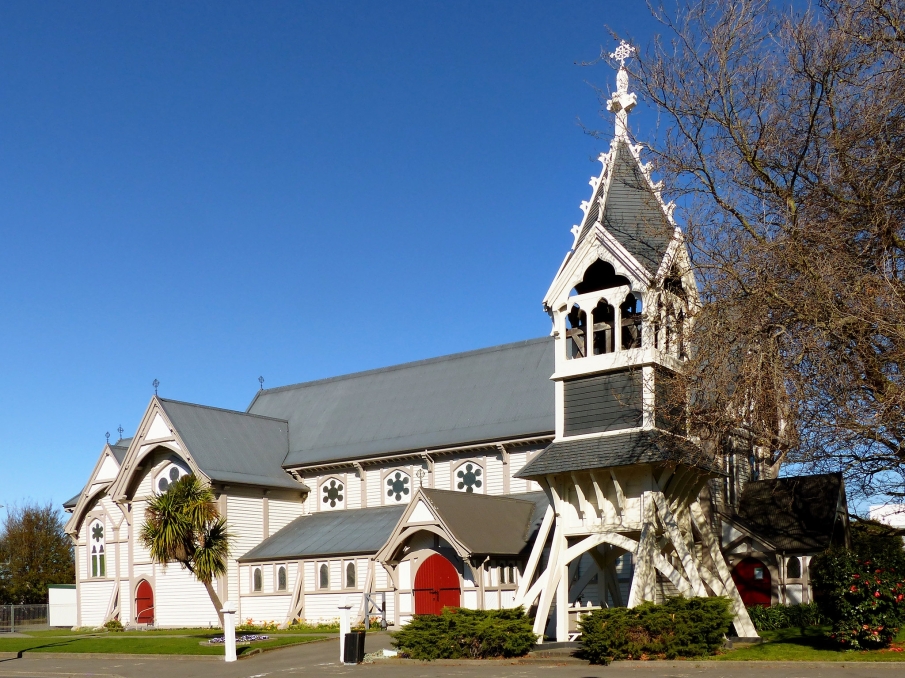
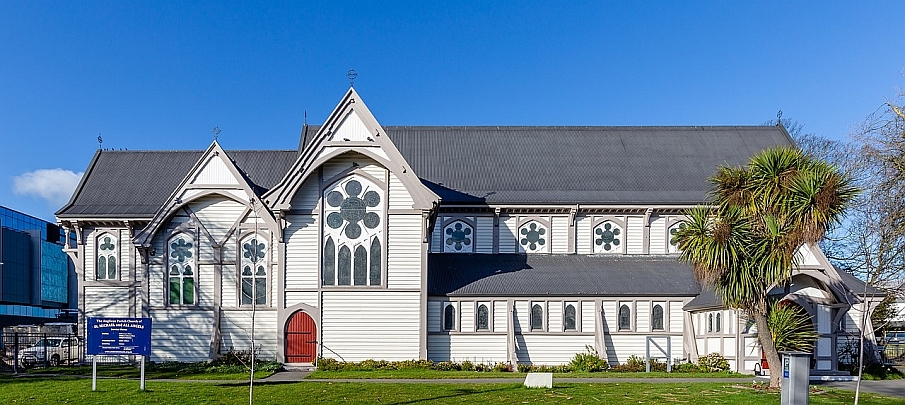
Church of St Michael and All Angels (Anglican), Christchurch. CC BY-SA 4.0 Image courtesy of commons.wikimedia.org
Church of St Michael and All Angels (Anglican)
Church of St Michael and All Angels (Anglican), Christchurch. CC BY-SA 4.0 Image courtesy of commons.wikimedia.org
Church of St Michael and All Angels (Anglican)
St Michael & All Angels (Stone School Building)
St Michael and All Angels (Stone School Building)
Sign up to hear more

Get the latest heritage news, features and events delivered
straight to your inbox.

Subscribe
