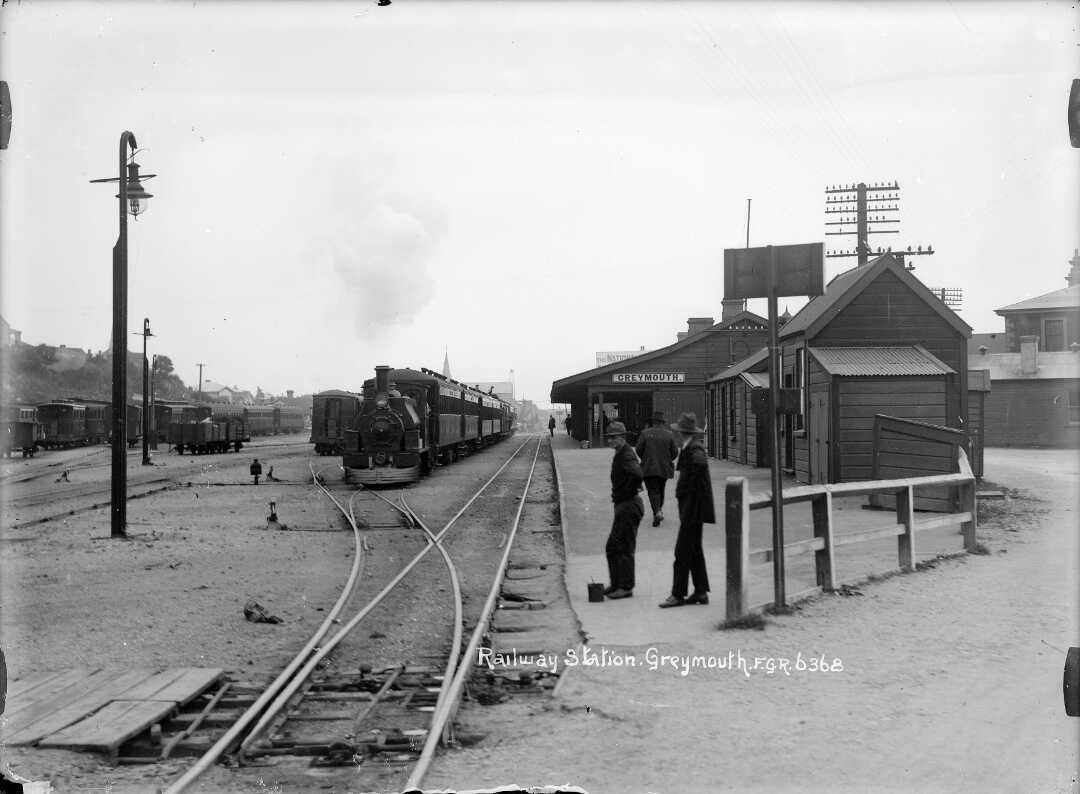
The Greymouth Railway Station dates from 1895 and was built to cope with the increase in traffic brought about by the opening of the Greymouth-Hokitika line in 1893. While a railway station had existed at Greymouth from 1876, it had only serviced the railway line that ran from the port at Greymouth to the Brunner coal mine. The line between Greymouth and Hokitika had begun in 1889 but difficulties with funding meant that little progress was made. However, in 1891 the government accepted that it was now a matter of urgency to finish the line, as recent dry weather had meant ships were unable to land at Hokitika. Without a railway there was no easy way of transporting food or goods from Greymouth to Hokitika. The line was officially opened in December 1893 and construction of the station buildings started the following year.
At Greymouth the station buildings were to consist of a second-class passenger-station, platform and a goods-shed 100ft. x 40ft (30.5m x 12m). The term 'second-class passenger-station' refers to one of the standard designs that formed the basis of most of the railway stations erected during the late nineteenth century expansion of New Zealand's railways. This expansion of the railway network began as part of Sir Julius Vogel's (1835-1899) immigration and public works scheme. Standard designs were an easy way of coping with the numbers of buildings that needed to be erected in a relatively short space of time. These early standard designs ranged from large stations with gabled roofs to very simple single room lean-tos.Greymouth Railway Station is one of the few second-class stations ever erected.
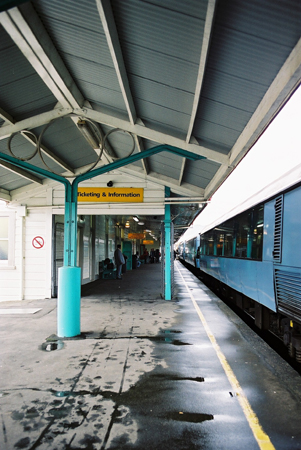
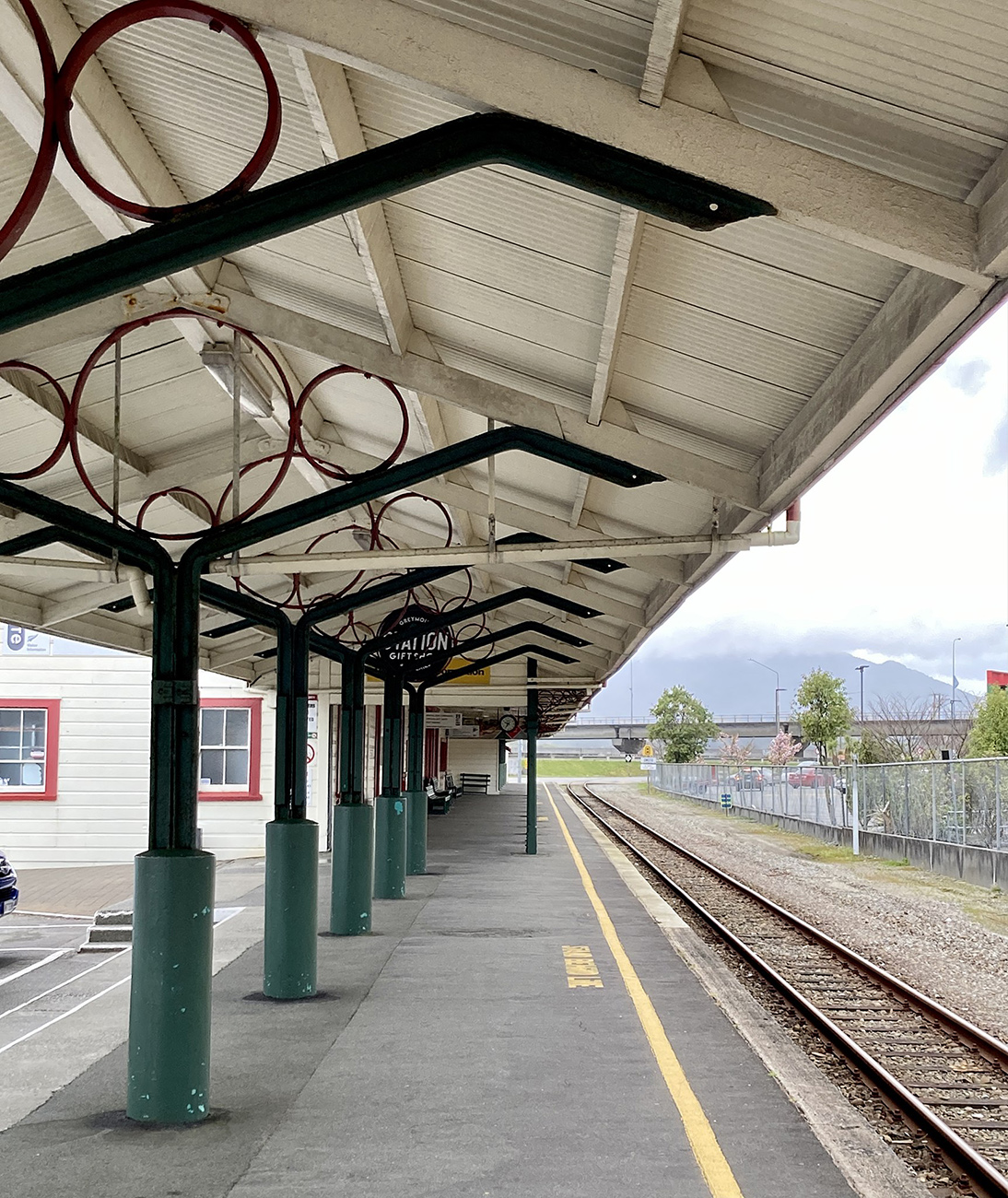
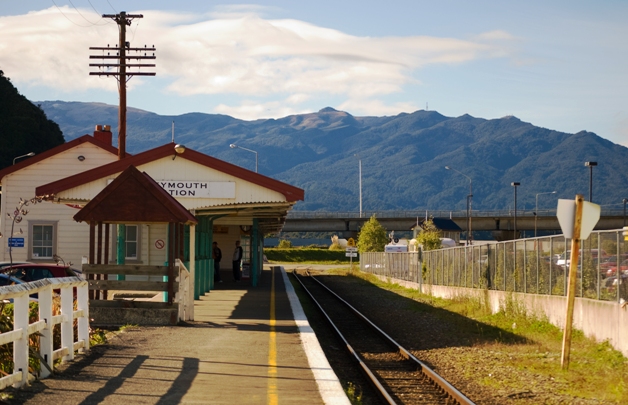
The main station building is a long, rectangular wooden structure and backs onto Mackay Street. A verandah runs the length of the building on the platform side, and a free-standing shelter extends on either side of the building. The station building is one room deep and housed, from west to east, foreman's office, storeroom, porters' room, parcel and freight inspector's offices, a parcel store, booking office, ticket lobby, waiting room, bookstall and women's toilets. All of the rooms were entered from the platform side with the exception of the ticket office, which could also be accessed from Mackay Street. Now the station building houses a rental car agency and an information centre.
A collection of outbuildings once stood at the east end of the railway station, which housed the men's toilets, lamp room, coal shed and footwarmer store. These were demolished as part of a refurbishment during the late 1990s. The station is also associated with the adjacent footbridge, which was constructed as part of the re-arrangement of the railway yard in the late 1920s. The footbridge is also registered by the New Zealand Historic Places Trust/Pouhere Taonga, but has, unfortunately, recently been dismantled.
The Greymouth Railway Station was a pivotal part of the West Coast railway system; a railway system that was essential for the exploitation of the West Coast resources such as coal and timber. The station has been the district headquarters of the railways on the West Coast and a busy passenger station for nearly 100 years. Although both passenger and freight business declined during the 1970s the success of the TranzAlpine train journey between Christchurch and Greymouth has revived the station to some extent in recent years. The station building itself is one of the few examples of second-class passenger stations built in New Zealand and is an important feature of the Greymouth townscape.