

In 1873 a complex was opened at Burnham, which was initially intended to provide accommodation for children from the Canterbury Orphanage and Reformatory. Instead it was used to house both abandoned and delinquent children and became known as the Burnham Industrial School. Industrial schools could be established by the Provincial Governments under the 1867 Neglected and Criminal Children Act. Under this Act children could be committed until they were 21 years old, and the schools were meant to provide them with a combination of education and vocational training, with the ultimate aim of converting delinquent or neglected children into hard working citizens.
Burnham developed a fearsome reputation for discipline and hardship. In the mornings all the children attended school, while in the afternoon the boys laboured on the surrounding six-acre block and the girls were taught sewing and housework.
From 1900 Burnham only housed those boys convicted of a criminal offence or who were seen as delinquent. Neglected children were transferred to Dunedin or Auckland, and in 1901 the delinquent girls were transferred to Te Oranga School at Burwood, a suburb of Christchurch.
Policies about the treatment of young offenders changed in the 1910s. John Beck, the head of the Special School Section of the Department of Education, believed that children should be provided with as near to a normal home life as possible, and preferred to either foster children or find them service positions. As a consequence, Burnham was emptied of its residents and closed in 1918.
Since that time the former school buildings and grounds have been used by the New Zealand Army as a base for the annual Territorial camps and for various short courses. In 1920, after much debate, the Burnham buildings and grounds were transferred from the Department of Education to the Department of Defence. The formal transfer ceremony took place at Burnham on 31 May 1921 and the land was officially made a military and defence reserve in 1923. It is now known as the Burnham Military Camp.
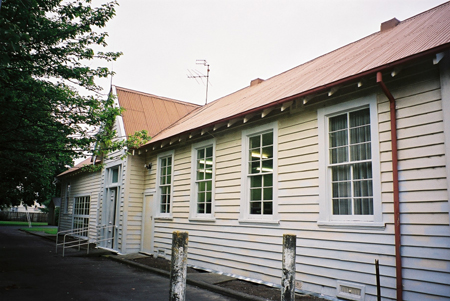
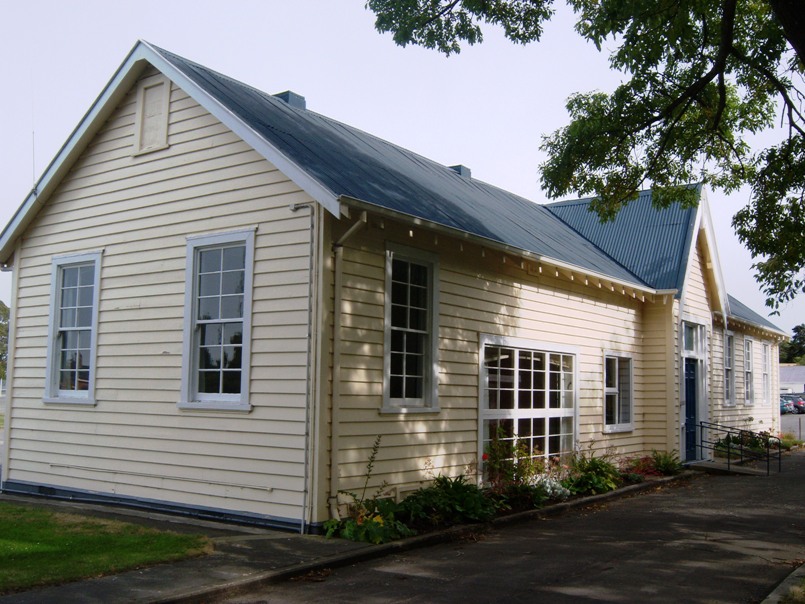
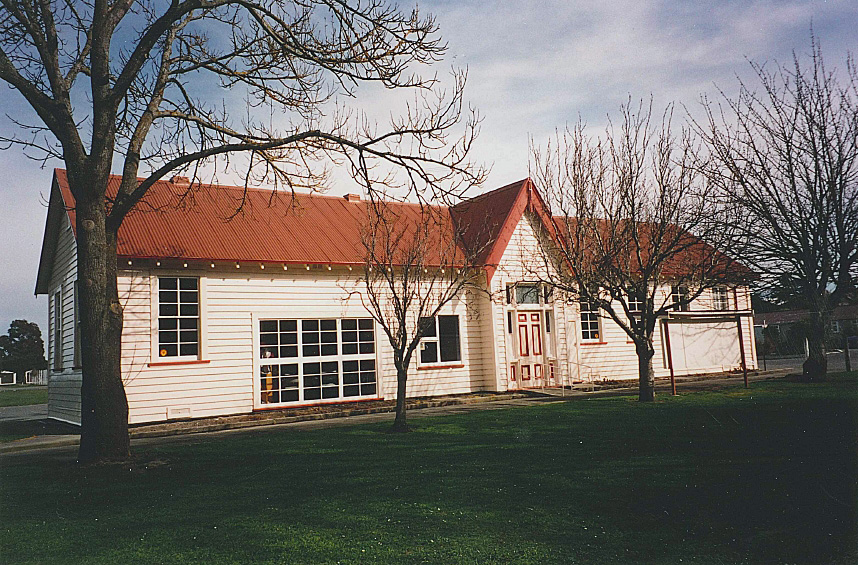
The former classroom block was used as the officers' mess for some time. In 1949, after some renovations, it became the Camp Post Office, replacing a smaller post office of 1939. Originally established to service the camp, from 1967 the Post Office also served the local community. When changes to the New Zealand postal system were made at the end of the 1980s the Camp Post Office was closed and around 1990 the building became the camp's police station.
The Burnham Camp Post Office building is historically significant as a remnant of the Burnham Industrial School and as a local Post Office for over forty years.
List Entry Information
Status
Listed
List Entry Status
Historic Place Category 2
Access
Private/No Public Access
List Number
3063
Date Entered
23rd June 1983
Date of Effect
23rd June 1983
City/District Council
Selwyn District
Region
Canterbury Region
Legal description
Pt RES 1160 (RT CB424/184), Canterbury Land District
Status
Listed
List Entry Status
Historic Place Category 2
Access
Private/No Public Access
List Number
3063
Date Entered
23rd June 1983
Date of Effect
23rd June 1983
City/District Council
Selwyn District
Region
Canterbury Region
Legal description
Pt RES 1160 (RT CB424/184), Canterbury Land District
Construction Details
Start Year
1871
startYearCirca
Type
Designed
Start Year
1949
Type
Modification
Construction Details
Start Year
1871
startYearCirca
Type
Designed
Start Year
1949
Type
Modification
Historical and Associated Iwi / Hapū / Whānau
Completion Date
29th August 2001
Report Written By
Melanie Lovell-Smith
Information Sources
Buchanan, 1967
Robert George Buchanan, Post and Telephone Offices in Canterbury : historical notes, Christchurch, [1967-1974]
Dalley, 1998
Bronwyn Dalley, Family matters : child welfare in twentieth-century New Zealand, Auckland, 1998
Other Information
This place was identified as significant under previous legislation with different information requirements. It remains significant under the current legislation. There is opportunity under our legislation and policies to add to this information. Further information about this place may be available from the Southern Regional Office of Heritage New Zealand Pouhere Taonga. Please note that entry on the New Zealand Heritage List/Rarangi Korero identifies only the heritage values of the property concerned, and should not be construed as advice on the state of the property, or as a comment of its soundness or safety, including in regard to earthquake risk, safety in the event of fire, or insanitary conditions.
Historical and Associated Iwi / Hapū / Whānau
Completion Date
29th August 2001
Report Written By
Melanie Lovell-Smith
Information Sources
Buchanan, 1967
Robert George Buchanan, Post and Telephone Offices in Canterbury : historical notes, Christchurch, [1967-1974]
Dalley, 1998
Bronwyn Dalley, Family matters : child welfare in twentieth-century New Zealand, Auckland, 1998
Other Information
This place was identified as significant under previous legislation with different information requirements. It remains significant under the current legislation. There is opportunity under our legislation and policies to add to this information. Further information about this place may be available from the Southern Regional Office of Heritage New Zealand Pouhere Taonga. Please note that entry on the New Zealand Heritage List/Rarangi Korero identifies only the heritage values of the property concerned, and should not be construed as advice on the state of the property, or as a comment of its soundness or safety, including in regard to earthquake risk, safety in the event of fire, or insanitary conditions.
Current Usages
Uses: Defence
Specific Usage: Defence - other
Uses: Law Enforcement
Specific Usage: Police station
Former Usages
General Usage: Communication
Specific Usage: Post Office
General Usage: Education
Specific Usage: School
Current Usages
Uses: Defence
Specific Usage: Defence - other
Uses: Law Enforcement
Specific Usage: Police station
Former Usages
General Usage: Communication
Specific Usage: Post Office
General Usage: Education
Specific Usage: School
Location
Sign up to hear more
Get the latest heritage news, features and events delivered
straight to your inbox.
