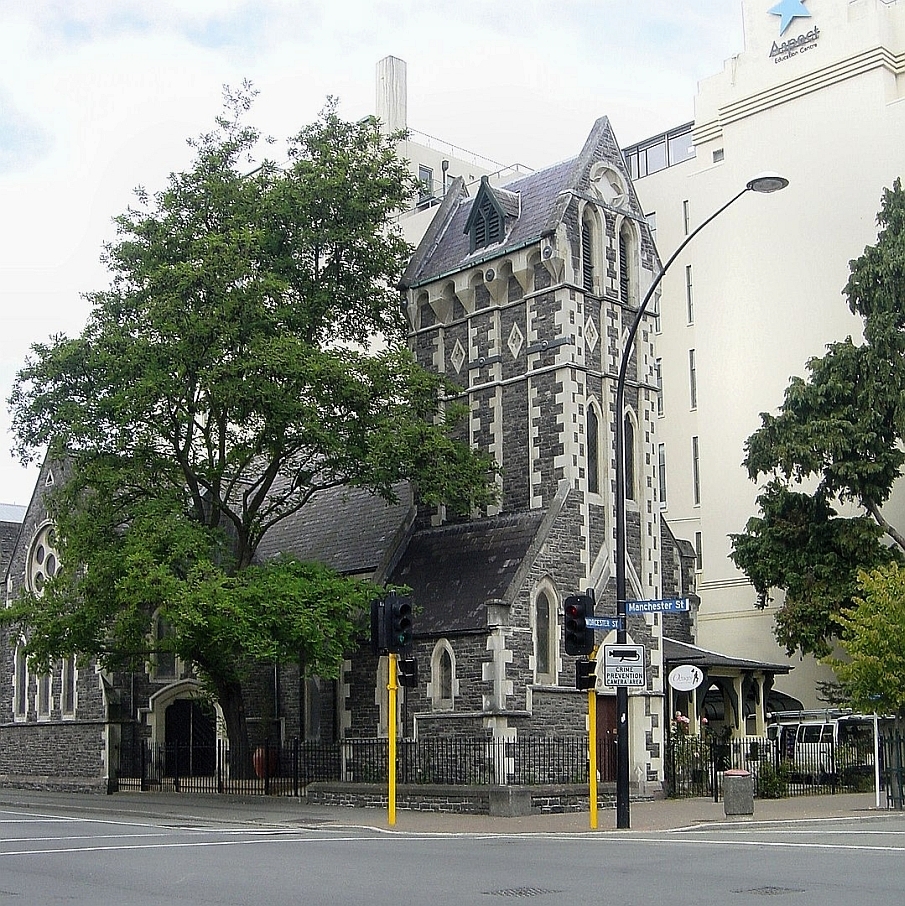
Dating from 1860, the relocated timber building known as Shand’s at 217 Manchester Street, Christchurch, is one of the city’s oldest commercial buildings that, until the Canterbury Earthquakes of 2010-11, had remained on its original site in Hereford Street. Its retention and shift to a new site adjacent to the historic Trinity Congregational Church (former), still within the CBD, tells an important story of heritage survival following the drastic loss of buildings as a result of the quakes. Shand’s has aesthetic, architectural, historical and social significance or value.
Prominent early colonial settler, John Shand owned land on Hereford Street, Christchurch, which was leased and subsequently sub-leased. Terms of the lease stated that a dwelling was to be erected but, in 1860, an office building was constructed instead.
A simple, utilitarian two-storeyed building, rectangular in plan, Shand’s is a rare surviving example of early commercial timber architecture in New Zealand. The building is clad in weatherboard with a shingle roof. The main (now east) elevation contains, at ground floor level, a large shop front window containing the words ‘Shand’s’ in gold signwriting and double entrance doors, and a further two windows are at first floor level.
The building housed offices -and from 1933 a watchmaker and jeweller -until 1977 when the whole building was converted to retail and named Shands Emporium. It suffered a moderate amount of damage as a result of the Canterbury Earthquakes of 2010-11 but the neighbouring buildings did not fare so well. Following the quakes, the Olympia Building and former New Zealand Trust and Loan Building to its west and Gough House at 90 Hereford Street to its east were demolished, along with all other buildings on the south side of that Hereford Street block. Shand’s was saved as a result of protracted efforts by heritage interest groups and private individuals to find a suitable new home for the building. Its retention through relocation and careful restoration and partial reconstruction by Christchurch Heritage Trust have meant that this modest colonial building continues to survive as the oldest surviving timber commercial building within the Christchurch CBD.
Prominent early colonial settler, John Shand owned land on Hereford Street, Christchurch, which was leased and subsequently sub-leased. Terms of the lease stated that a dwelling was to be erected but, in 1860, an office building was constructed instead.
A simple, utilitarian two-storeyed building, rectangular in plan, Shand’s is a rare surviving example of early commercial timber architecture in New Zealand. The building is clad in weatherboard with a shingle roof. The main (now east) elevation contains, at ground floor level, a large shop front window containing the words ‘Shand’s’ in gold signwriting and double entrance doors, and a further two windows are at first floor level.
The building housed offices -and from 1933 a watchmaker and jeweller -until 1977 when the whole building was converted to retail and named Shands Emporium. It suffered a moderate amount of damage as a result of the Canterbury Earthquakes of 2010-11 but the neighbouring buildings did not fare so well. Following the quakes, the Olympia Building and former New Zealand Trust and Loan Building to its west and Gough House at 90 Hereford Street to its east were demolished, along with all other buildings on the south side of that Hereford Street block. Shand’s was saved as a result of protracted efforts by heritage interest groups and private individuals to find a suitable new home for the building. Its retention through relocation and careful restoration and partial reconstruction by Christchurch Heritage Trust have meant that this modest colonial building continues to survive as the oldest surviving timber commercial building within the Christchurch CBD.
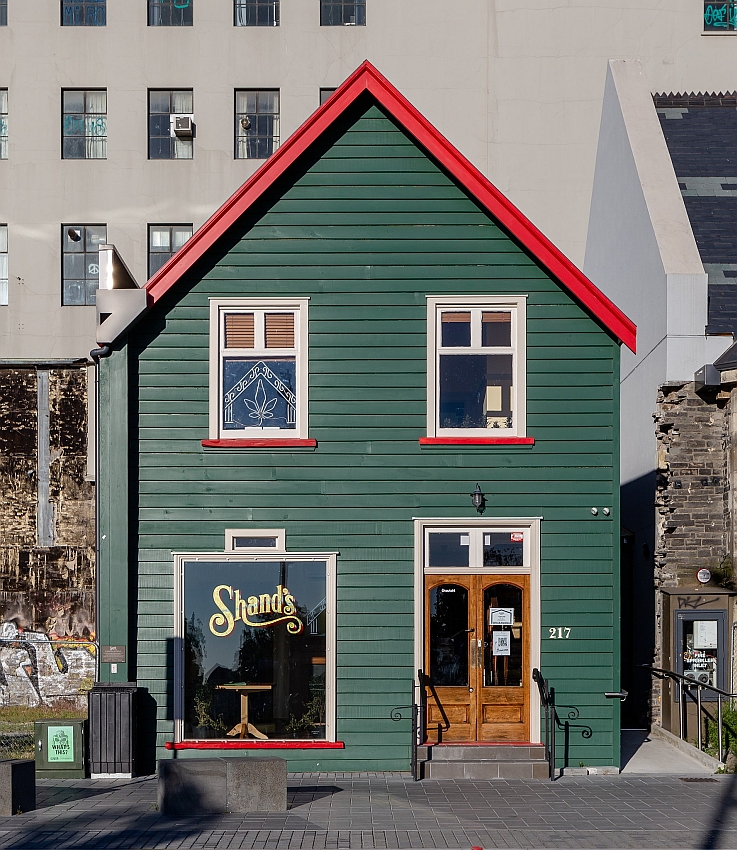
Shand's, 217 Manchester St, Christchurch | Hanna Westley | 22/07/2025 | Heritage New Zealand Pouhere Taonga
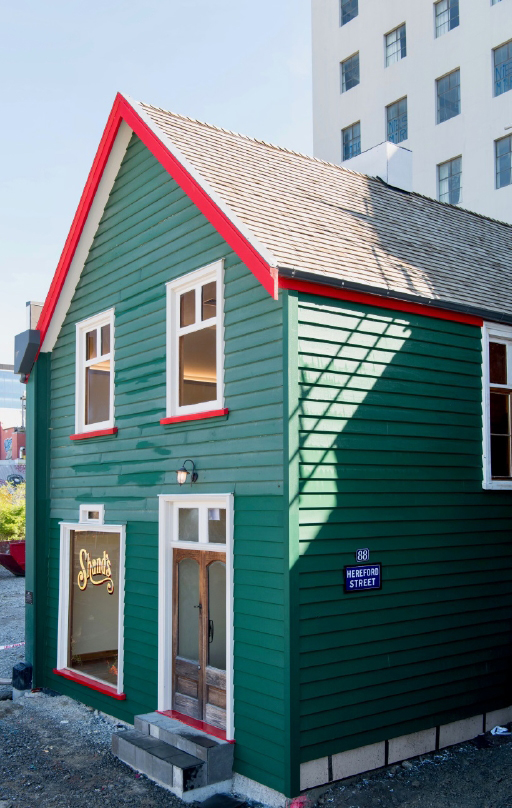
Shand's, 217 Manchester St, Christchurch. CC BY-SA 4.0 Image courtesy of commons.wikimedia.org | Michal Klajban | 04/12/2019 | Michal Klajban - Wikimedia Commons
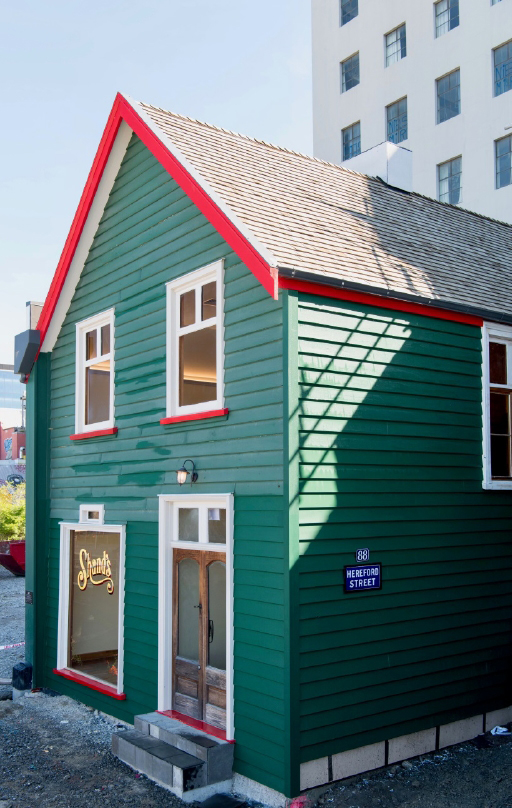
Shand's, 217 Manchester St, Christchurch | Anna Crighton | 16/01/2018 | Christchurch Heritage Trust
Shand's, 217 Manchester St, Christchurch | Hanna Westley | 22/07/2025 | Heritage New Zealand Pouhere Taonga
Shand's, 217 Manchester St, Christchurch. CC BY-SA 4.0 Image courtesy of commons.wikimedia.org | Michal Klajban | 04/12/2019 | Michal Klajban - Wikimedia Commons
Shand's, 217 Manchester St, Christchurch | Anna Crighton | 16/01/2018 | Christchurch Heritage Trust