DonateMembershipVisit Heritage
  • Tūrangawaewae
    Places
  • Tira Māori
    Māori Heritage
  • Poutairangahia
    Archaeology
  • Rauemi
    Resources
  • Mō Tātou
    About Us
  • New Zealand Heritage List
  • Nominate and submit
  • Explore the List
  • National Historic Landmarks
  • Plaques
  • Rainbow List Project
  • Lost heritage
  • Visit Heritage
  • Our properties
  • Turnbull House Project
  • Collections
  • Shop
  • Tohu Whenua
  • Tira Māori
  • Conserving Māori heritage
  • Marae built heritage
  • Māori heritage on the List
  • Hinemihi—Te Hokinga Mai
  • What is archaeology?
  • Is there a site on my property?
  • What are my legal requirements?
  • Affecting an archaeological site
  • Declaring an archaeological site
  • Archaeology FAQs
  • Archaeology Digital Library
  • Archaeology guidelines and templates
  • Resources
  • Funding
  • Publications
  • Sustainable management guides
  • Disaster recovery
  • Podcasts & digital resources
  • Education Hub
  • Conservation plans
  • About
  • Board
  • Māori Heritage Council
  • Senior Staff
  • Offices
  • Contact us
  • Careers
  • Covenants
  • Fast-track
  • Corporate documents
  • Currently consulting on
  • Our submissions
  • News
  • Covid-19 response
Quick links
Rārangi Kōrero | The List
Explore the List
National Historic Landmarks
Ngā Manawhenua o Aotearoa me ōna Kōrero Tūturu
Quick links
Tapuwae
A Vision for Places of Māori Heritage
Funding for Māori Heritage
Resources
Quick links
Archaeological Authority Portal
Applying for an archaeological authority
Archaeology FAQs
Browse the most frequently asked questions about archaeological authorities and the archaeological process.
Quick links
Quick links
News
News Keep up to date with Heritage New Zealand Pouhere Taonga
Membership
Membership Find out more and sign up today
DonateMembershipVisit Heritage
  • Tūrangawaewae
    Places
  • Tira Māori
    Māori Heritage
  • Poutairangahia
    Archaeology
  • Rauemi
    Resources
  • Mō Tātou
    About Us
  • New Zealand Heritage List
  • Nominate and submit
  • Explore the List
  • National Historic Landmarks
  • Plaques
  • Rainbow List Project
  • Lost heritage
  • Visit Heritage
  • Our properties
  • Turnbull House Project
  • Collections
  • Shop
  • Tohu Whenua
  • Tira Māori
  • Conserving Māori heritage
  • Marae built heritage
  • Māori heritage on the List
  • Hinemihi—Te Hokinga Mai
  • What is archaeology?
  • Is there a site on my property?
  • What are my legal requirements?
  • Affecting an archaeological site
  • Declaring an archaeological site
  • Archaeology FAQs
  • Archaeology Digital Library
  • Archaeology guidelines and templates
  • Resources
  • Funding
  • Publications
  • Sustainable management guides
  • Disaster recovery
  • Podcasts & digital resources
  • Education Hub
  • Conservation plans
  • About
  • Board
  • Māori Heritage Council
  • Senior Staff
  • Offices
  • Contact us
  • Careers
  • Covenants
  • Fast-track
  • Corporate documents
  • Currently consulting on
  • Our submissions
  • News
  • Covid-19 response
Quick links
Rārangi Kōrero | The List
Explore the List
National Historic Landmarks
Ngā Manawhenua o Aotearoa me ōna Kōrero Tūturu
Quick links
Tapuwae
A Vision for Places of Māori Heritage
Funding for Māori Heritage
Resources
Quick links
Archaeological Authority Portal
Applying for an archaeological authority
Archaeology FAQs
Browse the most frequently asked questions about archaeological authorities and the archaeological process.
Quick links
Quick links
News
News Keep up to date with Heritage New Zealand Pouhere Taonga
Membership
Membership Find out more and sign up today
  • Places
  • Nominate and submit
  • National Historic Landmarks
  • Places
  • Nominate and submit
  • National Historic Landmarks
  • Tira Māori
  • Conserving Māori heritage
  • Marae built heritage
  • Tira Māori
  • Conserving Māori heritage
  • Marae built heritage
  • Archaeological authorities
  • Archaeology Digital Library
  • Archaeological authorities
  • Archaeology Digital Library
  • All resources
  • Publications
  • Funding
  • All resources
  • Publications
  • Funding
  • FAQs
  • FAQs
Follow us on:
Places
  • Places
  • Nominate and submit
  • National Historic Landmarks
Tira Māori
  • Tira Māori
  • Conserving Māori heritage
  • Marae built heritage
Archaeology
  • Archaeological authorities
  • Archaeology Digital Library
Resources
  • All resources
  • Publications
  • Funding
FAQs
  • FAQs
Follow us on
HomePrivacyTerms and conditionsAbout this site
© Heritage New Zealand Pouhere Taonga 2026.
 
Clayton Homestead

66 Lochaber Road, FAIRLIE

Private

Historic Place Category 1

List No. 310

Quick links:
List GalleryLocationDetails
Clayton Homestead was built over several decades on the Clayton run in South Canterbury.

The station on which it was built originally consisted of two runs, one being Run 331, which was taken up in 1860 by a partnership of the Kennaway brothers, (William, Laurence and Walter), Edward Acton and a person known only as Lee. The second was Run 370, which the Kennaway brothers acquired in October of the same year. The Kennaways stocked the two runs in 1861-1862 and a description of their exploration and stocking of Clayton can be found in Laurence's book 'Crusts'. Unfortunately, the Kennaways lost most of their sheep in the crippling winter of 1862. The following summer they sold the station to the partnership of Walker and Clogstoun, who owned the neighbouring station, Fourpeaks. Walker and Clogstoun comprised the two Walker brothers, Lancelot and Sherbrooke, and Captain Edward Louis Clogstoun. Both Fourpeaks and Clayton stations were let to George Arthur Emilius Ross and Charles John Harper, son of Henry John Chitty Harper, the first bishop of Christchurch. In 1867 Ross and Harper were also ruined by a bad winter and the runs reverted to Walker and Clogstoun. Clayton was worked as a separate station, with its own flock and overseen by the head shepherd.

It appears that the first part of the Clayton homestead, the substantial stone cottage, was built during Walker and Clogstoun's ownership of the property, in the late 1860s and early 1870s. The cottage had two ground-floor rooms and two attic bedrooms lit by dormer windows. The quoins, doorways and window surrounds were constructed from a lighter limestone. The quality of the stone in South Canterbury had been noted by Julius Haast in a report to the Canterbury Provincial Council in 1864 and it was often used for building throughout the region. Originally the cottage was thatched with snowgrass.

In 1881 Clayton was bought by Hugh Hamilton ([1822]-1900), [a Scotsman] who placed his two sons, George [Innes Hamilton] and [James] Dundas [Hamilton], in charge of the station. At the time of the purchase the run carried around 19,000 sheep. Clayton remained in the Hamilton family until 1919. They experimented with crossbreeding Merinos with Border-Leicesters but after 1914 moved to stocking Corriedales (New Zealand's early contribution to sheep breeding). Their flock peaked at 30,000 sheep. Hamilton removed the attic rooms of the stone cottage and built a board and battern addition on top of it. He later added a single storey kitchen building to the cottage and then a two-storeyed block to the east end of the homestead.

In 1917 some of the run was taken over for closer settlement and the Hamiltons sold over 14,000 sheep. After 1919 the station was sold to a syndicate and in 1925 it passed to Simon Mackenzie who purchased Clayton for his sons. They remained at Clayton until 1964. It appears that no major changes to the homestead took place during this time. In 1967 the station was taken over by Andrew and Ruth Orbell and they added to the homestead in 1982. The Orbells' extension wraps around the west wall and part of the rear of the original stone cottage so that the original exterior wall now forms the inside corner of an 'L' shaped room.

Clayton Homestead is a significant example of the way in which station homesteads often evolved. Rather than demolishing the earlier buildings when the homestead needed to be expanded, the owners of Clayton incorporated the old with the new and built around the earliest parts. Clayton thus retains an example of the early stone homesteads typical of South Canterbury within it and overall the nineteenth and twentieth century additions have been sympathetic to the simplicity of the original structure. Clayton Station was one of the important South Canterbury sheep runs and it is historically representative of the large pastoral holdings which established Canterbury as one of the leading wool and lamb producing provinces of New Zealand.
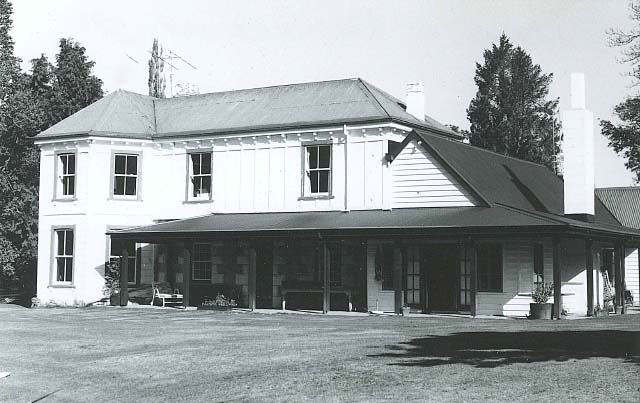
Clayton Homestead, Fairlie. Image included in Field Record Form Collection | Chris Cochran | 10/08/1993 | Heritage New Zealand Pouhere Taonga

List Entry Information

Overview

Status
Listed

List Entry Status
Historic Place Category 1

Access
Private/No Public Access

List Number
310

Date Entered
6th September 1984

Date of Effect
6th September 1984

City/District Council
Mackenzie District

Region
Canterbury Region

Legal description

RS 14214 (RT 129507), Canterbury Land District

Detailed List Entry

Construction Details

Start Year

1860

Finish Year

1880

Type

Original Construction

Description

Original stone cottage

Type

Addition

Description

Board and battern addition to replace attic rooms of stone cottage

Period

post-1881

Type

Addition

Description

Single storey kitchen building

Period

post-1881

Type

Addition

Description

Two-storeyed block to the east end of the homestead

Period

post-1881

Start Year

1982

Type

Addition

Description

Extension which wraps around the west wall and part of the rear of the original stone cottage

Reference

Completion Date

24th October 2002

Report Written By

Melanie Lovell-Smith

Information Sources

Acland, 1975

L.G.D. Acland, The Early Canterbury Runs, 4th ed., Christchurch, 1975

Cant, 2001

Garth Cant & Russell Kirkpatrick, eds., Rural Canterbury: Celebrating its History, Wellington, 2001

Gillespie, 1971

Oliver A. Gillespie, South Canterbury: A Record of Settlement, 2nd edn., Timaru, 1971

Report Written By

This place was identified as significant under previous legislation with different information requirements. It remains significant under the current legislation. There is opportunity under our legislation and policies to add to this information. Further information about this place may be available from the Southern Regional Office of Heritage New Zealand Pouhere Taonga. Please note that entry on the New Zealand Heritage List/Rarangi Korero identifies only the heritage values of the property concerned, and should not be construed as advice on the state of the property, or as a comment of its soundness or safety, including in regard to earthquake risk, safety in the event of fire, or insanitary conditions.

Further Information

Current Usages

Uses: Accommodation

Specific Usage: House

Former Usages

General Usage:: Accommodation

Specific Usage: House

Themes

Web Links

Overview

Status

Listed

List Entry Status

Historic Place Category 1

Access

Private/No Public Access

List Number

310

Date Entered

6th September 1984

Date of Effect

6th September 1984

City/District Council

Mackenzie District

Region

Canterbury Region

Legal description

RS 14214 (RT 129507), Canterbury Land District

Status

Listed

List Entry Status

Historic Place Category 1

Access

Private/No Public Access

List Number

310

Date Entered

6th September 1984

Date of Effect

6th September 1984

City/District Council

Mackenzie District

Region

Canterbury Region

Legal description

RS 14214 (RT 129507), Canterbury Land District

Construction Information

Construction Details

Start Year

1860

startYearCirca

Finish Year

1880

finishYearCirca

Type

Original Construction

Description

Original stone cottage

Type

Addition

Description

Board and battern addition to replace attic rooms of stone cottage

Period

post-1881

Type

Addition

Description

Single storey kitchen building

Period

post-1881

Type

Addition

Description

Two-storeyed block to the east end of the homestead

Period

post-1881

Start Year

1982

Type

Addition

Description

Extension which wraps around the west wall and part of the rear of the original stone cottage

Construction Details

Start Year

1860

startYearCirca

Finish Year

1880

finishYearCirca

Type

Original Construction

Description

Original stone cottage

Type

Addition

Description

Board and battern addition to replace attic rooms of stone cottage

Period

post-1881

Type

Addition

Description

Single storey kitchen building

Period

post-1881

Type

Addition

Description

Two-storeyed block to the east end of the homestead

Period

post-1881

Start Year

1982

Type

Addition

Description

Extension which wraps around the west wall and part of the rear of the original stone cottage

Reference

Historical and Associated Iwi / Hapū / Whānau

Completion Date

24th October 2002

Report Written By

Melanie Lovell-Smith

Information Sources

Acland, 1975

L.G.D. Acland, The Early Canterbury Runs, 4th ed., Christchurch, 1975

Cant, 2001

Garth Cant & Russell Kirkpatrick, eds., Rural Canterbury: Celebrating its History, Wellington, 2001

Gillespie, 1971

Oliver A. Gillespie, South Canterbury: A Record of Settlement, 2nd edn., Timaru, 1971

Other Information

This place was identified as significant under previous legislation with different information requirements. It remains significant under the current legislation. There is opportunity under our legislation and policies to add to this information. Further information about this place may be available from the Southern Regional Office of Heritage New Zealand Pouhere Taonga. Please note that entry on the New Zealand Heritage List/Rarangi Korero identifies only the heritage values of the property concerned, and should not be construed as advice on the state of the property, or as a comment of its soundness or safety, including in regard to earthquake risk, safety in the event of fire, or insanitary conditions.

Historical and Associated Iwi / Hapū / Whānau

Completion Date

24th October 2002

Report Written By

Melanie Lovell-Smith

Information Sources

Acland, 1975

L.G.D. Acland, The Early Canterbury Runs, 4th ed., Christchurch, 1975

Cant, 2001

Garth Cant & Russell Kirkpatrick, eds., Rural Canterbury: Celebrating its History, Wellington, 2001

Gillespie, 1971

Oliver A. Gillespie, South Canterbury: A Record of Settlement, 2nd edn., Timaru, 1971

Other Information

This place was identified as significant under previous legislation with different information requirements. It remains significant under the current legislation. There is opportunity under our legislation and policies to add to this information. Further information about this place may be available from the Southern Regional Office of Heritage New Zealand Pouhere Taonga. Please note that entry on the New Zealand Heritage List/Rarangi Korero identifies only the heritage values of the property concerned, and should not be construed as advice on the state of the property, or as a comment of its soundness or safety, including in regard to earthquake risk, safety in the event of fire, or insanitary conditions.

Further Information

Current Usages

Uses: Accommodation

Specific Usage: House

Former Usages

General Usage: Accommodation

Specific Usage: House

Current Usages

Uses: Accommodation

Specific Usage: House

Former Usages

General Usage: Accommodation

Specific Usage: House

Location

Loading
Related listings
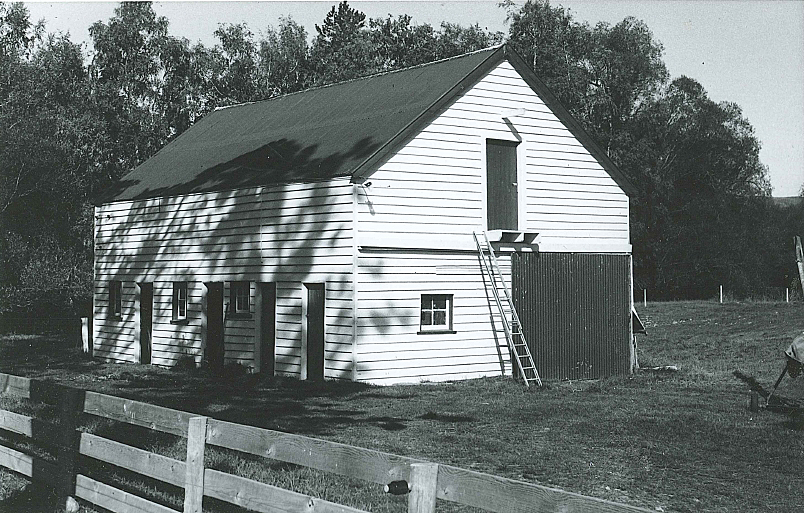
Clayton Station Stables. Original image submitted at time of registration
Clayton Station Stables
Clayton Station Stables. Original image submitted at time of registration
Clayton Station Stables
Stay up to date with Heritage this month