

In 1853, with his heath failing, Wilson took a protracted holiday. Whilst in Australia he learned of the opportunities in New Zealand, and chartered a ship to take his retinue to Lyttelton. Arriving in April 1854, Wilson brought three up-country runs and a 108 ha property on the Port Hills he named Cashmere, after Kashmir in India. Cashmere was later extended to 2000 ha. In December 1854 with his leave about to expire, Wilson returned to India and resumed his position. Two years later the Indian Mutiny broke out, and he served with distinction. On the basis of his service, Wilson was created a Knight of the Star of India in 1872.
In 1859 Wilson retired and returned to Canterbury and Cashmere permanently, where he soon became active in politics and local affairs. He served as a member of Parliament and the Provincial Council, on church vestries, school committees, a roads board, the Acclimatisation Society, the Canterbury College Board of Governors, the Amuri County Council, the Canterbury Musical Society, the Canterbury Jockey Club, and as a major in the Canterbury Yeomanry Cavalry. A colourful, egocentric and at times controversial character - once described as 'Toryism on two legs', 'Nabob' Wilson (as he was popularly known) was also public-spirited and known for his honesty.
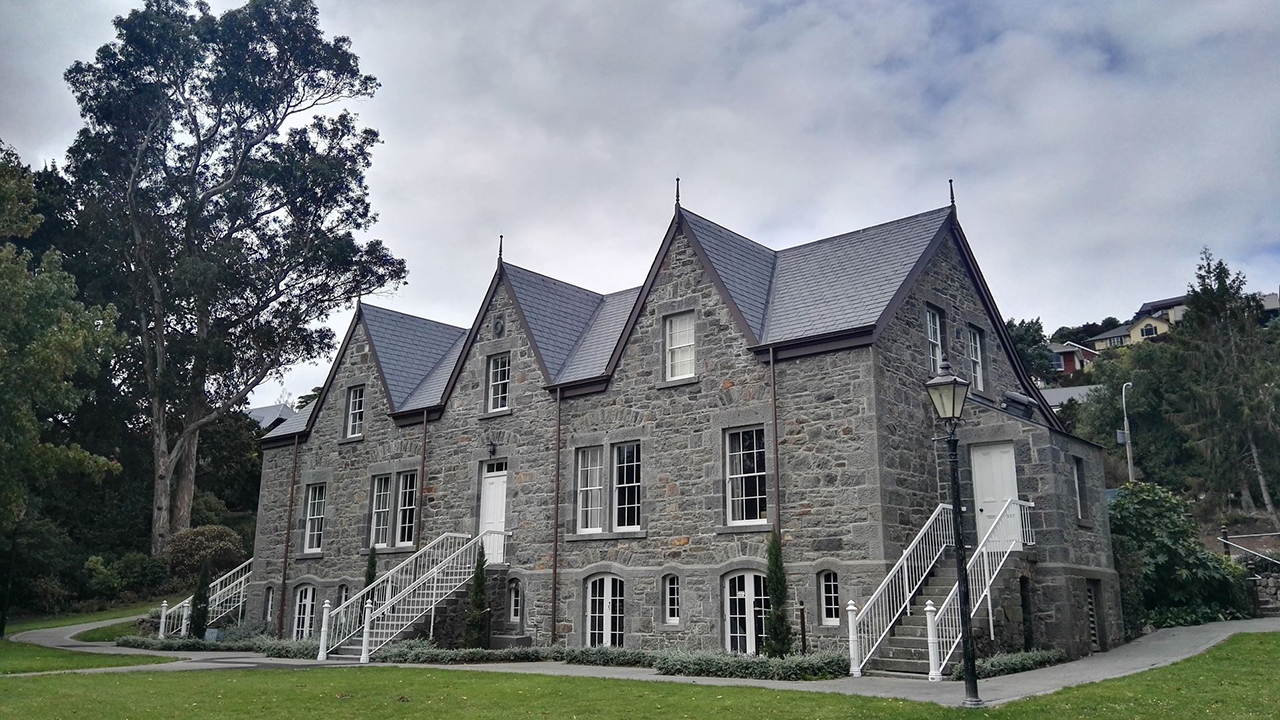
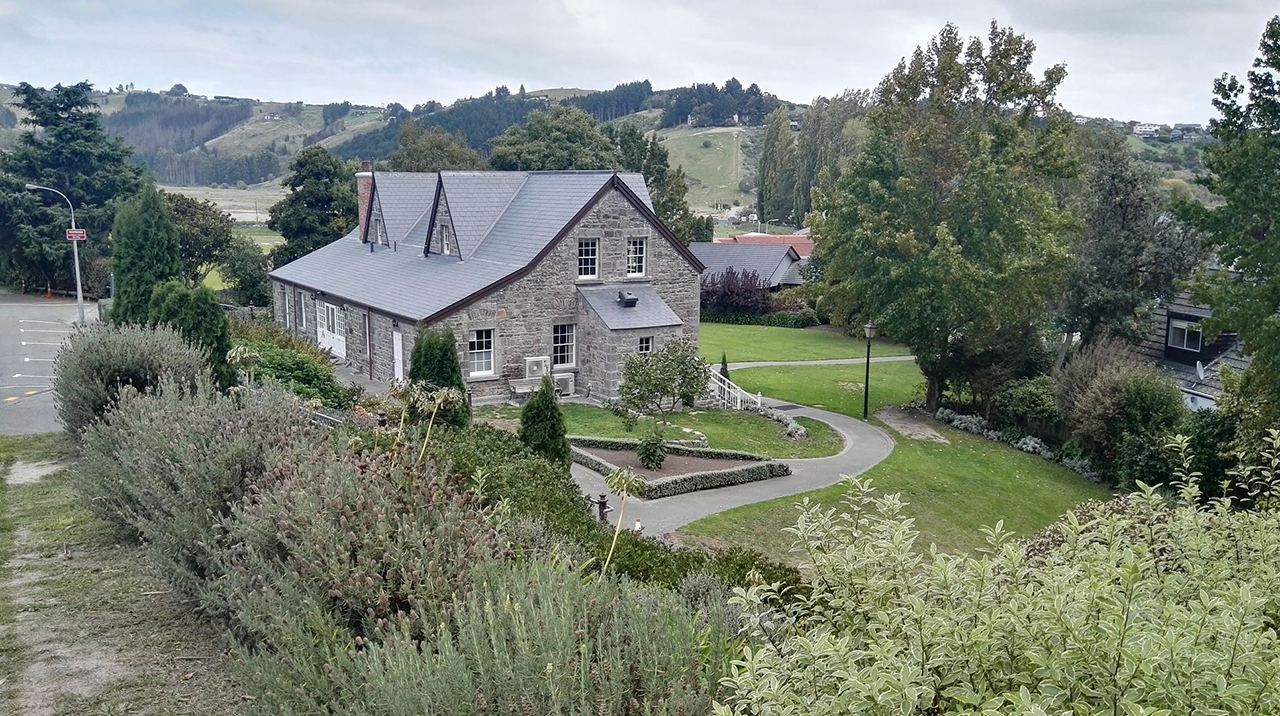
On both of his journeys to New Zealand, Wilson brought Indian and Eurasian servants with him. Initially they lived in small huts, but in 1870 Wilson built them a substantial stone accommodation house a few hundred yards from his homestead, where they could live communally. No details survive of the building's construction, though the stone is reputed to have come from a quarry on nearby Marleys Hill. The design has been likened to a vernacular English farmhouse of a few centuries before.
Not all of the Indians' found the cold Canterbury climate or the low wages of the patriarchal Sir John to their liking. In 1873 Wilson took some of them to court for deserting from hired service. A few died and others returned to India, but some remained and worked on the estate for many years. Wilson allowed his servants land and stock of their own, and independence once their term was up. Those who retired in his service received houses. The ghosts of some the Indian servants are said to haunt the old servants' quarters.
Up until the 1950s, farm workers continued to live in the Old Stone House (as it came to be known). However with mechanisation and the reduction in size of the Cashmere estate through subdivision, there was less need for staff accommodation, and much of the building was used for storage or vacant. As farm needs declined, community groups such as the Girl Guides were permitted to use the space. During the war years, the building was requisitioned by the armed forces, and housed the Signals Section of the Combined Head Quarters Southern Command. In 1966 Sir John's great grandson, John Frederick Cracroft Wilson gave the Old Stone House to the Student Christian Movement, an occasional user of the building between 1919 and WWII, and a frequent user thereafter. Members began substantial renovations the following year, and in 1969 a semi-autonomous Old Stone House Trust was formed with the intention of developing a national conference centre. Unfortunately disaster struck in July 1971, when the Old Stone House was reduced to a shell by fire.
By mid 1972 however, the decision had been made to construct a new community facility within the old walls. The Cracroft Community Centre was incorporated in December 1972, and was subsequently given the building's lease by the Old Stone House Trust. In May 1976 a public appeal was launched to help meet the projected (1975) $85, 000 restoration cost, with author Dame Ngaio Marsh as patron. After much lobbying, the Christchurch City Council agreed in 1978 to give $70, 000 towards the then (1977) $120, 000 restoration. The Heathcote County Council also assisted financially. Architect Bruce McGregor completed plans, and a $103, 000 contract was awarded to builder J. A. Harris in July 1978. Construction of the new community centre commenced in September that year, and was completed for an official opening on 17 November 1979 at a total cost (including furniture and fittings) of $157, 500. A considerable amount of labour was contributed by volunteers, who carried out a myriad of tasks, including sourcing slate and timber for the roof from the old Marylands School in Halswell, cutting the decorative bargeboards, pointing stonework and doing landscaping. The restored building consisted of two craft/games room in the sub-basement; and a single large hall with a partial mezzanine, a meeting room, and lean-to kitchen and stores at first floor level. The attic rooms were not recreated, thus giving the main room a 'cathedral' ceiling.
The Old Stone House has been well utilized in succeeding years, with a regular programme of activities. The building is also in demand as a social venue, and is particularly popular for weddings.
List Entry Information
Status
Listed
List Entry Status
Historic Place Category 2
Access
Private/No Public Access
List Number
3104
Date Entered
10th September 2004
Date of Effect
10th September 2004
City/District Council
Christchurch City
Region
Canterbury Region
Extent of List Entry
Registration includes: The building, its fittings and fixtures and the land on RT CB13B/366.
Legal description
lot 1 DP23624 and Lot 21 DP29333, RT CB13B/366
Status
Listed
List Entry Status
Historic Place Category 2
Access
Private/No Public Access
List Number
3104
Date Entered
10th September 2004
Date of Effect
10th September 2004
City/District Council
Christchurch City
Region
Canterbury Region
Extent of List Entry
Registration includes: The building, its fittings and fixtures and the land on RT CB13B/366.
Legal description
lot 1 DP23624 and Lot 21 DP29333, RT CB13B/366
Why is this place significant?
Cultural Significance
Social significance as a substantial example of servants/farm workers accommodation.
Historic Significance
Historical Significance or Value Historical significance for its associations with early Canterbury personality, Sir John Cracroft Wilson and his Indian employees.
Physical Significance
The Cracroft House Servants' Quarters has architectural significance or value as an unusual example of an English vernacular domestic building transplanted to New Zealand.
Why is this place Category 1 / Category 2?
Detail Of Assessed Criteria
(b) is associated with early Canterbury personality Sir John Cracroft Wilson; (e) is held in high esteem by the community, who strove against great adversity to establish the present community centre within the original shell; (g) is an unusual example of an authentic English vernacular domestic building in New Zealand; (k) forms part of a wider historical landscape with the nearby former Wilson homestead, Cracroft House (1854-6, Cat. II).
Why is this place significant?
Cultural Significance
Social significance as a substantial example of servants/farm workers accommodation.
Historic Significance
Historical Significance or Value Historical significance for its associations with early Canterbury personality, Sir John Cracroft Wilson and his Indian employees.
Physical Significance
The Cracroft House Servants' Quarters has architectural significance or value as an unusual example of an English vernacular domestic building transplanted to New Zealand.
Why is this place Category 1 / Category 2?
Detail Of Assessed Criteria
(b) is associated with early Canterbury personality Sir John Cracroft Wilson; (e) is held in high esteem by the community, who strove against great adversity to establish the present community centre within the original shell; (g) is an unusual example of an authentic English vernacular domestic building in New Zealand; (k) forms part of a wider historical landscape with the nearby former Wilson homestead, Cracroft House (1854-6, Cat. II).
Construction Professional
Name
Harris, J.A
Type
Builder
Biography
No biography is currently available for this construction professional
Name
McGregor, Bruce
Type
Architect
Biography
No biography is currently available for this construction professional
Construction Details
Start Year
1978
Finish Year
1979
Type
Modification
Description
Reconstruction as community centre, with new roof and new internal layout for the main floor. Much of this work was carried out by the voluntary labour from the local community.
Start Year
1870
Type
Original Construction
Start Year
1967
Finish Year
1971
Type
Modification
Description
Partial renovation as conference centre.
Start Year
1971
Type
Modification
Description
Extensive gutting by fire.
Construction Materials
Random rubble masonry with ashlar dressings, a brick chimney and a slate roof.
Construction Professional
Name
Harris, J.A
Type
Builder
Biography
No biography is currently available for this construction professional
Name
McGregor, Bruce
Type
Architect
Biography
No biography is currently available for this construction professional
Construction Details
Start Year
1978
Finish Year
1979
Type
Modification
Description
Reconstruction as community centre, with new roof and new internal layout for the main floor. Much of this work was carried out by the voluntary labour from the local community.
Start Year
1870
Type
Original Construction
Start Year
1967
Finish Year
1971
Type
Modification
Description
Partial renovation as conference centre.
Start Year
1971
Type
Modification
Description
Extensive gutting by fire.
Construction Materials
Random rubble masonry with ashlar dressings, a brick chimney and a slate roof.
An (originally) three level symmetrical domestic vernacular building, with multi-pane sash windows. The front elevation, which is entered at first floor level via a set of stone steps, has three gabled dormer windows with fretwork bargeboards and finials. The centre gable is set with an emblem containing the motto 'Virtus Sibi Praemium', (Virtue is its Own Reward) and the words 'John Cracroft Wilson CB AD 1870'. The lean-to rear elevation has two smaller gabled dormers, similarly decorated.
An (originally) three level symmetrical domestic vernacular building, with multi-pane sash windows. The front elevation, which is entered at first floor level via a set of stone steps, has three gabled dormer windows with fretwork bargeboards and finials. The centre gable is set with an emblem containing the motto 'Virtus Sibi Praemium', (Virtue is its Own Reward) and the words 'John Cracroft Wilson CB AD 1870'. The lean-to rear elevation has two smaller gabled dormers, similarly decorated.
Historical and Associated Iwi / Hapū / Whānau
Completion Date
7th October 2004
Report Written By
Pam Wilson
Information Sources
Dictionary of New Zealand Biography
Dictionary of New Zealand Biography
New Zealand Historic Places Trust (NZHPT)
New Zealand Historic Places Trust
Roberts, 1990
B and N Roberts, Old Stone House 1870-1990 and the Cracroft Community Centre of Christchurch 1972-1990 Christchurch: The Cracroft Community Centre, 1990.
Other Information
A fully referenced version of this report is available from the NZHPT Southern Region Office. Please note that entry on the New Zealand Heritage List/Rarangi Korero identifies only the heritage values of the property concerned, and should not be construed as advice on the state of the property, or as a comment of its soundness or safety, including in regard to earthquake risk, safety in the event of fire, or insanitary conditions.
Historical and Associated Iwi / Hapū / Whānau
Completion Date
7th October 2004
Report Written By
Pam Wilson
Information Sources
Dictionary of New Zealand Biography
Dictionary of New Zealand Biography
New Zealand Historic Places Trust (NZHPT)
New Zealand Historic Places Trust
Roberts, 1990
B and N Roberts, Old Stone House 1870-1990 and the Cracroft Community Centre of Christchurch 1972-1990 Christchurch: The Cracroft Community Centre, 1990.
Other Information
A fully referenced version of this report is available from the NZHPT Southern Region Office. Please note that entry on the New Zealand Heritage List/Rarangi Korero identifies only the heritage values of the property concerned, and should not be construed as advice on the state of the property, or as a comment of its soundness or safety, including in regard to earthquake risk, safety in the event of fire, or insanitary conditions.
Current Usages
Uses: Civic Facilities
Specific Usage: Community centre
Current Usages
Uses: Civic Facilities
Specific Usage: Community centre
Location
Sign up to hear more
Get the latest heritage news, features and events delivered
straight to your inbox.
