Quick links


Quick links
Quick links
Quick links
Quick links
Quick links
Church of the Good Shepherd
Pioneer Drive, TEKAPO
Private
Historic Place Category 1
List No. 311
Quick links:
List GalleryLocationDetails
Pioneer Drive, TEKAPO
Private
Historic Place Category 1
List No. 311
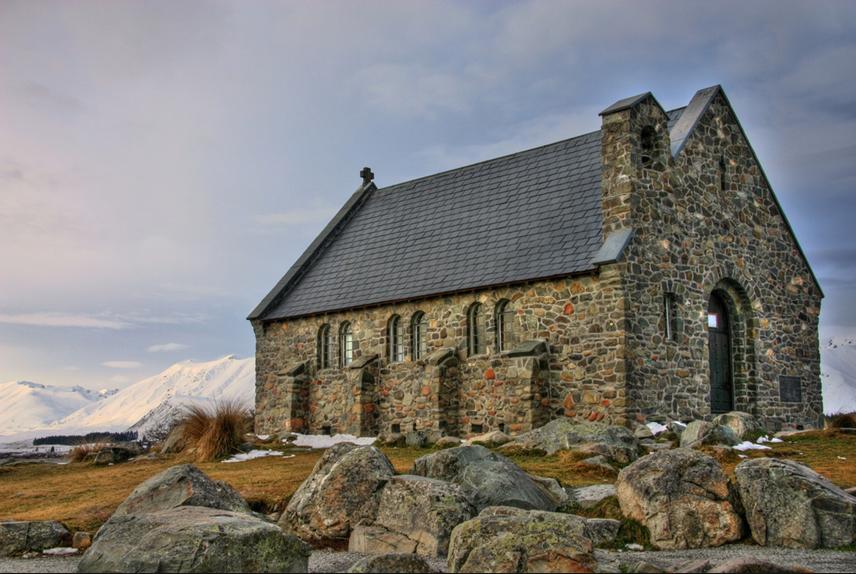
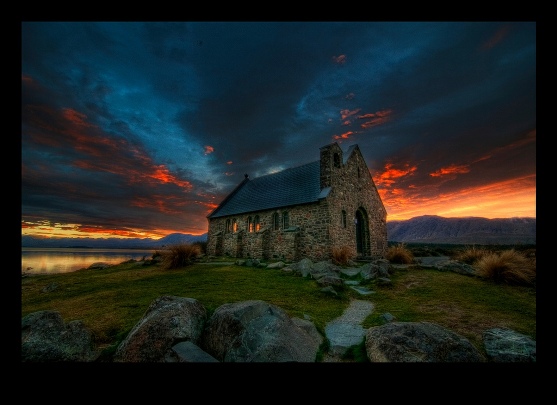
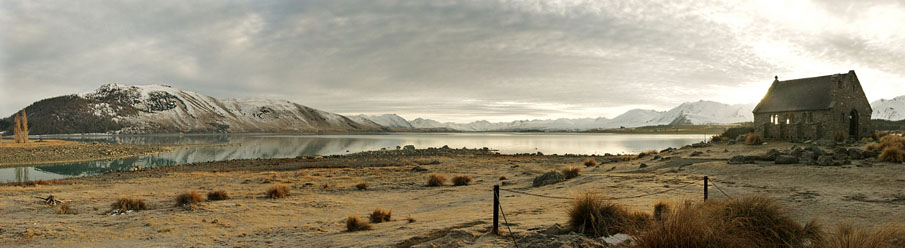
List Entry Information
Status
Listed
List Entry Status
Historic Place Category 1
Access
Private/No Public Access
List Number
311
Date Entered
5th September 1985
Date of Effect
5th September 1985
City/District Council
Mackenzie District
Region
Canterbury Region
Extent of List Entry
Extent includes the land described as Pt Sec 1C Blk II Tekapo Village (RT CB440/39), Canterbury Land District and the building known as Church of the Good Shepherd thereon.
Legal description
Pt Sec 1C Blk II Tekapo Village (RT CB440/39), Canterbury Land District
Status
Listed
List Entry Status
Historic Place Category 1
Access
Private/No Public Access
List Number
311
Date Entered
5th September 1985
Date of Effect
5th September 1985
City/District Council
Mackenzie District
Region
Canterbury Region
Extent of List Entry
Extent includes the land described as Pt Sec 1C Blk II Tekapo Village (RT CB440/39), Canterbury Land District and the building known as Church of the Good Shepherd thereon.
Legal description
Pt Sec 1C Blk II Tekapo Village (RT CB440/39), Canterbury Land District
Construction Professional
Name
Harman, Richard Strachan De Renzy
Type
Architect
Biography
Not to be confused with his uncle R.D. Harman of Collins and Harman, Architects, R.S. Harman (1896-1953) was born and educated in Christchurch where he subsequently became one of the city's most competent ecclesiastical and residential architects. He served his articles with the local firm of Seager and Macleod (1914-16) and also attended classes at the Canterbury College School of Art during this time. After service in France during the First World War, he studied at the Royal College of Art, London before returning to New Zealand in 1920 to rejoin Seager's office. Between 1923 and 1926 Harman was once more in London undertaking further study as well as working for the Ancient Monuments Branch of His Majesty's Office of Works. On his return to Christchurch he entered into a short-lived partnership with Cecil Wood before establishing his own practice in 1928. Harman was closely associated with the Anglican Church throughout his career and almost all of his church designs were commissioned by the Anglican dioceses of Canterbury and Nelson. The Church of the Good Shepherd, Tekapo (1935) and St. John's Cathedral, Napier (1953) are among his most well-known ecclesiastical works, although the latter was not erected until after his death. During the late 1940s he worked as the consulting architect for Christchurch Cathedral, designing the Chapel of St Michael and St George in the south transept in 1949 and the reredos behind the High Altar in 1950. Harman was also an active member of the New Zealand Institute of Architects, becoming president of that organisation in 1949.
Construction Details
Start Year
1935
Finish Year
1935
Type
Original Construction
Description
Foundation stone laid January 1935. Dedicated August 1935
Start Year
1933
Finish Year
1934
Type
Designed
Start Year
1957
Type
Modification
Description
Original wooden shingles replaced with slate.
Notable Features
Register of original sheep runs, their owners and employees.
Construction Professional
Name
Harman, Richard Strachan De Renzy
Type
Architect
Biography
Not to be confused with his uncle R.D. Harman of Collins and Harman, Architects, R.S. Harman (1896-1953) was born and educated in Christchurch where he subsequently became one of the city's most competent ecclesiastical and residential architects. He served his articles with the local firm of Seager and Macleod (1914-16) and also attended classes at the Canterbury College School of Art during this time. After service in France during the First World War, he studied at the Royal College of Art, London before returning to New Zealand in 1920 to rejoin Seager's office. Between 1923 and 1926 Harman was once more in London undertaking further study as well as working for the Ancient Monuments Branch of His Majesty's Office of Works. On his return to Christchurch he entered into a short-lived partnership with Cecil Wood before establishing his own practice in 1928. Harman was closely associated with the Anglican Church throughout his career and almost all of his church designs were commissioned by the Anglican dioceses of Canterbury and Nelson. The Church of the Good Shepherd, Tekapo (1935) and St. John's Cathedral, Napier (1953) are among his most well-known ecclesiastical works, although the latter was not erected until after his death. During the late 1940s he worked as the consulting architect for Christchurch Cathedral, designing the Chapel of St Michael and St George in the south transept in 1949 and the reredos behind the High Altar in 1950. Harman was also an active member of the New Zealand Institute of Architects, becoming president of that organisation in 1949.
Construction Details
Start Year
1935
Finish Year
1935
Type
Original Construction
Description
Foundation stone laid January 1935. Dedicated August 1935
Start Year
1933
Finish Year
1934
Type
Designed
Start Year
1957
Type
Modification
Description
Original wooden shingles replaced with slate.
Notable Features
Register of original sheep runs, their owners and employees.
Historical and Associated Iwi / Hapū / Whānau
Completion Date
4th October 2002
Report Written By
Melanie Lovell-Smith
Information Sources
Christchurch Press
Lochead, 1995
Ian Lochead (ed.) Papers and Proceedings SAHANZ Annual Conference, Christchurch 6-8 July 1991: Regional Responses, Christchurch, 1995
McGill, 1997
David McGill and Grant Sheehan, Landmarks: Notable Historic Buildings of New Zealand, Auckland, 1997
Stocker, 1997
Mark Stocker, Angels and Roses: the art of Frederick George Gurnsey, Christchurch, 1997
University of Canterbury
University of Canterbury
Other Information
This place was identified as significant under previous legislation with different information requirements. It remains significant under the current legislation. There is opportunity under our legislation and policies to add to this information. Further information about this place may be available from the Southern Regional Office of Heritage New Zealand Pouhere Taonga. Please note that entry on the New Zealand Heritage List/Rarangi Korero identifies only the heritage values of the property concerned, and should not be construed as advice on the state of the property, or as a comment of its soundness or safety, including in regard to earthquake risk, safety in the event of fire, or insanitary conditions.
Historical and Associated Iwi / Hapū / Whānau
Completion Date
4th October 2002
Report Written By
Melanie Lovell-Smith
Information Sources
Christchurch Press
Lochead, 1995
Ian Lochead (ed.) Papers and Proceedings SAHANZ Annual Conference, Christchurch 6-8 July 1991: Regional Responses, Christchurch, 1995
McGill, 1997
David McGill and Grant Sheehan, Landmarks: Notable Historic Buildings of New Zealand, Auckland, 1997
Stocker, 1997
Mark Stocker, Angels and Roses: the art of Frederick George Gurnsey, Christchurch, 1997
University of Canterbury
University of Canterbury
Other Information
This place was identified as significant under previous legislation with different information requirements. It remains significant under the current legislation. There is opportunity under our legislation and policies to add to this information. Further information about this place may be available from the Southern Regional Office of Heritage New Zealand Pouhere Taonga. Please note that entry on the New Zealand Heritage List/Rarangi Korero identifies only the heritage values of the property concerned, and should not be construed as advice on the state of the property, or as a comment of its soundness or safety, including in regard to earthquake risk, safety in the event of fire, or insanitary conditions.
Current Usages
Uses: Religion
Specific Usage: Church
Former Usages
General Usage: Religion
Specific Usage: Church
Current Usages
Uses: Religion
Specific Usage: Church
Former Usages
General Usage: Religion
Specific Usage: Church
Location
Get the latest heritage news, features and events delivered
straight to your inbox.
