

The Burnetts took up Mount Cook Station in May 1864, in a short-lived partnership with George McRae. It was the last large holding to be taken up in Canterbury. After the partnership dissolved Burnett continued to add to his holdings, until Mount Cook Station totalled 25,000 acres (10,117 hectares). One of his sons, Thomas David Burnett (1877-1941), later took over the run. Thomas became a member of Parliament and was responsible for a major South Canterbury irrigation scheme, the Downlands Water Supply. He conceived and supervised the construction of St David's as a memorial to his parents, as well as establishing a number of other monuments to the early settlers throughout the district. Thomas also believed that 'the arrival of the Scottish shepherd...began a new era in sheep management'. After Scottish shepherds arrived in the 1860s both lambing rates and wool yield increased, and many runholders extolled their virtues. St David's at Cave, is therefore dedicated to David of the Old Testament, as he had been a shepherd in his youth.
St David's was designed by Timaru-based architect Herbert Hall (1880-1939). Hall moved to Sydney, Australia, to begin working as an architect and on his return to New Zealand settled in Timaru. He designed a number of buildings (both domestic and public) throughout Timaru and the surrounding districts in the early part of the twentieth century. These included the Carnegie Library at Fairlie, also registered by the New Zealand Historic Places Trust Pouhere Taonga. One of his most notable buildings was the neo-Georgian Chateau Tongariro (1929), erected at the bottom of Mount Ruapehu in the North Island.
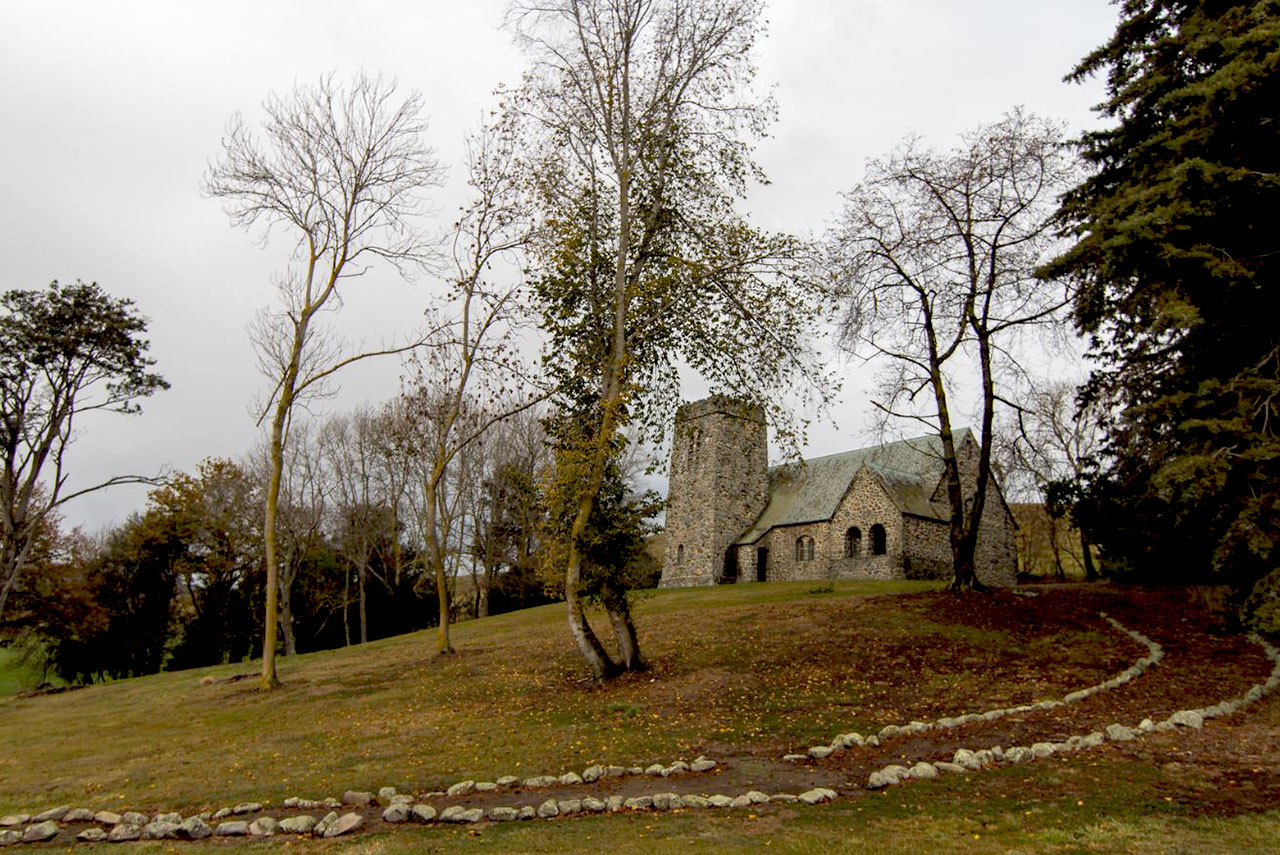
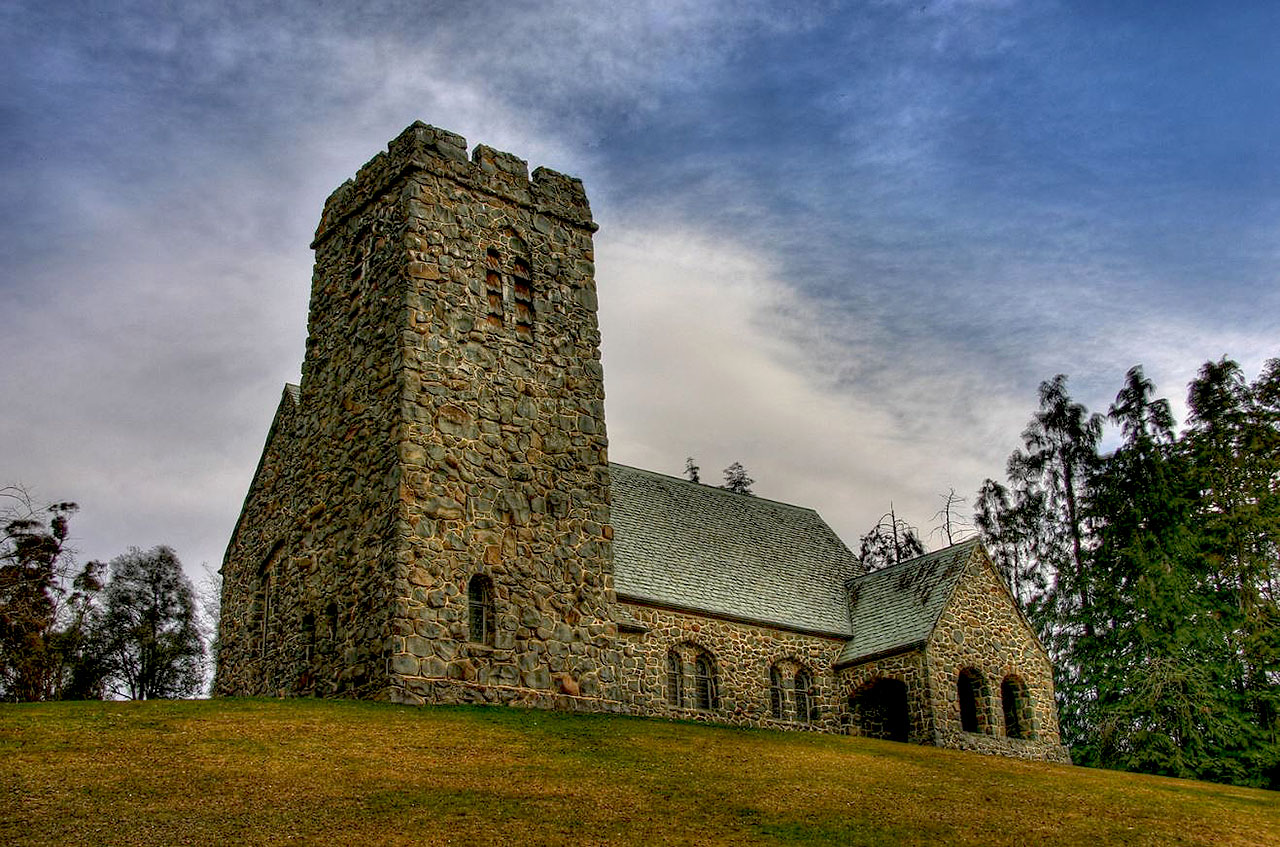
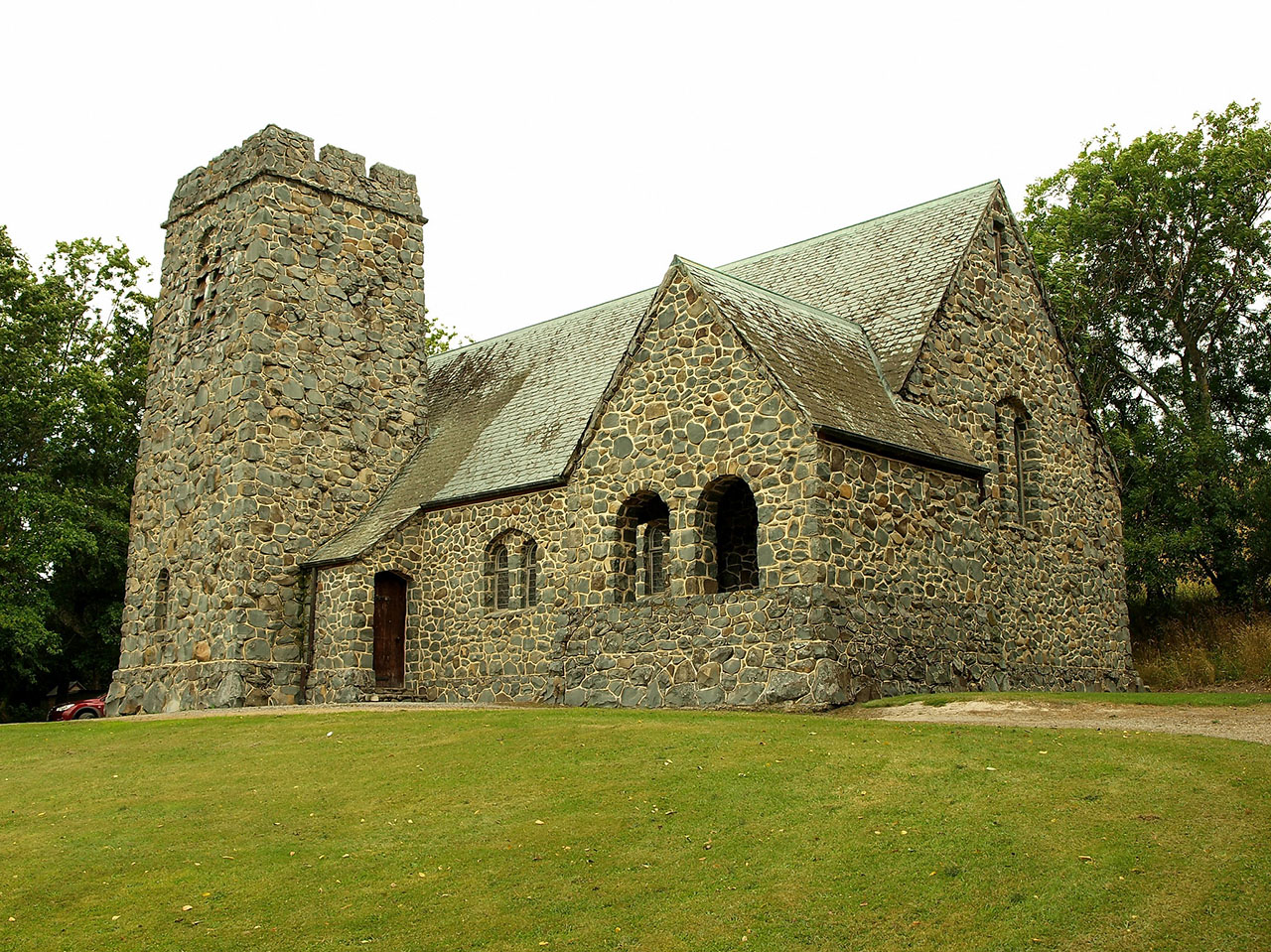
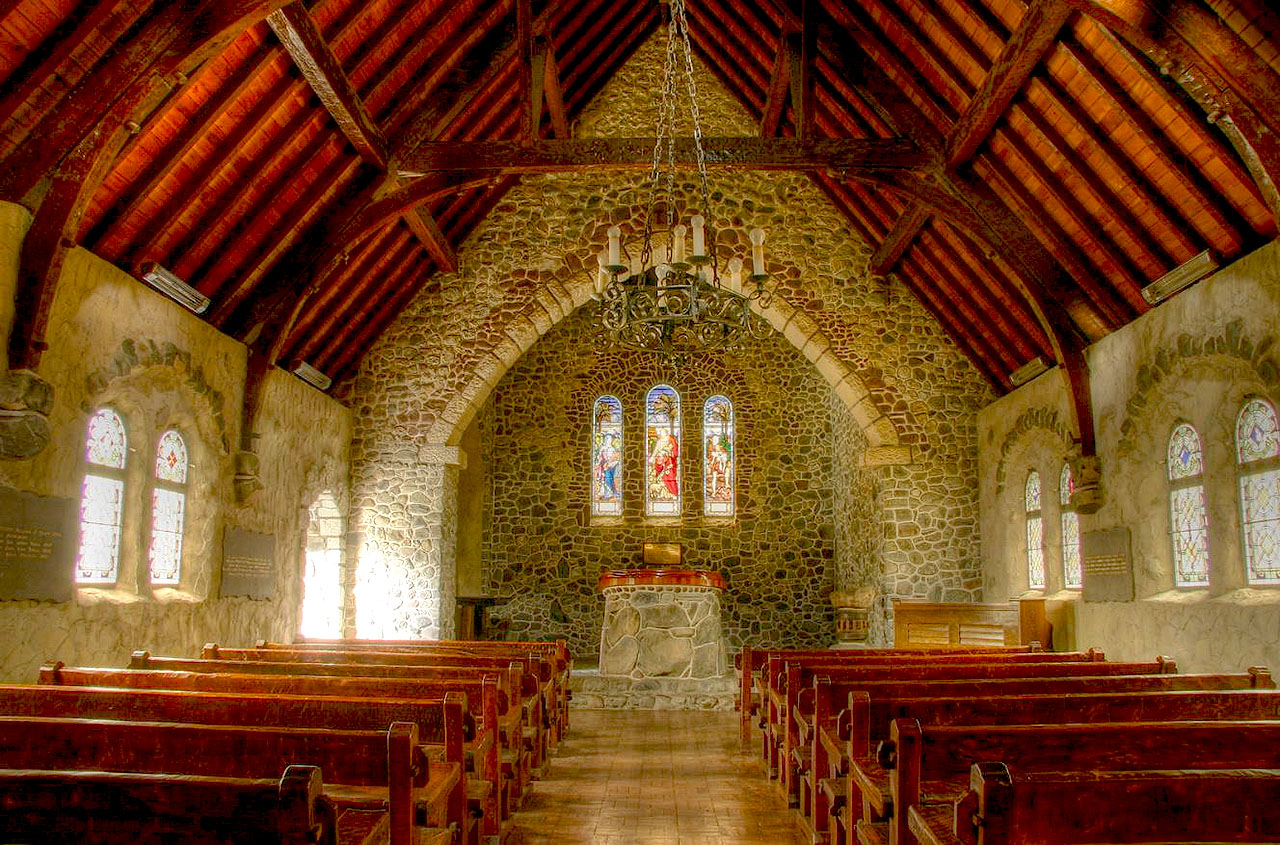
For St David's, Hall designed a small church in the Norman style with a simple nave and a square castellated tower. It was built from reinforced concrete and faced with local boulders. The main entrance is through a small stone porch built onto one side of the church. Inside the nave is dominated by the stone and plaster walls and the hand-adzed timber of the floor, pews and open roof. Hall won the New Zealand Institute of Architects Gold Medal in 1934 for his design of St David's. The church also has a significant collection of stained glass windows, which includes a set of twelve lancet windows that depict the names and symbols of the twelve Apostles. Three windows are dedicated to the memory of the pioneer women of the district, 'who, through Arctic winters and in the wilderness maintained their homes and kept the faith...'.
A number of structures within the church were constructed from material from the Burnetts' run. In the porch a slab of greywacke, inscribed with a dedication to 'the glory of God, and in memory of the Sheepmen, Shepherds, Bullockdrivers, Shearers and Station hands, who pioneered the back country of this province between the years 1855 and 1895', was once used as a table by Andrew Burnett at his mustering camp in the Jollie Gorge. The pulpit was constructed from hearth stones taken from the first homestead at Mount Cook Station while the font was constructed from three historic pieces: an ancient sandstone mortar from Scotland (once used for grinding oats and barley); the hub of one of Burnett's bullock dray wheels; and a boulder from the Jollie Gorge, used as part of a musterers' hut. Plaques around the wall bear the names of the original runholders of the area, their stations' names and sizes, and when they took them up. [In 2016 new plaques were added on the east side of the nave, detailing the Burnett generations]. As well as these physical remnants from Mount Cook Station, links to the Scottish origins of many of the early settlers were explicitly made. The service of dedication was primarily conducted in Gaelic. The use of oak for most of the fittings within St David's, the mortar bought out from Scotland and the medieval style of architecture all reflect and celebrate the British origins of the early runholders and shepherds.
St David's Pioneer Memorial Church at Cave [is] a place of worship for all [Christian] denominations. It proudly celebrates, in both architecture and words, the Scottish ancestry of the early runholders and the landscape they chose to settle in. It was built as a memorial to Andrew and Catherine Burnett and other pioneers of the district, by the Burnetts' son, Thomas, who was a notable local member of Parliament. The church also commemorates pioneer women and is included in a book of places and memorials associated with women in New Zealand, published to celebrate the centennial of women's suffrage.
List Entry Information
Status
Listed
List Entry Status
Historic Place Category 1
Access
Private/No Public Access
List Number
312
Date Entered
28th June 1984
Date of Effect
28th June 1984
City/District Council
Mackenzie District
Region
Canterbury Region
Extent of List Entry
Extent includes the land described as Lot 1 DP 9429 (RT CB421/142), Canterbury Land District and the building known as St David’s Pioneer Memorial Church thereon.
Legal description
Lot 1 DP 9429 (RT CB421/142), Canterbury Land District
Status
Listed
List Entry Status
Historic Place Category 1
Access
Private/No Public Access
List Number
312
Date Entered
28th June 1984
Date of Effect
28th June 1984
City/District Council
Mackenzie District
Region
Canterbury Region
Extent of List Entry
Extent includes the land described as Lot 1 DP 9429 (RT CB421/142), Canterbury Land District and the building known as St David’s Pioneer Memorial Church thereon.
Legal description
Lot 1 DP 9429 (RT CB421/142), Canterbury Land District
Construction Professional
Name
Hall, Herbert W
Type
Architect
Biography
No biography is currently available for this construction professional
Construction Details
Start Year
1930
Finish Year
1930
Type
Original Construction
Description
Opened 22 November 1930
Notable Features
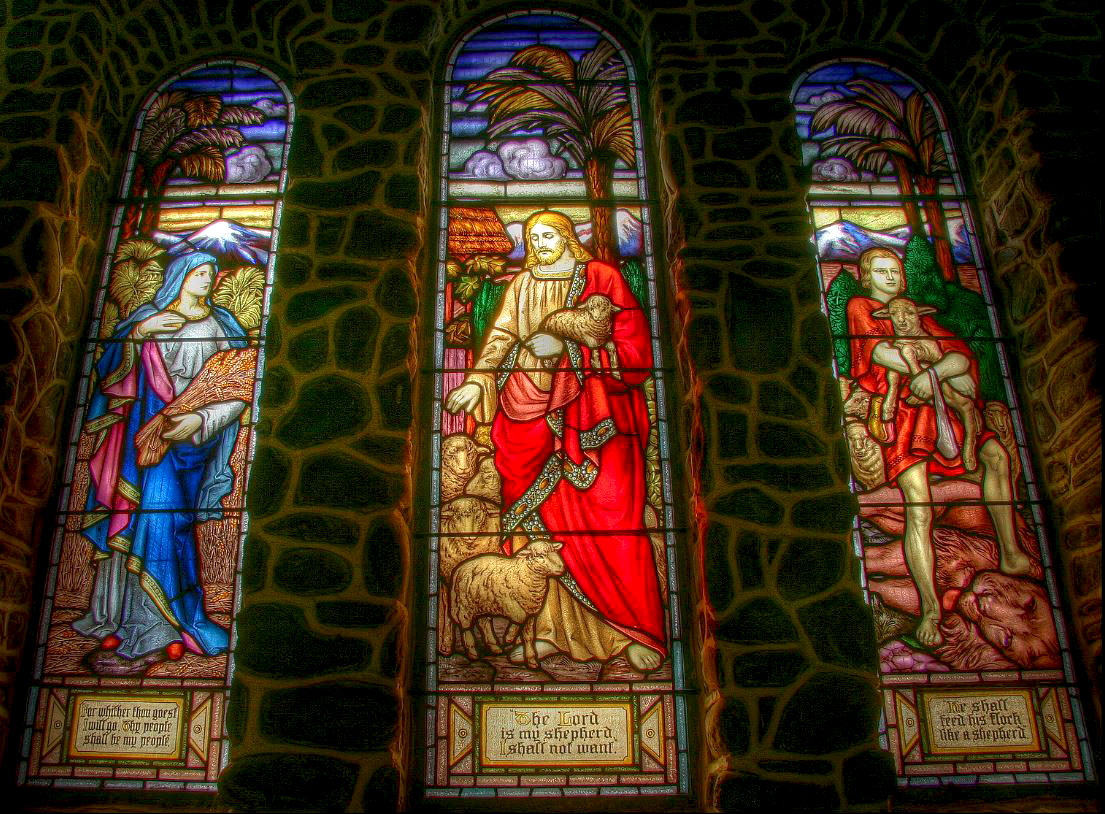
St David's Memorial Church has fourteen stained glass windows, all attributed to Brooks, Robinson & Co of Melbourne. The three in the east sanctuary were donated by Thomas and Agnes Burnett in memory of Thomas's parents, Andrew and Catherine. They depict the Good Shepherd, Ruth the Gleaner and David the Shepherd. A set of twelve windows in the nave depicts each of the Apostles and their emblems. A window dedicated to the pioneer women of the Mackenzie country, also donated by Thomas and Agnes Burnett, consists of two lights depicting 'Rachel the Shepherdess drawing Water from a Well' and 'Christ in the House of St Martha and Mary of Bethany' respectively.
Construction Professional
Name
Hall, Herbert W
Type
Architect
Biography
No biography is currently available for this construction professional
Construction Details
Start Year
1930
Finish Year
1930
Type
Original Construction
Description
Opened 22 November 1930
Notable Features
St David's Memorial Church has fourteen stained glass windows, all attributed to Brooks, Robinson & Co of Melbourne. The three in the east sanctuary were donated by Thomas and Agnes Burnett in memory of Thomas's parents, Andrew and Catherine. They depict the Good Shepherd, Ruth the Gleaner and David the Shepherd. A set of twelve windows in the nave depicts each of the Apostles and their emblems. A window dedicated to the pioneer women of the Mackenzie country, also donated by Thomas and Agnes Burnett, consists of two lights depicting 'Rachel the Shepherdess drawing Water from a Well' and 'Christ in the House of St Martha and Mary of Bethany' respectively.
Historical and Associated Iwi / Hapū / Whānau
Completion Date
9th October 2002
Report Written By
Melanie Lovell-Smith
Information Sources
Cant, 2001
Garth Cant & Russell Kirkpatrick, eds., Rural Canterbury: Celebrating its History, Wellington, 2001
Ciaran, 1998
Fiona Ciaran, Stained Glass Windows of Canterbury, New Zealand. A Catalogue Raisonne, Dunedin, 1998
Donovan, 1994
Don Donovan, 'Rugged Beauty' in Historic Places, 47, May 1994, pp. 22-23
Gillespie, 1971
Oliver A. Gillespie, South Canterbury: A Record of Settlement, 2nd edn., Timaru, 1971
Pierce, 1995
Jill Pierce, The suffrage trail: a guide to places, memorials and the arts commemorating New Zealand women, Wellington, 1995
University of Canterbury
University of Canterbury
Other Information
This place was identified as significant under previous legislation with different information requirements. It remains significant under the current legislation. There is opportunity under our legislation and policies to add to this information. Further information about this place may be available from the Southern Regional Office of Heritage New Zealand Pouhere Taonga. NZIA Gold Award Winners 1934 Please note that entry on the New Zealand Heritage List/Rarangi Korero identifies only the heritage values of the property concerned, and should not be construed as advice on the state of the property, or as a comment of its soundness or safety, including in regard to earthquake risk, safety in the event of fire, or insanitary conditions.
Historical and Associated Iwi / Hapū / Whānau
Completion Date
9th October 2002
Report Written By
Melanie Lovell-Smith
Information Sources
Cant, 2001
Garth Cant & Russell Kirkpatrick, eds., Rural Canterbury: Celebrating its History, Wellington, 2001
Ciaran, 1998
Fiona Ciaran, Stained Glass Windows of Canterbury, New Zealand. A Catalogue Raisonne, Dunedin, 1998
Donovan, 1994
Don Donovan, 'Rugged Beauty' in Historic Places, 47, May 1994, pp. 22-23
Gillespie, 1971
Oliver A. Gillespie, South Canterbury: A Record of Settlement, 2nd edn., Timaru, 1971
Pierce, 1995
Jill Pierce, The suffrage trail: a guide to places, memorials and the arts commemorating New Zealand women, Wellington, 1995
University of Canterbury
University of Canterbury
Other Information
This place was identified as significant under previous legislation with different information requirements. It remains significant under the current legislation. There is opportunity under our legislation and policies to add to this information. Further information about this place may be available from the Southern Regional Office of Heritage New Zealand Pouhere Taonga. NZIA Gold Award Winners 1934 Please note that entry on the New Zealand Heritage List/Rarangi Korero identifies only the heritage values of the property concerned, and should not be construed as advice on the state of the property, or as a comment of its soundness or safety, including in regard to earthquake risk, safety in the event of fire, or insanitary conditions.
Current Usages
Uses: Religion
Specific Usage: Church
Former Usages
General Usage: Religion
Specific Usage: Church
Current Usages
Uses: Religion
Specific Usage: Church
Former Usages
General Usage: Religion
Specific Usage: Church
Location
Sign up to hear more
Get the latest heritage news, features and events delivered
straight to your inbox.
