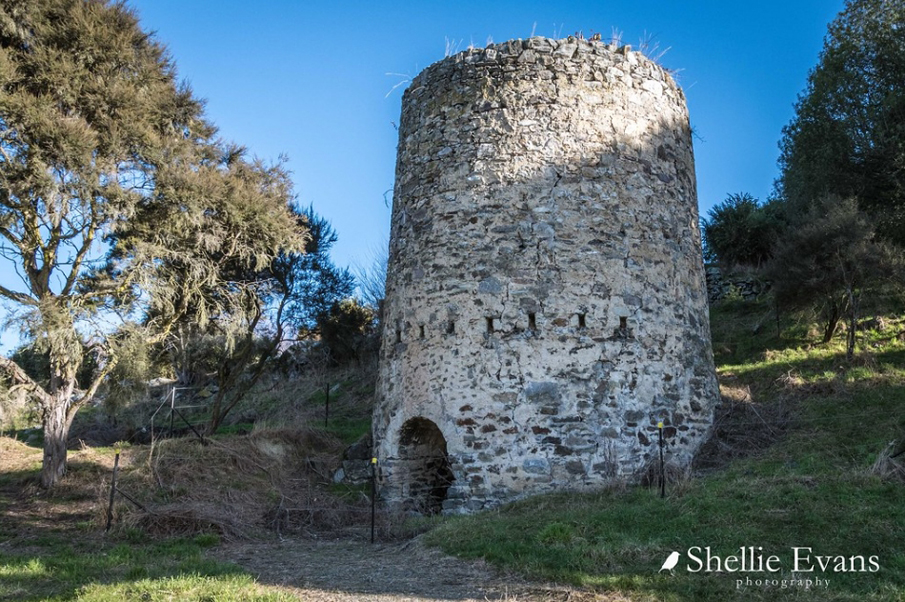
Built in circa 1876, the Kakahu Lime Kiln at Hall Road in Kakahu, near Geraldine, is a rare surviving relatively intact pot-style kiln that illustrates the lime burning process, an important industry in New Zealand in the last forty years of the nineteenth century. The place has aesthetic, archaeological, architectural and historical significance.
During the nineteenth century lime was burnt in small kilns near limestone deposits. A number of lime kilns were built in the South Canterbury region from the 1860s through to the 1880s. The Kakahu area was an obvious location to erect lime kilns because the region was rich in both limestone and coal – key ingredients for producing burnt lime. The burnt lime produced at Kakahu was used for agriculture and the building industry. Burnt lime was also used in the tanning industry for de-hairing hides. Seven or eight kilns were built in Kakaku. The Kakahu Lime Kiln on Hall Road was built for or by Alexander Fergusson in circa 1876, around the time when his partnership with George Munro in the ‘Pioneer Lime Kiln’ was dissolved.
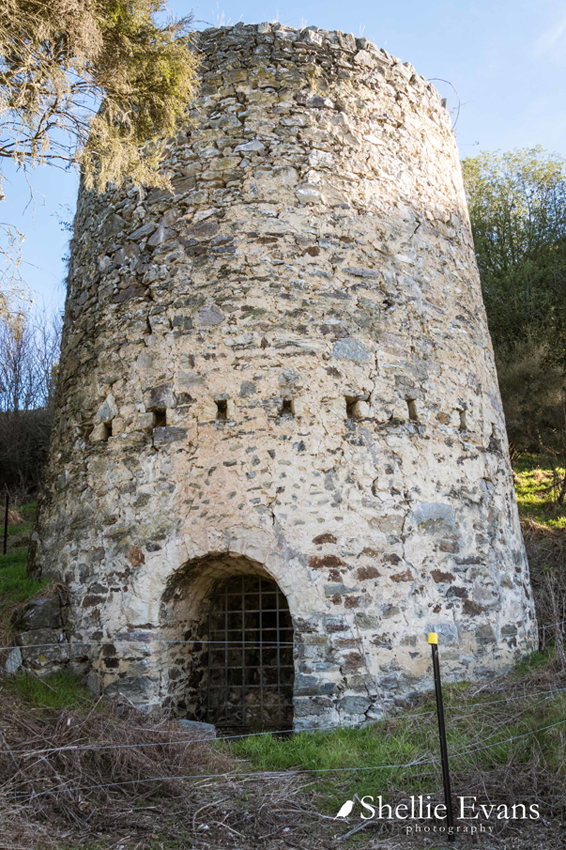
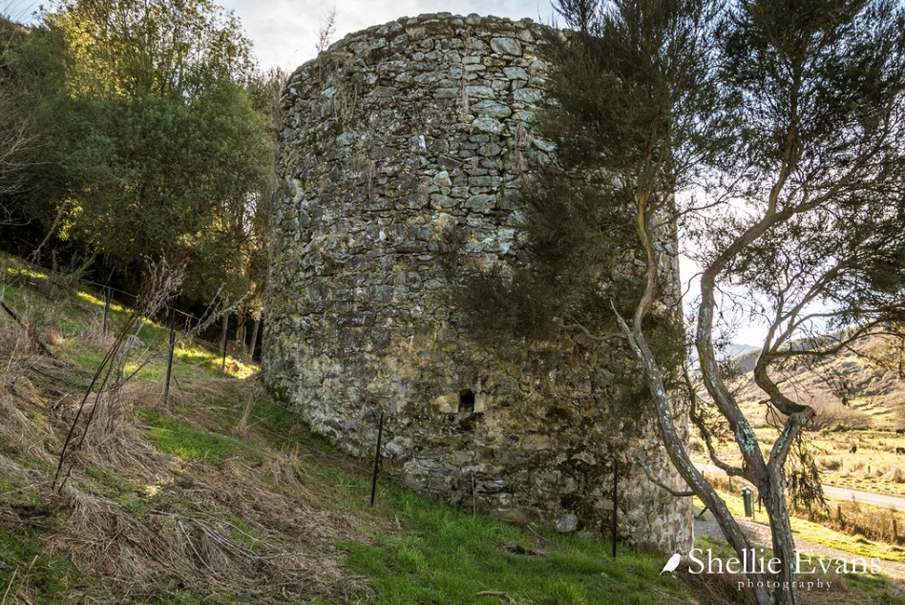
Built against a rocky outcrop, this pot-style kiln is built of local limestone known as lime rock or marble. Around the circumference of the kiln, about 1/3rd of the way up, are poke holes, which were used to introduce air to the kiln. Recorded archaeological sites around the lime kiln indicate where associated structures, including a tramway, previously stood while it was in operation. A track leads down from the top of the kiln to the Hall Road level, which is believed to be a track for transporting coal.
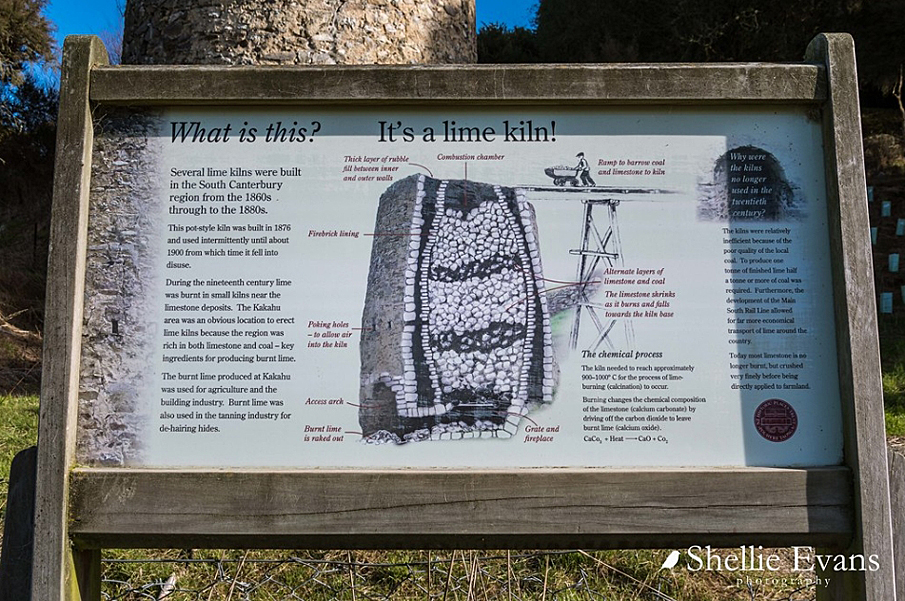
The kiln originally had a ramp constructed out from the hillside leading to the top of the kiln where coal and limestone chips were wheeled in barrows and tipped in. Successive layers of coal and limestone were built up in the kiln’s burning chamber on grate bars across the eye of the kiln. A fire was lit at the base of the kiln which was accessed via the open arch at the base of the kiln – this is also where the burnt lime fell through and was raked out. The kiln needed to reach approximately 900 -1000ºC for the process of lime-burning (calcination) to occur.
The Kakahu Lime Kiln operated intermittently. Fergusson appears to have operated the Kakahu Lime Kiln for several years, and in 1881 sold to William Langdon, who had a large Hoffman kiln on the opposite side of the river. Langdon gave up lime burning at Kakahu after 1883 and James Maylor (Mailor) took over the lease in circa 1886. In 1889, James Duke burnt lime here for a couple of years before moving to Fairlie. It appears the kiln operated intermittently and by the turn of the twentieth century was not used at all. The kiln was capped in 1973 by Timaru contractor, J H Wallace Ltd. A new interpretation sign board to replace an earlier one was erected in 2012-13 in memory of Alan Talbot.
During the nineteenth century lime was burnt in small kilns near limestone deposits. A number of lime kilns were built in the South Canterbury region from the 1860s through to the 1880s. The Kakahu area was an obvious location to erect lime kilns because the region was rich in both limestone and coal – key ingredients for producing burnt lime. The burnt lime produced at Kakahu was used for agriculture and the building industry. Burnt lime was also used in the tanning industry for de-hairing hides. Seven or eight kilns were built in Kakaku. The Kakahu Lime Kiln on Hall Road was built for or by Alexander Fergusson in circa 1876, around the time when his partnership with George Munro in the ‘Pioneer Lime Kiln’ was dissolved.
Built against a rocky outcrop, this pot-style kiln is built of local limestone known as lime rock or marble. Around the circumference of the kiln, about 1/3rd of the way up, are poke holes, which were used to introduce air to the kiln. Recorded archaeological sites around the lime kiln indicate where associated structures, including a tramway, previously stood while it was in operation. A track leads down from the top of the kiln to the Hall Road level, which is believed to be a track for transporting coal.
The kiln originally had a ramp constructed out from the hillside leading to the top of the kiln where coal and limestone chips were wheeled in barrows and tipped in. Successive layers of coal and limestone were built up in the kiln’s burning chamber on grate bars across the eye of the kiln. A fire was lit at the base of the kiln which was accessed via the open arch at the base of the kiln – this is also where the burnt lime fell through and was raked out. The kiln needed to reach approximately 900 -1000ºC for the process of lime-burning (calcination) to occur.
The Kakahu Lime Kiln operated intermittently. Fergusson appears to have operated the Kakahu Lime Kiln for several years, and in 1881 sold to William Langdon, who had a large Hoffman kiln on the opposite side of the river. Langdon gave up lime burning at Kakahu after 1883 and James Maylor (Mailor) took over the lease in circa 1886. In 1889, James Duke burnt lime here for a couple of years before moving to Fairlie. It appears the kiln operated intermittently and by the turn of the twentieth century was not used at all. The kiln was capped in 1973 by Timaru contractor, J H Wallace Ltd. A new interpretation sign board to replace an earlier one was erected in 2012-13 in memory of Alan Talbot.