DonateMembershipVisit Heritage
  • Tūrangawaewae
    Places
  • Tira Māori
    Māori Heritage
  • Poutairangahia
    Archaeology
  • Rauemi
    Resources
  • Mō Tātou
    About Us
  • New Zealand Heritage List
  • Nominate and submit
  • Explore the List
  • National Historic Landmarks
  • Plaques
  • Rainbow List Project
  • Lost heritage
  • Visit Heritage
  • Our properties
  • Turnbull House Project
  • Collections
  • Shop
  • Tohu Whenua
  • Tira Māori
  • Conserving Māori heritage
  • Marae built heritage
  • Māori heritage on the List
  • Hinemihi—Te Hokinga Mai
  • What is archaeology?
  • Is there a site on my property?
  • What are my legal requirements?
  • Affecting an archaeological site
  • Declaring an archaeological site
  • Archaeology FAQs
  • Archaeology Digital Library
  • Archaeology guidelines and templates
  • Resources
  • Funding
  • Publications
  • Sustainable management guides
  • Disaster recovery
  • Podcasts & digital resources
  • Education Hub
  • Conservation plans
  • About
  • Board
  • Māori Heritage Council
  • Senior Staff
  • Offices
  • Contact us
  • Careers
  • Covenants
  • Fast-track
  • Corporate documents
  • Currently consulting on
  • Our submissions
  • News
  • Covid-19 response
Quick links
Rārangi Kōrero | The List
Explore the List
National Historic Landmarks
Ngā Manawhenua o Aotearoa me ōna Kōrero Tūturu
Quick links
Tapuwae
A Vision for Places of Māori Heritage
Funding for Māori Heritage
Resources
Quick links
Archaeological Authority Portal
Applying for an archaeological authority
Archaeology FAQs
Browse the most frequently asked questions about archaeological authorities and the archaeological process.
Quick links
Quick links
News
News Keep up to date with Heritage New Zealand Pouhere Taonga
Membership
Membership Find out more and sign up today
DonateMembershipVisit Heritage
  • Tūrangawaewae
    Places
  • Tira Māori
    Māori Heritage
  • Poutairangahia
    Archaeology
  • Rauemi
    Resources
  • Mō Tātou
    About Us
  • New Zealand Heritage List
  • Nominate and submit
  • Explore the List
  • National Historic Landmarks
  • Plaques
  • Rainbow List Project
  • Lost heritage
  • Visit Heritage
  • Our properties
  • Turnbull House Project
  • Collections
  • Shop
  • Tohu Whenua
  • Tira Māori
  • Conserving Māori heritage
  • Marae built heritage
  • Māori heritage on the List
  • Hinemihi—Te Hokinga Mai
  • What is archaeology?
  • Is there a site on my property?
  • What are my legal requirements?
  • Affecting an archaeological site
  • Declaring an archaeological site
  • Archaeology FAQs
  • Archaeology Digital Library
  • Archaeology guidelines and templates
  • Resources
  • Funding
  • Publications
  • Sustainable management guides
  • Disaster recovery
  • Podcasts & digital resources
  • Education Hub
  • Conservation plans
  • About
  • Board
  • Māori Heritage Council
  • Senior Staff
  • Offices
  • Contact us
  • Careers
  • Covenants
  • Fast-track
  • Corporate documents
  • Currently consulting on
  • Our submissions
  • News
  • Covid-19 response
Quick links
Rārangi Kōrero | The List
Explore the List
National Historic Landmarks
Ngā Manawhenua o Aotearoa me ōna Kōrero Tūturu
Quick links
Tapuwae
A Vision for Places of Māori Heritage
Funding for Māori Heritage
Resources
Quick links
Archaeological Authority Portal
Applying for an archaeological authority
Archaeology FAQs
Browse the most frequently asked questions about archaeological authorities and the archaeological process.
Quick links
Quick links
News
News Keep up to date with Heritage New Zealand Pouhere Taonga
Membership
Membership Find out more and sign up today
  • Places
  • Nominate and submit
  • National Historic Landmarks
  • Places
  • Nominate and submit
  • National Historic Landmarks
  • Tira Māori
  • Conserving Māori heritage
  • Marae built heritage
  • Tira Māori
  • Conserving Māori heritage
  • Marae built heritage
  • Archaeological authorities
  • Archaeology Digital Library
  • Archaeological authorities
  • Archaeology Digital Library
  • All resources
  • Publications
  • Funding
  • All resources
  • Publications
  • Funding
  • FAQs
  • FAQs
Follow us on:
Places
  • Places
  • Nominate and submit
  • National Historic Landmarks
Tira Māori
  • Tira Māori
  • Conserving Māori heritage
  • Marae built heritage
Archaeology
  • Archaeological authorities
  • Archaeology Digital Library
Resources
  • All resources
  • Publications
  • Funding
FAQs
  • FAQs
Follow us on
HomePrivacyTerms and conditionsAbout this site
© Heritage New Zealand Pouhere Taonga 2026.
 
Oamaru Freezing Works (Former)

Esplanade Road, OAMARU

Private

Historic Place Category 2

List No. 3217

Quick links:
List GalleryLocationDetails
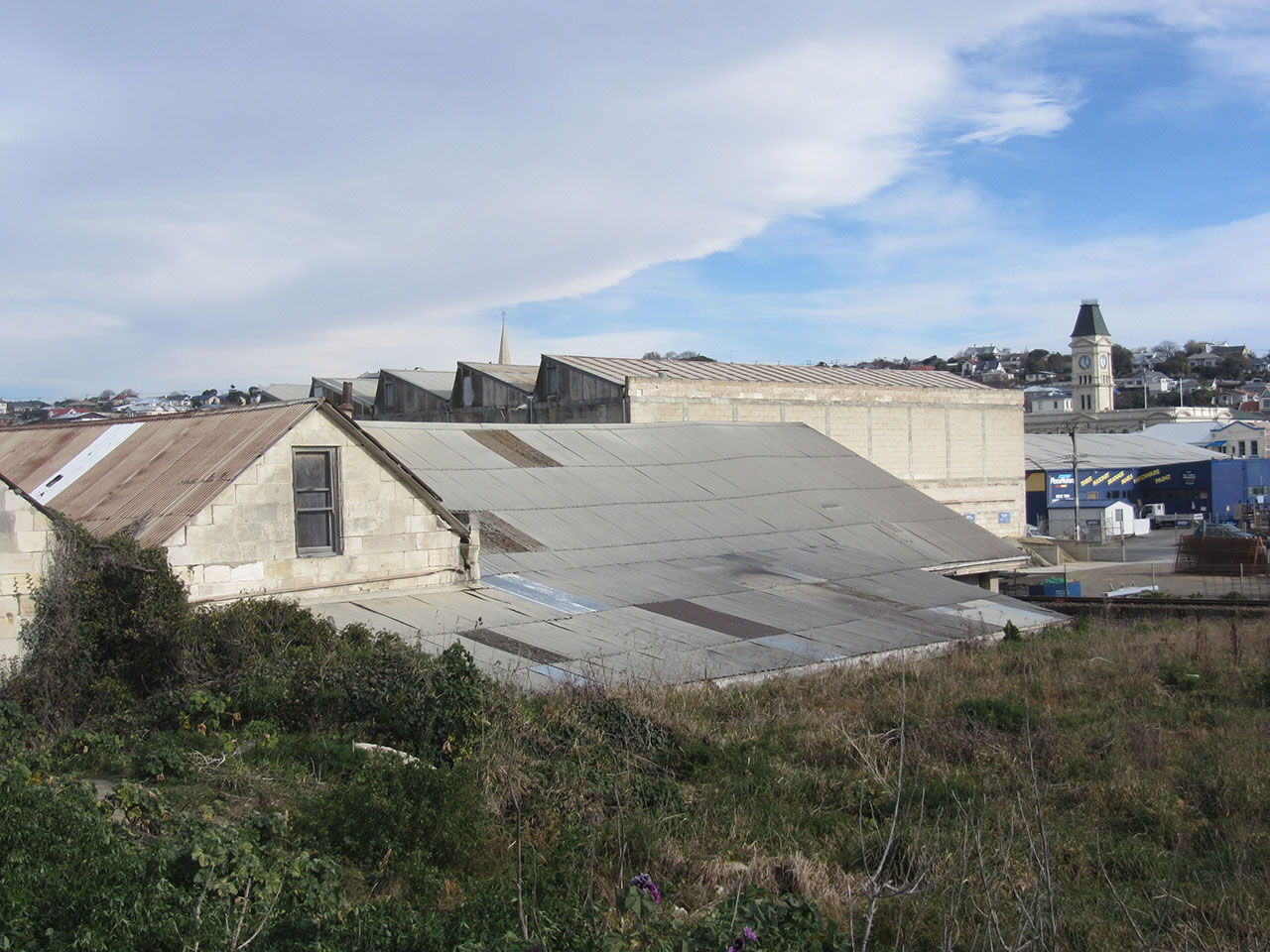
The Oamaru Freezing Works (Former), opened in February 1886, are thought to be New Zealand’s oldest surviving freezing works. They provide a link to the early years of one of the country’s most important industries. The relatively unaltered state of the Oamaru Freezing Works (Former) makes them an important example of an early freezing works complex.

The first shipment of frozen meat to Britain in 1882 marked the beginning of New Zealand’s frozen meat industry. The meat for that first shipment was frozen on-board ship by a freezing plant. The industry needed land-based meat works and the New Zealand Refrigerating Company built the country’s first freezing works at Burnside near Dunedin in 1882. Three freezing works opened in 1883 – in Wellington, Belfast (near Christchurch) and in Tomoana (in the Hawke’s Bay).

In 1885, the New Zealand Refrigerating Company built a freezer and store in Oamaru on a site close to the railway line and the port. Prominent Oamaru architect Thomas Forrester designed the works. The freezing works began processing meat on 2 February 1886. Sheep for the works were slaughtered at the company’s Eveline Refrigerating Works, five kilometres north by rail. The North Otago Times recognised that the freezing works were the ‘centre of an extensive industry.’ The freezing works started with one Bell-Coleman refrigerator driven by a water motor connected to council water mains. The company installed a steam engine and boiler in case the water supply failed. The works could process three hundred sheep daily and store 12,000 frozen carcases.

Very soon, the works needed to process more carcases and the company added to the buildings and the refrigeration system. In 1889, the North Otago Times described the limestone buildings and their recent alterations. They are, the paper wrote, ‘rectangular in shape, one storey high, and measure 160ft by 50ft [49 by 15m]; and the engine room, stokehole, offices, etc., are placed on the east side of the premises, while the siding and loading platform extend along the whole west side.’ The original buildings had two storerooms and two freezing rooms. An extension to the larger store meant there was enough room for 20,000 carcases. The stokehole was also extended, giving enough space for the new boilers, and an additional ten feet [3m] were added to the height of the chimneystack. The company built a residence for the engineer at the rear of the works.

The North Otago Times told readers about insulation of the freezing chambers walls, giving an interesting insight into the technology: the three-foot thick walls were made up of two walls of stone with a sealed air cavity between them. There was another ‘hermetically sealed space between the timber and the stone, then a solid wall of charcoal 10 inches thick all around, above and below, the whole of the building, the charcoal being increased to about 16 inches above. There is also a layer of asphalt in the ceiling and floor, while the whole building is scrimmed and papered throughout to prevent leakage of air, and covered with galvanised sheet iron in the inside to prevent any possibility of fire.’

Even with the alterations, the works could not meet the needs of this rapidly growing industry. The number of freezing works built in less than twenty years shows the growth of the frozen meat industry – in 1900, there were twenty-five works, fourteen in the North Island and eleven in the South Island. Company structures changed with the growth – the New Zealand Refrigerating Company amalgamated with the Christchurch Meat Company in 1905. The Christchurch Meat Company acquired the Burnside and Oamaru freezing works.

In 1906 general manager William Murray recommended that the Oamaru works close and that North Otago stock be railed to Burnside or Smithfield, in Timaru. Historian Cyril Loach writes that by this time the ‘Oamaru plant was antiquated and inefficient.’ Another five years passed before the company decided to rebuild at Pukeuri, north of Oamaru. The new Pukeuri Freezing Works opened on 5 March 1914 – with 90,000ft [8361m²] of floor space and the capacity to process 3,000 lambs a day.


In 2013, the former Oamaru Freezing Works stand as a reminder of the beginnings of New Zealand’s frozen meat industry.
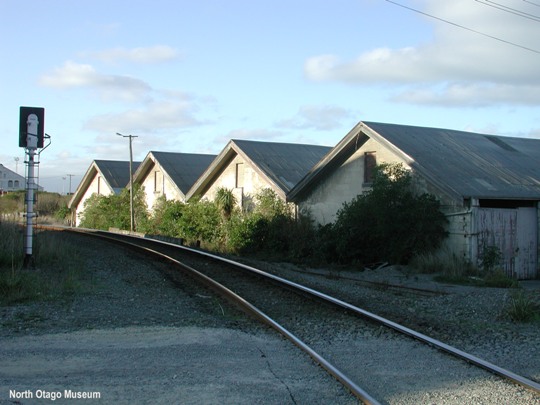
Oamaru Freezing Works (Former), Oamaru | North Otago Museum
Oamaru Freezing Works (Former), Oamaru. CC BY-SA 2.0 Image courtesy of commons.wikimedia.org | Huhnbeauftragter | 28/07/2011 | Huhnbeauftragter - Wikimedia Commons
Oamaru Freezing Works (Former), Oamaru | North Otago Museum
Oamaru Freezing Works (Former), Oamaru. CC BY-SA 2.0 Image courtesy of commons.wikimedia.org | Huhnbeauftragter | 28/07/2011 | Huhnbeauftragter - Wikimedia Commons

List Entry Information

Overview

Status
Listed

List Entry Status
Historic Place Category 2

Access
Private/No Public Access

List Number
3217

Date Entered
7th April 1983

Date of Effect
7th April 1983

City/District Council
Waitaki District

Region
Otago Region

Extent of List Entry

Extent includes the land described as Lots 5-8 DP 285 (RT OT15B/743), Otago Land District and the building known as the Oamaru Freezing Works (Former), thereon.

Legal description

Lots 5-8 DP 285 (RT OT15B/743), Otago Land District

Detailed List Entry

Construction Professional

Name

Forrester, Thomas

Type

Architect

Biography

Born in Glasgow and educated at the Glasgow School of Art, Thomas Forrester (1838-1907) emigrated to New Zealand in 1861 with some experience in building construction, particularly plasterwork. Settling in Dunedin he worked under William Mason (1810-97) and William Henry Clayton (1823-77) and later Robert Arthur Lawson (1833-1902). In 1865 he superintended the Dunedin Exhibition and in 1870 was employed by the Otago Provincial Government to supervise borings for the Waitaki road and rail bridge. In 1872 Forrester entered partnership with John Lemon (1828-90) in Oamaru. Forrester was responsible for most of the design work while Lemon administered the practice. Among their many designs were St Paul's Church (1875-76), the Harbour Board Offices (1876), Queen's (later Brydone) Hotel (1881), Waitaki Boys' High School (1883), The Courthouse (1883) and the Post Office (1883-84). They contributed greatly to Oamaru's nineteenth century character. On Lemon's death in 1890 the practice was taken over by Forrester's son, John Megget Forrester (1865-1965). From 1870 Forrester became involved with the supervision of harbour works and some time after 1885 he became Engineer to the Oamaru Harbour Board. In this capacity he designed the repairs to the breakwater following storm damage in 1886 and later the Holmes Wharf. On his death in 1907 he was still in the employ of the Harbour Board. Forrester is also believed to have prepared the first geological maps of New Zealand under the direction of Sir James Hector (1834-1907).

Construction Details

Start Year

1886

Type

Other

Description

2 Feb 1886: Oamaru Freezing Works operating

Start Year

1886

Finish Year

1889

Type

Modification

Description

Store and stoke hole extended

Start Year

1889

Type

Additional building added to site

Description

Engineer's residence built

Start Year

1914

Type

Other

Description

Freezing Works plant shifted to Pukeuri

Type

Demolished - additional building on site

Description

Engineer's residence demolished

Period

Unknown

Type

Modification

Description

Two-storey gable portion of works demolished

Period

Unknown

Construction Materials

North Otago limestone

Reference

Public NZAA Number

J41/276

Completion Date

11th September 2013

Report Written By

Heather Bauchop

Information Sources

Cyclopedia of New Zealand, 1905

Cyclopedia Company, Industrial, descriptive, historical, biographical facts, figures, illustrations, Wellington, N.Z, 1897-1908, Vol. 4 Otago and Southland, Cyclopedia Company, Christchurch, 1905

Loach, 1969

Cyril Loach, A History of The New Zealand Refrigeration Company, Caxton Press, Christchurch, 1969.

McCarthy, 2002

Conal McCarthy, Forrester and Lemon of Oamaru, architects, Oamaru, 2002

Smith, 2001

Nigel Smith, Heritage of Industry: Discovering New Zealand's Industrial History, Auckland, 2001

Thornton, 1982

Geoffrey G. Thornton, New Zealand's Industrial Heritage, A.H. & A.W. Reed, Wellington, 1982

Report Written By

This place was identified as significant under previous legislation with different information requirements. It remains significant under the current legislation. There is opportunity under our legislation and policies to add to this information. Further information about this place may be available from the Otago/Southland Office of Heritage New Zealand Pouhere Taonga. A fully referenced upgrade report is available on request from the Otago/Southland Office of the NZHPT Please note that entry on the New Zealand Heritage List/Rarangi Korero identifies only the heritage values of the property concerned, and should not be construed as advice on the state of the property, or as a comment of its soundness or safety, including in regard to earthquake risk, safety in the event of fire, or insanitary conditions.

Further Information

Current Usages

Uses: Trade

Specific Usage: Warehouse/storage area

Former Usages

General Usage:: Manufacturing

Specific Usage: Freezing Works

Themes

Web Links

Overview

Status

Listed

List Entry Status

Historic Place Category 2

Access

Private/No Public Access

List Number

3217

Date Entered

7th April 1983

Date of Effect

7th April 1983

City/District Council

Waitaki District

Region

Otago Region

Extent of List Entry

Extent includes the land described as Lots 5-8 DP 285 (RT OT15B/743), Otago Land District and the building known as the Oamaru Freezing Works (Former), thereon.

Legal description

Lots 5-8 DP 285 (RT OT15B/743), Otago Land District

Status

Listed

List Entry Status

Historic Place Category 2

Access

Private/No Public Access

List Number

3217

Date Entered

7th April 1983

Date of Effect

7th April 1983

City/District Council

Waitaki District

Region

Otago Region

Extent of List Entry

Extent includes the land described as Lots 5-8 DP 285 (RT OT15B/743), Otago Land District and the building known as the Oamaru Freezing Works (Former), thereon.

Legal description

Lots 5-8 DP 285 (RT OT15B/743), Otago Land District

Construction Information

Construction Professional

Name

Forrester, Thomas

Type

Architect

Biography

Born in Glasgow and educated at the Glasgow School of Art, Thomas Forrester (1838-1907) emigrated to New Zealand in 1861 with some experience in building construction, particularly plasterwork. Settling in Dunedin he worked under William Mason (1810-97) and William Henry Clayton (1823-77) and later Robert Arthur Lawson (1833-1902). In 1865 he superintended the Dunedin Exhibition and in 1870 was employed by the Otago Provincial Government to supervise borings for the Waitaki road and rail bridge. In 1872 Forrester entered partnership with John Lemon (1828-90) in Oamaru. Forrester was responsible for most of the design work while Lemon administered the practice. Among their many designs were St Paul's Church (1875-76), the Harbour Board Offices (1876), Queen's (later Brydone) Hotel (1881), Waitaki Boys' High School (1883), The Courthouse (1883) and the Post Office (1883-84). They contributed greatly to Oamaru's nineteenth century character. On Lemon's death in 1890 the practice was taken over by Forrester's son, John Megget Forrester (1865-1965). From 1870 Forrester became involved with the supervision of harbour works and some time after 1885 he became Engineer to the Oamaru Harbour Board. In this capacity he designed the repairs to the breakwater following storm damage in 1886 and later the Holmes Wharf. On his death in 1907 he was still in the employ of the Harbour Board. Forrester is also believed to have prepared the first geological maps of New Zealand under the direction of Sir James Hector (1834-1907).

Construction Details

Start Year

1886

Type

Other

Description

2 Feb 1886: Oamaru Freezing Works operating

Start Year

1886

Finish Year

1889

Type

Modification

Description

Store and stoke hole extended

Start Year

1889

Type

Additional building added to site

Description

Engineer's residence built

Start Year

1914

Type

Other

Description

Freezing Works plant shifted to Pukeuri

Type

Demolished - additional building on site

Description

Engineer's residence demolished

Period

Unknown

Type

Modification

Description

Two-storey gable portion of works demolished

Period

Unknown

Construction Materials

North Otago limestone

Construction Professional

Name

Forrester, Thomas

Type

Architect

Biography

Born in Glasgow and educated at the Glasgow School of Art, Thomas Forrester (1838-1907) emigrated to New Zealand in 1861 with some experience in building construction, particularly plasterwork. Settling in Dunedin he worked under William Mason (1810-97) and William Henry Clayton (1823-77) and later Robert Arthur Lawson (1833-1902). In 1865 he superintended the Dunedin Exhibition and in 1870 was employed by the Otago Provincial Government to supervise borings for the Waitaki road and rail bridge. In 1872 Forrester entered partnership with John Lemon (1828-90) in Oamaru. Forrester was responsible for most of the design work while Lemon administered the practice. Among their many designs were St Paul's Church (1875-76), the Harbour Board Offices (1876), Queen's (later Brydone) Hotel (1881), Waitaki Boys' High School (1883), The Courthouse (1883) and the Post Office (1883-84). They contributed greatly to Oamaru's nineteenth century character. On Lemon's death in 1890 the practice was taken over by Forrester's son, John Megget Forrester (1865-1965). From 1870 Forrester became involved with the supervision of harbour works and some time after 1885 he became Engineer to the Oamaru Harbour Board. In this capacity he designed the repairs to the breakwater following storm damage in 1886 and later the Holmes Wharf. On his death in 1907 he was still in the employ of the Harbour Board. Forrester is also believed to have prepared the first geological maps of New Zealand under the direction of Sir James Hector (1834-1907).

Construction Details

Start Year

1886

Type

Other

Description

2 Feb 1886: Oamaru Freezing Works operating

Start Year

1886

Finish Year

1889

Type

Modification

Description

Store and stoke hole extended

Start Year

1889

Type

Additional building added to site

Description

Engineer's residence built

Start Year

1914

Type

Other

Description

Freezing Works plant shifted to Pukeuri

Type

Demolished - additional building on site

Description

Engineer's residence demolished

Period

Unknown

Type

Modification

Description

Two-storey gable portion of works demolished

Period

Unknown

Construction Materials

North Otago limestone

Reference

Historical and Associated Iwi / Hapū / Whānau

Public NZAA Number

J41/276

Completion Date

11th September 2013

Report Written By

Heather Bauchop

Information Sources

Cyclopedia of New Zealand, 1905

Cyclopedia Company, Industrial, descriptive, historical, biographical facts, figures, illustrations, Wellington, N.Z, 1897-1908, Vol. 4 Otago and Southland, Cyclopedia Company, Christchurch, 1905

Loach, 1969

Cyril Loach, A History of The New Zealand Refrigeration Company, Caxton Press, Christchurch, 1969.

McCarthy, 2002

Conal McCarthy, Forrester and Lemon of Oamaru, architects, Oamaru, 2002

Smith, 2001

Nigel Smith, Heritage of Industry: Discovering New Zealand's Industrial History, Auckland, 2001

Thornton, 1982

Geoffrey G. Thornton, New Zealand's Industrial Heritage, A.H. & A.W. Reed, Wellington, 1982

Other Information

This place was identified as significant under previous legislation with different information requirements. It remains significant under the current legislation. There is opportunity under our legislation and policies to add to this information. Further information about this place may be available from the Otago/Southland Office of Heritage New Zealand Pouhere Taonga. A fully referenced upgrade report is available on request from the Otago/Southland Office of the NZHPT Please note that entry on the New Zealand Heritage List/Rarangi Korero identifies only the heritage values of the property concerned, and should not be construed as advice on the state of the property, or as a comment of its soundness or safety, including in regard to earthquake risk, safety in the event of fire, or insanitary conditions.

Historical and Associated Iwi / Hapū / Whānau

Public NZAA Number

J41/276

Completion Date

11th September 2013

Report Written By

Heather Bauchop

Information Sources

Cyclopedia of New Zealand, 1905

Cyclopedia Company, Industrial, descriptive, historical, biographical facts, figures, illustrations, Wellington, N.Z, 1897-1908, Vol. 4 Otago and Southland, Cyclopedia Company, Christchurch, 1905

Loach, 1969

Cyril Loach, A History of The New Zealand Refrigeration Company, Caxton Press, Christchurch, 1969.

McCarthy, 2002

Conal McCarthy, Forrester and Lemon of Oamaru, architects, Oamaru, 2002

Smith, 2001

Nigel Smith, Heritage of Industry: Discovering New Zealand's Industrial History, Auckland, 2001

Thornton, 1982

Geoffrey G. Thornton, New Zealand's Industrial Heritage, A.H. & A.W. Reed, Wellington, 1982

Other Information

This place was identified as significant under previous legislation with different information requirements. It remains significant under the current legislation. There is opportunity under our legislation and policies to add to this information. Further information about this place may be available from the Otago/Southland Office of Heritage New Zealand Pouhere Taonga. A fully referenced upgrade report is available on request from the Otago/Southland Office of the NZHPT Please note that entry on the New Zealand Heritage List/Rarangi Korero identifies only the heritage values of the property concerned, and should not be construed as advice on the state of the property, or as a comment of its soundness or safety, including in regard to earthquake risk, safety in the event of fire, or insanitary conditions.

Further Information

Current Usages

Uses: Trade

Specific Usage: Warehouse/storage area

Former Usages

General Usage: Manufacturing

Specific Usage: Freezing Works

Current Usages

Uses: Trade

Specific Usage: Warehouse/storage area

Former Usages

General Usage: Manufacturing

Specific Usage: Freezing Works

Location

Loading
Stay up to date with Heritage this month