Quick links


Quick links
Quick links
Quick links
Quick links
Quick links
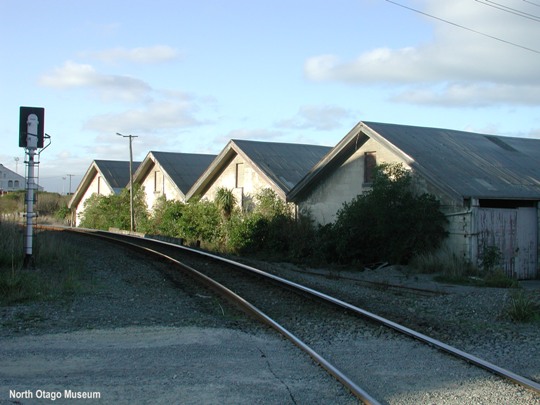
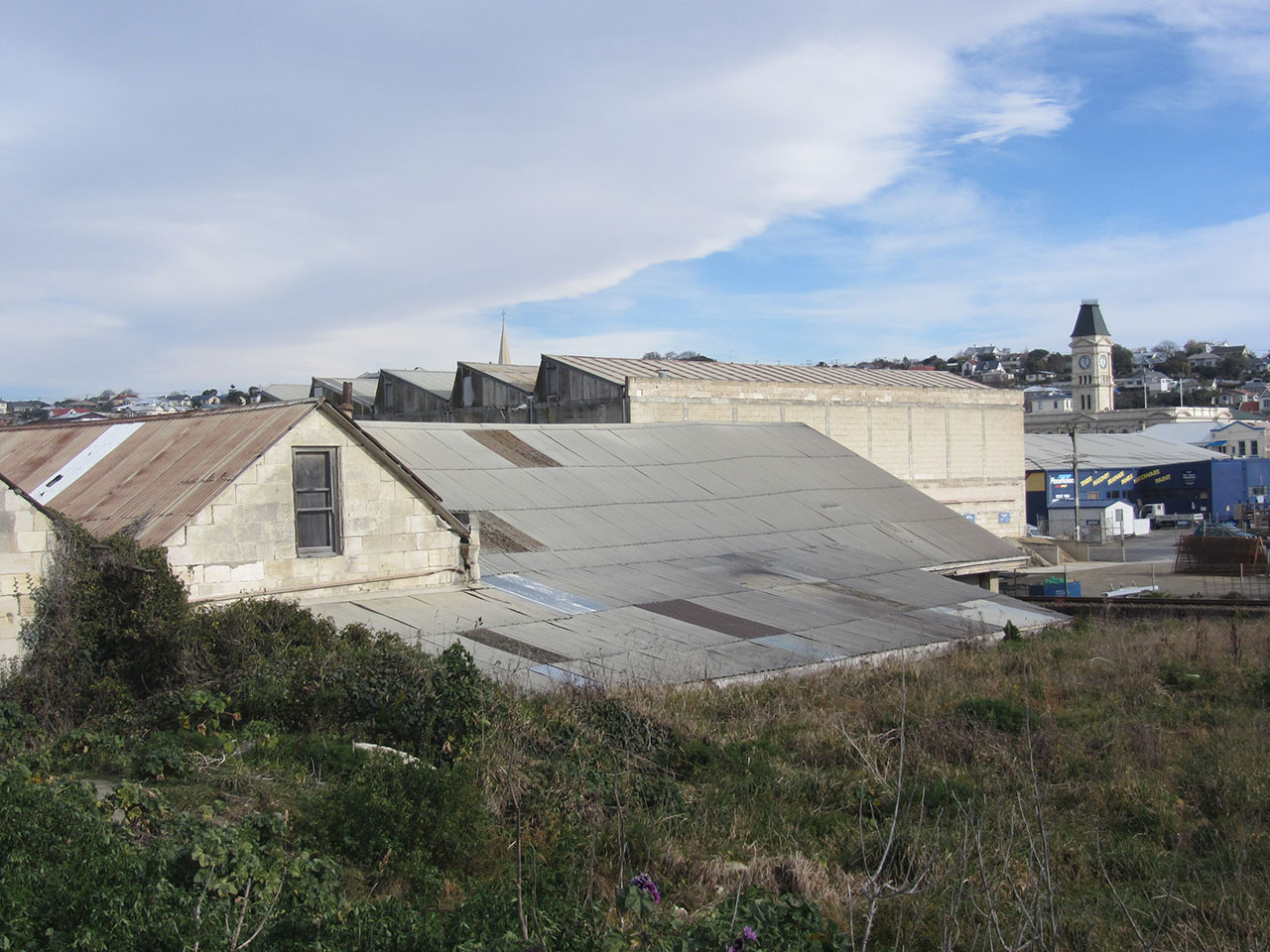
Oamaru Freezing Works (Former)
Esplanade Road, OAMARU
Private
Historic Place Category 2
List No. 3217
Quick links:
List GalleryLocationDetails
Esplanade Road, OAMARU
Private
Historic Place Category 2
List No. 3217
List Entry Information
Status
Listed
List Entry Status
Historic Place Category 2
Access
Private/No Public Access
List Number
3217
Date Entered
7th April 1983
Date of Effect
7th April 1983
City/District Council
Waitaki District
Region
Otago Region
Extent of List Entry
Extent includes the land described as Lots 5-8 DP 285 (RT OT15B/743), Otago Land District and the building known as the Oamaru Freezing Works (Former), thereon.
Legal description
Lots 5-8 DP 285 (RT OT15B/743), Otago Land District
Construction Professional
Name
Forrester, Thomas
Type
Architect
Biography
Born in Glasgow and educated at the Glasgow School of Art, Thomas Forrester (1838-1907) emigrated to New Zealand in 1861 with some experience in building construction, particularly plasterwork. Settling in Dunedin he worked under William Mason (1810-97) and William Henry Clayton (1823-77) and later Robert Arthur Lawson (1833-1902). In 1865 he superintended the Dunedin Exhibition and in 1870 was employed by the Otago Provincial Government to supervise borings for the Waitaki road and rail bridge. In 1872 Forrester entered partnership with John Lemon (1828-90) in Oamaru. Forrester was responsible for most of the design work while Lemon administered the practice. Among their many designs were St Paul's Church (1875-76), the Harbour Board Offices (1876), Queen's (later Brydone) Hotel (1881), Waitaki Boys' High School (1883), The Courthouse (1883) and the Post Office (1883-84). They contributed greatly to Oamaru's nineteenth century character. On Lemon's death in 1890 the practice was taken over by Forrester's son, John Megget Forrester (1865-1965). From 1870 Forrester became involved with the supervision of harbour works and some time after 1885 he became Engineer to the Oamaru Harbour Board. In this capacity he designed the repairs to the breakwater following storm damage in 1886 and later the Holmes Wharf. On his death in 1907 he was still in the employ of the Harbour Board. Forrester is also believed to have prepared the first geological maps of New Zealand under the direction of Sir James Hector (1834-1907).
Construction Details
Start Year
1886
Type
Other
Description
2 Feb 1886: Oamaru Freezing Works operating
Start Year
1886
Finish Year
1889
Type
Modification
Description
Store and stoke hole extended
Start Year
1889
Type
Additional building added to site
Description
Engineer's residence built
Start Year
1914
Type
Other
Description
Freezing Works plant shifted to Pukeuri
Type
Demolished - additional building on site
Description
Engineer's residence demolished
Period
Unknown
Type
Modification
Description
Two-storey gable portion of works demolished
Period
Unknown
Construction Materials
North Otago limestone
Historical and Associated Iwi / Hapū / Whānau
Public NZAA Number
J41/276
Completion Date
11th September 2013
Report Written By
Heather Bauchop
Information Sources
Cyclopedia of New Zealand, 1905
Cyclopedia Company, Industrial, descriptive, historical, biographical facts, figures, illustrations, Wellington, N.Z, 1897-1908, Vol. 4 Otago and Southland, Cyclopedia Company, Christchurch, 1905
Loach, 1969
Cyril Loach, A History of The New Zealand Refrigeration Company, Caxton Press, Christchurch, 1969.
McCarthy, 2002
Conal McCarthy, Forrester and Lemon of Oamaru, architects, Oamaru, 2002
Smith, 2001
Nigel Smith, Heritage of Industry: Discovering New Zealand's Industrial History, Auckland, 2001
Thornton, 1982
Geoffrey G. Thornton, New Zealand's Industrial Heritage, A.H. & A.W. Reed, Wellington, 1982
Other Information
This place was identified as significant under previous legislation with different information requirements. It remains significant under the current legislation. There is opportunity under our legislation and policies to add to this information. Further information about this place may be available from the Otago/Southland Office of Heritage New Zealand Pouhere Taonga. A fully referenced upgrade report is available on request from the Otago/Southland Office of the NZHPT Please note that entry on the New Zealand Heritage List/Rarangi Korero identifies only the heritage values of the property concerned, and should not be construed as advice on the state of the property, or as a comment of its soundness or safety, including in regard to earthquake risk, safety in the event of fire, or insanitary conditions.
Current Usages
Uses: Trade
Specific Usage: Warehouse/storage area
Former Usages
General Usage: Manufacturing
Specific Usage: Freezing Works
Current Usages
Uses: Trade
Specific Usage: Warehouse/storage area
Former Usages
General Usage: Manufacturing
Specific Usage: Freezing Works
Location
Get the latest heritage news, features and events delivered
straight to your inbox.
