Quick links


Quick links
Quick links
Quick links
Quick links
Quick links
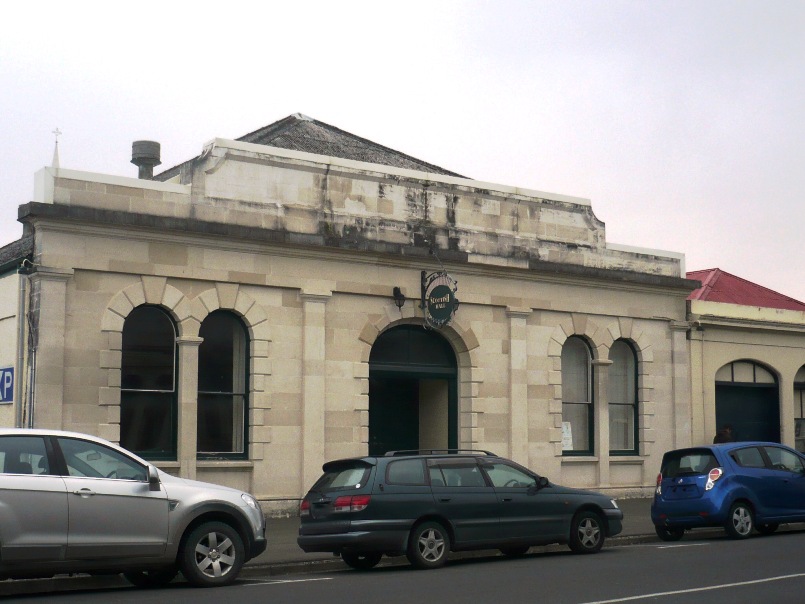
10 Tyne Street, OAMARU
Private
Historic Place Category 2
List No. 3224
List Entry Information
Status
Listed
List Entry Status
Historic Place Category 2
Access
Private/No Public Access
List Number
3224
Date Entered
2nd July 1982
Date of Effect
2nd July 1982
City/District Council
Waitaki District
Region
Otago Region
Extent of List Entry
The extent includes the land described as Sec 9 Blk III Town of Oamaru and part of the land described as Pt Sec 14 Blk III Town of Oamaru (RT OT244/172), Otago Land District, and the building known as Dalgety, Rattray and Co's. Store (Former) thereon.
Legal description
Sec 9 and Pt Sec 14 Blk III, Town of Oamaru (RT OT244/172), Otago Land District
Status
Listed
List Entry Status
Historic Place Category 2
Access
Private/No Public Access
List Number
3224
Date Entered
2nd July 1982
Date of Effect
2nd July 1982
City/District Council
Waitaki District
Region
Otago Region
Extent of List Entry
The extent includes the land described as Sec 9 Blk III Town of Oamaru and part of the land described as Pt Sec 14 Blk III Town of Oamaru (RT OT244/172), Otago Land District, and the building known as Dalgety, Rattray and Co's. Store (Former) thereon.
Legal description
Sec 9 and Pt Sec 14 Blk III, Town of Oamaru (RT OT244/172), Otago Land District
Construction Professional
Name
Ross, David
Type
Architect
Biography
David Ross (1827-1908) was one of a significant number of architects who came to New Zealand from Australia in the early 1860s prompted by the news of the Otago gold rushes. Born in Scotland, Ross worked in Victoria in the late 1850s before settling in Dunedin in c.1862, whereupon he entered into a brief partnership with William Mason (1810-97). After establishing his own practice, Ross designed the Congregational Church (1863-64), Dunedin's oldest ecclesiastical building, Fernhill house (1867) which is now home to the Dunedin Club, and the central wing of the Otago Museum (1876-77). In the mid-1860s Ross worked briefly in Hokitika (1866) before returning to Dunedin and in 1870 he applied for a patent for the frames and apparatus required for the construction of works in concrete. This application lapsed but it is nevertheless significant as it places Ross at the forefront of the development of mass concrete construction in this country. In addition to his professional responsibilities David Ross was also a member of the first Dunedin City Council (1865-66) and in 1876 he became the first president of the joint Institute of Engineers and Architects in Otago. Ross may have returned to Australia in the early 1890s and it would appear that he spent the rest of his life living in the United States and Japan.
Construction Details
Start Year
1864
Type
Original Construction
Start Year
1940
Finish Year
1949
Type
Addition
Start Year
1950
Finish Year
1959
Type
Modification
Description
Facade plastered
Start Year
1997
Type
Restoration
Description
Plastering on the facade removed
Construction Professional
Name
Ross, David
Type
Architect
Biography
David Ross (1827-1908) was one of a significant number of architects who came to New Zealand from Australia in the early 1860s prompted by the news of the Otago gold rushes. Born in Scotland, Ross worked in Victoria in the late 1850s before settling in Dunedin in c.1862, whereupon he entered into a brief partnership with William Mason (1810-97). After establishing his own practice, Ross designed the Congregational Church (1863-64), Dunedin's oldest ecclesiastical building, Fernhill house (1867) which is now home to the Dunedin Club, and the central wing of the Otago Museum (1876-77). In the mid-1860s Ross worked briefly in Hokitika (1866) before returning to Dunedin and in 1870 he applied for a patent for the frames and apparatus required for the construction of works in concrete. This application lapsed but it is nevertheless significant as it places Ross at the forefront of the development of mass concrete construction in this country. In addition to his professional responsibilities David Ross was also a member of the first Dunedin City Council (1865-66) and in 1876 he became the first president of the joint Institute of Engineers and Architects in Otago. Ross may have returned to Australia in the early 1890s and it would appear that he spent the rest of his life living in the United States and Japan.
Construction Details
Start Year
1864
Type
Original Construction
Start Year
1940
Finish Year
1949
Type
Addition
Start Year
1950
Finish Year
1959
Type
Modification
Description
Facade plastered
Start Year
1997
Type
Restoration
Description
Plastering on the facade removed
Historical and Associated Iwi / Hapū / Whānau
Completion Date
1st May 2013
Report Written By
Heather Bauchop
Information Sources
North Otago Museum
North Otago Museum
North Otago Times
North Otago Times
Oamaru Borough Council
Historic Building Catalogue
Otago Daily Times
Otago Daily Times, 1 Jun 1915, p.10.
Other Information
This place was identified as significant under previous legislation with different information requirements. It remains significant under the current legislation. There is opportunity under our legislation and policies to add to this information. Further information about this place may be available from the Otago/Southland Office of Heritage New Zealand Pouhere Taonga. A fully referenced Upgrade Report is available from the Otago/Southland Area office of NZHPT. This registration is also included in the Harbour/Tyne Street Historic Area (Record no. 7064). Please note that entry on the New Zealand Heritage List/Rarangi Korero identifies only the heritage values of the property concerned, and should not be construed as advice on the state of the property, or as a comment of its soundness or safety, including in regard to earthquake risk, safety in the event of fire, or insanitary conditions.
Historical and Associated Iwi / Hapū / Whānau
Completion Date
1st May 2013
Report Written By
Heather Bauchop
Information Sources
North Otago Museum
North Otago Museum
North Otago Times
North Otago Times
Oamaru Borough Council
Historic Building Catalogue
Otago Daily Times
Otago Daily Times, 1 Jun 1915, p.10.
Other Information
This place was identified as significant under previous legislation with different information requirements. It remains significant under the current legislation. There is opportunity under our legislation and policies to add to this information. Further information about this place may be available from the Otago/Southland Office of Heritage New Zealand Pouhere Taonga. A fully referenced Upgrade Report is available from the Otago/Southland Area office of NZHPT. This registration is also included in the Harbour/Tyne Street Historic Area (Record no. 7064). Please note that entry on the New Zealand Heritage List/Rarangi Korero identifies only the heritage values of the property concerned, and should not be construed as advice on the state of the property, or as a comment of its soundness or safety, including in regard to earthquake risk, safety in the event of fire, or insanitary conditions.
Current Usages
Uses: Civic Facilities
Specific Usage: Club rooms/building
Uses: Civic Facilities
Specific Usage: Hall, Community
Former Usages
General Usage: Trade
Specific Usage: Warehouse/storage area
Current Usages
Uses: Civic Facilities
Specific Usage: Club rooms/building
Uses: Civic Facilities
Specific Usage: Hall, Community
Former Usages
General Usage: Trade
Specific Usage: Warehouse/storage area
Get the latest heritage news, features and events delivered
straight to your inbox.