DonateMembershipVisit Heritage
  • Tūrangawaewae
    Places
  • Tira Māori
    Māori Heritage
  • Poutairangahia
    Archaeology
  • Rauemi
    Resources
  • Mō Tātou
    About Us
  • New Zealand Heritage List
  • Nominate and submit
  • Explore the List
  • National Historic Landmarks
  • Plaques
  • Rainbow List Project
  • Lost heritage
  • Visit Heritage
  • Our properties
  • Turnbull House Project
  • Collections
  • Shop
  • Tohu Whenua
  • Tira Māori
  • Conserving Māori heritage
  • Marae built heritage
  • Māori heritage on the List
  • Hinemihi—Te Hokinga Mai
  • What is archaeology?
  • Is there a site on my property?
  • What are my legal requirements?
  • Affecting an archaeological site
  • Declaring an archaeological site
  • Archaeology FAQs
  • Archaeology Digital Library
  • Archaeology guidelines and templates
  • Resources
  • Funding
  • Publications
  • Sustainable management guides
  • Disaster recovery
  • Podcasts & digital resources
  • Education Hub
  • Conservation plans
  • About
  • Board
  • Māori Heritage Council
  • Senior Staff
  • Offices
  • Contact us
  • Careers
  • Covenants
  • Fast-track
  • Corporate documents
  • Currently consulting on
  • Our submissions
  • News
  • Covid-19 response
Quick links
Rārangi Kōrero | The List
Explore the List
National Historic Landmarks
Ngā Manawhenua o Aotearoa me ōna Kōrero Tūturu
Quick links
Tapuwae
A Vision for Places of Māori Heritage
Funding for Māori Heritage
Resources
Quick links
Archaeological Authority Portal
Applying for an archaeological authority
Archaeology FAQs
Browse the most frequently asked questions about archaeological authorities and the archaeological process.
Quick links
Quick links
News
News Keep up to date with Heritage New Zealand Pouhere Taonga
Membership
Membership Find out more and sign up today
DonateMembershipVisit Heritage
  • Tūrangawaewae
    Places
  • Tira Māori
    Māori Heritage
  • Poutairangahia
    Archaeology
  • Rauemi
    Resources
  • Mō Tātou
    About Us
  • New Zealand Heritage List
  • Nominate and submit
  • Explore the List
  • National Historic Landmarks
  • Plaques
  • Rainbow List Project
  • Lost heritage
  • Visit Heritage
  • Our properties
  • Turnbull House Project
  • Collections
  • Shop
  • Tohu Whenua
  • Tira Māori
  • Conserving Māori heritage
  • Marae built heritage
  • Māori heritage on the List
  • Hinemihi—Te Hokinga Mai
  • What is archaeology?
  • Is there a site on my property?
  • What are my legal requirements?
  • Affecting an archaeological site
  • Declaring an archaeological site
  • Archaeology FAQs
  • Archaeology Digital Library
  • Archaeology guidelines and templates
  • Resources
  • Funding
  • Publications
  • Sustainable management guides
  • Disaster recovery
  • Podcasts & digital resources
  • Education Hub
  • Conservation plans
  • About
  • Board
  • Māori Heritage Council
  • Senior Staff
  • Offices
  • Contact us
  • Careers
  • Covenants
  • Fast-track
  • Corporate documents
  • Currently consulting on
  • Our submissions
  • News
  • Covid-19 response
Quick links
Rārangi Kōrero | The List
Explore the List
National Historic Landmarks
Ngā Manawhenua o Aotearoa me ōna Kōrero Tūturu
Quick links
Tapuwae
A Vision for Places of Māori Heritage
Funding for Māori Heritage
Resources
Quick links
Archaeological Authority Portal
Applying for an archaeological authority
Archaeology FAQs
Browse the most frequently asked questions about archaeological authorities and the archaeological process.
Quick links
Quick links
News
News Keep up to date with Heritage New Zealand Pouhere Taonga
Membership
Membership Find out more and sign up today
  • Places
  • Nominate and submit
  • National Historic Landmarks
  • Places
  • Nominate and submit
  • National Historic Landmarks
  • Tira Māori
  • Conserving Māori heritage
  • Marae built heritage
  • Tira Māori
  • Conserving Māori heritage
  • Marae built heritage
  • Archaeological authorities
  • Archaeology Digital Library
  • Archaeological authorities
  • Archaeology Digital Library
  • All resources
  • Publications
  • Funding
  • All resources
  • Publications
  • Funding
  • FAQs
  • FAQs
Follow us on:
Places
  • Places
  • Nominate and submit
  • National Historic Landmarks
Tira Māori
  • Tira Māori
  • Conserving Māori heritage
  • Marae built heritage
Archaeology
  • Archaeological authorities
  • Archaeology Digital Library
Resources
  • All resources
  • Publications
  • Funding
FAQs
  • FAQs
Follow us on
HomePrivacyTerms and conditionsAbout this site
© Heritage New Zealand Pouhere Taonga 2026.
 
Port of Invercargill Jetty

21 Stead Street, INVERCARGILL

Private

Historic Place Category 2

List No. 3261

Quick links:
List GalleryLocationDetails
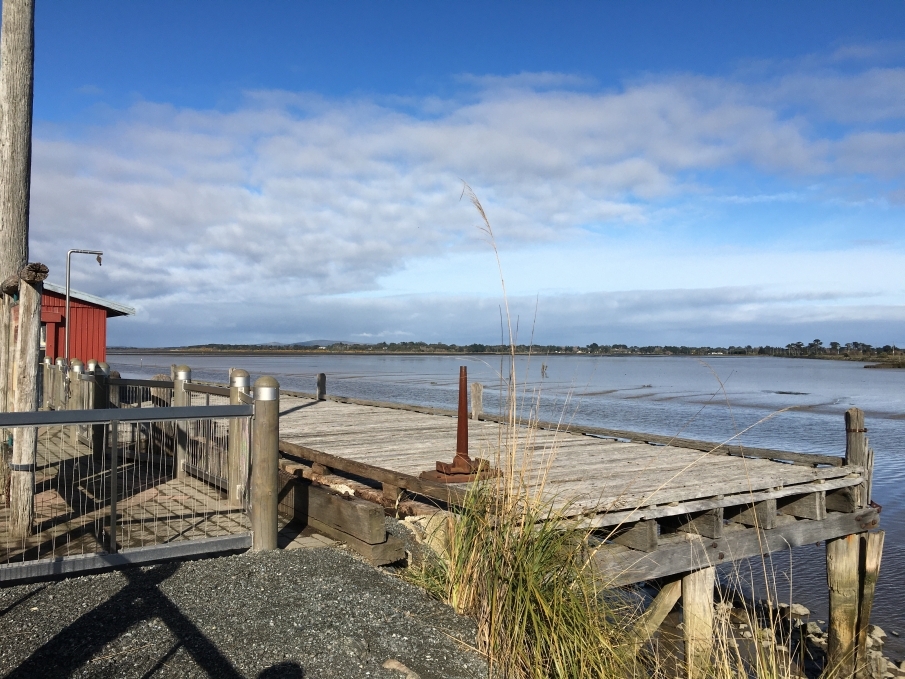
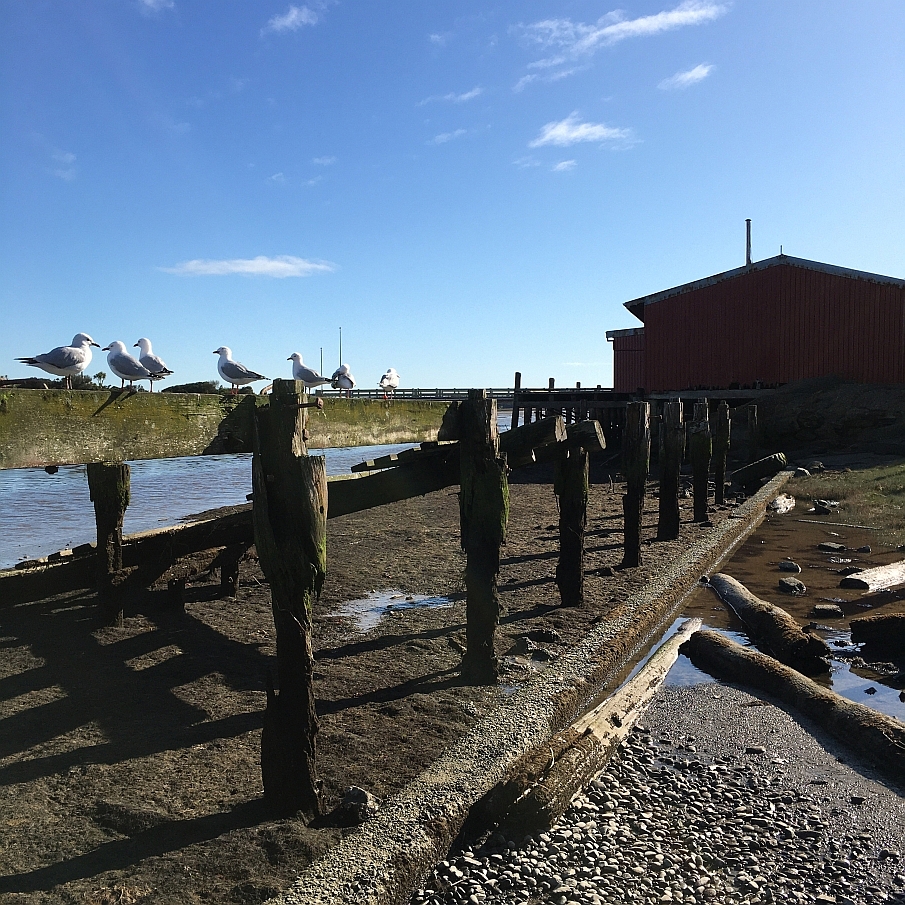
On the south side of Stead Street, adjacent Bond Street, the Stead Street Reserve and the Geoff Piercy Reserve, is the Port of Invercargill Jetty in the New River Estuary. Commissioned by the Otago Provincial Council in 1859 and completed around 1861. The jetty is historically significant as a reminder of the growth and development of Invercargill in the 19th century.

The New River Estuary is the largest in Murihiku / Southland; a large tidal lagoon type of estuary. The estuary is the confluence of the Waihopai and Ōreti Rivers. The Ōreti, formerly known as the New River, has its headwaters close to the Mavora Lakes between Te Anau and Whakatipu Waimāori / Lake Wakatipu and was a traditional travel route, providing access for coastal settlements into the interior of Te Waipounamu. The history of this place extends back to Maui who is said to have spent a year at Ōmāui (the mouth of the New River Estuary) during which time he claimed the South Island. Ōue and Ōmāui were principal settlements in Murihiku at the mouth of the Ōreti in the New River Estuary in the 19th Century. The New River Estuary was the site of the earliest port to serve Invercargill and was the major port south of Dunedin, prior to the establishment of a port at Campbell Town (Bluff). The mouth of the estuary was known for its bar which also necessitated the establishment of a pilot station overlooking the channel between Ōmāui and Tārere-ki-whenua-uta (Steep Head). A tender for a jetty and a pilot’s house on the New River Estuary were advertised late in 1859. The contract was awarded in 1860 at a rate of £1000 ($121,160). A population boom largely due to the goldrush resulted in further investment in the jetty. In 1862 additions were made to the jetty and the dolphins were probably installed at this time. The original jetty once ran as far as Stead Street (formerly Tweed Street) creating a link to the city.

Despite its recent completion, in 1862 there were complaints that the jetty was ill positioned, and should be extended or rebuilt further south as it didn’t accommodate the larger vessels that were able to berth in Bluff. A lack of tide beacons resulted in a number of ship wrecks. From 1863 a 300m wooden tramway conveyed the Lady Barkly, New Zealand’s first steam-powered locomotive, along the jetty. It was not an uncommon sight at this time to see twenty to fifty vessels of 600 and 700 tons capacity lying at anchor at the Lower and Upper Pools, as the two chief anchorages were named, or alongside the jetty. Reclamation of land began from 1865 and continued for years; this has complicated the reading of the site. The railway link through to Bluff in 1867 proved to be the beginning of the end for the Port of Invercargill. In 1882 stone training walls were installed to create a deeper channel and allow for ships with a deeper draft to dock. Ships with at least 9’ (2.7 metres) draft were able to reach the wharf in the early 1900’s. The jetty saw much in the way of fishing, oystering and carrying cargo and farm produce from the 1890s through to the 1940s. The embankment that was constructed in 1913 linked the T end of the jetty with the mainland, and featured a number of sheds and a boatshed on the reclaimed land. In 1916 a new jetty was completed with the T end of the old jetty incorporated into its structure. In In 1926 a concrete wall on top of the stone retaining walls raised the height. In 2000, as part of the archaeological authority process, archaeologist Peter Petchey discovered parts of an earlier structure beneath the Sea Scouts Hall (which is built on piles) adjacent to the jetty. Petchey described the wharf at that time as a ‘dilapidated timber structure’. Following the redevelopment of the site, ‘part of the existing wharf has been dismantled, with the recovered material being used to restore the remaining section of the structure.’ While the jetty has substantially reduced in size and function over the years, the wharf piles, dolphins, retaining walls, and jetty remain. As part of the Stead Street Reserve, some access was provided to the jetty and is, ‘an enduring reminder of Invercargill’s maritime and railroad history.’ A replica of New Zealand’s first steam locomotive, Lady Barkly, is available to see on site today adjacent to the Sea Scouts Hall. In 2016 the wharf was closed to the public due to the poor state of the timber planks. In 2020 it remains inaccessible to the public.
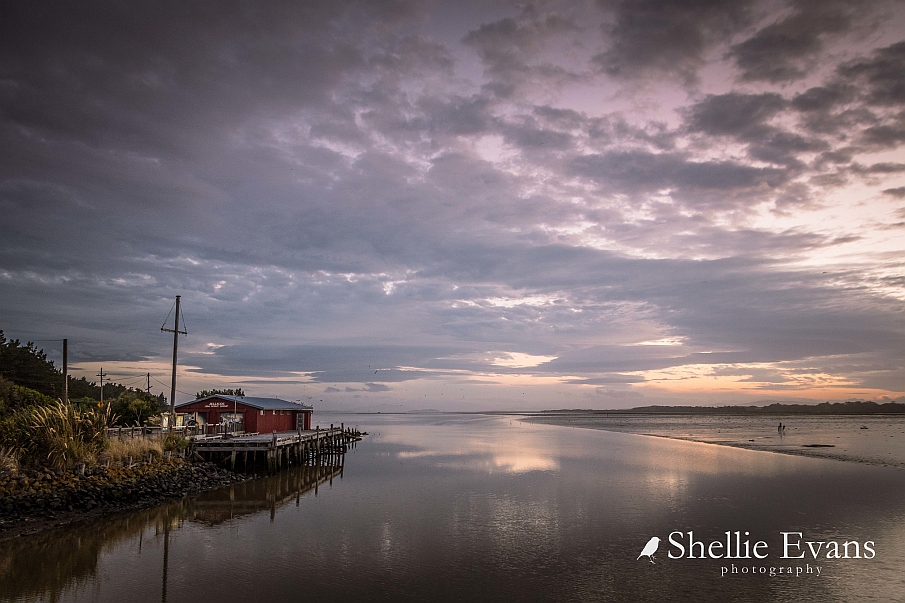
Port of Invercargill Jetty, Invercargill. Image courtesy of www.flickr.com | Shellie Evans – flyingkiwigirl | 25/01/2021 | Shellie Evans
Port of Invercargill Jetty, Invercargill | Sarah Gallagher | 02/09/2020 | Heritage New Zealand
Port of Invercargill Jetty, Invercargill. Image courtesy of www.flickr.com | Shellie Evans – flyingkiwigirl | 25/01/2021 | Shellie Evans
Port of Invercargill Jetty, Invercargill | Sarah Gallagher | 02/09/2020 | Heritage New Zealand

List Entry Information

Overview

Status
Listed

List Entry Status
Historic Place Category 2

Access
Private/No Public Access

List Number
3261

Date Entered
24th November 1983

Date of Effect
24th November 1983

City/District Council
Invercargill City

Region
Southland Region

Extent of List Entry

Extent includes part of the land described as Seabed and the land described as Lot 6 DP 384782, Southland Land District and the structure known as the Port of Invercargill Jetty, wharf piles and retaining walls thereon. Refer to the extent map tabled at the Heritage List/ Rārangi Kōrero Committee meeting on 4 June 2020.

Legal description

Seabed; Lot 6 DP 384782, Southland Land District

Detailed List Entry

Construction Details

Start Year

1861

Type

Original Construction

Start Year

1862

Type

Addition

Description

Additions to jetty, likely dolphins installed

Start Year

1863

Type

Addition

Description

Tenders for double line of tramway on the jetty, building goods warehouse and constructing roadways (Southland Times 1863)

Start Year

1881

Type

Addition

Description

Stone tide training walls constructed (stone)

Start Year

1913

Type

Addition

Description

Embankment completed connecting jetty with Stead Street

Start Year

1916

Type

Addition

Description

New Jetty completed with T end of old jetty incorporated

Start Year

2000

Type

Modification

Description

Development of a beach area, rip rap stone retaining wall. Part of wharf dismantled and used to restore remaining structure.

Reference

Public NZAA Number

E46/48

Completion Date

14th April 2020

Report Written By

Sarah Gallagher

Information Sources

Invercargill City Council

Invercargill City Council

Invercargill City Council

Invercargill City Council

Petchey, 2001

Petchey, P.G., Stead Street Wharf Development, Invercargill Report on archaeological monitoring of site during excavation. May 2001.

Report Written By

This place was identified as significant under previous legislation with different information requirements. It remains significant under the current legislation. There is opportunity under our legislation and policies to add to this information. Further information about this place may be available from the Otago/Southland Office of Heritage New Zealand Pouhere Taonga. Please note that entry on the New Zealand Heritage List/Rarangi Korero identifies only the heritage values of the property concerned, and should not be construed as advice on the state of the property, or as a comment of its soundness or safety, including in regard to earthquake risk, safety in the event of fire, or insanitary conditions. A fully referenced upgrade report is available on request from the Otago/Southland Office of Heritage New Zealand.

Further Information

Current Usages

Former Usages

General Usage:: Transport

Specific Usage: Wharf/Dock/ Pier/ Jetty

Themes

Web Links

Overview

Status

Listed

List Entry Status

Historic Place Category 2

Access

Private/No Public Access

List Number

3261

Date Entered

24th November 1983

Date of Effect

24th November 1983

City/District Council

Invercargill City

Region

Southland Region

Extent of List Entry

Extent includes part of the land described as Seabed and the land described as Lot 6 DP 384782, Southland Land District and the structure known as the Port of Invercargill Jetty, wharf piles and retaining walls thereon. Refer to the extent map tabled at the Heritage List/ Rārangi Kōrero Committee meeting on 4 June 2020.

Legal description

Seabed; Lot 6 DP 384782, Southland Land District

Status

Listed

List Entry Status

Historic Place Category 2

Access

Private/No Public Access

List Number

3261

Date Entered

24th November 1983

Date of Effect

24th November 1983

City/District Council

Invercargill City

Region

Southland Region

Extent of List Entry

Extent includes part of the land described as Seabed and the land described as Lot 6 DP 384782, Southland Land District and the structure known as the Port of Invercargill Jetty, wharf piles and retaining walls thereon. Refer to the extent map tabled at the Heritage List/ Rārangi Kōrero Committee meeting on 4 June 2020.

Legal description

Seabed; Lot 6 DP 384782, Southland Land District

Construction Information

Construction Details

Start Year

1861

Type

Original Construction

Start Year

1862

Type

Addition

Description

Additions to jetty, likely dolphins installed

Start Year

1863

Type

Addition

Description

Tenders for double line of tramway on the jetty, building goods warehouse and constructing roadways (Southland Times 1863)

Start Year

1881

Type

Addition

Description

Stone tide training walls constructed (stone)

Start Year

1913

Type

Addition

Description

Embankment completed connecting jetty with Stead Street

Start Year

1916

Type

Addition

Description

New Jetty completed with T end of old jetty incorporated

Start Year

2000

Type

Modification

Description

Development of a beach area, rip rap stone retaining wall. Part of wharf dismantled and used to restore remaining structure.

Construction Details

Start Year

1861

Type

Original Construction

Start Year

1862

Type

Addition

Description

Additions to jetty, likely dolphins installed

Start Year

1863

Type

Addition

Description

Tenders for double line of tramway on the jetty, building goods warehouse and constructing roadways (Southland Times 1863)

Start Year

1881

Type

Addition

Description

Stone tide training walls constructed (stone)

Start Year

1913

Type

Addition

Description

Embankment completed connecting jetty with Stead Street

Start Year

1916

Type

Addition

Description

New Jetty completed with T end of old jetty incorporated

Start Year

2000

Type

Modification

Description

Development of a beach area, rip rap stone retaining wall. Part of wharf dismantled and used to restore remaining structure.

Reference

Historical and Associated Iwi / Hapū / Whānau

Public NZAA Number

E46/48

Completion Date

14th April 2020

Report Written By

Sarah Gallagher

Information Sources

Invercargill City Council

Invercargill City Council

Invercargill City Council

Invercargill City Council

Petchey, 2001

Petchey, P.G., Stead Street Wharf Development, Invercargill Report on archaeological monitoring of site during excavation. May 2001.

Other Information

This place was identified as significant under previous legislation with different information requirements. It remains significant under the current legislation. There is opportunity under our legislation and policies to add to this information. Further information about this place may be available from the Otago/Southland Office of Heritage New Zealand Pouhere Taonga. Please note that entry on the New Zealand Heritage List/Rarangi Korero identifies only the heritage values of the property concerned, and should not be construed as advice on the state of the property, or as a comment of its soundness or safety, including in regard to earthquake risk, safety in the event of fire, or insanitary conditions. A fully referenced upgrade report is available on request from the Otago/Southland Office of Heritage New Zealand.

Historical and Associated Iwi / Hapū / Whānau

Public NZAA Number

E46/48

Completion Date

14th April 2020

Report Written By

Sarah Gallagher

Information Sources

Invercargill City Council

Invercargill City Council

Invercargill City Council

Invercargill City Council

Petchey, 2001

Petchey, P.G., Stead Street Wharf Development, Invercargill Report on archaeological monitoring of site during excavation. May 2001.

Other Information

This place was identified as significant under previous legislation with different information requirements. It remains significant under the current legislation. There is opportunity under our legislation and policies to add to this information. Further information about this place may be available from the Otago/Southland Office of Heritage New Zealand Pouhere Taonga. Please note that entry on the New Zealand Heritage List/Rarangi Korero identifies only the heritage values of the property concerned, and should not be construed as advice on the state of the property, or as a comment of its soundness or safety, including in regard to earthquake risk, safety in the event of fire, or insanitary conditions. A fully referenced upgrade report is available on request from the Otago/Southland Office of Heritage New Zealand.

Further Information

Former Usages

General Usage: Transport

Specific Usage: Wharf/Dock/ Pier/ Jetty

Former Usages

General Usage: Transport

Specific Usage: Wharf/Dock/ Pier/ Jetty

Location

Loading
Stay up to date with Heritage this month