DonateSupporterVisit Heritage
  • Tūrangawaewae
    Places
  • Tira Māori
    Māori Heritage
  • Poutairangahia
    Archaeology
  • Rauemi
    Resources
  • Mō Tātou
    About Us
  • New Zealand Heritage List
  • Nominate and submit
  • Explore the List
  • National Historic Landmarks
  • Plaques
  • Rainbow List Project
  • Lost heritage
  • Visit Heritage
  • Our properties
  • Turnbull House Project
  • Collections
  • Shop
  • Tohu Whenua
  • Tira Māori
  • Conserving Māori heritage
  • Marae built heritage
  • Māori heritage on the List
  • Hinemihi—Te Hokinga Mai
  • What is archaeology?
  • Is there a site on my property?
  • What are my legal requirements?
  • Affecting an archaeological site
  • Declaring an archaeological site
  • Archaeology FAQs
  • Archaeology Digital Library
  • Archaeology guidelines and templates
  • Resources
  • Funding
  • Publications
  • Sustainable management guides
  • Disaster recovery
  • Podcasts & digital resources
  • Education Hub
  • Conservation plans
  • About
  • Board
  • Māori Heritage Council
  • Senior Staff
  • Offices
  • Contact us
  • Careers
  • Covenants
  • Fast-track
  • Corporate documents
  • Currently consulting on
  • Our submissions
  • News
Quick links
Rārangi Kōrero | The List
Explore the List
National Historic Landmarks
Ngā Manawhenua o Aotearoa me ōna Kōrero Tūturu
Quick links
Tapuwae
A Vision for Places of Māori Heritage
Funding for Māori Heritage
Resources
Quick links
Archaeological Authority Portal
Applying for an archaeological authority
Archaeology FAQs
Browse the most frequently asked questions about archaeological authorities and the archaeological process.
Quick links
Quick links
Contact us
Offices
DonateSupporterVisit Heritage
  • Tūrangawaewae
    Places
  • Tira Māori
    Māori Heritage
  • Poutairangahia
    Archaeology
  • Rauemi
    Resources
  • Mō Tātou
    About Us
  • New Zealand Heritage List
  • Nominate and submit
  • Explore the List
  • National Historic Landmarks
  • Plaques
  • Rainbow List Project
  • Lost heritage
  • Visit Heritage
  • Our properties
  • Turnbull House Project
  • Collections
  • Shop
  • Tohu Whenua
  • Tira Māori
  • Conserving Māori heritage
  • Marae built heritage
  • Māori heritage on the List
  • Hinemihi—Te Hokinga Mai
  • What is archaeology?
  • Is there a site on my property?
  • What are my legal requirements?
  • Affecting an archaeological site
  • Declaring an archaeological site
  • Archaeology FAQs
  • Archaeology Digital Library
  • Archaeology guidelines and templates
  • Resources
  • Funding
  • Publications
  • Sustainable management guides
  • Disaster recovery
  • Podcasts & digital resources
  • Education Hub
  • Conservation plans
  • About
  • Board
  • Māori Heritage Council
  • Senior Staff
  • Offices
  • Contact us
  • Careers
  • Covenants
  • Fast-track
  • Corporate documents
  • Currently consulting on
  • Our submissions
  • News
Quick links
Rārangi Kōrero | The List
Explore the List
National Historic Landmarks
Ngā Manawhenua o Aotearoa me ōna Kōrero Tūturu
Quick links
Tapuwae
A Vision for Places of Māori Heritage
Funding for Māori Heritage
Resources
Quick links
Archaeological Authority Portal
Applying for an archaeological authority
Archaeology FAQs
Browse the most frequently asked questions about archaeological authorities and the archaeological process.
Quick links
Quick links
Contact us
Offices
  • Places
  • Nominate and submit
  • National Historic Landmarks
  • Places
  • Nominate and submit
  • National Historic Landmarks
  • Tira Māori
  • Conserving Māori heritage
  • Marae built heritage
  • Tira Māori
  • Conserving Māori heritage
  • Marae built heritage
  • Archaeological authorities
  • Archaeology Digital Library
  • Archaeological authorities
  • Archaeology Digital Library
  • All resources
  • Publications
  • Funding
  • All resources
  • Publications
  • Funding
  • FAQs
  • FAQs
Follow us on:
Places
  • Places
  • Nominate and submit
  • National Historic Landmarks
Tira Māori
  • Tira Māori
  • Conserving Māori heritage
  • Marae built heritage
Archaeology
  • Archaeological authorities
  • Archaeology Digital Library
Resources
  • All resources
  • Publications
  • Funding
FAQs
  • FAQs
Follow us on
HomePrivacyTerms and conditionsAbout this site
© Heritage New Zealand Pouhere Taonga 2026.
 
Bank of New South Wales Gold Office

Loop Road, ST BATHANS

Private

Historic Place Category 1

List No. 331

Quick links:
List GalleryLocationDetails
Gold was first discovered near St Bathans in 1862 at Welshman's Gully. The new field attracted 200 miners within a week. Within three years major sluicing was undertaken in the area. The town of St Bathans was flourishing by July 1864, and by October of that year had forty business houses, ten hotels and a thousand residents. By the 1870s the town had become a service centre for the region. By the turn of the century the population had decreased as gold returns declined. The goldfield was a rich one, up until the 1940s some three quarters of a million pounds worth of gold had been taken out of the St Bathans basin alone. By 1956 only 47 people resided at St Bathans.

An Agency of the Bank of New South Wales was opened in St Bathans in September 1864 , becoming a Branch in March 1883. The land on which the bank was sited (Section 10) was purchased from the Crown in August 1874. The adjoining Section 9, previously owned by the Bank of New Zealand was purchased by the Bank of New South Wales in February 1893.

A banking chamber with small gold office partitioned off, and an attached dwelling of six rooms was built on the Bank's section and occupied in November 1874.

On the 30 December 1905 the Branch reverted to an agency of the Naseby Branch, and the dwelling portion was leased at the same time as a residence. The residence part was sold to J. Lothian for removal during 1925, with the proviso that the agency part be left in a fit state for use. The Agency at St Bathans closed on 10 April 1946 and the Gold Office was transported to Oturehua.

The Oturehua Agency operated from May 1946 to September 1973. During this time the building was refurbished and the roof line altered to give it its present appearance. Prior to this alteration it had a sawn off appearance from the removal of the dwelling. The interiors were relined after a small fire in the premises in 1958. During this refurbishment the original wire gauze screens from the windows were removed and the white frosting applied in their place.

In October 1974 the building was handed over to the Oturehua Historical Society. When the society ceased operations in 1982 permission was requested from the Otago Goldfield's Park to return the building to St Bathans. The building was restored by the Department of Lands and Survey at its Alexandra workshop and then shifted to St Bathans. The building was sited across the road from its original section. It was officially opened by Otago Conservator for the Department of Conservation, Robin Thomas, in March 1989, as a site providing for the interpretation of the early banking system on the goldfields.
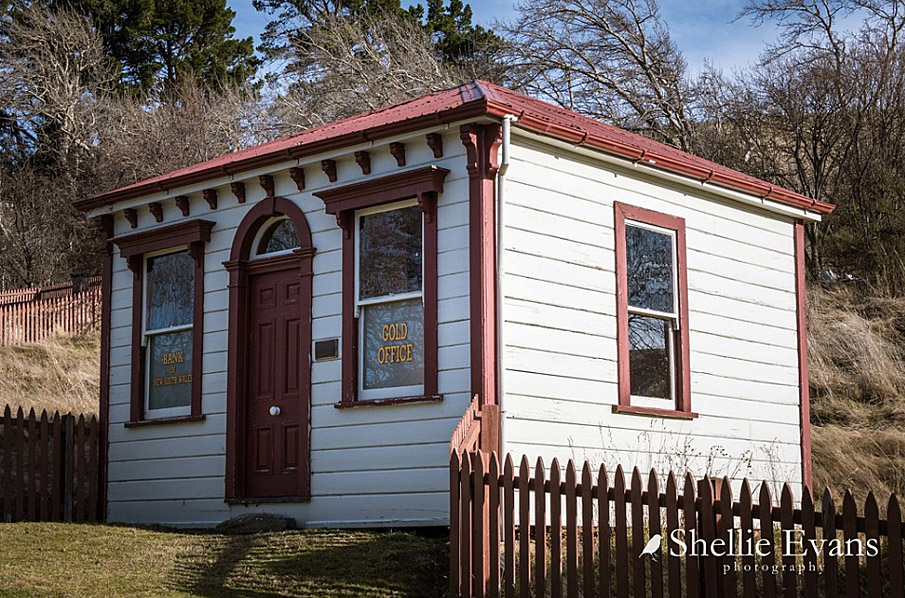
Bank of New South Wales Gold Office, St Bathans. Image courtesy of www.flickr.com | Shellie Evans – flyingkiwigirl | 26/07/2019 | Shellie Evans
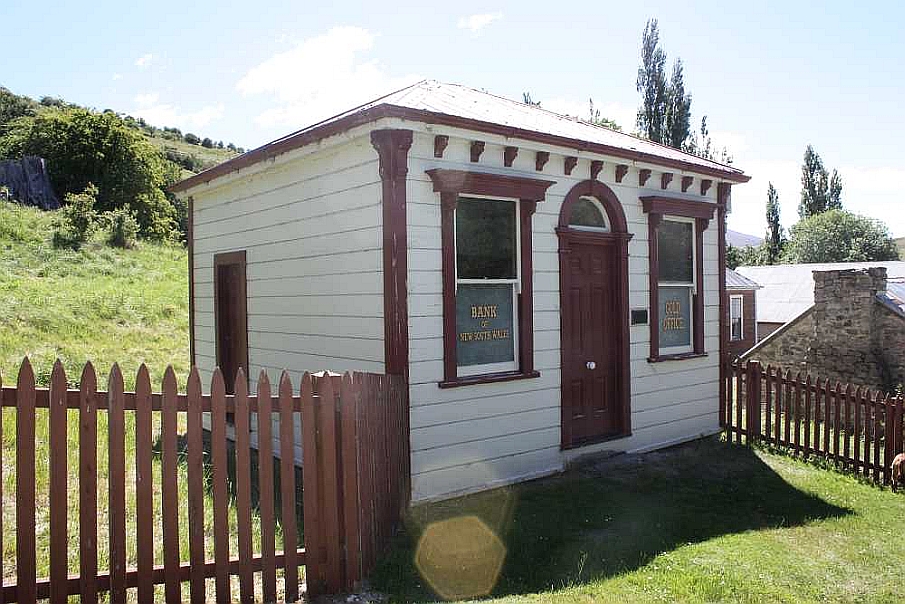
Bank of New South Wales Gold Office, St Bathans | Sarah Gallagher | 03/12/2020 | Heritage New Zealand Pouhere Taonga
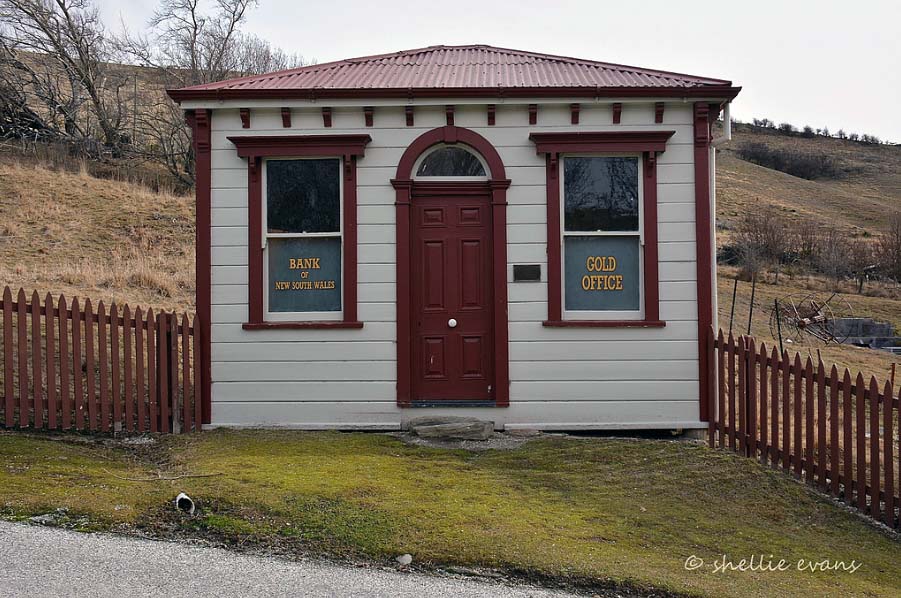
Bank of New South Wales Gold Office, St Bathans. Image courtesy of www.flickr.com | Shellie Evans – flyingkiwigirl | 02/04/2015 | Shellie Evans

Bank of New South Wales Gold Office, St Bathans. Image courtesy of www.flickr.com | Shellie Evans – flyingkiwigirl | 26/07/2019 | Shellie Evans
Bank of New South Wales Gold Office, St Bathans | Sarah Gallagher | 03/12/2020 | Heritage New Zealand Pouhere Taonga
Bank of New South Wales Gold Office, St Bathans. Image courtesy of www.flickr.com | Shellie Evans – flyingkiwigirl | 02/04/2015 | Shellie Evans

List Entry Information

Overview

Status
Listed

List Entry Status
Historic Place Category 1

Access
Private/No Public Access

List Number
331

Date Entered
2nd April 2004

Date of Effect
2nd April 2004

City/District Council
Central Otago District

Region
Otago Region

Extent of List Entry

Registration includes the building, its fixtures and fittings and land on part RT OT32/217 as shown on Plan A in the Registration Report.

Legal description

Sec 13 Blk I St Bathans Town (RT OT32/217)

Detailed List Entry
Significance

Cultural Significance

Premises such as the Gold Office were social and commercial centres of the small communities, a hub of a population focused on the search for gold.

Historic Significance

Historical Significance or Value The Gold Office is a tangible reminder of the history of the goldrushes which shaped St Bathans and Otago, and a building which provided for the handling of the gold from the nearby sluicings.

Physical Significance

The Gold Office is representative of the early goldfield architecture, a small scale wooden commercial building characteristic of those in the developing townships. Such architectural remnants of goldfields townships are relatively rare, as many were built as temporary structures, and were replaced as towns became more permanent.

Detail Of Assessed Criteria

The Gold Office represents the importance of the history of the goldrushes to Otago, and to New Zealand as a whole. The goldrush, particularly the hydraulic sluicing at St Bathans was a significant event in the history of the region, an event which shaped the town and the landscape of the region. The community has had a long attachment with the building, through its community service as a bank, both in St Bathans and nearby Oturehua. Its return to St Bathans emphasises its history in that town. The Gold Office is an important survivor of such structures which would have been common place in most goldmining towns, but which are no longer represented. As such it is important in identifying rare historic places. The building is an important link to the wider historical landscape of the town of St Bathans, being adjacent to the Post Office and the Hall, but also to the surrounding country which was spectacularly shaped by the search for gold. The Gold Office is a reminder of the gold being sought, and the monetary value it represented, and which was bought and sold in this small building.

Construction Details

Start Year

1870

Finish Year

1880

Type

Original Construction

Description

Original construction of banking chamber with small gold office partitioned off, and attached dwelling.

Start Year

1925

Type

Modification

Description

Dwelling portion removed.

Start Year

1946

Type

Relocation

Description

Building moved to Oturehua, where it was used for the Oturehua agency of the Bank of New South Wales.

Start Year

1980

Finish Year

1990

Type

Modification

Description

Exterior restored and the building was relocated to St Bathans, in a position on the opposite side of the road to its original site.

Construction Materials

Timber, weatherboards, Iron roof, cast iron fretwork.

Physical Description

A banking chamber with small gold office partitioned off, and an attached dwelling of six rooms was built on the Bank's section and occupied in November 1874. The dwelling portion was removed in 1925. The gold office was relocated in 1946. The Gold Office is the remaining portion of the building originally built as a bank and managers residence in 1874. An 1894 photograph indicates that the premises were of weatherboard construction with a hipped iron roof, and double hung single pane sash windows. The residence had a veranda with cast iron fretwork. The main decorative detailings on the Gold Office are the eave brackets, the classically styled arched fanlight with false keystone above the central doorway, and the horizontal cap moulding supported by corbels above the sash windows on the commercial frontage of the otherwise domestically styled building.

Reference

Completion Date

7th September 2004

Report Written By

Heather Bauchop

Information Sources

Cowan, 1948

Janet. C. Cowan, Down the Years in the Maniototo: A Survey of the Early History of Maniototo County and Naseby Borough, Otago Centennial Historical Publications, Whitcombe and Tombs, Dunedin, 1948

New Zealand Historic Places Trust (NZHPT)

New Zealand Historic Places Trust

Report Written By

A fully referenced version of this report is available from the NZHPT Southern Region Office. Please note that entry on the New Zealand Heritage List/Rarangi Korero identifies only the heritage values of the property concerned, and should not be construed as advice on the state of the property, or as a comment of its soundness or safety, including in regard to earthquake risk, safety in the event of fire, or insanitary conditions.

Further Information

Current Usages

Uses: Civic Facilities

Specific Usage: Historic Property

Former Usages

General Usage:: Civic Facilities

Specific Usage: Museum

General Usage:: Finance

Specific Usage: Bank

Themes

Web Links

Overview

Status

Listed

List Entry Status

Historic Place Category 1

Access

Private/No Public Access

List Number

331

Date Entered

2nd April 2004

Date of Effect

2nd April 2004

City/District Council

Central Otago District

Region

Otago Region

Extent of List Entry

Registration includes the building, its fixtures and fittings and land on part RT OT32/217 as shown on Plan A in the Registration Report.

Legal description

Sec 13 Blk I St Bathans Town (RT OT32/217)

Status

Listed

List Entry Status

Historic Place Category 1

Access

Private/No Public Access

List Number

331

Date Entered

2nd April 2004

Date of Effect

2nd April 2004

City/District Council

Central Otago District

Region

Otago Region

Extent of List Entry

Registration includes the building, its fixtures and fittings and land on part RT OT32/217 as shown on Plan A in the Registration Report.

Legal description

Sec 13 Blk I St Bathans Town (RT OT32/217)

Significance

Why is this place significant?

Cultural Significance

Premises such as the Gold Office were social and commercial centres of the small communities, a hub of a population focused on the search for gold.

Historic Significance

Historical Significance or Value The Gold Office is a tangible reminder of the history of the goldrushes which shaped St Bathans and Otago, and a building which provided for the handling of the gold from the nearby sluicings.

Physical Significance

The Gold Office is representative of the early goldfield architecture, a small scale wooden commercial building characteristic of those in the developing townships. Such architectural remnants of goldfields townships are relatively rare, as many were built as temporary structures, and were replaced as towns became more permanent.

Why is this place Category 1 / Category 2?

Detail Of Assessed Criteria

The Gold Office represents the importance of the history of the goldrushes to Otago, and to New Zealand as a whole. The goldrush, particularly the hydraulic sluicing at St Bathans was a significant event in the history of the region, an event which shaped the town and the landscape of the region. The community has had a long attachment with the building, through its community service as a bank, both in St Bathans and nearby Oturehua. Its return to St Bathans emphasises its history in that town. The Gold Office is an important survivor of such structures which would have been common place in most goldmining towns, but which are no longer represented. As such it is important in identifying rare historic places. The building is an important link to the wider historical landscape of the town of St Bathans, being adjacent to the Post Office and the Hall, but also to the surrounding country which was spectacularly shaped by the search for gold. The Gold Office is a reminder of the gold being sought, and the monetary value it represented, and which was bought and sold in this small building.

Why is this place significant?

Cultural Significance

Premises such as the Gold Office were social and commercial centres of the small communities, a hub of a population focused on the search for gold.

Historic Significance

Historical Significance or Value The Gold Office is a tangible reminder of the history of the goldrushes which shaped St Bathans and Otago, and a building which provided for the handling of the gold from the nearby sluicings.

Physical Significance

The Gold Office is representative of the early goldfield architecture, a small scale wooden commercial building characteristic of those in the developing townships. Such architectural remnants of goldfields townships are relatively rare, as many were built as temporary structures, and were replaced as towns became more permanent.

Why is this place Category 1 / Category 2?

Detail Of Assessed Criteria

The Gold Office represents the importance of the history of the goldrushes to Otago, and to New Zealand as a whole. The goldrush, particularly the hydraulic sluicing at St Bathans was a significant event in the history of the region, an event which shaped the town and the landscape of the region. The community has had a long attachment with the building, through its community service as a bank, both in St Bathans and nearby Oturehua. Its return to St Bathans emphasises its history in that town. The Gold Office is an important survivor of such structures which would have been common place in most goldmining towns, but which are no longer represented. As such it is important in identifying rare historic places. The building is an important link to the wider historical landscape of the town of St Bathans, being adjacent to the Post Office and the Hall, but also to the surrounding country which was spectacularly shaped by the search for gold. The Gold Office is a reminder of the gold being sought, and the monetary value it represented, and which was bought and sold in this small building.

Construction Information

Construction Details

Start Year

1870

startYearCirca

Finish Year

1880

finishYearCirca

Type

Original Construction

Description

Original construction of banking chamber with small gold office partitioned off, and attached dwelling.

Start Year

1925

Type

Modification

Description

Dwelling portion removed.

Start Year

1946

Type

Relocation

Description

Building moved to Oturehua, where it was used for the Oturehua agency of the Bank of New South Wales.

Start Year

1980

startYearCirca

Finish Year

1990

finishYearCirca

Type

Modification

Description

Exterior restored and the building was relocated to St Bathans, in a position on the opposite side of the road to its original site.

Construction Materials

Timber, weatherboards, Iron roof, cast iron fretwork.

Construction Details

Start Year

1870

startYearCirca

Finish Year

1880

finishYearCirca

Type

Original Construction

Description

Original construction of banking chamber with small gold office partitioned off, and attached dwelling.

Start Year

1925

Type

Modification

Description

Dwelling portion removed.

Start Year

1946

Type

Relocation

Description

Building moved to Oturehua, where it was used for the Oturehua agency of the Bank of New South Wales.

Start Year

1980

startYearCirca

Finish Year

1990

finishYearCirca

Type

Modification

Description

Exterior restored and the building was relocated to St Bathans, in a position on the opposite side of the road to its original site.

Construction Materials

Timber, weatherboards, Iron roof, cast iron fretwork.

Physical Description

A banking chamber with small gold office partitioned off, and an attached dwelling of six rooms was built on the Bank's section and occupied in November 1874. The dwelling portion was removed in 1925. The gold office was relocated in 1946. The Gold Office is the remaining portion of the building originally built as a bank and managers residence in 1874. An 1894 photograph indicates that the premises were of weatherboard construction with a hipped iron roof, and double hung single pane sash windows. The residence had a veranda with cast iron fretwork. The main decorative detailings on the Gold Office are the eave brackets, the classically styled arched fanlight with false keystone above the central doorway, and the horizontal cap moulding supported by corbels above the sash windows on the commercial frontage of the otherwise domestically styled building.

A banking chamber with small gold office partitioned off, and an attached dwelling of six rooms was built on the Bank's section and occupied in November 1874. The dwelling portion was removed in 1925. The gold office was relocated in 1946. The Gold Office is the remaining portion of the building originally built as a bank and managers residence in 1874. An 1894 photograph indicates that the premises were of weatherboard construction with a hipped iron roof, and double hung single pane sash windows. The residence had a veranda with cast iron fretwork. The main decorative detailings on the Gold Office are the eave brackets, the classically styled arched fanlight with false keystone above the central doorway, and the horizontal cap moulding supported by corbels above the sash windows on the commercial frontage of the otherwise domestically styled building.

Reference

Historical and Associated Iwi / Hapū / Whānau

Completion Date

7th September 2004

Report Written By

Heather Bauchop

Information Sources

Cowan, 1948

Janet. C. Cowan, Down the Years in the Maniototo: A Survey of the Early History of Maniototo County and Naseby Borough, Otago Centennial Historical Publications, Whitcombe and Tombs, Dunedin, 1948

New Zealand Historic Places Trust (NZHPT)

New Zealand Historic Places Trust

Other Information

A fully referenced version of this report is available from the NZHPT Southern Region Office. Please note that entry on the New Zealand Heritage List/Rarangi Korero identifies only the heritage values of the property concerned, and should not be construed as advice on the state of the property, or as a comment of its soundness or safety, including in regard to earthquake risk, safety in the event of fire, or insanitary conditions.

Historical and Associated Iwi / Hapū / Whānau

Completion Date

7th September 2004

Report Written By

Heather Bauchop

Information Sources

Cowan, 1948

Janet. C. Cowan, Down the Years in the Maniototo: A Survey of the Early History of Maniototo County and Naseby Borough, Otago Centennial Historical Publications, Whitcombe and Tombs, Dunedin, 1948

New Zealand Historic Places Trust (NZHPT)

New Zealand Historic Places Trust

Other Information

A fully referenced version of this report is available from the NZHPT Southern Region Office. Please note that entry on the New Zealand Heritage List/Rarangi Korero identifies only the heritage values of the property concerned, and should not be construed as advice on the state of the property, or as a comment of its soundness or safety, including in regard to earthquake risk, safety in the event of fire, or insanitary conditions.

Further Information

Current Usages

Uses: Civic Facilities

Specific Usage: Historic Property

Former Usages

General Usage: Civic Facilities

Specific Usage: Museum

General Usage: Finance

Specific Usage: Bank

Current Usages

Uses: Civic Facilities

Specific Usage: Historic Property

Former Usages

General Usage: Civic Facilities

Specific Usage: Museum

General Usage: Finance

Specific Usage: Bank

Location

Loading
Sign up to hear more

Get the latest heritage news, features and events delivered
straight to your inbox.

Subscribe