The settlement of the Nelson region is said to have begun with the founding ancestor of the Waitaha iwi, Rakaihautu, landing in the waka Uruao. When Ngati Māmoe and Ngai Tahu later intermarried with Waitaha, they were absorbed into the genealogy of that tribe. It was because of an abundance of resources, such as stone for adzes, and food, that the district is said to have been ‘one of the most fought over in New Zealand.’
The European association with the area began in 1642 when Abel Tasman anchored in what was to be called Murderer’s, then Massacre, and now Golden Bay. This first visit led to a lethal exchange between the Dutch sailors and members of Ngati Tumatakokiri. Following exploratory visits in the later eighteenth century from Captain James Cook and early nineteenth century by Dumont D’Urville, flax traders and sealers began to frequent the coast around Nelson. However, there was no substantive European settlement until the New Zealand Company’s establishment and settlement of Nelson from 1841.
Nelson was chosen as the nucleus for settlement, despite the generally swampy nature of the low lying areas, because of its harbour and the plentiful supplies of game and fish. Captain Arthur Wakefield negotiated a land deal with various iwi of the region; although subsequent events demonstrated the discrepancies in what each party believed they had agreed to. This led to several instances of conflict in the Nelson region during the 1840s, including the ‘Wairau Affray’ in 1843, during which Arthur Wakefield was killed.
In the early days of settlement, the arts and other cultural activities in Nelson were understandably not a main concern. However, as the quality of life of the majority of the population progressed past subsistence level, performing arts groups were formed and concert events staged. Some early examples of this include a short-lived philharmonic group and the Amateur Musical Society, both started in 1853. In 1860 a Harmonic Society formed and survived for 95 years. In 1868 it could afford to build its own small Practise of Harmonic Hall, sited on what is now the forecourt of the Rutherford Hotel. By the 1870s there was a performance of some variety for people to enjoy most nights, whether it was a concert, a theatrical performance, or a public lecture or reading.
The Theatre Royal:
The Theatre Royal was built in 1878 next to the Oddfellows’ Lodge and members of the Loyal Howard and Loyal Nelson Oddfellows’ Lodges took up debentures in the project, providing the necessary finance. The theatre was described as the Oddfellows’ new hall by the reviewer in the Nelson Evening Mail.
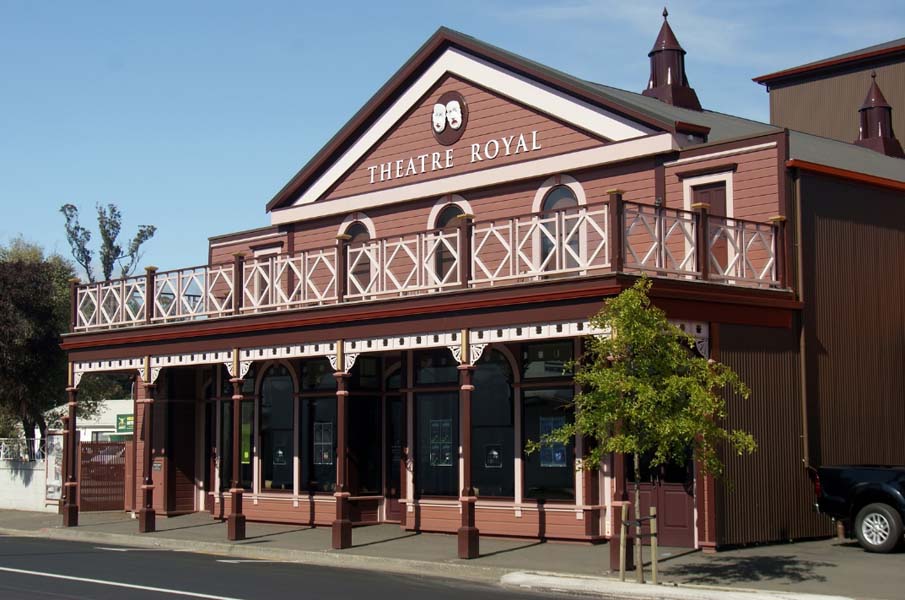
The theatre was designed by William Bethwaite of Bethwaite and Robertson, and built by Mr C W Moore in 1878. The original building was clad in rough-sawn lapped weather boards and the front façade was rusticated weather boards. The upper front façade had three double-hung windows with semi-circular heads, while the lower façade had three sets of double panel doors with curved heads. The original veranda was accessed from the head of the main stair, and featured a central extension out to the Rutherford Street curb. The roof was corrugated iron and small turrets covered ventilation vents. The stage originally had a bow front, and sets of two Corinthian columns, sloping inwards, framed the stage. These had decoration between them and the proscenium had embossed paper decoration.
The Colonist described the building as it neared completion in May 1878:
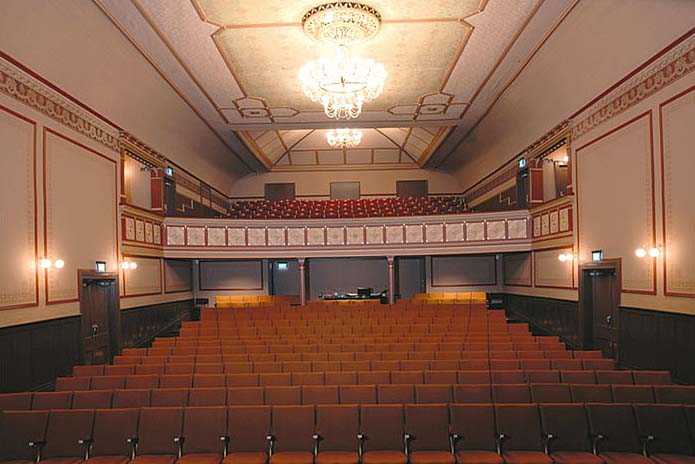
‘The exterior of the Theatre, which is built entirely of wood, is conspicuous more for its plain and serviceable-looking appearance than for embellishment, but its sightliness is fully sufficient to attract attention ... In the front...are the stalls, which will consist of 10 tiers arranged in the centre, and these will afford accommodation for about 150 persons. Behind the stalls are ‘front seats’ arranged with a centre gangway, and there will be sitting room for about 250. Beneath the gallery will be the cheapest part of the house, where seats will be provided for about 200. The gallery will wisely be devoted to dress circle, holding some 200; it will therefore be seen that the new Theatre will accommodate something like 800 persons. It will be observed, as being very desirable, that with these arrangements, ill-behaved boys or men cannot hide themselves in a gallery, where they would not be subject to inspection, for the purpose of annoying the more decent members of the community.’
The Theatre Royal opening night was held on Thursday 18 July 1878 with about 1,000 people attending. There was bench seating on the ground level. Mr Neville Thornton was responsible for painting eight stage sets, and also gave the opening address on the first night. As the theatre seated about 800 it was a substantial building in a town with a population at the time of about 6,000, reflecting the keen local interest in music and theatrical performances.
The theatre flourished in the days when travelling companies visited all the small centres. A variety of entertainment was provided at the theatre - including plays, farces, bell ringing and magic lantern shows. In 1894 the Nelson School of Music opened, which provided a competing venue to the Theatre Royal and its profitability began to decline. The theatre was sold in the early 1900s to Harry Saunders, who carried out extensive alterations, including adding a projection box for screening movies; this had an external side entry. Other alterations at this time included removing the veranda, adding a lean-to extension to the foyer in the central area and changing the main doors. The circle seating rake was increased, side corridors added and ‘boxes’ built within these. The fly tower, used to support the rigging and raising and lowering of set-pieces and backdrops, was added above the stage. The dress circle seating was purchased second-hand from an English theatre in about 1904.
Saunders continued to put on a wide variety of entertainments, from hypnotists, acrobats, plays, concerts, dancers and even occasional boxing and wrestling matches. For example, the annual tournament of the Nelson Amateur Boxing Association was held there from at least 1910 to 1912, promising some ‘very interesting and scientific displays’ to an expected crowded house. Performances were sometimes given to benefit local groups, such as one for the Nelson Cricket Club in 1905 and another for the Nelson Technical School in 1911. An unusual entertainment was provided by Macdermott’s Micro-Bio-Scope Company and Professor Scott at the theatre in 1905. A concert at the theatre by Clara Butt and Kennerley Rumford in 1908 occasioned such enthusiasm that the performers were afterwards accompanied by a cheering crowd to their hotel.
The theatre has also been used for many public talks, such as political meetings by electoral candidates and protest meetings. In 1923, 24 of the scientists who had been in Wellington for a science congress went on to Nelson, perhaps mainly to visit the Cawthron Institute, but while there Sir Douglas Mawson addressed a crowded gathering on Antarctica at the Theatre Royal.
In 1910, Henry John Hayward (1865–1945) leased the building to show movies; the Colonist announcing that the public could expect a ‘first class entertainment’; the three ticket prices being one shilling and sixpence (reserve); one shilling; and sixpence. Haywards’ Enterprises ran over 30 cinemas in New Zealand by 1912. When movies were first shown, the City Council’s steam road roller - placed in a pit between the theatre and adjoining lodge building - provided the power. After a few years, the theatre had its own steam plant. Movies continued to be shown until 1936, by which time newer cinemas were competing more successfully.
The Amateur Operatic and Dramatic Society aimed to present one opera and one comedy each year at the theatre; with most of the productions also being taken to Blenheim. Among the productions was ‘The Runaway Girl’ in 1913. However, the Depression caused the Society to go into recess and it was replaced by the Nelson Repertory Club, formed in 1934.
During World War One many patriotic meetings and fund raising events were held at the theatre. Similarly, after World War Two a seven-night revue ‘Hello Victory’ was held in aid of the Returned Services Association (RSA) building fund; and the concert section of the RSA (the Tin Hat Club) staged their annual revues at the theatre.
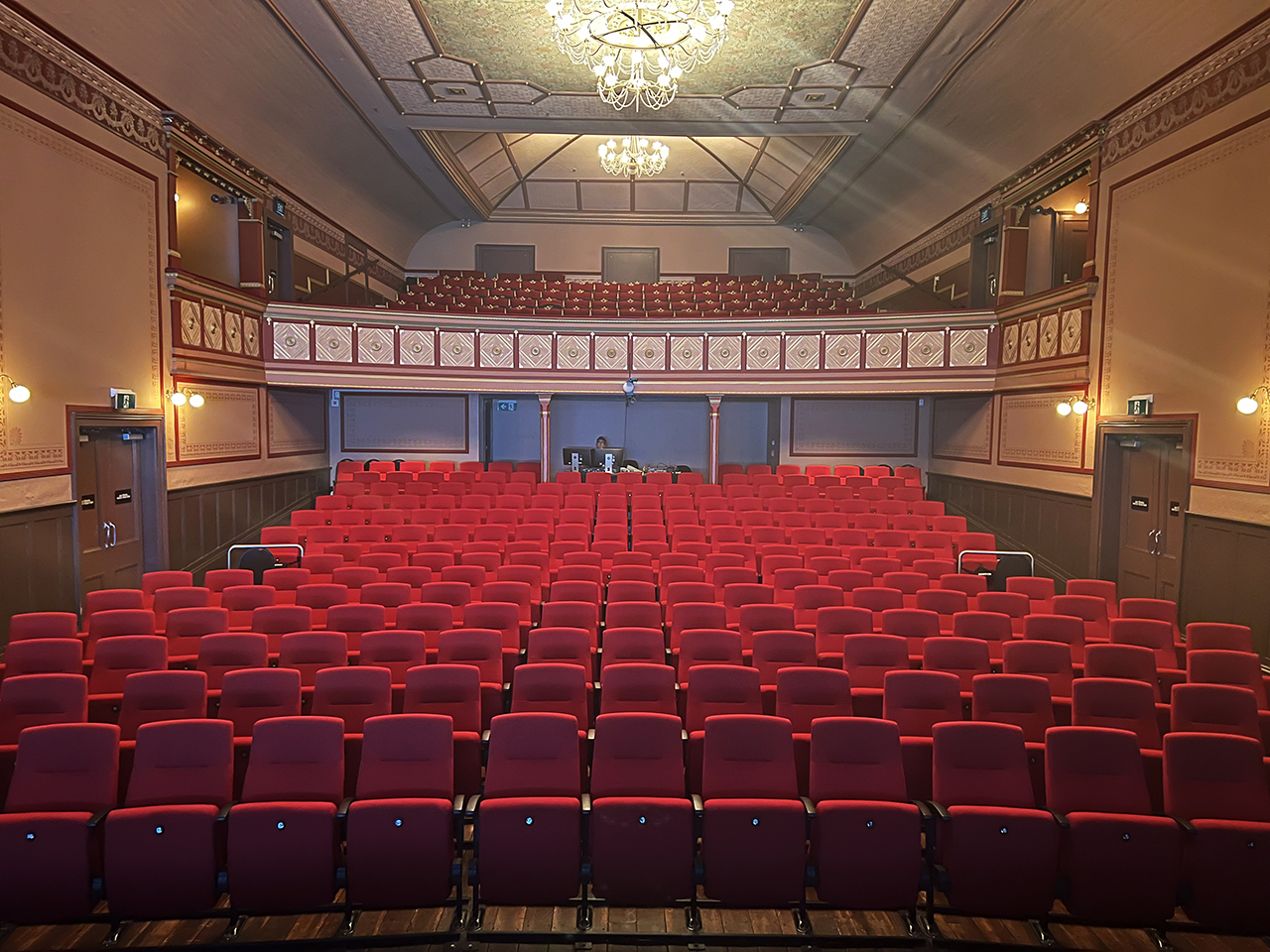
The Nelson Repertory Club became an incorporated society in 1944 to purchase the theatre from Mr Noel Jones, who had advertised his intention of selling the seats and turning the theatre into a joinery factory. The purchase price was ₤2,250 - the building costing ₤1,700 and the seating ₤550. The seating comprised 290 ‘modern seats’ and 110 ‘plush’ seats of an older style (these are the dress circle seats). Members of the Nelson Repertory Society Inc took out debentures to enable the purchase and once these had been paid off they began an upgrade of the building.
The 1960s saw a decline in theatre audiences as television took hold in households - this was a typical pattern everywhere, and also affected cinemas, with many closing. The Theatre Royal building was also becoming run down, with a flood in 1970, caused by inadequate drainage, leaving the orchestra members’ chairs in six inches of water. Alterations were carried out in the mid-1970s at the time of the building’s centennial - including removing the projection box and restyling the front façade with three round-top neo-Georgian windows and multi-paned lower façade out to the footpath boundary, thus enclosing the space beneath the veranda.
Fund-raising to restore the building began in the late 1990s. In 1999 actors Dame Kate Harcourt and Miranda Harcourt, after performing at the theatre, wrote in support of restoration efforts: ‘your theatre is a valuable community asset which brings touring companies to Nelson... It’s a perfect size, acoustic and shape and retains aspects of its original décor. As to these elements of your theatre don’t change a thing!’
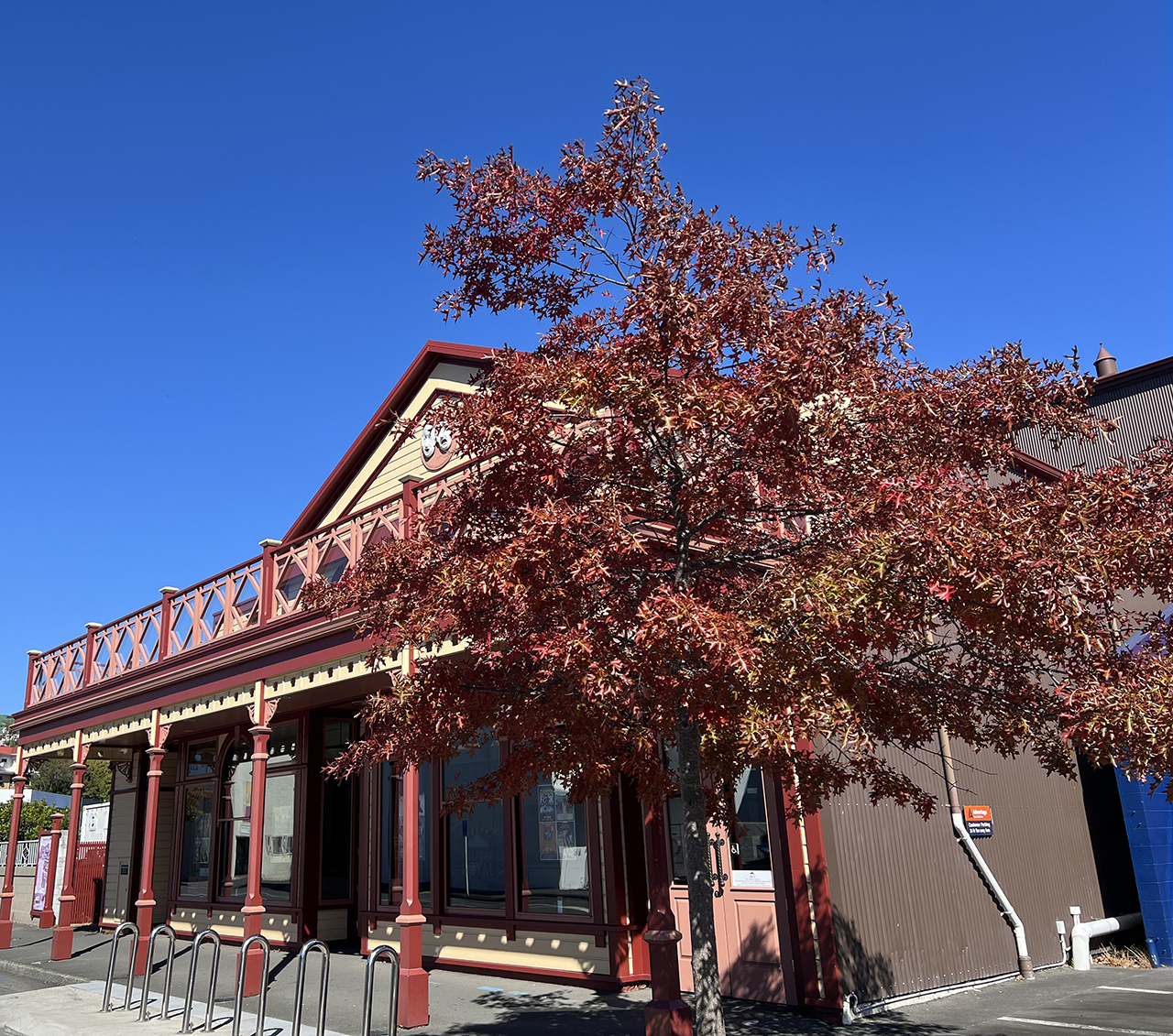
The theatre closed in December 2005 as such major maintenance was needed that it was no longer possible to get a licence to operate the building as a theatre. Ownership was transferred to the Nelson Historic Theatre Trust, who spearheaded a fund raising campaign for the upgrade of the building. Major refurbishment began in 2008 and the theatre reopened on 31 May 2010, with a gala opening festival from May 31 to June 13. The refurbishment cost approximately $6.5 million, which was largely paid for with government and council grants and loans, and community fund raising efforts. It now seats approximately 350. As part of the fundraising all of the seats were sponsored by local individuals and groups, whose names are marked by a small plaque on the underside of the seat - the sponsorship cost being $750 for downstairs seats and $1,000 for dress circle seats. A list of sponsors is displayed in the south corridor. The auditorium looks much as it has always been, but the stage, fly tower, back stage facilities and front-of-house have been rebuilt. The raked stage was replaced with a level one. In and around the auditorium, care was taken to restore as much of the heritage fabric as possible and only replace what was necessary. The façade was remodelled, with extra windows installed on the ground level to open it up to the street.
In its first year since reopening, the theatre had approximately 42,000 audience members to its various performances.