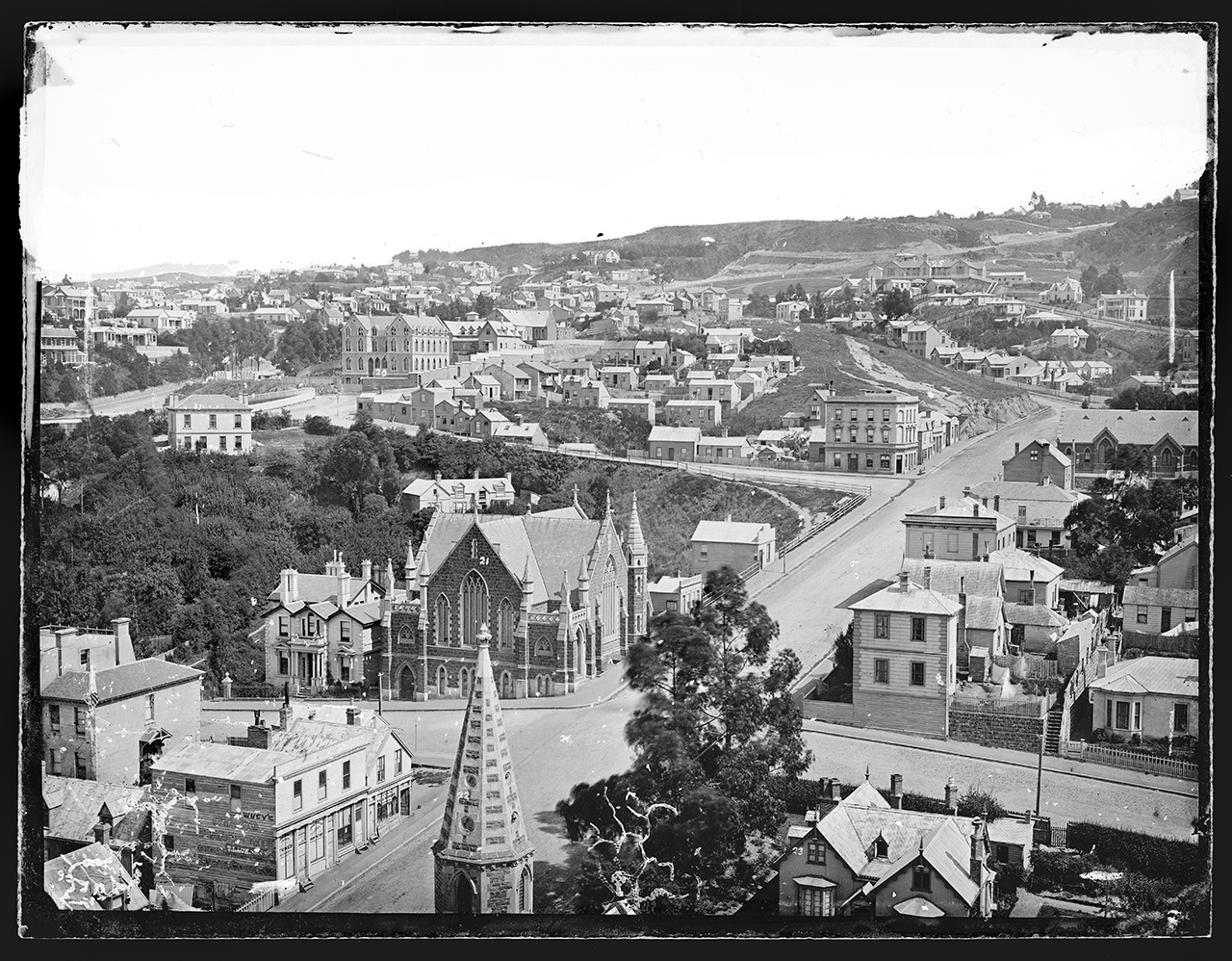
A striking landmark on upper Stuart Street, the Trinity Methodist Church (Former) designed by R.A. Lawson, represents a significant part of the development of the Methodism in Dunedin. Its transformation from a place of worship to a playhouse in 1977 was an example of an innovative and successful adaptive reuse of a redundant ecclesiastical building. This place has architectural and historical significance.
The area around the Octagon was traditionally known as Ōtepoti after a small kaik near the site of the Toitū tauraka waka (List No. 9774). The hapū Kai Te Pahi, Kāti Moki, and Kāti Taoka still maintain their presence and responsibility as kaitiaki in this region through Ōtākau rūnaka as mana whenua. In 1848 the First Church Settlement arrived in Dunedin led by Captain William Cargill and Rev. Thomas Burns. The original Wesleyan Church was situated on Dowling Street ‘above the cutting’ in Ngā Moana e Rua / Bell Hill and opened on 14 July 1862. The first preachers being the Rev. Dr D.M. Stuart (List No. 4758) of Knox Church (List No. 4372) and Dr Thomas Burns. A wooden building with a slate roof, it was designed by Mr Greenfield and cost £1,100 ($139,358) but was wrecked in a gale and never recovered. R.A. Lawson, the leading architect at the time, was in full flight with commissions and winning design competitions for churches. In 1868 his design for the new Wesleyan church was proposed for the junction of Stuart, Albert Streets and York Place. The location moved a block down the street to the corner of Moray Place and Stuart Street which resulted in the design being mirrored. This church replaced the earlier church in Dowling Street.
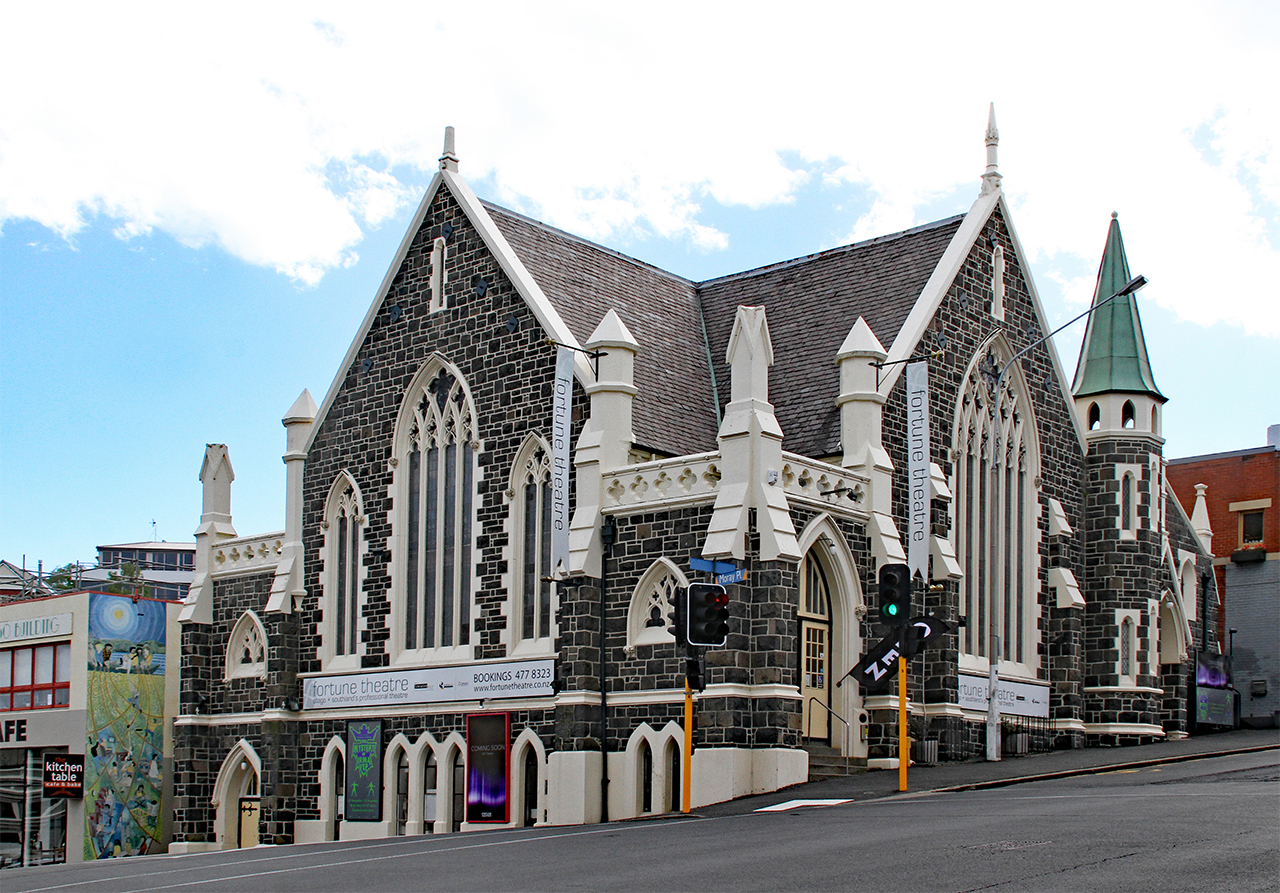
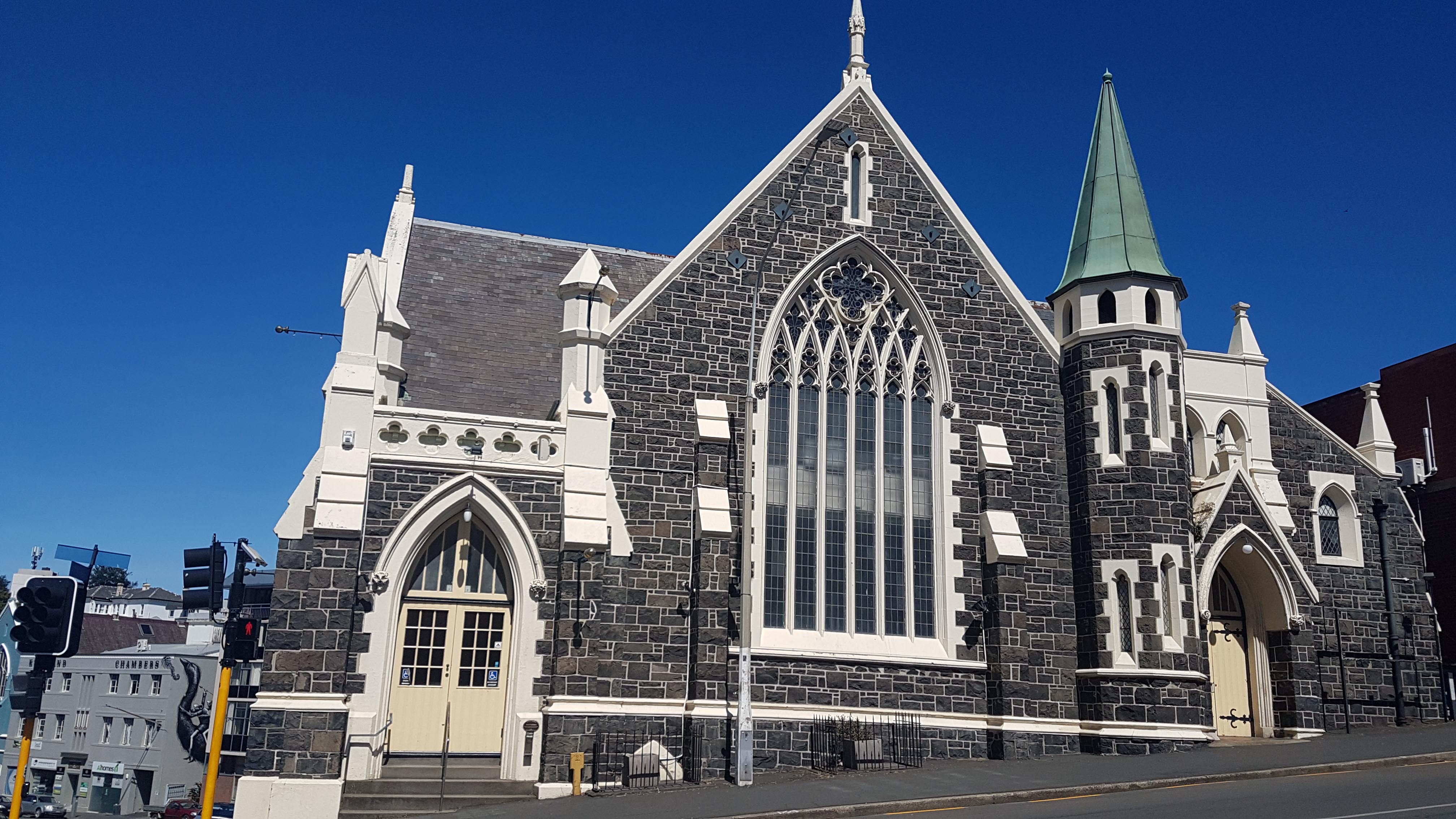
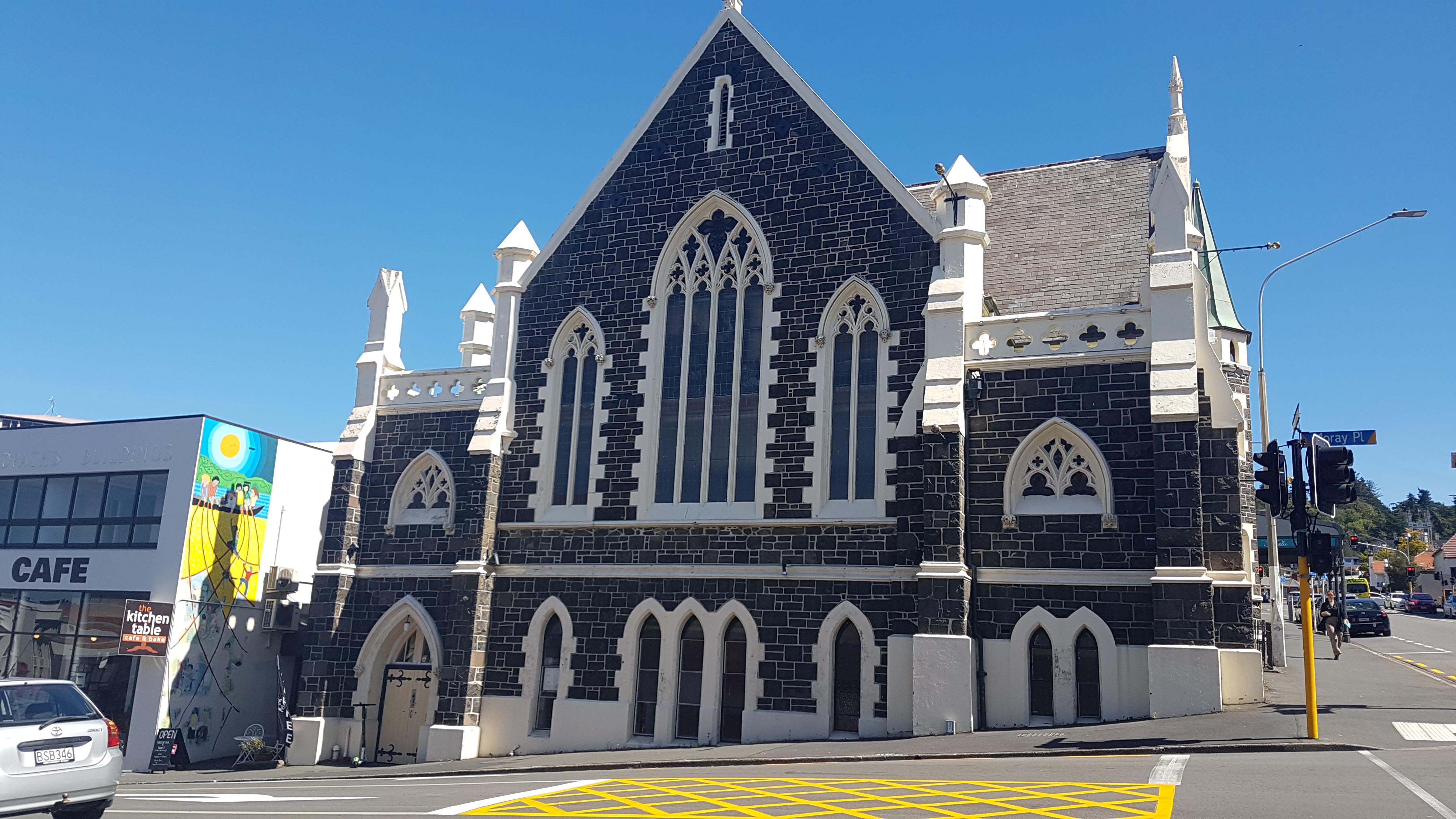
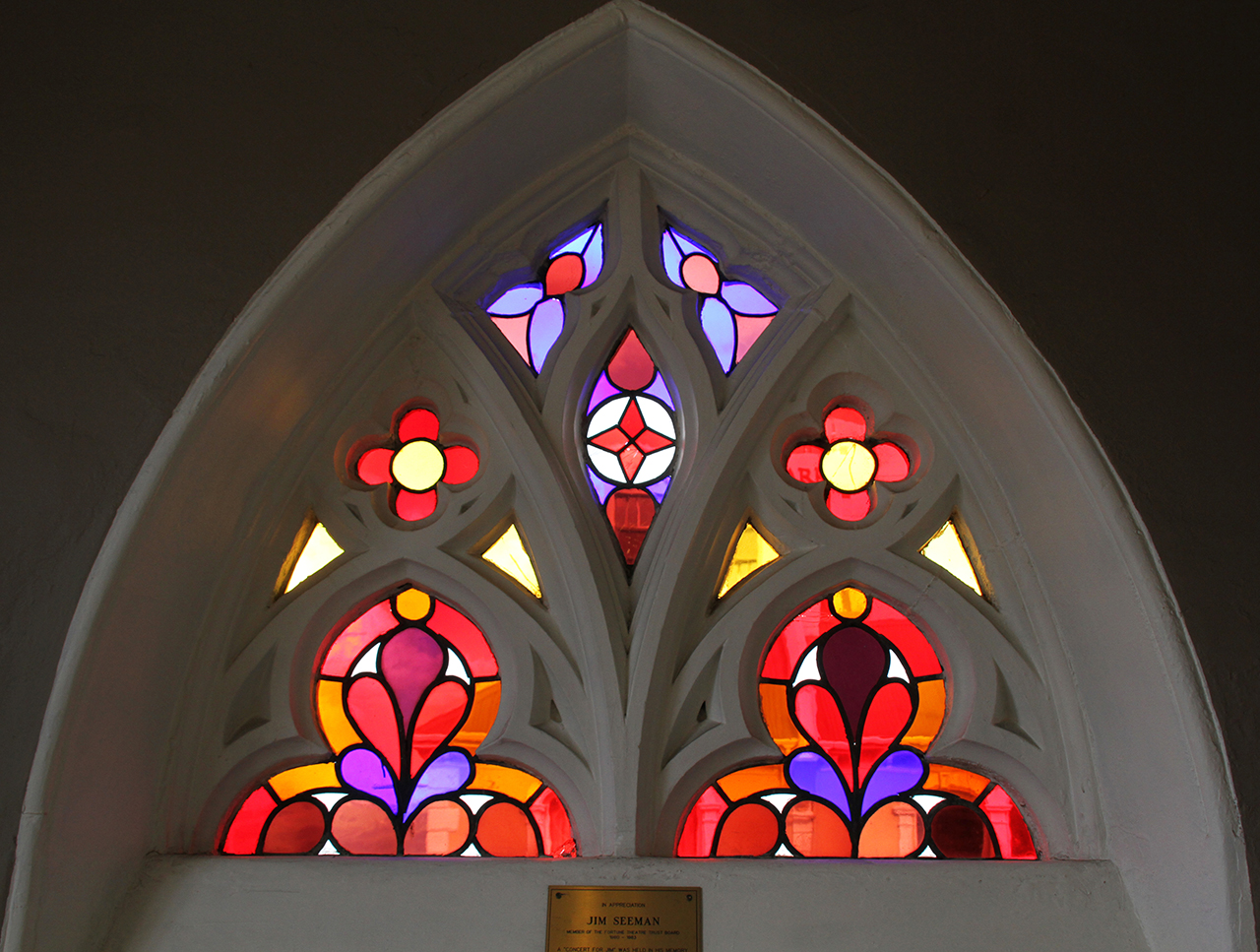
The foundation stone was laid in 25 Aug 1869 by Rev. Thomas Buddle, Chairman of the Southern District of New Zealand of the Australasian Wesleyan Methodist Church. Trinity Methodist Church is a substantial Victorian building, Gothic Revival in style - on a cruciform plan. Constructed in Leith Valley trachyandesite it is characterised by pale pointing and decorative Ōamaru stone facings, the contrast in colour emphasises the Gothic elements of pointed arches, window tracery, pinnacles, finials, and buttress angles. The pointed arch is used repeatedly for window and door openings, contrasted by a rose window in the west elevation. Windows vary in size, the largest ones featuring intersecting tracery enclosing trefoils. The slate roof is steeply pitched above the nave and transepts with flat balcony areas to the north-west and south-west. The balconies have quatrefoil balustrading and oversized pinnacles at the corners. An octagonal bell turret on the north-west adds variety to the overall form. Employing an architectural style and construction which is a feature of Dunedin city, the former Trinity Methodist Church is a very fine smaller-scale church. The original design called for an imposing spire on the corner but his was sacrificed when costs became too great, the result is a truncated tower forming the formal entrance on Stuart Street. The church seated 650 souls and had a school room and vestry in the basement. It was opened on 10 July 1870 with a celebratory soiree on 12 July. Knight notes it is one of only five stone Wesley/Methodist Churches in Otago.
The church carried a heavy debt for three decades and required constant fundraising. Anniversary services, lectures and soirees were held annually for many years. In 1876 a gallery was added which improved the acoustics. In 1930 a proposed new Sunday School building was scaled down and, in the end, incorporated into the gallery and ground floor of the church. A memorial tablet to those who fell in the war was unveiled. The 1960s and 1970s saw the rationalisation of church parishes and buildings in Dunedin following ‘the crisis of belief … and general religious decline that set in after World War 21’. In 1974 the Church became part of the Dunedin Methodist Circuit which coincided with changes in alternative forms of worship, an aging congregation and accompanying accessibility issues.
Following consultation and review of all congregations, it was found that congregations needed to ‘reduce their reliance on buildings by selling or leasing one third of total plant by March 31st 1978.’ Trinity was already expensive to run and major costs loomed. The church was closed with some drama with the final service held on Christmas Day 1977. The Fortune Theatre Trust which was founded in 1974 and previously occupied part of the Dunedin Athenaeum and Mechanics’ Institute (List No. 7781) took on the lease of the building in 1978. During the following year it was remodelled as a theatre providing two auditoriums; a mainstage which seated 227 people and a studio which seated 102. In 1980 the building was sold to Trust and subsequently to the Dunedin City Council who leased it back to them. It successfully operated as Otago Southland’s only home of professional theatre until its abrupt closure in 2018. During its 44 years the company produced 407 main stage productions selling more than 750,000 tickets. In 2022 it maintains its architectural integrity and streetscape quality and is remembered fondly as the home of professional theatre in Dunedin.
The area around the Octagon was traditionally known as Ōtepoti after a small kaik near the site of the Toitū tauraka waka (List No. 9774). The hapū Kai Te Pahi, Kāti Moki, and Kāti Taoka still maintain their presence and responsibility as kaitiaki in this region through Ōtākau rūnaka as mana whenua. In 1848 the First Church Settlement arrived in Dunedin led by Captain William Cargill and Rev. Thomas Burns. The original Wesleyan Church was situated on Dowling Street ‘above the cutting’ in Ngā Moana e Rua / Bell Hill and opened on 14 July 1862. The first preachers being the Rev. Dr D.M. Stuart (List No. 4758) of Knox Church (List No. 4372) and Dr Thomas Burns. A wooden building with a slate roof, it was designed by Mr Greenfield and cost £1,100 ($139,358) but was wrecked in a gale and never recovered. R.A. Lawson, the leading architect at the time, was in full flight with commissions and winning design competitions for churches. In 1868 his design for the new Wesleyan church was proposed for the junction of Stuart, Albert Streets and York Place. The location moved a block down the street to the corner of Moray Place and Stuart Street which resulted in the design being mirrored. This church replaced the earlier church in Dowling Street.
The foundation stone was laid in 25 Aug 1869 by Rev. Thomas Buddle, Chairman of the Southern District of New Zealand of the Australasian Wesleyan Methodist Church. Trinity Methodist Church is a substantial Victorian building, Gothic Revival in style - on a cruciform plan. Constructed in Leith Valley trachyandesite it is characterised by pale pointing and decorative Ōamaru stone facings, the contrast in colour emphasises the Gothic elements of pointed arches, window tracery, pinnacles, finials, and buttress angles. The pointed arch is used repeatedly for window and door openings, contrasted by a rose window in the west elevation. Windows vary in size, the largest ones featuring intersecting tracery enclosing trefoils. The slate roof is steeply pitched above the nave and transepts with flat balcony areas to the north-west and south-west. The balconies have quatrefoil balustrading and oversized pinnacles at the corners. An octagonal bell turret on the north-west adds variety to the overall form. Employing an architectural style and construction which is a feature of Dunedin city, the former Trinity Methodist Church is a very fine smaller-scale church. The original design called for an imposing spire on the corner but his was sacrificed when costs became too great, the result is a truncated tower forming the formal entrance on Stuart Street. The church seated 650 souls and had a school room and vestry in the basement. It was opened on 10 July 1870 with a celebratory soiree on 12 July. Knight notes it is one of only five stone Wesley/Methodist Churches in Otago.
The church carried a heavy debt for three decades and required constant fundraising. Anniversary services, lectures and soirees were held annually for many years. In 1876 a gallery was added which improved the acoustics. In 1930 a proposed new Sunday School building was scaled down and, in the end, incorporated into the gallery and ground floor of the church. A memorial tablet to those who fell in the war was unveiled. The 1960s and 1970s saw the rationalisation of church parishes and buildings in Dunedin following ‘the crisis of belief … and general religious decline that set in after World War 21’. In 1974 the Church became part of the Dunedin Methodist Circuit which coincided with changes in alternative forms of worship, an aging congregation and accompanying accessibility issues.
Following consultation and review of all congregations, it was found that congregations needed to ‘reduce their reliance on buildings by selling or leasing one third of total plant by March 31st 1978.’ Trinity was already expensive to run and major costs loomed. The church was closed with some drama with the final service held on Christmas Day 1977. The Fortune Theatre Trust which was founded in 1974 and previously occupied part of the Dunedin Athenaeum and Mechanics’ Institute (List No. 7781) took on the lease of the building in 1978. During the following year it was remodelled as a theatre providing two auditoriums; a mainstage which seated 227 people and a studio which seated 102. In 1980 the building was sold to Trust and subsequently to the Dunedin City Council who leased it back to them. It successfully operated as Otago Southland’s only home of professional theatre until its abrupt closure in 2018. During its 44 years the company produced 407 main stage productions selling more than 750,000 tickets. In 2022 it maintains its architectural integrity and streetscape quality and is remembered fondly as the home of professional theatre in Dunedin.