DonateMembershipVisit Heritage
  • Tūrangawaewae
    Places
  • Tira Māori
    Māori Heritage
  • Poutairangahia
    Archaeology
  • Rauemi
    Resources
  • Mō Tātou
    About Us
  • New Zealand Heritage List
  • Nominate and submit
  • Explore the List
  • National Historic Landmarks
  • Plaques
  • Rainbow List Project
  • Lost heritage
  • Visit Heritage
  • Our properties
  • Turnbull House Project
  • Collections
  • Shop
  • Tohu Whenua
  • Tira Māori
  • Conserving Māori heritage
  • Marae built heritage
  • Māori heritage on the List
  • Hinemihi—Te Hokinga Mai
  • What is archaeology?
  • Is there a site on my property?
  • What are my legal requirements?
  • Affecting an archaeological site
  • Declaring an archaeological site
  • Archaeology FAQs
  • Archaeology Digital Library
  • Archaeology guidelines and templates
  • Resources
  • Funding
  • Publications
  • Sustainable management guides
  • Disaster recovery
  • Podcasts & digital resources
  • Education Hub
  • Conservation plans
  • About
  • Board
  • Māori Heritage Council
  • Senior Staff
  • Offices
  • Contact us
  • Careers
  • Covenants
  • Fast-track
  • Corporate documents
  • Currently consulting on
  • Our submissions
  • News
  • Covid-19 response
Quick links
Rārangi Kōrero | The List
Explore the List
National Historic Landmarks
Ngā Manawhenua o Aotearoa me ōna Kōrero Tūturu
Quick links
Tapuwae
A Vision for Places of Māori Heritage
Funding for Māori Heritage
Resources
Quick links
Archaeological Authority Portal
Applying for an archaeological authority
Archaeology FAQs
Browse the most frequently asked questions about archaeological authorities and the archaeological process.
Quick links
Quick links
News
News Keep up to date with Heritage New Zealand Pouhere Taonga
Membership
Membership Find out more and sign up today
DonateMembershipVisit Heritage
  • Tūrangawaewae
    Places
  • Tira Māori
    Māori Heritage
  • Poutairangahia
    Archaeology
  • Rauemi
    Resources
  • Mō Tātou
    About Us
  • New Zealand Heritage List
  • Nominate and submit
  • Explore the List
  • National Historic Landmarks
  • Plaques
  • Rainbow List Project
  • Lost heritage
  • Visit Heritage
  • Our properties
  • Turnbull House Project
  • Collections
  • Shop
  • Tohu Whenua
  • Tira Māori
  • Conserving Māori heritage
  • Marae built heritage
  • Māori heritage on the List
  • Hinemihi—Te Hokinga Mai
  • What is archaeology?
  • Is there a site on my property?
  • What are my legal requirements?
  • Affecting an archaeological site
  • Declaring an archaeological site
  • Archaeology FAQs
  • Archaeology Digital Library
  • Archaeology guidelines and templates
  • Resources
  • Funding
  • Publications
  • Sustainable management guides
  • Disaster recovery
  • Podcasts & digital resources
  • Education Hub
  • Conservation plans
  • About
  • Board
  • Māori Heritage Council
  • Senior Staff
  • Offices
  • Contact us
  • Careers
  • Covenants
  • Fast-track
  • Corporate documents
  • Currently consulting on
  • Our submissions
  • News
  • Covid-19 response
Quick links
Rārangi Kōrero | The List
Explore the List
National Historic Landmarks
Ngā Manawhenua o Aotearoa me ōna Kōrero Tūturu
Quick links
Tapuwae
A Vision for Places of Māori Heritage
Funding for Māori Heritage
Resources
Quick links
Archaeological Authority Portal
Applying for an archaeological authority
Archaeology FAQs
Browse the most frequently asked questions about archaeological authorities and the archaeological process.
Quick links
Quick links
News
News Keep up to date with Heritage New Zealand Pouhere Taonga
Membership
Membership Find out more and sign up today
  • Places
  • Nominate and submit
  • National Historic Landmarks
  • Places
  • Nominate and submit
  • National Historic Landmarks
  • Tira Māori
  • Conserving Māori heritage
  • Marae built heritage
  • Tira Māori
  • Conserving Māori heritage
  • Marae built heritage
  • Archaeological authorities
  • Archaeology Digital Library
  • Archaeological authorities
  • Archaeology Digital Library
  • All resources
  • Publications
  • Funding
  • All resources
  • Publications
  • Funding
  • FAQs
  • FAQs
Follow us on:
Places
  • Places
  • Nominate and submit
  • National Historic Landmarks
Tira Māori
  • Tira Māori
  • Conserving Māori heritage
  • Marae built heritage
Archaeology
  • Archaeological authorities
  • Archaeology Digital Library
Resources
  • All resources
  • Publications
  • Funding
FAQs
  • FAQs
Follow us on
HomePrivacyTerms and conditionsAbout this site
© Heritage New Zealand Pouhere Taonga 2026.
 
Waiau Coronation Library and Hall

3-5 Cheviot Street, WAIAU

Private

Historic Place Category 2

List No. 3443

Quick links:
List GalleryLocationDetails
Brief History:
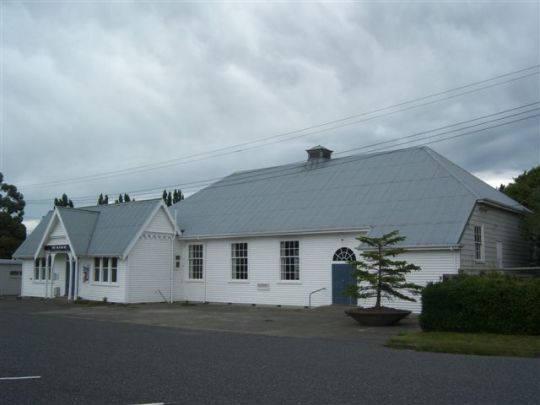
The Waiau Coronation Library and Hall is a well-preserved example of a small town community facility of the early to mid twentieth century. The complexity of the design of this building as completed in 1938 - containing a supper room, library, hall, film projection facilities and a shooting range - suggests the central role that it played in the social life of the community of the time. With its two architecturally distinct parts, one Arts-and-Crafts, and the other neo-Georgian, the complex also clearly depicts changing architectural tastes during the period.

The North Canterbury township of Waiau came into existence in the 1860s as a run country township. It became the administrative and service centre for the district, with tradesmen and labourers setting up home there. The township grew in importance during the 1880s with the bridging of the Waiau in 1883, and the completion of an inland road to Kaikoura in 1887.

Following the establishment of a school at Waiau in 1877, community gatherings took place in the schoolroom. As the rural township grew however, this arrangement proved more problematic - particularly as the 'cramped space' also served initially as library and courthouse. In 1883 a new school was built, and the old school moved to Cheviot Street, where it was converted for use as a dedicated library and reading room.

About the same time, local identity Alexander MacDonald built a skating rink in the township, at the corner of Cheviot and Lowry Streets. Known as MacDonald's Hall or Tin Hall, the corrugated iron and timber structure was also 'the scene of many important social and historical functions'. As a consequence of its construction however, the building was hot in summer and cold in winter, and thus became the object of 'merciless criticism'. Despite its inadequacies though, the private hall served the community for thirty years.

An opportunity for Waiau to gain its own purpose-built community facilities arose with the coronation of George V in 1911. To commemorate the occasion, government subsidies for the construction of public facilities such as libraries, halls, bridges and band rotundas were made available. Waiau took advantage of the official benevolence, and had a library, adjoining hall and supper room erected in 1911-1912 to a design of Christchurch architectural firm Collins and Harman. Building began in September 1911 on the site of the old library, and the complex was officially opened in February 1912 by the chair of its committee, Mr T. Marr. The total cost of was £606 18s - of which £250 was government subsidy.

In 1918 the railway to the district was completed, providing an additional fillip to Waiau's prosperous post war economy and ensuring the township's continued importance. By 1923 the decade-old King George V Coronation Library Hall was already proving inadequate to the needs of the growing community, and the old MacDonald's Hall (by then being used as a garage) was purchased to serve as a supplementary facility. With the installation of a new floor and the addition of a kitchen and dressing rooms, the reborn Tin Hall was used for another fifteen years.

Despite the community's efforts, the lack of suitable hall accommodation in Waiau was again becoming apparent by the mid 1930s. In 1936 a meeting was convened to enquire into the issue, and a building committee was elected. As a consequence of their endeavours, additions and alterations were made to the Coronation library and hall by prominent Christchurch architectural firm Helmore and Cotterill in 1937-1938. A large new hall in the firm's favoured style, neo-Georgian, was added at right angles to the north elevation of the old hall. This extension enabled the facility to serve a greater range of community activity, with the new hall containing a stage, dressing rooms, a 'Bio Room' (or projection booth) for the showing of films and a shooting range. The old hall was altered to serve as an enlarged supper room, whilst the library ceded a portion of its space for the insertion of new toilet facilities. The total cost of the new complex was £2,695, though a Queen Carnival campaign conducted by the hall committee raised a further £600 for the provision of furnishings. The hall was officially opened by the local MP, former Prime Minister the Rt. Hon. George Forbes, at a well-attended ceremony on 22 July 1938. At the time, the building was described as 'one of the best country halls in Canterbury'.

Although shooting ranges and public halls were commonly associated, most ranges were temporary adaptations - with shooters firing the length of the hall into butts under the stage. Examples of this type in North Canterbury include the halls at Glenmark and Hawarden (the latter of which is still in use). However the construction of a purpose-built permanent shooting range as a part of the Waiau hall extension was an unusual feature, and may be unique. The Waiau Miniature Rifle Club, for whom the range was provided, was in its heyday a particularly large and successful small-bore club. At its peak in the 1950s the club had sixty members, necessitating the expansion of the range to accommodate a larger numbers of shooters. Amongst the many competitive shooters produced by the club was Kelvin Dunbar - club treasurer, secretary and a national champion during the 1940s and 1950s.

Increased private car use and alternative sources of entertainment in the later half of the twentieth century led frequently to the decline of the local hall. The Waiau Community Hall and Library (as it is presently known) however proves an exception, and continues today to serve the community much as it has since 1912. The library is administered by its own committee, and remains well utilized despite being open on Saturday mornings only. There has been recent discussion about establishing a Waiau information centre in the space - a consequence of the growth of tourism in the district. The hall is administered by the Waiau Citizens Association, and fulfils a variety of uses. It is a popular venue for functions (such as 21st birthdays), school productions and badminton. A 'Kids Club', an after-school programme for children, is run on a Friday afternoon. The Waiau Community Project also runs computer classes from the building, for the benefit of disadvantaged children. The shooting range remains in-situ, but is presently unused - the club having been in recess since 1987.
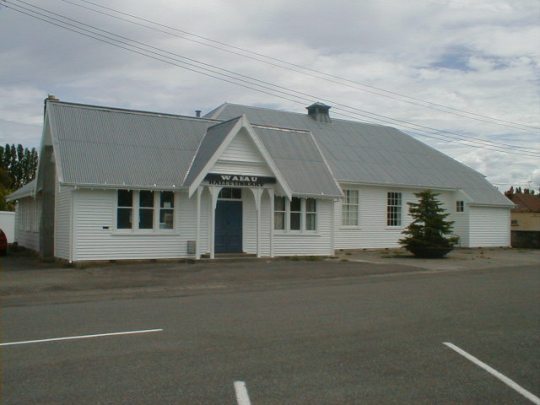
Waiau Coronation Library and Hall | NZ Historic Places Trust
Waiau Coronation Library/Hall | Robyn Burgess | 30/01/2011 | NZ Historic Places Trust
Waiau Coronation Library and Hall | NZ Historic Places Trust
Waiau Coronation Library/Hall | Robyn Burgess | 30/01/2011 | NZ Historic Places Trust

List Entry Information

Overview

Status
Listed

List Entry Status
Historic Place Category 2

Access
Private/No Public Access

List Number
3443

Date Entered
26th May 2006

Date of Effect
26th May 2006

City/District Council
Hurunui District

Region
Canterbury Region

Extent of List Entry

Registration includes the building its fittings, and the land on certificates of title CB408/130, CB2D/1121 and CB453/165 (See Appendix 2 of Registration Report.)

Legal description

Pt Sec 90 Blk IV Town of Waiau, Lot 1 DP 22335, Pt Sec 89 Blk IV Town of Waiau, (RTs CB408/130, CB2D/1121, CB453/165), Canterbury Land District.

Detailed List Entry
Significance

Historic Significance

Historical Significance or Value Significance or value (section 23(1): historical, social: The library and hall complex also have social and historical significance or value as a reflection of the needs and aspirations of the Waiau community at the time it was built and extended, and as an active focus of community association and sociability in Waiau for more than ninety years. The unusual in-built rifle range is an interesting example of the many, diverse activities which the hall has housed.

Physical Significance

Significance or value (section 23(1): architectural: The Waiau Coronation Library and Hall has architectural significance or value as the joint product of two prominent Christchurch architectural practices: Collins and Harman, and Helmore and Cotterill. Each of the two parts of the complex reflect a contemporary architectural taste of the period in which it was built. Despite this variation however, the Helmore and Cotterill addition was designed to relate to the original building.

Detail Of Assessed Criteria

(a) The hall represents the sociability and vitality of small communities such as Waiau in the first half of the twentieth century. Facilities similar to this once provided a focus for the communal activities of many rural districts and townships, but the development since the 1960s of better transport links and alternative sources of entertainment have seen the decline of many local halls. (b) The hall is associated with a grants scheme commemorating the coronation of King George V in 1911, a programme which saw the extensive distribution by government of funds for public facilities such as libraries. (e) The hall has on-going and active community associations, and is held in high esteem such that it has been well maintained and well used through the course of its history. (h) The hall commemorates the coronation of King George V.

Construction Professional

Name

Collins & Harman

Type

Architectural Partnership

Biography

One of the two oldest architectural firms in New Zealand, Armson, Collins and Harman was established by William Barnett Armson in 1870. After serving his articles with Armson, John James Collins (1855-1933) bought the practice after the former's death in 1883 and subsequently took Richard Dacre Harman (1859-1927) into partnership four years later. Collins' son, John Goddard Collins (1886-1973), joined the firm in 1903. Armson, Collins and Harman was one of Christchurch's leading architectural practices in the early years of this century. Notable examples of the firm's work include the Christchurch Press Building (1909), Nazareth House (1909), the former Canterbury College Students Union (1927), the Nurses Memorial Chapel at Christchurch Public Hospital (1927) and the Sign of the Takahe (1936). Their domestic work includes Blue Cliffs Station Homestead (1889) and Meadowbank Homestead, Irwell. In 1928 the firm's name was simplified to Collins and Harman and the firm continues today as Collins Architects Ltd. With a versatility and competence that betrayed the practice's debt to Armson's skill and professionalism, Collins and Harman designed a wide variety of building types in a range of styles.

Name

Helmore & Cotterill

Type

Architectural Partnership

Biography

The partnership between Heathcote Helmore (1894-1965) and Guy Cotterill (1897-1981) began in 1924. Based in Christchurch, both men had attended Christ's College, served articles under Cecil Wood, and then travelled to England in 1920. On their way to England they stopped at New York, and due to a delay were able to travel to Yorkstown, Virginia where they saw examples of American Colonial architecture. In England Helmore worked for Sir Edwin Lutyens, who at the time was concentrating on Neo-Georgian buildings. Both of these events influenced the later architectural direction of Helmore and Cotterill, who, when they returned to New Zealand, began to design houses that were neo-Georgian in style but built from timber, like the American Colonial Georgian houses, rather than the English brick. Their partnership ended with Helemore's death in 1965.

Construction Details

Start Year

1911

Finish Year

1912

Type

Original Construction

Description

Construction of library and first hall.

Start Year

1937

Finish Year

1938

Type

Addition

Description

Addition of new larger hall, and associated alterations to original building.

Start Year

1950

Finish Year

1960

Type

Modification

Description

Expansion of shooting range

Start Year

2005

Type

Modification

Description

Side and rear elevations clad in Hardy plank during renovation.

Construction Materials

Weatherboard with a corrugated iron roof.

Physical Description

Architects: Collins and Harman (1911) Helmore and Cotterill (1937) Builder: Wadey and Efford (1937-1938) Description: The Waiau Coronation Library and Hall is located just off Lyndon Street, Waiau's main street, and faces onto a small park, the Green. The single-storey community hall and library complex was built in two distinct stages. The first, T-shaped, stage was built in 1911-1912. It consists of a steeply gabled library fronting a lower pitched hall with a lean-to kitchen at the rear. On the main (Cheviot) street frontage, a centrally placed steeply-gabled Arts-and Crafts porch is flanked by two three-light double-hung sash windows. The porch shelters a pair of panelled doors surmounted by a rectangular transom. These doors open to a short corridor that provides access to both the library and hall. All three shingled library gables (one front, two end) are splayed; the splay of the north end gable being decorated with a fringe of brackets. The hall itself is a functional structure, with (originally) three sets of paired double-hung sash windows down each side. The second stage, built 25 years later in 1937-1938, is a larger hall that sits end-on to the side of the original building. Although also weatherboard, it is neo-Georgian in style - with large multipaned sash windows, a fanlight headed double door and a hipped roof. These doors also help link the extension visually with the transom-headed front doors of the earlier portion. The large expanse of roof is given interest with an ogee-capped square ventilator. The roof plane is extended either side of the stage to provide space for wings and dressing rooms. A 'shooting tunnel' with associated 'shooting room' and 'markers pit' was constructed as part of this hall, and sits against and parallel to the back (west) wall.

Reference

Information Sources

Canterbury Museum

Canterbury Museum

Cyclopedia of New Zealand, 1903

Cyclopedia Company, Industrial, descriptive, historical, biographical facts, figures, illustrations, Wellington, N.Z, 1897-1908, Vol. 3, Canterbury Provincial District, Christchurch, 1903

Press

Press, 17 May 1915, p.9.

University of Canterbury

University of Canterbury

Wilson, 1993

J. Cheviot Wilson, Kingdom to County Cheviot: Cheviot Historical Records Society, 1993.

Report Written By

Other interested parties: Waiau Citizens' Association (Hall) Library committee (Library) A copy of the original report is available from the NZHPT Southern Region office Please note that entry on the New Zealand Heritage List/Rarangi Korero identifies only the heritage values of the property concerned, and should not be construed as advice on the state of the property, or as a comment of its soundness or safety, including in regard to earthquake risk, safety in the event of fire, or insanitary conditions.

Further Information

Current Usages

Uses: Civic Facilities

Specific Usage: Hall, Community

Uses: Civic Facilities

Specific Usage: Library

Former Usages

General Usage:: Civic Facilities

Specific Usage: Hall, Community

General Usage:: Civic Facilities

Specific Usage: Library

Themes

Web Links

Overview

Status

Listed

List Entry Status

Historic Place Category 2

Access

Private/No Public Access

List Number

3443

Date Entered

26th May 2006

Date of Effect

26th May 2006

City/District Council

Hurunui District

Region

Canterbury Region

Extent of List Entry

Registration includes the building its fittings, and the land on certificates of title CB408/130, CB2D/1121 and CB453/165 (See Appendix 2 of Registration Report.)

Legal description

Pt Sec 90 Blk IV Town of Waiau, Lot 1 DP 22335, Pt Sec 89 Blk IV Town of Waiau, (RTs CB408/130, CB2D/1121, CB453/165), Canterbury Land District.

Status

Listed

List Entry Status

Historic Place Category 2

Access

Private/No Public Access

List Number

3443

Date Entered

26th May 2006

Date of Effect

26th May 2006

City/District Council

Hurunui District

Region

Canterbury Region

Extent of List Entry

Registration includes the building its fittings, and the land on certificates of title CB408/130, CB2D/1121 and CB453/165 (See Appendix 2 of Registration Report.)

Legal description

Pt Sec 90 Blk IV Town of Waiau, Lot 1 DP 22335, Pt Sec 89 Blk IV Town of Waiau, (RTs CB408/130, CB2D/1121, CB453/165), Canterbury Land District.

Significance

Why is this place significant?

Historic Significance

Historical Significance or Value Significance or value (section 23(1): historical, social: The library and hall complex also have social and historical significance or value as a reflection of the needs and aspirations of the Waiau community at the time it was built and extended, and as an active focus of community association and sociability in Waiau for more than ninety years. The unusual in-built rifle range is an interesting example of the many, diverse activities which the hall has housed.

Physical Significance

Significance or value (section 23(1): architectural: The Waiau Coronation Library and Hall has architectural significance or value as the joint product of two prominent Christchurch architectural practices: Collins and Harman, and Helmore and Cotterill. Each of the two parts of the complex reflect a contemporary architectural taste of the period in which it was built. Despite this variation however, the Helmore and Cotterill addition was designed to relate to the original building.

Why is this place Category 1 / Category 2?

Detail Of Assessed Criteria

(a) The hall represents the sociability and vitality of small communities such as Waiau in the first half of the twentieth century. Facilities similar to this once provided a focus for the communal activities of many rural districts and townships, but the development since the 1960s of better transport links and alternative sources of entertainment have seen the decline of many local halls. (b) The hall is associated with a grants scheme commemorating the coronation of King George V in 1911, a programme which saw the extensive distribution by government of funds for public facilities such as libraries. (e) The hall has on-going and active community associations, and is held in high esteem such that it has been well maintained and well used through the course of its history. (h) The hall commemorates the coronation of King George V.

Why is this place significant?

Historic Significance

Historical Significance or Value Significance or value (section 23(1): historical, social: The library and hall complex also have social and historical significance or value as a reflection of the needs and aspirations of the Waiau community at the time it was built and extended, and as an active focus of community association and sociability in Waiau for more than ninety years. The unusual in-built rifle range is an interesting example of the many, diverse activities which the hall has housed.

Physical Significance

Significance or value (section 23(1): architectural: The Waiau Coronation Library and Hall has architectural significance or value as the joint product of two prominent Christchurch architectural practices: Collins and Harman, and Helmore and Cotterill. Each of the two parts of the complex reflect a contemporary architectural taste of the period in which it was built. Despite this variation however, the Helmore and Cotterill addition was designed to relate to the original building.

Why is this place Category 1 / Category 2?

Detail Of Assessed Criteria

(a) The hall represents the sociability and vitality of small communities such as Waiau in the first half of the twentieth century. Facilities similar to this once provided a focus for the communal activities of many rural districts and townships, but the development since the 1960s of better transport links and alternative sources of entertainment have seen the decline of many local halls. (b) The hall is associated with a grants scheme commemorating the coronation of King George V in 1911, a programme which saw the extensive distribution by government of funds for public facilities such as libraries. (e) The hall has on-going and active community associations, and is held in high esteem such that it has been well maintained and well used through the course of its history. (h) The hall commemorates the coronation of King George V.

Construction Information

Construction Professional

Name

Collins & Harman

Type

Architectural Partnership

Biography

One of the two oldest architectural firms in New Zealand, Armson, Collins and Harman was established by William Barnett Armson in 1870. After serving his articles with Armson, John James Collins (1855-1933) bought the practice after the former's death in 1883 and subsequently took Richard Dacre Harman (1859-1927) into partnership four years later. Collins' son, John Goddard Collins (1886-1973), joined the firm in 1903. Armson, Collins and Harman was one of Christchurch's leading architectural practices in the early years of this century. Notable examples of the firm's work include the Christchurch Press Building (1909), Nazareth House (1909), the former Canterbury College Students Union (1927), the Nurses Memorial Chapel at Christchurch Public Hospital (1927) and the Sign of the Takahe (1936). Their domestic work includes Blue Cliffs Station Homestead (1889) and Meadowbank Homestead, Irwell. In 1928 the firm's name was simplified to Collins and Harman and the firm continues today as Collins Architects Ltd. With a versatility and competence that betrayed the practice's debt to Armson's skill and professionalism, Collins and Harman designed a wide variety of building types in a range of styles.

Name

Helmore & Cotterill

Type

Architectural Partnership

Biography

The partnership between Heathcote Helmore (1894-1965) and Guy Cotterill (1897-1981) began in 1924. Based in Christchurch, both men had attended Christ's College, served articles under Cecil Wood, and then travelled to England in 1920. On their way to England they stopped at New York, and due to a delay were able to travel to Yorkstown, Virginia where they saw examples of American Colonial architecture. In England Helmore worked for Sir Edwin Lutyens, who at the time was concentrating on Neo-Georgian buildings. Both of these events influenced the later architectural direction of Helmore and Cotterill, who, when they returned to New Zealand, began to design houses that were neo-Georgian in style but built from timber, like the American Colonial Georgian houses, rather than the English brick. Their partnership ended with Helemore's death in 1965.

Construction Details

Start Year

1911

Finish Year

1912

Type

Original Construction

Description

Construction of library and first hall.

Start Year

1937

Finish Year

1938

Type

Addition

Description

Addition of new larger hall, and associated alterations to original building.

Start Year

1950

Finish Year

1960

Type

Modification

Description

Expansion of shooting range

Start Year

2005

Type

Modification

Description

Side and rear elevations clad in Hardy plank during renovation.

Construction Materials

Weatherboard with a corrugated iron roof.

Construction Professional

Name

Collins & Harman

Type

Architectural Partnership

Biography

One of the two oldest architectural firms in New Zealand, Armson, Collins and Harman was established by William Barnett Armson in 1870. After serving his articles with Armson, John James Collins (1855-1933) bought the practice after the former's death in 1883 and subsequently took Richard Dacre Harman (1859-1927) into partnership four years later. Collins' son, John Goddard Collins (1886-1973), joined the firm in 1903. Armson, Collins and Harman was one of Christchurch's leading architectural practices in the early years of this century. Notable examples of the firm's work include the Christchurch Press Building (1909), Nazareth House (1909), the former Canterbury College Students Union (1927), the Nurses Memorial Chapel at Christchurch Public Hospital (1927) and the Sign of the Takahe (1936). Their domestic work includes Blue Cliffs Station Homestead (1889) and Meadowbank Homestead, Irwell. In 1928 the firm's name was simplified to Collins and Harman and the firm continues today as Collins Architects Ltd. With a versatility and competence that betrayed the practice's debt to Armson's skill and professionalism, Collins and Harman designed a wide variety of building types in a range of styles.

Name

Helmore & Cotterill

Type

Architectural Partnership

Biography

The partnership between Heathcote Helmore (1894-1965) and Guy Cotterill (1897-1981) began in 1924. Based in Christchurch, both men had attended Christ's College, served articles under Cecil Wood, and then travelled to England in 1920. On their way to England they stopped at New York, and due to a delay were able to travel to Yorkstown, Virginia where they saw examples of American Colonial architecture. In England Helmore worked for Sir Edwin Lutyens, who at the time was concentrating on Neo-Georgian buildings. Both of these events influenced the later architectural direction of Helmore and Cotterill, who, when they returned to New Zealand, began to design houses that were neo-Georgian in style but built from timber, like the American Colonial Georgian houses, rather than the English brick. Their partnership ended with Helemore's death in 1965.

Construction Details

Start Year

1911

Finish Year

1912

Type

Original Construction

Description

Construction of library and first hall.

Start Year

1937

Finish Year

1938

Type

Addition

Description

Addition of new larger hall, and associated alterations to original building.

Start Year

1950

Finish Year

1960

Type

Modification

Description

Expansion of shooting range

Start Year

2005

Type

Modification

Description

Side and rear elevations clad in Hardy plank during renovation.

Construction Materials

Weatherboard with a corrugated iron roof.

Physical Description

Architects: Collins and Harman (1911) Helmore and Cotterill (1937) Builder: Wadey and Efford (1937-1938) Description: The Waiau Coronation Library and Hall is located just off Lyndon Street, Waiau's main street, and faces onto a small park, the Green. The single-storey community hall and library complex was built in two distinct stages. The first, T-shaped, stage was built in 1911-1912. It consists of a steeply gabled library fronting a lower pitched hall with a lean-to kitchen at the rear. On the main (Cheviot) street frontage, a centrally placed steeply-gabled Arts-and Crafts porch is flanked by two three-light double-hung sash windows. The porch shelters a pair of panelled doors surmounted by a rectangular transom. These doors open to a short corridor that provides access to both the library and hall. All three shingled library gables (one front, two end) are splayed; the splay of the north end gable being decorated with a fringe of brackets. The hall itself is a functional structure, with (originally) three sets of paired double-hung sash windows down each side. The second stage, built 25 years later in 1937-1938, is a larger hall that sits end-on to the side of the original building. Although also weatherboard, it is neo-Georgian in style - with large multipaned sash windows, a fanlight headed double door and a hipped roof. These doors also help link the extension visually with the transom-headed front doors of the earlier portion. The large expanse of roof is given interest with an ogee-capped square ventilator. The roof plane is extended either side of the stage to provide space for wings and dressing rooms. A 'shooting tunnel' with associated 'shooting room' and 'markers pit' was constructed as part of this hall, and sits against and parallel to the back (west) wall.

Architects: Collins and Harman (1911) Helmore and Cotterill (1937) Builder: Wadey and Efford (1937-1938) Description: The Waiau Coronation Library and Hall is located just off Lyndon Street, Waiau's main street, and faces onto a small park, the Green. The single-storey community hall and library complex was built in two distinct stages. The first, T-shaped, stage was built in 1911-1912. It consists of a steeply gabled library fronting a lower pitched hall with a lean-to kitchen at the rear. On the main (Cheviot) street frontage, a centrally placed steeply-gabled Arts-and Crafts porch is flanked by two three-light double-hung sash windows. The porch shelters a pair of panelled doors surmounted by a rectangular transom. These doors open to a short corridor that provides access to both the library and hall. All three shingled library gables (one front, two end) are splayed; the splay of the north end gable being decorated with a fringe of brackets. The hall itself is a functional structure, with (originally) three sets of paired double-hung sash windows down each side. The second stage, built 25 years later in 1937-1938, is a larger hall that sits end-on to the side of the original building. Although also weatherboard, it is neo-Georgian in style - with large multipaned sash windows, a fanlight headed double door and a hipped roof. These doors also help link the extension visually with the transom-headed front doors of the earlier portion. The large expanse of roof is given interest with an ogee-capped square ventilator. The roof plane is extended either side of the stage to provide space for wings and dressing rooms. A 'shooting tunnel' with associated 'shooting room' and 'markers pit' was constructed as part of this hall, and sits against and parallel to the back (west) wall.

Reference

Historical and Associated Iwi / Hapū / Whānau

Information Sources

Canterbury Museum

Canterbury Museum

Cyclopedia of New Zealand, 1903

Cyclopedia Company, Industrial, descriptive, historical, biographical facts, figures, illustrations, Wellington, N.Z, 1897-1908, Vol. 3, Canterbury Provincial District, Christchurch, 1903

Press

Press, 17 May 1915, p.9.

University of Canterbury

University of Canterbury

Wilson, 1993

J. Cheviot Wilson, Kingdom to County Cheviot: Cheviot Historical Records Society, 1993.

Other Information

Other interested parties: Waiau Citizens' Association (Hall) Library committee (Library) A copy of the original report is available from the NZHPT Southern Region office Please note that entry on the New Zealand Heritage List/Rarangi Korero identifies only the heritage values of the property concerned, and should not be construed as advice on the state of the property, or as a comment of its soundness or safety, including in regard to earthquake risk, safety in the event of fire, or insanitary conditions.

Historical and Associated Iwi / Hapū / Whānau

Information Sources

Canterbury Museum

Canterbury Museum

Cyclopedia of New Zealand, 1903

Cyclopedia Company, Industrial, descriptive, historical, biographical facts, figures, illustrations, Wellington, N.Z, 1897-1908, Vol. 3, Canterbury Provincial District, Christchurch, 1903

Press

Press, 17 May 1915, p.9.

University of Canterbury

University of Canterbury

Wilson, 1993

J. Cheviot Wilson, Kingdom to County Cheviot: Cheviot Historical Records Society, 1993.

Other Information

Other interested parties: Waiau Citizens' Association (Hall) Library committee (Library) A copy of the original report is available from the NZHPT Southern Region office Please note that entry on the New Zealand Heritage List/Rarangi Korero identifies only the heritage values of the property concerned, and should not be construed as advice on the state of the property, or as a comment of its soundness or safety, including in regard to earthquake risk, safety in the event of fire, or insanitary conditions.

Further Information

Current Usages

Uses: Civic Facilities

Specific Usage: Hall, Community

Uses: Civic Facilities

Specific Usage: Library

Former Usages

General Usage: Civic Facilities

Specific Usage: Hall, Community

General Usage: Civic Facilities

Specific Usage: Library

Current Usages

Uses: Civic Facilities

Specific Usage: Hall, Community

Uses: Civic Facilities

Specific Usage: Library

Former Usages

General Usage: Civic Facilities

Specific Usage: Hall, Community

General Usage: Civic Facilities

Specific Usage: Library

Location

Loading
Stay up to date with Heritage this month