DonateMembershipVisit Heritage
  • Tūrangawaewae
    Places
  • Tira Māori
    Māori Heritage
  • Poutairangahia
    Archaeology
  • Rauemi
    Resources
  • Mō Tātou
    About Us
  • New Zealand Heritage List
  • Nominate and submit
  • Explore the List
  • National Historic Landmarks
  • Plaques
  • Rainbow List Project
  • Lost heritage
  • Visit Heritage
  • Our properties
  • Turnbull House Project
  • Collections
  • Shop
  • Tohu Whenua
  • Tira Māori
  • Conserving Māori heritage
  • Marae built heritage
  • Māori heritage on the List
  • Hinemihi—Te Hokinga Mai
  • What is archaeology?
  • Is there a site on my property?
  • What are my legal requirements?
  • Affecting an archaeological site
  • Declaring an archaeological site
  • Archaeology FAQs
  • Archaeology Digital Library
  • Archaeology guidelines and templates
  • Resources
  • Funding
  • Publications
  • Sustainable management guides
  • Disaster recovery
  • Podcasts & digital resources
  • Education Hub
  • Conservation plans
  • About
  • Board
  • Māori Heritage Council
  • Senior Staff
  • Offices
  • Contact us
  • Careers
  • Covenants
  • Fast-track
  • Corporate documents
  • Currently consulting on
  • Our submissions
  • News
  • Covid-19 response
Quick links
Rārangi Kōrero | The List
Explore the List
National Historic Landmarks
Ngā Manawhenua o Aotearoa me ōna Kōrero Tūturu
Quick links
Tapuwae
A Vision for Places of Māori Heritage
Funding for Māori Heritage
Resources
Quick links
Archaeological Authority Portal
Applying for an archaeological authority
Archaeology FAQs
Browse the most frequently asked questions about archaeological authorities and the archaeological process.
Quick links
Quick links
News
News Keep up to date with Heritage New Zealand Pouhere Taonga
Membership
Membership Find out more and sign up today
DonateMembershipVisit Heritage
  • Tūrangawaewae
    Places
  • Tira Māori
    Māori Heritage
  • Poutairangahia
    Archaeology
  • Rauemi
    Resources
  • Mō Tātou
    About Us
  • New Zealand Heritage List
  • Nominate and submit
  • Explore the List
  • National Historic Landmarks
  • Plaques
  • Rainbow List Project
  • Lost heritage
  • Visit Heritage
  • Our properties
  • Turnbull House Project
  • Collections
  • Shop
  • Tohu Whenua
  • Tira Māori
  • Conserving Māori heritage
  • Marae built heritage
  • Māori heritage on the List
  • Hinemihi—Te Hokinga Mai
  • What is archaeology?
  • Is there a site on my property?
  • What are my legal requirements?
  • Affecting an archaeological site
  • Declaring an archaeological site
  • Archaeology FAQs
  • Archaeology Digital Library
  • Archaeology guidelines and templates
  • Resources
  • Funding
  • Publications
  • Sustainable management guides
  • Disaster recovery
  • Podcasts & digital resources
  • Education Hub
  • Conservation plans
  • About
  • Board
  • Māori Heritage Council
  • Senior Staff
  • Offices
  • Contact us
  • Careers
  • Covenants
  • Fast-track
  • Corporate documents
  • Currently consulting on
  • Our submissions
  • News
  • Covid-19 response
Quick links
Rārangi Kōrero | The List
Explore the List
National Historic Landmarks
Ngā Manawhenua o Aotearoa me ōna Kōrero Tūturu
Quick links
Tapuwae
A Vision for Places of Māori Heritage
Funding for Māori Heritage
Resources
Quick links
Archaeological Authority Portal
Applying for an archaeological authority
Archaeology FAQs
Browse the most frequently asked questions about archaeological authorities and the archaeological process.
Quick links
Quick links
News
News Keep up to date with Heritage New Zealand Pouhere Taonga
Membership
Membership Find out more and sign up today
  • Places
  • Nominate and submit
  • National Historic Landmarks
  • Places
  • Nominate and submit
  • National Historic Landmarks
  • Tira Māori
  • Conserving Māori heritage
  • Marae built heritage
  • Tira Māori
  • Conserving Māori heritage
  • Marae built heritage
  • Archaeological authorities
  • Archaeology Digital Library
  • Archaeological authorities
  • Archaeology Digital Library
  • All resources
  • Publications
  • Funding
  • All resources
  • Publications
  • Funding
  • FAQs
  • FAQs
Follow us on:
Places
  • Places
  • Nominate and submit
  • National Historic Landmarks
Tira Māori
  • Tira Māori
  • Conserving Māori heritage
  • Marae built heritage
Archaeology
  • Archaeological authorities
  • Archaeology Digital Library
Resources
  • All resources
  • Publications
  • Funding
FAQs
  • FAQs
Follow us on
HomePrivacyTerms and conditionsAbout this site
© Heritage New Zealand Pouhere Taonga 2026.
 
Custom House (Former)

29 Tyne Street and Wansbeck Street, South Hill, OAMARU

Private

Historic Place Category 1

List No. 3461

Quick links:
List GalleryLocationDetails
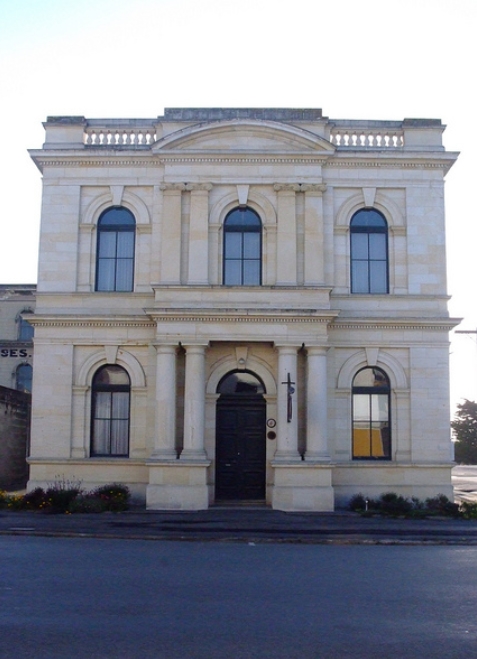
This austere Custom House, opened in 1884, housed Her Majesty’s Customs collectors who oversaw the collection of duties and taxes for the Customs Department. The Custom House has architectural significance as the building was designed by prominent Oamaru architectural partnership Forrester and Lemon; it also has historical and townscape significance as part of Oamaru’s Harbour/Tyne Street Historic Area.

Customs is the oldest government department in New Zealand, established in 1840, Its primary role was to collect revenue, particularly taxes on alcohol, tobacco, tea, sugar and grain. The Government appointed officials to monitor and administer customs matters at Ports of Entry such as Oamaru. Oamaru was declared a Port of Entry on 1 August 1861 and a ‘Warehousing Port’ for the purposes of the Customs Regulation Act in 1863. In January 1862 resident magistrate Thomas Windle Parker was appointed Sub-collector of Customs. In 1869, a Custom House Reserve was set aside. The Customs Department first used rooms at the Post and Telegraph Office, located an inconvenient distance from the port. As early as 1868, £2,500 was voted for a Custom House, but shortage of labour and other priorities delayed the call for tenders.

It was not until 1883 that building of the Custom House began. John Lemon, of Oamaru architectural partnership Forrester and Lemon, advertised for tenders in April 1883. Stone mason Alexander Watson won the tender. The North Otago Times described the Custom House, as a ‘two-storeyed building in the Italian style of architecture. The main entrance will be from Wansbeck street into a lobby 14ft by 8ft. The lobby communicates with a collector’s room on the right, 14ft by 17ft, and with a clerks’ room on the left, 14ft by 18ft; and leads through into a Long room, 21ft by 23ft – fitted with a spacious counter for the convenience of the public. To the left of the long room is a strong room, 12ft square, lavatory, etc. The upper storey is at present to remain unfinished. The building will be of a plain but substantial appearance, and will be of advantage to the town if only as filling up the vacant corner it is to occupy.’ Lemon advertised for tenders for fencing at the Custom House on 11 January 1884. The new building, with its main entrance facing Tyne Street, opened for business on 16 February 1884.

Architectural historian Conal McCarthy writes that the Custom House was designed with ‘decorative restraint’ in a standard format for buildings of this type. The design was ‘plainly Classical’ like other customs houses in Timaru, Dunedin, Melbourne and Sydney. McCarthy writes that the ‘severe Tuscan portico’ marking the Tyne Street entrance, gives the building ‘an air of serious purpose that matches its function’ and it appears to, in the words of another writer, ‘frown down on recalcitrant who might wish to avoid paying their dues.’

The Customs Department was not the only occupant of this building. For a time from the late 1880s until 1905, the Waitaki County Council had their offices there; after the council moved out the building was home to the newly formed Oamaru Technical School. The Technical School moved out in 1925. The Customs Department seems to have moved in and out of the building. During the 1930s, the Department of Agriculture and the Government Mens’ Employment Bureau moved in. In 1960 the land was set apart as a public reserve for ‘Buildings of the General Government. In 1966, Oamaru ceased to be a Port of Entry. The Custom House was sold to William Bee, who in 1972 sold the building to The Royal Antediluvian Order of Buffaloes. The New Zealand Historic Places Trust bought the building in 1981, and after restoring it, sold it to the North Otago Art Society Incorporated. In 2015, it remains home to the art society, providing a gallery and working space.
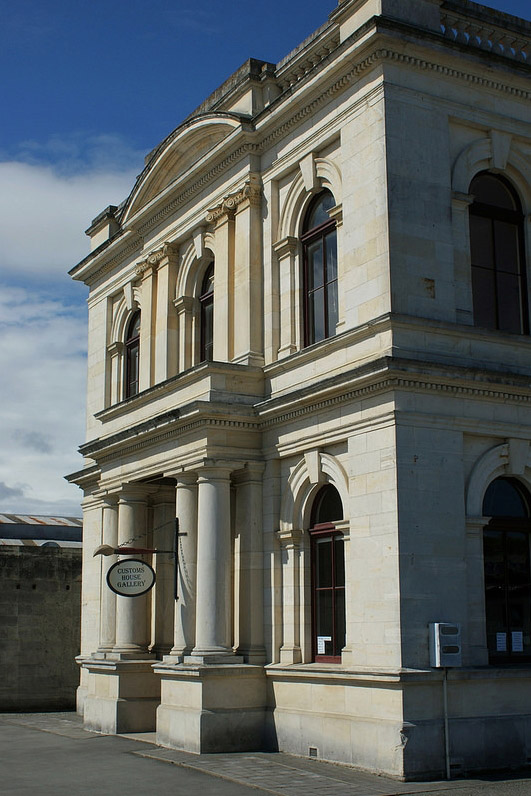
Custom House (Former), Oamaru | Sarah Gallagher | 20/09/2024 | Heritage New Zealand Pouhere Taonga
Custom House (Former), Oamaru. Image courtesy of www.flickr.com | PhilBee NZ - Phil Braithwaite | 13/11/2016 | Phil Braithwaite
Custom House (Former), Oamaru | Sarah Gallagher | 20/09/2024 | Heritage New Zealand Pouhere Taonga
Custom House (Former), Oamaru. Image courtesy of www.flickr.com | PhilBee NZ - Phil Braithwaite | 13/11/2016 | Phil Braithwaite

List Entry Information

Overview

Status
Listed

List Entry Status
Historic Place Category 1

Access
Private/No Public Access

List Number
3461

Date Entered
2nd July 1987

Date of Effect
2nd July 1987

City/District Council
Waitaki District

Region
Otago Region

Extent of List Entry

Extent includes the land described as Sec 25 Blk III Town of Oamaru (RT OT3A/292), Otago Land District and the building known as the Custom House (Former) thereon.

Legal description

Sec 25 Blk III Town of Oamaru (RT OT3A/292), Otago Land District

Detailed List Entry
Significance

Historic Significance

Historical Significance or Value This building is of considerable historical significance for its associations with the development of Oamaru's port. The building also housed a technical school, the Waitaki County Council and a Buffalo Lodge. The rather severe appearance of the building illustrates the importance of its original function.

Physical Significance

ARCHITECTURAL SIGNIFICANCE A notable example of the work of Forrester Lemon. A restrained Neo-Classical building of solid, dignified appearance. The severe Tuscan portico is a notable feature of the design. TOWNSCAPE/LANDMARK SIGNIFICANCE The Custom House occupies a prominent corner site and forms an integral part of the nationally important Harbour/Tyne Street Conservation Area.

Construction Professional

Name

Forrester & Lemon

Type

Architectural Partnership

Biography

The architectural partnership of Forrester and Lemon was established in Oamaru in 1872. Thomas Forrester (1838-1907) was born in Glasgow and educated at the Glasgow School of Art. Emigrating to New Zealand in 1861 he settled in Dunedin and worked under William Mason (1810-97) and William Henry Clayton (1823-77) and later Robert Arthur Lawson (1833-1902). In 1865 he superintended the Dunedin Exhibition and from 1870 he became involved with the supervision of harbour works. Some time after 1885 he became Engineer to the Oamaru Harbour Board and in this capacity designed the repairs to the breakwater following storm damage in 1886 and later the Holmes Wharf. On his death in 1907 he was still in the employ of the Harbour Board. John Lemon (1828-1890) was born in Jamaica and travelled to England before emigrating to New Zealand in 1849. He settled in Oamaru in 1860 and with his brother Charles established a timber merchant's business. By 1869 he was in partnership with his father-in-law, George Sumpter calling themselves "Timber and General Merchants, Land and Commission Agents". This partnership was dissolved in 1872 and Lemon entered into partnership with Forrester. Lemon had no architectural experience at all, but had a wide circle of business contacts and was an efficient administrator. Buildings designed by the partnership of Forrester and Lemon include St Paul's Church (1875-76), the Harbour Board Offices (1876), Queen's (later Brydone) Hotel (1881), Waitaki Boys' High School (1883), The Courthouse (1883) and the Post Office (1883-84), all in Oamaru. Forrester and Lemon contributed greatly to Oamaru's nineteenth century character. On Lemon's death in 1890 the practice was taken over by Forrester's son, John Megget Forrester (1865-1965).

Name

Alexander Watson

Type

Stonemason

Biography

No biography is currently available for this construction professional

Construction Details

Start Year

1883

Finish Year

1884

Type

Original Construction

Start Year

1983

Type

Restoration

Description

Restoration, including replacement of roof

Start Year

1990

Type

Restoration

Description

Restored for Art Gallery

Construction Materials

Oamaru Stone

Physical Description

ARCHITECTURAL DESCRIPTION (Style) A two storey Neo-Classical building with a fine Tuscan portico over the ground floor entrance on Tyne Street. It is a solid, well proportioned building with relatively little classical ornamentation. MODIFICATIONS Largely in original condition.

Reference

Completion Date

20th July 2015

Report Written By

Heather Bauchop

Information Sources

McCarthy, 2002

Conal McCarthy, Forrester and Lemon of Oamaru, architects, Oamaru, 2002

North Otago Times

North Otago Times

Oamaru Borough Council

Historic Building Catalogue

Tony Simpson

'Customs and tariffs - Tariffs for revenue, 1840–1940', Te Ara - the Encyclopedia of New Zealand, updated 13-Jul-12

Report Written By

Please note that entry on the New Zealand Heritage List/Rarangi Korero identifies only the heritage values of the property concerned, and should not be construed as advice on the state of the property, or as a comment of its soundness or safety, including in regard to earthquake risk, safety in the event of fire, or insanitary conditions. A fully referenced upgrade report is available on request from the Otago/Southland Office of Heritage New Zealand

Further Information

Current Usages

Former Usages

General Usage:: Government

Specific Usage: Customs House

Themes

Web Links

Overview

Status

Listed

List Entry Status

Historic Place Category 1

Access

Private/No Public Access

List Number

3461

Date Entered

2nd July 1987

Date of Effect

2nd July 1987

City/District Council

Waitaki District

Region

Otago Region

Extent of List Entry

Extent includes the land described as Sec 25 Blk III Town of Oamaru (RT OT3A/292), Otago Land District and the building known as the Custom House (Former) thereon.

Legal description

Sec 25 Blk III Town of Oamaru (RT OT3A/292), Otago Land District

Status

Listed

List Entry Status

Historic Place Category 1

Access

Private/No Public Access

List Number

3461

Date Entered

2nd July 1987

Date of Effect

2nd July 1987

City/District Council

Waitaki District

Region

Otago Region

Extent of List Entry

Extent includes the land described as Sec 25 Blk III Town of Oamaru (RT OT3A/292), Otago Land District and the building known as the Custom House (Former) thereon.

Legal description

Sec 25 Blk III Town of Oamaru (RT OT3A/292), Otago Land District

Significance

Why is this place significant?

Historic Significance

Historical Significance or Value This building is of considerable historical significance for its associations with the development of Oamaru's port. The building also housed a technical school, the Waitaki County Council and a Buffalo Lodge. The rather severe appearance of the building illustrates the importance of its original function.

Physical Significance

ARCHITECTURAL SIGNIFICANCE A notable example of the work of Forrester Lemon. A restrained Neo-Classical building of solid, dignified appearance. The severe Tuscan portico is a notable feature of the design. TOWNSCAPE/LANDMARK SIGNIFICANCE The Custom House occupies a prominent corner site and forms an integral part of the nationally important Harbour/Tyne Street Conservation Area.

Why is this place significant?

Historic Significance

Historical Significance or Value This building is of considerable historical significance for its associations with the development of Oamaru's port. The building also housed a technical school, the Waitaki County Council and a Buffalo Lodge. The rather severe appearance of the building illustrates the importance of its original function.

Physical Significance

ARCHITECTURAL SIGNIFICANCE A notable example of the work of Forrester Lemon. A restrained Neo-Classical building of solid, dignified appearance. The severe Tuscan portico is a notable feature of the design. TOWNSCAPE/LANDMARK SIGNIFICANCE The Custom House occupies a prominent corner site and forms an integral part of the nationally important Harbour/Tyne Street Conservation Area.

Construction Information

Construction Professional

Name

Forrester & Lemon

Type

Architectural Partnership

Biography

The architectural partnership of Forrester and Lemon was established in Oamaru in 1872. Thomas Forrester (1838-1907) was born in Glasgow and educated at the Glasgow School of Art. Emigrating to New Zealand in 1861 he settled in Dunedin and worked under William Mason (1810-97) and William Henry Clayton (1823-77) and later Robert Arthur Lawson (1833-1902). In 1865 he superintended the Dunedin Exhibition and from 1870 he became involved with the supervision of harbour works. Some time after 1885 he became Engineer to the Oamaru Harbour Board and in this capacity designed the repairs to the breakwater following storm damage in 1886 and later the Holmes Wharf. On his death in 1907 he was still in the employ of the Harbour Board. John Lemon (1828-1890) was born in Jamaica and travelled to England before emigrating to New Zealand in 1849. He settled in Oamaru in 1860 and with his brother Charles established a timber merchant's business. By 1869 he was in partnership with his father-in-law, George Sumpter calling themselves "Timber and General Merchants, Land and Commission Agents". This partnership was dissolved in 1872 and Lemon entered into partnership with Forrester. Lemon had no architectural experience at all, but had a wide circle of business contacts and was an efficient administrator. Buildings designed by the partnership of Forrester and Lemon include St Paul's Church (1875-76), the Harbour Board Offices (1876), Queen's (later Brydone) Hotel (1881), Waitaki Boys' High School (1883), The Courthouse (1883) and the Post Office (1883-84), all in Oamaru. Forrester and Lemon contributed greatly to Oamaru's nineteenth century character. On Lemon's death in 1890 the practice was taken over by Forrester's son, John Megget Forrester (1865-1965).

Name

Alexander Watson

Type

Stonemason

Biography

No biography is currently available for this construction professional

Construction Details

Start Year

1883

Finish Year

1884

Type

Original Construction

Start Year

1983

Type

Restoration

Description

Restoration, including replacement of roof

Start Year

1990

Type

Restoration

Description

Restored for Art Gallery

Construction Materials

Oamaru Stone

Construction Professional

Name

Forrester & Lemon

Type

Architectural Partnership

Biography

The architectural partnership of Forrester and Lemon was established in Oamaru in 1872. Thomas Forrester (1838-1907) was born in Glasgow and educated at the Glasgow School of Art. Emigrating to New Zealand in 1861 he settled in Dunedin and worked under William Mason (1810-97) and William Henry Clayton (1823-77) and later Robert Arthur Lawson (1833-1902). In 1865 he superintended the Dunedin Exhibition and from 1870 he became involved with the supervision of harbour works. Some time after 1885 he became Engineer to the Oamaru Harbour Board and in this capacity designed the repairs to the breakwater following storm damage in 1886 and later the Holmes Wharf. On his death in 1907 he was still in the employ of the Harbour Board. John Lemon (1828-1890) was born in Jamaica and travelled to England before emigrating to New Zealand in 1849. He settled in Oamaru in 1860 and with his brother Charles established a timber merchant's business. By 1869 he was in partnership with his father-in-law, George Sumpter calling themselves "Timber and General Merchants, Land and Commission Agents". This partnership was dissolved in 1872 and Lemon entered into partnership with Forrester. Lemon had no architectural experience at all, but had a wide circle of business contacts and was an efficient administrator. Buildings designed by the partnership of Forrester and Lemon include St Paul's Church (1875-76), the Harbour Board Offices (1876), Queen's (later Brydone) Hotel (1881), Waitaki Boys' High School (1883), The Courthouse (1883) and the Post Office (1883-84), all in Oamaru. Forrester and Lemon contributed greatly to Oamaru's nineteenth century character. On Lemon's death in 1890 the practice was taken over by Forrester's son, John Megget Forrester (1865-1965).

Name

Alexander Watson

Type

Stonemason

Biography

No biography is currently available for this construction professional

Construction Details

Start Year

1883

Finish Year

1884

Type

Original Construction

Start Year

1983

Type

Restoration

Description

Restoration, including replacement of roof

Start Year

1990

Type

Restoration

Description

Restored for Art Gallery

Construction Materials

Oamaru Stone

Physical Description

ARCHITECTURAL DESCRIPTION (Style) A two storey Neo-Classical building with a fine Tuscan portico over the ground floor entrance on Tyne Street. It is a solid, well proportioned building with relatively little classical ornamentation. MODIFICATIONS Largely in original condition.

ARCHITECTURAL DESCRIPTION (Style) A two storey Neo-Classical building with a fine Tuscan portico over the ground floor entrance on Tyne Street. It is a solid, well proportioned building with relatively little classical ornamentation. MODIFICATIONS Largely in original condition.

Reference

Historical and Associated Iwi / Hapū / Whānau

Completion Date

20th July 2015

Report Written By

Heather Bauchop

Information Sources

McCarthy, 2002

Conal McCarthy, Forrester and Lemon of Oamaru, architects, Oamaru, 2002

North Otago Times

North Otago Times

Oamaru Borough Council

Historic Building Catalogue

Tony Simpson

'Customs and tariffs - Tariffs for revenue, 1840–1940', Te Ara - the Encyclopedia of New Zealand, updated 13-Jul-12

Other Information

Please note that entry on the New Zealand Heritage List/Rarangi Korero identifies only the heritage values of the property concerned, and should not be construed as advice on the state of the property, or as a comment of its soundness or safety, including in regard to earthquake risk, safety in the event of fire, or insanitary conditions. A fully referenced upgrade report is available on request from the Otago/Southland Office of Heritage New Zealand

Historical and Associated Iwi / Hapū / Whānau

Completion Date

20th July 2015

Report Written By

Heather Bauchop

Information Sources

McCarthy, 2002

Conal McCarthy, Forrester and Lemon of Oamaru, architects, Oamaru, 2002

North Otago Times

North Otago Times

Oamaru Borough Council

Historic Building Catalogue

Tony Simpson

'Customs and tariffs - Tariffs for revenue, 1840–1940', Te Ara - the Encyclopedia of New Zealand, updated 13-Jul-12

Other Information

Please note that entry on the New Zealand Heritage List/Rarangi Korero identifies only the heritage values of the property concerned, and should not be construed as advice on the state of the property, or as a comment of its soundness or safety, including in regard to earthquake risk, safety in the event of fire, or insanitary conditions. A fully referenced upgrade report is available on request from the Otago/Southland Office of Heritage New Zealand

Further Information

Former Usages

General Usage: Government

Specific Usage: Customs House

Former Usages

General Usage: Government

Specific Usage: Customs House

Location

Loading
Related listings
Oamaru Historic Area. Image courtesy of www.jimwitkowski.com
Oamaru Historic Area
Oamaru Historic Area. Image courtesy of www.jimwitkowski.com
Oamaru Historic Area
Stay up to date with Heritage this month