Quick links


Quick links
Quick links
Quick links
Quick links
Quick links
28-30 The Terrace, WELLINGTON
Private
Historic Place Category 1
List No. 3571
List Entry Information
Status
Listed
List Entry Status
Historic Place Category 1
Access
Private/No Public Access
List Number
3571
Date Entered
2nd July 1987
Date of Effect
2nd July 1987
City/District Council
Wellington City
Region
Wellington Region
Extent of List Entry
Extent includes the land described as Lot 3 DP 11548, Pt Sec 472 Town of Wellington and Pt Lot 1 DP 4123 (RT WN476/23), Wellington Land District, and the building known as St Andrews on the Terrace thereon. The extent excludes the Hall and the St Andrew’s Centre. Refer to the extent map tabled at the Heritage New Zealand/Rārangi Kōrero Committee meeting on 29 April 2021.
Legal description
Lot 3 DP 11548, Pt Sec 472 Town of Wellington and Pt Lot 1 DP 4123 (RT WN476/23), Wellington Land District
Status
Listed
List Entry Status
Historic Place Category 1
Access
Private/No Public Access
List Number
3571
Date Entered
2nd July 1987
Date of Effect
2nd July 1987
City/District Council
Wellington City
Region
Wellington Region
Extent of List Entry
Extent includes the land described as Lot 3 DP 11548, Pt Sec 472 Town of Wellington and Pt Lot 1 DP 4123 (RT WN476/23), Wellington Land District, and the building known as St Andrews on the Terrace thereon. The extent excludes the Hall and the St Andrew’s Centre. Refer to the extent map tabled at the Heritage New Zealand/Rārangi Kōrero Committee meeting on 29 April 2021.
Legal description
Lot 3 DP 11548, Pt Sec 472 Town of Wellington and Pt Lot 1 DP 4123 (RT WN476/23), Wellington Land District
Why is this place significant?
Historic Significance
Historical Significance or Value This building has strong links with the history of the Church in the region. It is the second church on this site and the fourth St Andrew's church since 1840. It has served as the first Presbyterian Church in the region and is now being used by the wider community for lunchtime concerts, lectures etc.
Physical Significance
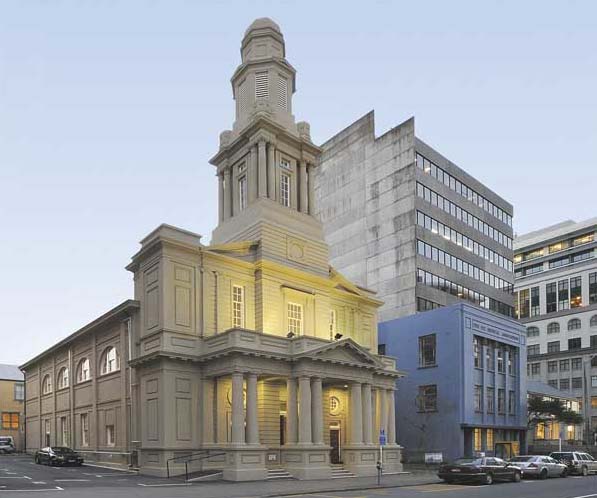
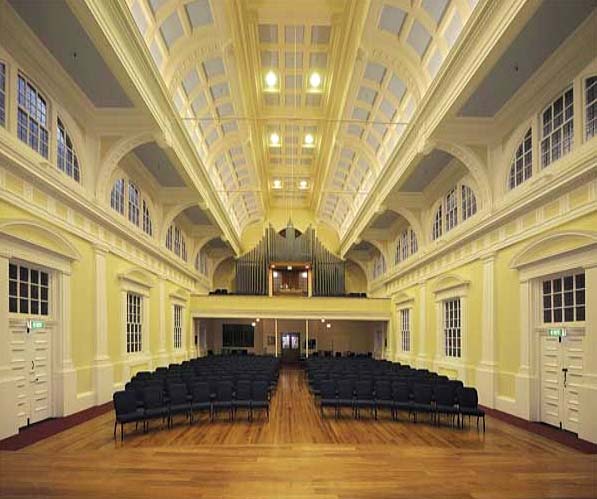
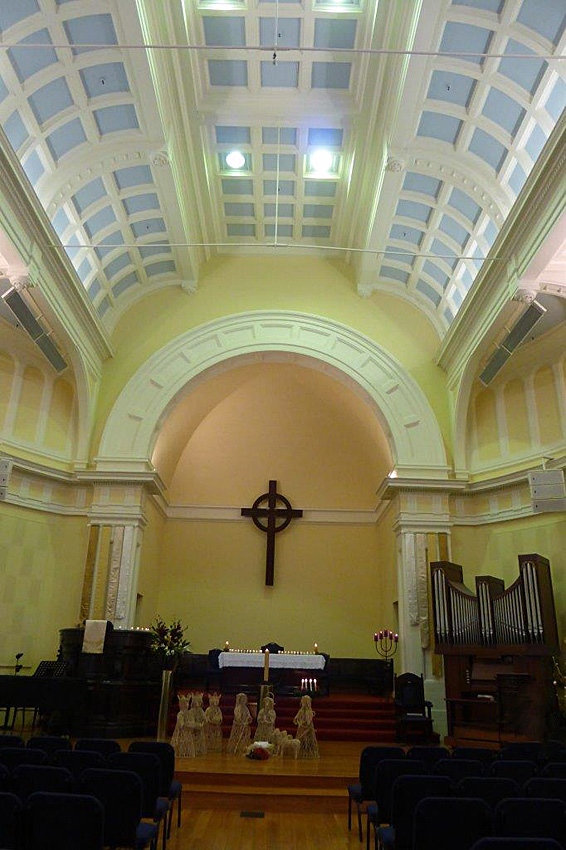
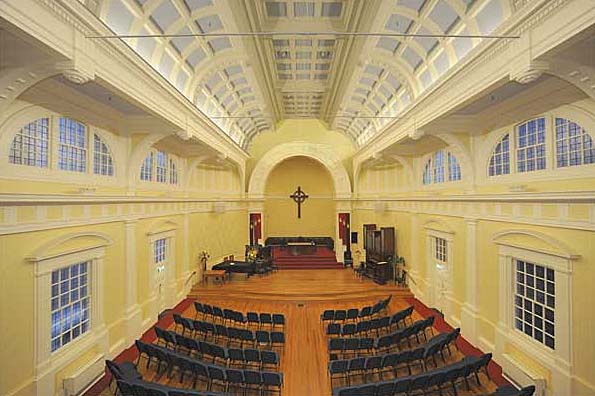
ARCHITECTURAL SIGNIFICANCE The only example of the English Baroque style of ecclesiastical architecture in New Zealand and one of the very few large churches made of reinforced concrete. The use of this material for an ecclesiastical building was advanced for its time. The interior is also architecturally significant with fine coved and coffered ceiling and round chancel arch. TOWNSCAPE/LANDMARK SIGNIFICANCE Although its impact has been somewhat lessened by new high-rise buildings, the tower of St Andrew's is something of a landmark at the Parliament end of the Terrace. The church is adjacent to other classified buildings, notably Brandon's building and further along, 22 The Terrace. The church is an important feature in the townscape.
Why is this place significant?
Historic Significance
Historical Significance or Value This building has strong links with the history of the Church in the region. It is the second church on this site and the fourth St Andrew's church since 1840. It has served as the first Presbyterian Church in the region and is now being used by the wider community for lunchtime concerts, lectures etc.
Physical Significance
ARCHITECTURAL SIGNIFICANCE The only example of the English Baroque style of ecclesiastical architecture in New Zealand and one of the very few large churches made of reinforced concrete. The use of this material for an ecclesiastical building was advanced for its time. The interior is also architecturally significant with fine coved and coffered ceiling and round chancel arch. TOWNSCAPE/LANDMARK SIGNIFICANCE Although its impact has been somewhat lessened by new high-rise buildings, the tower of St Andrew's is something of a landmark at the Parliament end of the Terrace. The church is adjacent to other classified buildings, notably Brandon's building and further along, 22 The Terrace. The church is an important feature in the townscape.
Construction Professional
Name
Clere, Frederick De Jersey
Type
Architect
Biography
Clere (1856-1952) was born in Lancashire, the son of an Anglican clergyman, and was articled to Edmund Scott, an ecclesiastical architect of Brighton. He then became chief assistant to R J Withers, a London architect. Clere came to New Zealand in 1877, practising first in Feilding and then in Wanganui. He later came to Wellington and practised there for 58 years. He was elected a Fellow of the Royal Institute of British Architects in 1886 and held office for 50 years as one of four honorary secretaries in the Empire. In 1883 he was appointed Diocesan Architect of the Anglican Church; he designed more than 100 churches while he held this position. Clere was a pioneer in reinforced concrete construction; the outstanding example of his work with this material is the Church of St Mary of the Angels (1922), Wellington. As well as being pre-eminent in church design, Clere was responsible for many domestic and commercial buildings including Wellington's Harbour Board Offices and Bond Store (1891) and Overton in Marton. Clere was also involved in the design of large woolsheds in Hawkes Bay and Wairarapa. He was active in the formation of the New Zealand Institute of Architects and served on their council for many years. He was a member of the Wellington City Council until 1895, and from 1900 a member of the Wellington Diocesan Synod and the General Synod. He was also a member of the New Zealand Academy of Fine Arts.
Name
Ian Calder
Type
Architect
Biography
No biography is currently available for this construction professional
Name
Studio 8
Type
Architect
Biography
No biography is currently available for this construction professional
Name
Fletcher Construction Company
Type
Builder
Biography
Fletcher Construction Company was founded by Scottish-born James Fletcher (1886 - 1974), the son of a builder. Six months after his arrival in Dunedin in 1908, Fletcher formed a house-building partnership with Bert Morris. They soon moved into larger-scale construction work, building the St Kilda Town Hall (1911), and the main dormitory block and Ross Chapel at Knox College (1912). Fletcher's brothers, William, Andrew and John joined the business in 1911, which then became known as Fletcher Brothers. A branch was opened in Invercargill. While holidaying in Auckland in 1916, James tendered for the construction of the the Auckland City Markets. By 1919 the company, then known as Fletcher Construction, was firmly established in Auckland and Wellington. Notable landmarks constructed by the company during the Depression included the Auckland University College Arts Building (completed 1926); Landmark House (the former Auckland Electric Power Board Building, 1927); Auckland Civic Theatre (1929); the Chateau Tongariro (1929); and the Dominion Museum, Wellington (1934). Prior to the election of the first Labour Government, Fletcher (a Reform supporter) had advised the Labour Party on housing policy as hbe believed in large-scale planning and in the inter-dependence of government and business. However, he declined an approach by Prime Minister Michael Joseph Savage in December 1935 to sell the company to the government, when the latter wanted to ensure the large-scale production of rental state housing. Although Fletchers ultimately went on to build many of New Zealand's state houses, for several years Residential Construction Ltd (the subsidiary established to undertake their construction) sustained heavy financial losses. Fletcher Construction became a public company, Fletcher Holdings, in 1940. Already Fletchers' interests were wide ranging: brickyards, engineering shops, joinery factories, marble quarries, structural steel plants and other enterprises had been added the original construction firm. Further expansion could only be undertaken with outside capital. During the Second World War James Fletcher, having retired as chairman of Fletcher Holdings, was seconded to the newly created position of Commissioner of State Construction which he held during 1942 and 1943. Directly responsible to Prime Minister Peter Fraser, Fletcher had almost complete control over the deployment of workers and resources. He also became the Commissioner of the Ministry of Works, set up in 1943, a position he held until December 1945. In 1981 Fletcher Holdings; Tasman Pulp and Paper; and Challenge Corporation amalgamated to form Fletcher Challenge Ltd, at that time New Zealand's largest company. Williamson Construction Company - main contract
Construction Details
Start Year
1923
Type
Original Construction
Start Year
1922
Type
Designed
Start Year
2008
Type
Structural upgrade
Description
(church)
Finish Year
2012
Type
Partial Demolition
Description
(administration building)
Start Year
2012
Type
Original Construction
Description
(St Andrew's Centre)
Start Year
2019
Type
Modification
Description
(construction of entrance ramps)
Construction Materials
Reinforced concrete
Construction Professional
Name
Clere, Frederick De Jersey
Type
Architect
Biography
Clere (1856-1952) was born in Lancashire, the son of an Anglican clergyman, and was articled to Edmund Scott, an ecclesiastical architect of Brighton. He then became chief assistant to R J Withers, a London architect. Clere came to New Zealand in 1877, practising first in Feilding and then in Wanganui. He later came to Wellington and practised there for 58 years. He was elected a Fellow of the Royal Institute of British Architects in 1886 and held office for 50 years as one of four honorary secretaries in the Empire. In 1883 he was appointed Diocesan Architect of the Anglican Church; he designed more than 100 churches while he held this position. Clere was a pioneer in reinforced concrete construction; the outstanding example of his work with this material is the Church of St Mary of the Angels (1922), Wellington. As well as being pre-eminent in church design, Clere was responsible for many domestic and commercial buildings including Wellington's Harbour Board Offices and Bond Store (1891) and Overton in Marton. Clere was also involved in the design of large woolsheds in Hawkes Bay and Wairarapa. He was active in the formation of the New Zealand Institute of Architects and served on their council for many years. He was a member of the Wellington City Council until 1895, and from 1900 a member of the Wellington Diocesan Synod and the General Synod. He was also a member of the New Zealand Academy of Fine Arts.
Name
Ian Calder
Type
Architect
Biography
No biography is currently available for this construction professional
Name
Studio 8
Type
Architect
Biography
No biography is currently available for this construction professional
Name
Fletcher Construction Company
Type
Builder
Biography
Fletcher Construction Company was founded by Scottish-born James Fletcher (1886 - 1974), the son of a builder. Six months after his arrival in Dunedin in 1908, Fletcher formed a house-building partnership with Bert Morris. They soon moved into larger-scale construction work, building the St Kilda Town Hall (1911), and the main dormitory block and Ross Chapel at Knox College (1912). Fletcher's brothers, William, Andrew and John joined the business in 1911, which then became known as Fletcher Brothers. A branch was opened in Invercargill. While holidaying in Auckland in 1916, James tendered for the construction of the the Auckland City Markets. By 1919 the company, then known as Fletcher Construction, was firmly established in Auckland and Wellington. Notable landmarks constructed by the company during the Depression included the Auckland University College Arts Building (completed 1926); Landmark House (the former Auckland Electric Power Board Building, 1927); Auckland Civic Theatre (1929); the Chateau Tongariro (1929); and the Dominion Museum, Wellington (1934). Prior to the election of the first Labour Government, Fletcher (a Reform supporter) had advised the Labour Party on housing policy as hbe believed in large-scale planning and in the inter-dependence of government and business. However, he declined an approach by Prime Minister Michael Joseph Savage in December 1935 to sell the company to the government, when the latter wanted to ensure the large-scale production of rental state housing. Although Fletchers ultimately went on to build many of New Zealand's state houses, for several years Residential Construction Ltd (the subsidiary established to undertake their construction) sustained heavy financial losses. Fletcher Construction became a public company, Fletcher Holdings, in 1940. Already Fletchers' interests were wide ranging: brickyards, engineering shops, joinery factories, marble quarries, structural steel plants and other enterprises had been added the original construction firm. Further expansion could only be undertaken with outside capital. During the Second World War James Fletcher, having retired as chairman of Fletcher Holdings, was seconded to the newly created position of Commissioner of State Construction which he held during 1942 and 1943. Directly responsible to Prime Minister Peter Fraser, Fletcher had almost complete control over the deployment of workers and resources. He also became the Commissioner of the Ministry of Works, set up in 1943, a position he held until December 1945. In 1981 Fletcher Holdings; Tasman Pulp and Paper; and Challenge Corporation amalgamated to form Fletcher Challenge Ltd, at that time New Zealand's largest company. Williamson Construction Company - main contract
Construction Details
Start Year
1923
Type
Original Construction
Start Year
1922
Type
Designed
Start Year
2008
Type
Structural upgrade
Description
(church)
Finish Year
2012
Type
Partial Demolition
Description
(administration building)
Start Year
2012
Type
Original Construction
Description
(St Andrew's Centre)
Start Year
2019
Type
Modification
Description
(construction of entrance ramps)
Construction Materials
Reinforced concrete
ARCHITECTURAL DESCRIPTION (STYLE) Symmetrically organised, it has a classical portico of pediment and frieze supported on four groups of paired Doric columns. The second storey is less classical having more affinity with early eighteenth century English architecture. Façade as a whole is particularly reminiscent of Sir Christopher Wren's London churches. MODIFICATIONS In 1962 repairs to the exterior and renovations and alterations to the interior were made by Calder, Fowler and Styles. Some of the more ornate details which had deteriorated were removed. Overall the church is in largely original condition.
ARCHITECTURAL DESCRIPTION (STYLE) Symmetrically organised, it has a classical portico of pediment and frieze supported on four groups of paired Doric columns. The second storey is less classical having more affinity with early eighteenth century English architecture. Façade as a whole is particularly reminiscent of Sir Christopher Wren's London churches. MODIFICATIONS In 1962 repairs to the exterior and renovations and alterations to the interior were made by Calder, Fowler and Styles. Some of the more ornate details which had deteriorated were removed. Overall the church is in largely original condition.
Historical and Associated Iwi / Hapū / Whānau
Public NZAA Number
R27/468
Completion Date
16th December 2020
Report Written By
Rebecca Chrystal and Kerryn Pollock
Other Information
A fully referenced upgrade report is available on request from the Central Region Office of Heritage New Zealand This historic place was registered under the Historic Places Act 1980. This report includes the text from the original Building Classification Committee report considered by the NZHPT Board at the time of registration. Please note that entry on the New Zealand Heritage List/Rarangi Korero identifies only the heritage values of the property concerned, and should not be construed as advice on the state of the property, or as a comment of its soundness or safety, including in regard to earthquake risk, safety in the event of fire, or insanitary conditions.
Historical and Associated Iwi / Hapū / Whānau
Public NZAA Number
R27/468
Completion Date
16th December 2020
Report Written By
Rebecca Chrystal and Kerryn Pollock
Other Information
A fully referenced upgrade report is available on request from the Central Region Office of Heritage New Zealand This historic place was registered under the Historic Places Act 1980. This report includes the text from the original Building Classification Committee report considered by the NZHPT Board at the time of registration. Please note that entry on the New Zealand Heritage List/Rarangi Korero identifies only the heritage values of the property concerned, and should not be construed as advice on the state of the property, or as a comment of its soundness or safety, including in regard to earthquake risk, safety in the event of fire, or insanitary conditions.
Current Usages
Uses: Religion
Specific Usage: Church
Former Usages
General Usage: Religion
Specific Usage: Church
Themes
Rainbow List
Current Usages
Uses: Religion
Specific Usage: Church
Former Usages
General Usage: Religion
Specific Usage: Church
Themes
Rainbow List
Location
Get the latest heritage news, features and events delivered
straight to your inbox.
