Quick links


Quick links
Quick links
Quick links
Quick links
Quick links
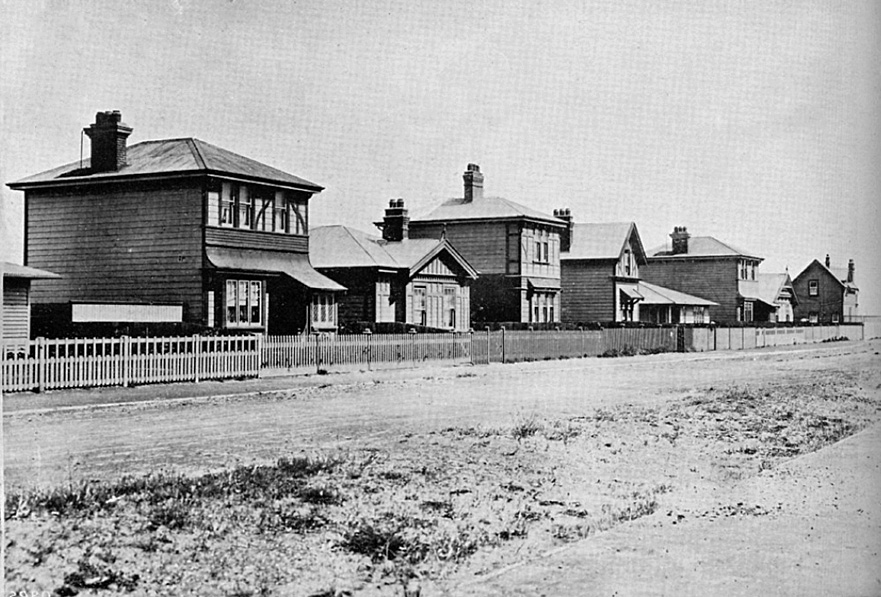
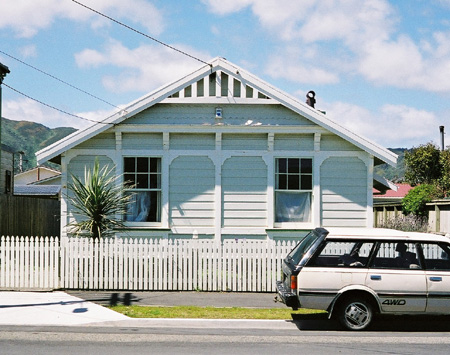
2 Patrick Street, Petone, LOWER HUTT
Private
Historic Place Category 2
List No. 3582
List Entry Information
Status
Listed
List Entry Status
Historic Place Category 2
Access
Private/No Public Access
List Number
3582
Date Entered
28th June 1984
Date of Effect
28th June 1984
City/District Council
Hutt City
Region
Wellington Region
Legal description
Sec 22 Blk VIII Heretaunga Settlement (RT WN327/203), Wellington Land District
Status
Listed
List Entry Status
Historic Place Category 2
Access
Private/No Public Access
List Number
3582
Date Entered
28th June 1984
Date of Effect
28th June 1984
City/District Council
Hutt City
Region
Wellington Region
Legal description
Sec 22 Blk VIII Heretaunga Settlement (RT WN327/203), Wellington Land District
Construction Professional
Name
Young, William G
Type
Architect
Biography
William Gray Young (1885-1962) was born in Oamaru. When he was a child his family moved to Wellington where he was educated. After leaving school he was articled to the Wellington architectural firm of Crichton and McKay. In 1906 he won a competition for the design of Knox College, Dunedin, and shortly after this he commenced practice on his own account. He became a prominent New Zealand architect and during a career of 60 years he designed over 500 buildings. His major buildings include the Wellington and Christchurch Railway Stations (1936 and 1954 respectively), Scot's College (1919), Phoenix Assurance Building (1930) and the Australian Mutual Provident Society (AMP) Chambers (1950). At Victoria University College of Wellington he was responsible for the Stout (1930), Kirk (1938), and Easterfield (1957) buildings, and Weir House (1930). Gray Young also achieved recognition for his domestic work such as the Elliott House Wellington, (1913). His design for the Wellesley Club (1925) earned him the Gold Medal of the New Zealand Institute of Architects in 1932. He was elected a Fellow of the Institute in 1913, served on the executive committee from 1914-35 and was President from 1935-36. He was also elected a Fellow of the Royal Institute of British Architects, and achieved prominence in public affairs.
Construction Details
Start Year
1906
Type
Original Construction
Notable Features
Note: In 1984 the house was considered to be in original condition, including outside toilet, bathroom and scullery.
Construction Professional
Name
Young, William G
Type
Architect
Biography
William Gray Young (1885-1962) was born in Oamaru. When he was a child his family moved to Wellington where he was educated. After leaving school he was articled to the Wellington architectural firm of Crichton and McKay. In 1906 he won a competition for the design of Knox College, Dunedin, and shortly after this he commenced practice on his own account. He became a prominent New Zealand architect and during a career of 60 years he designed over 500 buildings. His major buildings include the Wellington and Christchurch Railway Stations (1936 and 1954 respectively), Scot's College (1919), Phoenix Assurance Building (1930) and the Australian Mutual Provident Society (AMP) Chambers (1950). At Victoria University College of Wellington he was responsible for the Stout (1930), Kirk (1938), and Easterfield (1957) buildings, and Weir House (1930). Gray Young also achieved recognition for his domestic work such as the Elliott House Wellington, (1913). His design for the Wellesley Club (1925) earned him the Gold Medal of the New Zealand Institute of Architects in 1932. He was elected a Fellow of the Institute in 1913, served on the executive committee from 1914-35 and was President from 1935-36. He was also elected a Fellow of the Royal Institute of British Architects, and achieved prominence in public affairs.
Construction Details
Start Year
1906
Type
Original Construction
Notable Features
Note: In 1984 the house was considered to be in original condition, including outside toilet, bathroom and scullery.
Historical and Associated Iwi / Hapū / Whānau
Completion Date
15th August 2001
Report Written By
Helen McCracken
Information Sources
Bowman, 1990
Ian Bowman, 'Patrick Street Historic Precinct, Conservation Principles and Design Guidelines', 1990
Butterworth, 1988
Susan Butterworth, 'Petone, A history', Auckland, 1988
Fill, 1981
Barbara Fill, 'Seddon's State Houses; The Workers' Dwellings Act 1905, & the Heretaunga Settlement', Wellington Regional Committee Monograph Number 1, New Zealand Historic Places Trust, Wellington, 1981
Historic Places in New Zealand
Historic Places in New Zealand
Other Information
This place was identified as significant under previous legislation with different information requirements. It remains significant under the current legislation. There is opportunity under our legislation and policies to add to this information. Further information about this place may be available from the Central Regional Office of Heritage New Zealand Pouhere Taonga. Please note that entry on the New Zealand Heritage List/Rarangi Korero identifies only the heritage values of the property concerned, and should not be construed as advice on the state of the property, or as a comment of its soundness or safety, including in regard to earthquake risk, safety in the event of fire, or insanitary conditions.
Historical and Associated Iwi / Hapū / Whānau
Completion Date
15th August 2001
Report Written By
Helen McCracken
Information Sources
Bowman, 1990
Ian Bowman, 'Patrick Street Historic Precinct, Conservation Principles and Design Guidelines', 1990
Butterworth, 1988
Susan Butterworth, 'Petone, A history', Auckland, 1988
Fill, 1981
Barbara Fill, 'Seddon's State Houses; The Workers' Dwellings Act 1905, & the Heretaunga Settlement', Wellington Regional Committee Monograph Number 1, New Zealand Historic Places Trust, Wellington, 1981
Historic Places in New Zealand
Historic Places in New Zealand
Other Information
This place was identified as significant under previous legislation with different information requirements. It remains significant under the current legislation. There is opportunity under our legislation and policies to add to this information. Further information about this place may be available from the Central Regional Office of Heritage New Zealand Pouhere Taonga. Please note that entry on the New Zealand Heritage List/Rarangi Korero identifies only the heritage values of the property concerned, and should not be construed as advice on the state of the property, or as a comment of its soundness or safety, including in regard to earthquake risk, safety in the event of fire, or insanitary conditions.
Current Usages
Uses: Accommodation
Specific Usage: House
Current Usages
Uses: Accommodation
Specific Usage: House
Location
Get the latest heritage news, features and events delivered
straight to your inbox.