DonateMembershipVisit Heritage
  • Tūrangawaewae
    Places
  • Tira Māori
    Māori Heritage
  • Poutairangahia
    Archaeology
  • Rauemi
    Resources
  • Mō Tātou
    About Us
  • New Zealand Heritage List
  • Nominate and submit
  • Explore the List
  • National Historic Landmarks
  • Plaques
  • Rainbow List Project
  • Lost heritage
  • Visit Heritage
  • Our properties
  • Turnbull House Project
  • Collections
  • Shop
  • Tohu Whenua
  • Tira Māori
  • Conserving Māori heritage
  • Marae built heritage
  • Māori heritage on the List
  • Hinemihi—Te Hokinga Mai
  • What is archaeology?
  • Is there a site on my property?
  • What are my legal requirements?
  • Affecting an archaeological site
  • Declaring an archaeological site
  • Archaeology FAQs
  • Archaeology Digital Library
  • Archaeology guidelines and templates
  • Resources
  • Funding
  • Publications
  • Sustainable management guides
  • Disaster recovery
  • Podcasts & digital resources
  • Education Hub
  • Conservation plans
  • About
  • Board
  • Māori Heritage Council
  • Senior Staff
  • Offices
  • Contact us
  • Careers
  • Covenants
  • Fast-track
  • Corporate documents
  • Currently consulting on
  • Our submissions
  • News
  • Covid-19 response
Quick links
Rārangi Kōrero | The List
Explore the List
National Historic Landmarks
Ngā Manawhenua o Aotearoa me ōna Kōrero Tūturu
Quick links
Tapuwae
A Vision for Places of Māori Heritage
Funding for Māori Heritage
Resources
Quick links
Archaeological Authority Portal
Applying for an archaeological authority
Archaeology FAQs
Browse the most frequently asked questions about archaeological authorities and the archaeological process.
Quick links
Quick links
News
News Keep up to date with Heritage New Zealand Pouhere Taonga
Membership
Membership Find out more and sign up today
DonateMembershipVisit Heritage
  • Tūrangawaewae
    Places
  • Tira Māori
    Māori Heritage
  • Poutairangahia
    Archaeology
  • Rauemi
    Resources
  • Mō Tātou
    About Us
  • New Zealand Heritage List
  • Nominate and submit
  • Explore the List
  • National Historic Landmarks
  • Plaques
  • Rainbow List Project
  • Lost heritage
  • Visit Heritage
  • Our properties
  • Turnbull House Project
  • Collections
  • Shop
  • Tohu Whenua
  • Tira Māori
  • Conserving Māori heritage
  • Marae built heritage
  • Māori heritage on the List
  • Hinemihi—Te Hokinga Mai
  • What is archaeology?
  • Is there a site on my property?
  • What are my legal requirements?
  • Affecting an archaeological site
  • Declaring an archaeological site
  • Archaeology FAQs
  • Archaeology Digital Library
  • Archaeology guidelines and templates
  • Resources
  • Funding
  • Publications
  • Sustainable management guides
  • Disaster recovery
  • Podcasts & digital resources
  • Education Hub
  • Conservation plans
  • About
  • Board
  • Māori Heritage Council
  • Senior Staff
  • Offices
  • Contact us
  • Careers
  • Covenants
  • Fast-track
  • Corporate documents
  • Currently consulting on
  • Our submissions
  • News
  • Covid-19 response
Quick links
Rārangi Kōrero | The List
Explore the List
National Historic Landmarks
Ngā Manawhenua o Aotearoa me ōna Kōrero Tūturu
Quick links
Tapuwae
A Vision for Places of Māori Heritage
Funding for Māori Heritage
Resources
Quick links
Archaeological Authority Portal
Applying for an archaeological authority
Archaeology FAQs
Browse the most frequently asked questions about archaeological authorities and the archaeological process.
Quick links
Quick links
News
News Keep up to date with Heritage New Zealand Pouhere Taonga
Membership
Membership Find out more and sign up today
  • Nominate and submit
  • National Historic Landmarks
  • Nominate and submit
  • National Historic Landmarks
  • Conserving Māori heritage
  • Marae built heritage
  • Conserving Māori heritage
  • Marae built heritage
  • Archaeological authorities
  • Archaeology Digital Library
  • Archaeological authorities
  • Archaeology Digital Library
  • All resources
  • Publications
  • Funding
  • All resources
  • Publications
  • Funding
  • FAQs
  • FAQs
Follow us on:
Places
  • Nominate and submit
  • National Historic Landmarks
Tira Māori
  • Conserving Māori heritage
  • Marae built heritage
Archaeology
  • Archaeological authorities
  • Archaeology Digital Library
Resources
  • All resources
  • Publications
  • Funding
FAQs
  • FAQs
Follow us on
HomePrivacyTerms and conditionsAbout this site
© Heritage New Zealand Pouhere Taonga 2026.
 
House

22 Patrick Street, Petone, LOWER HUTT

Private

Historic Place Category 1

List No. 3590

Quick links:
List GalleryLocationDetails
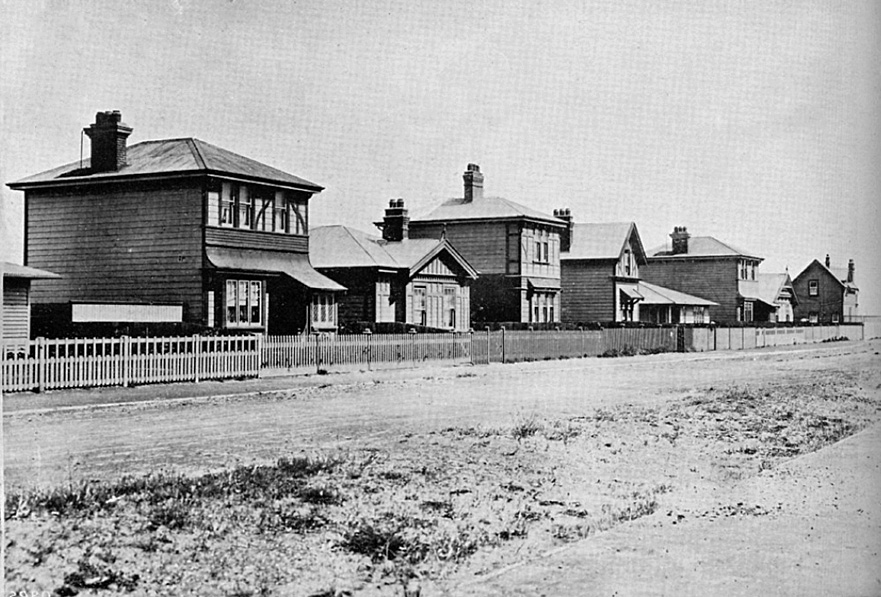
This house is one of the first state houses built in New Zealand. Under the Workers' Dwelling Act 1905 the Liberal Government, led by Premier Richard John Seddon, undertook to provide low cost but quality housing to working families. Land was purchased in the suburbs of the four main centres (Auckland, Wellington, Christchurch, and Dunedin). In order to avoid an image of a 'workers barracks' by erecting all houses to the same design, a competition was held to find a number of designs. From the winning entries two sets of designs were produced, one for the North Island and one for the South Island, to take account of the climatic variation between the two islands. Petone was chosen as the site for the first of these houses primarily because Wellington was considered to have the highest rents in the country. In 1906 the first 25 houses, based on seven designs by prominent New Zealand architects, were built in what was named the Heretaunga Settlement. Initially, interest in applying for the houses was small, primarily due to the cost of rent and the distance of the settlement from the main industrial areas of Petone and Wellington City. Many workers also found it difficult to find the deposit needed to apply for the house. Although changes were made to increase the maximum income limit a worker was allowed to earn, it was not until transport improved that the houses became fully tenanted. Only 9 more houses were built in Petone under the 1905 Act, and by 1919 only 657 had been built throughout the whole country.

In 1984 the registered properties in Patrick Street and adjoining Adelaide Street constructed under the Workers' Dwellings Act 1905 were declared part of an Historic Area by the New Zealand Historic Places Trust.

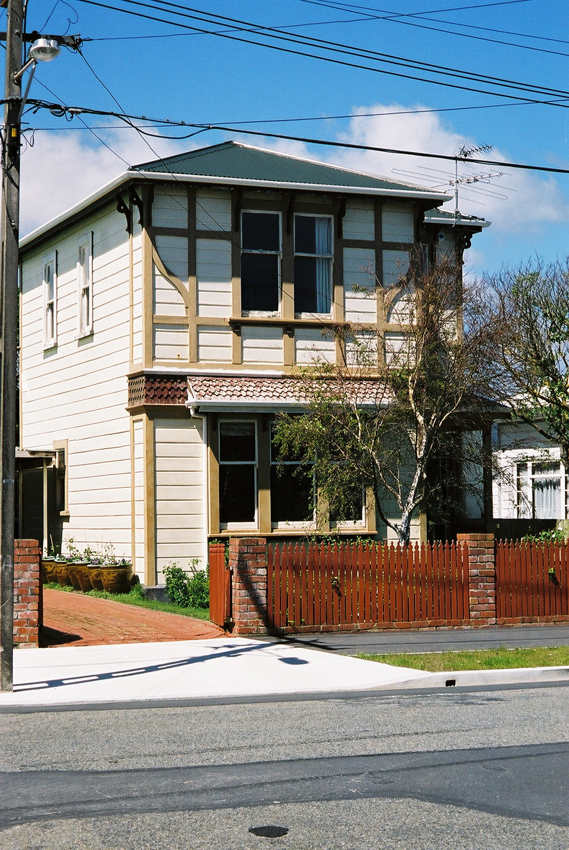
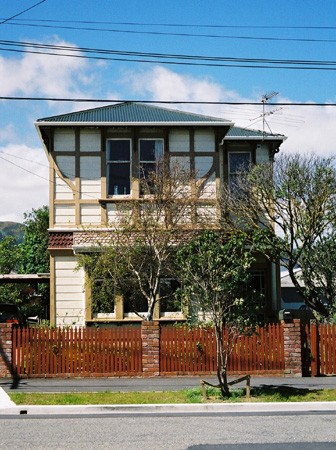
This house style is known as 'Domus' and was design by Joshua Charlesworth (1861-1925) whose work included the Wellington Town Hall (1901), the Te Aro Post Office (1908), and seventeen branch banks for the Bank of New Zealand throughout the country. The house is the best preserved of the three that were built to this design. It was built by W. J. Barrie and Co. It is a two-storeyed structure with low-pitched hipped roof and recessed porch to the side of the street elevation.

This house has great historical significance as it was one of the first state houses built under the Workers' Dwelling Act 1905, the first large-scale central government initiative to provide affordable housing to low-income working families. It was part of a wider package of social legislation passed by the Liberal Government (1893-1912). It is also significant as it was designed by notable architect, Joshua Charlesworth.
House, 22 Patrick St, Petone, Lower Hutt | Helen McCracken | 18/10/2001 | Heritage New Zealand
House, 22 Patrick St, Petone, Lower Hutt | Helen McCracken | 18/12/2001 | Heritage New Zealand
House, 22 Patrick St, Petone, Lower Hutt | Helen McCracken | 18/10/2001 | Heritage New Zealand
House, 22 Patrick St, Petone, Lower Hutt | Helen McCracken | 18/12/2001 | Heritage New Zealand

List Entry Information

Overview

Status
Listed

List Entry Status
Historic Place Category 1

Access
Private/No Public Access

List Number
3590

Date Entered
25th September 1986

Date of Effect
25th September 1986

City/District Council
Hutt City

Region
Wellington Region

Legal description

Lot 10 Blk III DP 5172 (RT WN 492/144), Wellington Land District

Detailed List Entry

Construction Professional

Name

Charlesworth, Joshua

Type

Architect

Biography

Charlesworth (1861-1925) was born in Yorkshire and the first record of his practice in Wellington was in the New Zealand Post Office Directory of 1885-87. He won a competition for the design of the Home for the Aged and Needy in June, 1887, and in the same year won another for the design of the Nelson Town Hall. Charlesworth set up practice in Wellington in his early twenties, designing many institutional buildings and showing command of the revival styles of architecture. His work includes the Wellington Town Hall (1901), Brancepeth Station Homestead addition, Wairarapa (1905), Te Aro Post Office (1908), St Hilda's Church, Upper Hutt (1909), and seventeen branch banks for the Bank of New Zealand, situated throughout the country (1907-17). Charlesworth was elected a Fellow of the New Zealand Institute of Architects in 1905, and became a life member of the Institute. He was its vice-president in 1909-10, and was the first chairman of a society of architects which was formed in 1912. Charlesworth also belonged to the Yorkshire Society in Wellington and was its president for many years.

Construction Details

Start Year

1906

Type

Original Construction

Reference

Completion Date

16th August 2001

Report Written By

Helen McCracken

Information Sources

Bowman, 1989

Ian Bowman, 'Special Precinct protects workers dwellings', in Historic Places in New Zealand, September 1989, no. 26, pp. 3-5.

Bowman, 1990

Ian Bowman, 'Patrick Street Historic Precinct, Conservation Principles and Design Guidelines', 1990

Butterworth, 1988

Susan Butterworth, 'Petone, A history', Auckland, 1988

Fill, 1981

Barbara Fill, 'Seddon's State Houses; The Workers' Dwellings Act 1905, & the Heretaunga Settlement', Wellington Regional Committee Monograph Number 1, New Zealand Historic Places Trust, Wellington, 1981

Report Written By

This place was identified as significant under previous legislation with different information requirements. It remains significant under the current legislation. There is opportunity under our legislation and policies to add to this information. Further information about this place may be available from the Central Regional Office of Heritage New Zealand Pouhere Taonga. Please note that entry on the New Zealand Heritage List/Rarangi Korero identifies only the heritage values of the property concerned, and should not be construed as advice on the state of the property, or as a comment of its soundness or safety, including in regard to earthquake risk, safety in the event of fire, or insanitary conditions.

Further Information

Current Usages

Uses: Accommodation

Specific Usage: House

Former Usages

General Usage:: Accommodation

Specific Usage: House

Themes

Web Links

Overview

Status

Listed

List Entry Status

Historic Place Category 1

Access

Private/No Public Access

List Number

3590

Date Entered

25th September 1986

Date of Effect

25th September 1986

City/District Council

Hutt City

Region

Wellington Region

Legal description

Lot 10 Blk III DP 5172 (RT WN 492/144), Wellington Land District

Status

Listed

List Entry Status

Historic Place Category 1

Access

Private/No Public Access

List Number

3590

Date Entered

25th September 1986

Date of Effect

25th September 1986

City/District Council

Hutt City

Region

Wellington Region

Legal description

Lot 10 Blk III DP 5172 (RT WN 492/144), Wellington Land District

Construction Information

Construction Professional

Name

Charlesworth, Joshua

Type

Architect

Biography

Charlesworth (1861-1925) was born in Yorkshire and the first record of his practice in Wellington was in the New Zealand Post Office Directory of 1885-87. He won a competition for the design of the Home for the Aged and Needy in June, 1887, and in the same year won another for the design of the Nelson Town Hall. Charlesworth set up practice in Wellington in his early twenties, designing many institutional buildings and showing command of the revival styles of architecture. His work includes the Wellington Town Hall (1901), Brancepeth Station Homestead addition, Wairarapa (1905), Te Aro Post Office (1908), St Hilda's Church, Upper Hutt (1909), and seventeen branch banks for the Bank of New Zealand, situated throughout the country (1907-17). Charlesworth was elected a Fellow of the New Zealand Institute of Architects in 1905, and became a life member of the Institute. He was its vice-president in 1909-10, and was the first chairman of a society of architects which was formed in 1912. Charlesworth also belonged to the Yorkshire Society in Wellington and was its president for many years.

Construction Details

Start Year

1906

Type

Original Construction

Construction Professional

Name

Charlesworth, Joshua

Type

Architect

Biography

Charlesworth (1861-1925) was born in Yorkshire and the first record of his practice in Wellington was in the New Zealand Post Office Directory of 1885-87. He won a competition for the design of the Home for the Aged and Needy in June, 1887, and in the same year won another for the design of the Nelson Town Hall. Charlesworth set up practice in Wellington in his early twenties, designing many institutional buildings and showing command of the revival styles of architecture. His work includes the Wellington Town Hall (1901), Brancepeth Station Homestead addition, Wairarapa (1905), Te Aro Post Office (1908), St Hilda's Church, Upper Hutt (1909), and seventeen branch banks for the Bank of New Zealand, situated throughout the country (1907-17). Charlesworth was elected a Fellow of the New Zealand Institute of Architects in 1905, and became a life member of the Institute. He was its vice-president in 1909-10, and was the first chairman of a society of architects which was formed in 1912. Charlesworth also belonged to the Yorkshire Society in Wellington and was its president for many years.

Construction Details

Start Year

1906

Type

Original Construction

Reference

Historical and Associated Iwi / Hapū / Whānau

Completion Date

16th August 2001

Report Written By

Helen McCracken

Information Sources

Bowman, 1989

Ian Bowman, 'Special Precinct protects workers dwellings', in Historic Places in New Zealand, September 1989, no. 26, pp. 3-5.

Bowman, 1990

Ian Bowman, 'Patrick Street Historic Precinct, Conservation Principles and Design Guidelines', 1990

Butterworth, 1988

Susan Butterworth, 'Petone, A history', Auckland, 1988

Fill, 1981

Barbara Fill, 'Seddon's State Houses; The Workers' Dwellings Act 1905, & the Heretaunga Settlement', Wellington Regional Committee Monograph Number 1, New Zealand Historic Places Trust, Wellington, 1981

Other Information

This place was identified as significant under previous legislation with different information requirements. It remains significant under the current legislation. There is opportunity under our legislation and policies to add to this information. Further information about this place may be available from the Central Regional Office of Heritage New Zealand Pouhere Taonga. Please note that entry on the New Zealand Heritage List/Rarangi Korero identifies only the heritage values of the property concerned, and should not be construed as advice on the state of the property, or as a comment of its soundness or safety, including in regard to earthquake risk, safety in the event of fire, or insanitary conditions.

Historical and Associated Iwi / Hapū / Whānau

Completion Date

16th August 2001

Report Written By

Helen McCracken

Information Sources

Bowman, 1989

Ian Bowman, 'Special Precinct protects workers dwellings', in Historic Places in New Zealand, September 1989, no. 26, pp. 3-5.

Bowman, 1990

Ian Bowman, 'Patrick Street Historic Precinct, Conservation Principles and Design Guidelines', 1990

Butterworth, 1988

Susan Butterworth, 'Petone, A history', Auckland, 1988

Fill, 1981

Barbara Fill, 'Seddon's State Houses; The Workers' Dwellings Act 1905, & the Heretaunga Settlement', Wellington Regional Committee Monograph Number 1, New Zealand Historic Places Trust, Wellington, 1981

Other Information

This place was identified as significant under previous legislation with different information requirements. It remains significant under the current legislation. There is opportunity under our legislation and policies to add to this information. Further information about this place may be available from the Central Regional Office of Heritage New Zealand Pouhere Taonga. Please note that entry on the New Zealand Heritage List/Rarangi Korero identifies only the heritage values of the property concerned, and should not be construed as advice on the state of the property, or as a comment of its soundness or safety, including in regard to earthquake risk, safety in the event of fire, or insanitary conditions.

Further Information

Current Usages

Uses: Accommodation

Specific Usage: House

Former Usages

General Usage: Accommodation

Specific Usage: House

Current Usages

Uses: Accommodation

Specific Usage: House

Former Usages

General Usage: Accommodation

Specific Usage: House

Location

Loading
Related listings
Heretaunga Settlement Workers' Dwellings Historic Area. A row of 'workmen's homes' on Patrick St, Petone. Ref: Appendices of the Journals of the House of Representatives, 1909, H-11B
Heretaunga Settlement Workers' Dwellings Historic Area
Heretaunga Settlement Workers' Dwellings Historic Area. A row of 'workmen's homes' on Patrick St, Petone. Ref: Appendices of the Journals of the House of Representatives, 1909, H-11B
Heretaunga Settlement Workers' Dwellings Historic Area
Stay up to date with Heritage this month