Richard Seddon described the elevated site that is Mount Cook as ‘the noblest site in Wellington.’ Therefore, it is not surprising that before the European settlement of Wellington, Mount Cook, or Pukeahu, had been the location of a pa. The pa had been used periodically but had been abandoned by the time Europeans settled the area, so was reserved for military purposes by the New Zealand Company in 1840 and a barracks was built. The military and penal use of Mount Cook developed in the mid to late nineteenth century and remaining structures like the General Headquarters Building (Former), Mount Cook Police Station (Former), and the Tasman Street Wall reflect this, as well as the tendency towards building in brick, a material which was in high production around Mount Cook.
Initially, the eastern side of Mount Cook descended into a lagoon which was later drained to become the famous Basin Reserve recreation ground. As part of the inner city suburb of Te Aro, in the late nineteenth century the Mount Cook/Basin Reserve area was characterised by workers’ cottages. The street names around the Basin Reserve reference the early European occupation of the area and include Buckle and Ellice Streets, which are named after New Zealand Company directors.
Marie Henriette Suzanne Aubert and the Catholic mission
When the history of Catholicism in New Zealand officially began in January 1838 with the arrival of this country’s first bishop of any denomination, Jean-Baptiste Francoise Pompallier (1801-1871), there was a burgeoning population of the faithful for this first mission to minister to. The early Catholic population primarily consisted of French whalers in coastal settlements and also English and Irish immigrants, many of whom came to New Zealand from Australia.
Whereas an Anglican mission was sent to New Zealand in 1814 and a Methodist equivalent in 1822, the French Catholic missionary party only set sail for the Pacific on Christmas Eve 1836. The voyagers included four priests and three brothers who visited several islands, such as Tahiti, before they arrived at their Oceanic mission base, New Zealand. Eventually six Pompallier-led missionary groups came to New Zealand. Marie Henriette Suzanne Aubert (1835-1926) was included in the last of these and arrived in Auckland in December 1860, along with eight Italian Franciscans and a French contingent amongst who were a niece and a nephew of the Bishop who, like Aubert, were from Lyon.
Aubert was from a well-to-do family and many have cited an accident, which left the two year old Aubert blinded and crippled, as a key reason for her adult work amongst marginalised people and her empathy for them. Because of her family’s high social status educational opportunities were open to Aubert, but her early schooling was stinted by her physical impediments. However, her body gradually healed which allowed her to begin to feed her voracious appetite for knowledge. By the time she began her missionary life in New Zealand at the age of 25 Aubert was said to have been among France’s most educated women. It was while at school at age 11 that Aubert met Pompallier while he was promoting an Oceanic mission, and he also paid a personal visit to her mother.
Aubert’s accident also had another impact in that it motivated her family to move to a house in Lyon which happened to be opposite a property used by the newly-formed Society of Mary. This early exposure to the Marists’ spiritual influence was formative and Aubert continued to have a close connection to the order for the rest of her life, with several of her ventures in New Zealand established in association with, or in close proximity to, Marist ones. It was also in Lyon that Aubert was exposed to a variety of women’s missionary organisations, as well as numerous medical facilities and hospices, that were run by female religious groups like the Sisters of Charity, the Sisters of St Charles, and the Sisters of St Joseph.
After arriving in Auckland Aubert, then called Sister Joseph, spent the first decade teaching Maori girls at the Nazareth Institution. Aubert spent the 1870s in Hawke’s Bay, mostly nursing, before her work took her to Jerusalem (Hihuharama) on the banks of the Whanganui River in 1883. Here Aubert worked alongside the Marist mission, helping to establish schools and institutions to care for foundlings (abandoned or orphaned, often ex-nuptial, children) and ‘incurable’ adults (destitute and chronically or mentally ill, and disabled people). To help fund these activities she produced a range of herbal medicines which were available throughout New Zealand and Australia. It was also while at Jerusalem that Aubert founded her own congregation. Initially, Aubert intended that her new congregation would be closely associated with the Society of Mary. However, the two had slightly different focuses and in 1892 Bishop Francis Redwood (1839-1935) re-christened Aubert’s order the Daughters of Our Lady of Compassion, who became more commonly known as the Sisters of Compassion.
Wellington work
Catholics in Wellington had long been urging Aubert and her Sisters to come to Wellington and work among the urban poor, which they did in 1899. Aubert is said to have had the unstinting support of Bishop Redwood upon her move from Whanganui to start her charitable works in central Wellington. It was here that the foundations for the continuance of the Sisters of Compassion were firmly set, the importance of Aubert was cemented, and her legacy secured.
Upon moving to Wellington the Sisters settled in Buckle Street, initially renting a house, but eventually accumulating a group of five cottages on sections between St Patrick’s College and Cambridge Terrace. It was in this first house that the Sisters lived, and from 1901 also operated St Anthony’s soup kitchen, serving food through a kitchen hatch to men waiting on their porch. Aubert was not content to manage the work of the Sisters - she led by example toiling alongside them at the Buckle Street properties, and walking Wellington’s streets gathering charitable contributions.
Aubert had tremendous respect for the selfless work ethic that St Joseph displayed in protecting and providing as best he could for his poor family consisting of Mary and Jesus. To Aubert his life was a paragon which she hoped the Sisters of Compassion could emulate on a larger scale. Therefore, she dedicated her Home for Incurables, established in 1900, and later the associated crèche, to St Joseph. The naming of these Buckle Street institutions may also have reflected their proximity to the large octagonal St Joseph’s Church, the second church built in Wellington’s Te Aro Catholic parish, at the crest of the hill at the corner of Tory and Buckle Streets. In conjunction with St Patrick’s College and the Sisters of Compassion buildings, this gave the northern corner of the Basin Reserve a distinctly Catholic stamp. Opposite, on Mount Victoria’s Paterson Street was the residence of the Archbishop and other top clergy. This group of buildings reflects the Catholic portion of the general ecclesiastical and educational characteristic of the area around the Basin Reserve by the beginning of the twentieth century, which also included St Mark’s Church and School, as well as Wellington College and Wellington East Girls’ College.
St Joseph’s Home for Incurables looked after people who may otherwise have fallen through the cracks – the decrepit, disabled or chronically ill. At the time there was no social welfare system so people unable to work or look after themselves had no choice but to rely on charitable institutions, like those run by the Sisters of Compassion, if they had no family who could support them. In this regard the feats of Aubert and her Sisters are impressive because they received no government assistance, funding their endeavours solely through donations, begging, and events like their annual concert at the Town Hall. The high profile of Aubert no doubt helped in this regard and ‘it was not unusual for the famous old Sister of Compassion to be halted by passers-by and given money, sometimes substantial sums.’
In 1907 the Sisters further expanded their services, and property, with the building of Our Lady’s Home of Compassion in Island Bay, which enabled them to accept foundlings. The incurable children previously at Buckle Street were also transferred there along with children from Jerusalem. The immense regard in which the work of the Sisters of Compassion was held is indicated by the calibre of guests at the opening, including Archbishop Redwood, the Hon. James Carroll, and Wellington’s Mayor. Speaking at the opening the Acting-Premier, the Hon. W. Hall-Jones, paid tribute to Mother Aubert saying that her name was honoured throughout New Zealand. A few years later in 1910 the Sisters of Compassion expanded their work further by purchasing a building in Auckland to house foundlings, which they called St Vincent’s Home of Compassion.
In 1903 Aubert established another pioneering institution, a crèche, in two of the cottages next to the Home for Incurables, which she was able to purchase by getting a bank overdraft. This crèche was ‘the first New Zealand crèche to be successfully established on a long-term basis.’ The crèche was open between 7am and 6pm and initially only accepted children under the age of three. By 1907 the crèche was able to accommodate up to 35 infants and young children under five years old in the building, and it was described as a ‘much-appreciated department’ of the wider services provided by the Sisters.
A crèche was a novel idea in New Zealand at the time. This was demonstrated by the fact that when Aubert opened hers the Evening Post, and other newspapers that covered the story, felt it necessary to define what the service was:
‘A crèche, it may be explained, is an institution in which mothers who are compelled to earn their living may leave their children during the day, and where they will receive proper care and attention from responsible people until their mothers call for them after working hours in the evening.’
There were a few earlier attempts in New Zealand to set up crèches, like that which Rachel Reynolds (1838-1928) and other Dunedin ladies started in 1879. However, these ultimately failed mainly because institutions which appeared to support extra-marital sex, or enabled women to apparently neglect their foremost duty as a mother, were generally disapproved of. Temporary crèches at occasions such as large exhibitions were becoming increasingly common though by the beginning of the twentieth century.
Conversely, kindergartens were socially acceptable because they had an educational focus and did not offer full-day care. After the failure of the Dunedin crèche Reynolds was involved in the Dunedin Free Kindergarten Association which was a successful venture, and although Auckland’s Jubilee Kindergarten and Crèche was established in 1887 the service was predominantly run as a dedicated kindergarten. The ideal of motherhood was supported and exhorted by successive governments until well after World War Two through legislation which focused on a husband’s responsibility as the breadwinner, which of course did not help women from broken marriages or unmarried mothers.
Ideas about the sanctity of motherhood and the practical implications of this for a family were imported to Australia and New Zealand from England. Therefore, it is perhaps because of her French background that Aubert saw a crèche as a logical addition to the other welfare institutions at Buckle Street. When Aubert was growing up there was an increasing social acceptance of the need for some mothers to seek work. As such, the first crèche was established in Paris in 1844 and the state starting funding crèches from 1869. In comparison, the New Zealand government did not support crèches in the same manner until almost a century later.
The success and longevity of the Sisters of Compassion Wellington crèche in New Zealand’s generally disapproving social atmosphere could be attributed to the fact that it was only one of the services offered by the Sisters. Therefore, while people may not have felt comfortable donating directly to the crèche, their generosity nonetheless reached it and maintained it. It would still be several decades after the construction of the Home of Compassion Crèche building in 1914 before the idea of daycare services would become widely accepted in New Zealand society.
Home of Compassion Crèche
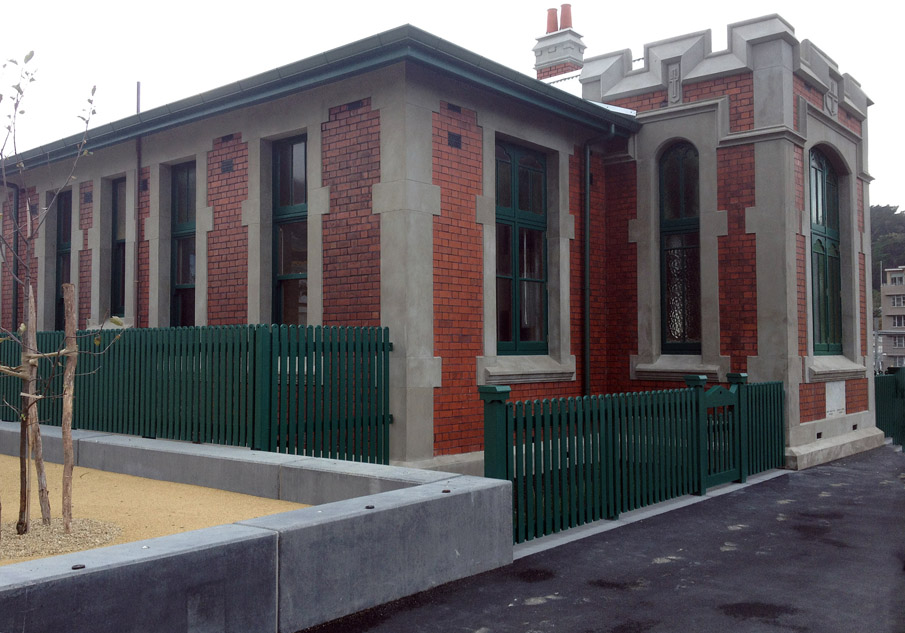
Perhaps the first example in New Zealand of a dedicated crèche was that named after Lady Carroll Heni Materoa (1852/1856?-1930) opened in Gisborne in mid 1913. This was run by the Cook County Womens’ Guild and replaced a temporary building they had used since 1909. The main focus of the Heni Materoa Crèche seems to mostly have been long term housing of poor children, with a tiny proportion of their service given over to crèche work in the sense established by Aubert in 1903. For a fee the Heni Materoa Crèche also offered childminding services on occasions when mothers may have needed to attend a wedding or go shopping. Unlike the Heni Materoa Crèche, the purpose-built Home of Compassion Crèche was a dedicated crèche in the French tradition and continued the pioneering work that Aubert and the Sisters had begun in 1903 in buildings which formerly occupied its site. The new building was necessary because the existing crèche buildings had been condemned.
When the Crèche was being planned Aubert was actually in Rome. At almost 80 years of age, and over 50 years after she left Europe, Aubert returned in 1913 with the goal of obtaining papal recognition for her congregation, which would give it independence from the often frustrating and stifling control of the local diocese. This was an important time for the Sisters because they essentially had to run the order by themselves for a period of six years. This was a steep learning curve but one which was ultimately in the interest of the congregation of approximately 50 women, because it enabled future managers to step out from Aubert’s impressive shadow and develop their skills. In this regard organising the construction of the Crèche was a challenge, but one which stood the Sisters in good stead for future building projects. Therefore, in combination with the independence they secured as a result of Aubert’s Europe trip, the Sisters of Compassion also developed a succession framework which ensured the unhindered continuance of the order when Aubert died only a few years later. The period when the Home of Compassion Crèche was built was a crucial time for the order and today the Sisters of Compassion ‘remain the only surviving religious congregation founded in New Zealand.’
The Sisters had always relied on the generosity of others to fund their activities and building projects. The planning of the Crèche was contemporary with the founding of the Macarthy Trust. This was established after Thomas George Macarthy’s (1833-1912) death and has subsequently contributed significant sums to educational and charitable organisations in Wellington. The initial grants round consisted of over £5000, however, the Sisters did not apply because Macarthy had already bequeathed Aubert £1000 which the Sisters would receive upon her return from Europe. However, because the Crèche was constructed before Aubert’s return the building was paid for with the Sisters’ existing funds and through donations. Finally, a £200 grant from the Trust in 1915 paid the balance of the cost for the £1200 building.
Tenders were called by the Crèche’s architect, John Sydney Swan (1874-1936), in April 1914 and Campbell and Burke was the successful construction company. Swan began his architectural career articled to Frederick de Jersey Clere and later the two went into partnership. In 1907 Swan established his own practice and went on to become one of Wellington’s most important architects of the early twentieth century, and one who completed a large number of projects for the Catholic Church. Swan designed St Gerard’s Church on Mt Victoria (1908-10), and buildings at Erskine College, as well as other commercial, ecclesiastical, educational, and domestic buildings, and additions to Victoria University’s Hunter Building. Campbell and Burke were also Wellington-based and seem to have been active between 1900 and the 1920s. Swan and Campbell and Burke worked together on several occasions around the period when the Crèche was built, including the Sacred Heart Convent in Wanganui (1911). In Wellington together they completed Plimmer’s Emporium (1916), and also Our Lady’s Home of Compassion, which meant that the Sisters were familiar with work produced from Swan and Campbell and Burke collaborations.
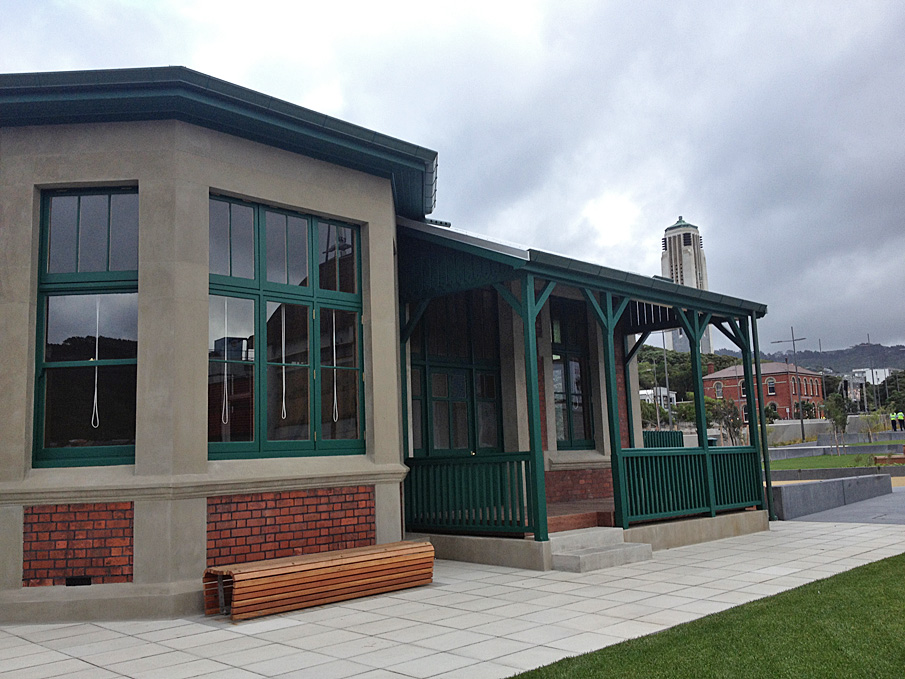
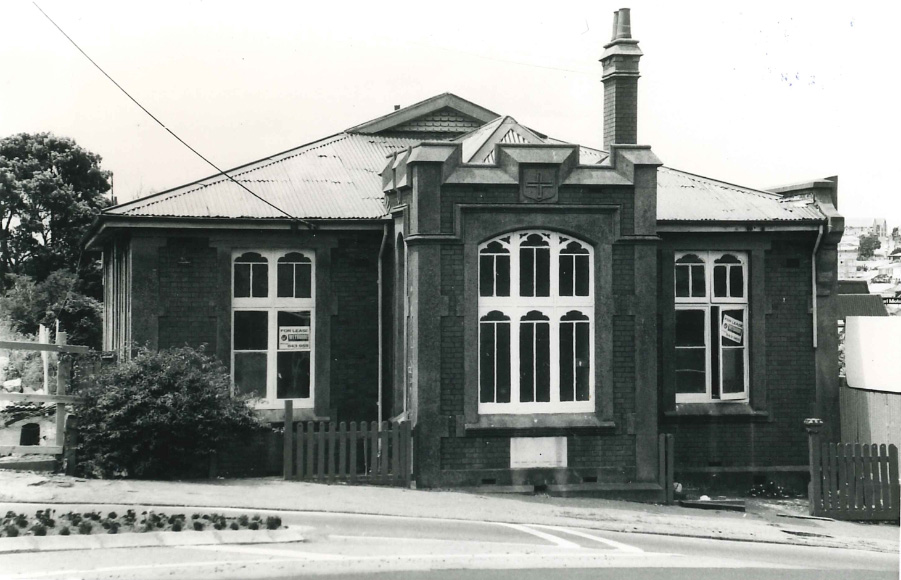
The opening ceremony for the Home of Compassion Crèche was on 27 September 1914. It was a reasonably low key affair given that people’s focus was on the newly declared war in Europe. However, invitations were sent to a few key dignitaries, such as the Archbishop Redwood, Sir Joseph and Lady Ward, and Dr and Lady Stout. Unfortunately the Premier was unable to attend but sent his apologies. The facilities in this building, whose workmanship was universally praised at its opening, included a front porch where the children could leave their coats before entering the building proper, and several dormitories for the children to nap in, a large dayroom for activities, and separate girls and boys toilets. A high fence separated the Crèche’s small yard from the driveway and playing fields of St Patrick’s College. Swan had also designed the building in a manner that would enable a second storey to be added if required.
When the new Crèche building opened the service continued in the same vein as it had since 1903. The Sisters received infants and young children daily, year round, except during the month of January. There was no fee charged at the Crèche, but small contributions towards milk costs were appreciated. The need of each case was examined before acceptance because of the limited number of children the Crèche could cater for, and priority was given to children from single parent families where the mother had no option but to work to support her children. Aubert had close links to Truby King’s Plunket movement and therefore it follows that in 1916 the Crèche was the first institution in Wellington to adopt the standardised mode of childcare of the Plunket system.
Fresh-air and play were recognised by the Sisters as an important aspect of the childhood experience. However, in the early period of the crèche operation the property’s playground was important to the Sisters primarily because it enabled them to almost double the number of children they could cater for, if the weather was fine. Later, the crèche’s long narrow section meant that by mid twentieth century standards the play area at the Home of Compassion Crèche’s was limited in terms of available grass space. However, the Sisters had an arrangement with St Patrick’s College, situated behind the crèche property, which enabled the children to use their grounds as a supplementary playground. The children also had access, by way of a set of steps, to the asphalt area at the back of the St Joseph’s Home next door, which was separated from the Crèche by a concrete retaining wall.
Continuing Aubert’s good work
On 1 October 1926, it was announced that one of New Zealand’s greatest women had passed away. Aubert died at the age of 91 at Our Lady’s Home of Compassion, and five days later her funeral was held amidst a huge outpouring of collective grief. Aubert’s funeral, which was attended by clergy of many denominations as well as top politicians, was described as ‘the greatest funeral New Zealand had ever accorded a woman.’ The route of the mile-long funeral cortege was crowded with people, not only from the Catholic community but the general populous, who all wanted to demonstrate their respect.
Upon reflecting on the achievements and legacy of Aubert, historian Michael King stated: ‘Mother Aubert’s vision and example – her insistence on seeing Christ in every person who needed help, her refusal while doing so to distinguish between Catholic and non-Catholic, Maori and Pakeha – were among the most pervasive and enduring forces to emerge from the Catholic Church in New Zealand.’ In 1990 the Sisters of Compassion began the process of seeking official Vatican recognition of the saintliness that people attributed to Aubert in life through beatification and canonisation, which are rigorous and lengthy processes. However, this is now well underway and if progressed successfully Aubert will become the first person associated with the Catholic Church in New Zealand to become a saint.
Of course, as planned the work of the Sisters of Compassion continued after Aubert’s passing, drawing inspiration from her life and example. From the 1920s the Sisters of Compassion began transferring their work with adults to Island Bay, as well as to the new Silverstream Home of Compassion in 1933. The Buckle Street Home for Incurables, which had helped hundreds of people from Wellington, and as far afield as Auckland and Dunedin, then became St Joseph’s Relief Depot. The Sisters of Compassion also set up other institutions around New Zealand and overseas.
As part of a small group of crèche services in New Zealand, the Home of Compassion Crèche was an important institution especially at times of economic crisis when more women were forced to seek work or supplement their family’s existing income, such as during World War One, the Great Depression, and World War Two. The daycare provided by the Crèche would have been a godsend for those lucky enough to secure a place, because kindergartens only offered care for part of the day. Until World War Two only charitable services like that at Buckle Street catered to this need, with the only full-day kindergartens in Wellington being established in 1942.
In the years after the Home of Compassion Crèche was built a few other charitable crèches were opened in Wellington. One of these was the Citizens Day Nursery, established in 1916. Upon investigation one inquisitive mother whose child attended the Nursery found that it was ‘dark and dingy,’ and she immediately transferred her child to the Home of Compassion Crèche. She was impressed with the Crèche and felt her child was much happier there. The Education Department had a similar favourable view of the Crèche during the 1960s, saying that the children were ‘a particularly happy group who respond cheerfully to kindly, gentle, but firm management,’ and that the Crèche was ‘without doubt the best run day nursery in Wellington.’
However, a combination of the crèche service outgrowing the 1914 building and planned State Highway One developments around the Basin Reserve prompted the Sisters of Compassion to move their facilities into a new three storey building close by on Sussex Street in 1973. Much of the land now incorporated into Karo Drive, as well as a passage of land that immediately adjoins the highway on the northeast side of Buckle, Ellice and Paterson Streets leading around the Basin Reserve and up to the Mount Victoria Tunnel, was taken for Better Utilisation or Motorway purposes by the Crown around this period in the early to mid 1970s.
As well as the crèche, the new Sussex Street facility also incorporated the St Joseph’s Relief Centre and the building which had been the Home for Incurables was then demolished. At the new building the Sisters were able to accommodate up to 50 children as opposed to the 30 they could manage at Buckle Street. The crèche has continued to function but is now the Aubert Childcare Centre located in Island Bay. Given the proximity of the vacated Crèche to St Patrick’s College, the building was then used as a library and supplementary classroom area for the school. However, this came to an end when the college moved to Evans Bay in 1979. After the former college buildings were demolished the Crèche was untenanted for period until it was eventually leased by its owners, Transit, to be used as an art studio. In recent years it has been used as a residence and office.