DonateSupporterVisit Heritage
  • Tūrangawaewae
    Places
  • Tira Māori
    Māori Heritage
  • Poutairangahia
    Archaeology
  • Rauemi
    Resources
  • Mō Tātou
    About Us
  • New Zealand Heritage List
  • Nominate and submit
  • Explore the List
  • National Historic Landmarks
  • Plaques
  • Rainbow List Project
  • Lost heritage
  • Visit Heritage
  • Our properties
  • Turnbull House Project
  • Collections
  • Shop
  • Tohu Whenua
  • Tira Māori
  • Conserving Māori heritage
  • Marae built heritage
  • Māori heritage on the List
  • Hinemihi—Te Hokinga Mai
  • What is archaeology?
  • Is there a site on my property?
  • What are my legal requirements?
  • Affecting an archaeological site
  • Declaring an archaeological site
  • Archaeology FAQs
  • Archaeology Digital Library
  • Archaeology guidelines and templates
  • Resources
  • Funding
  • Publications
  • Sustainable management guides
  • Disaster recovery
  • Podcasts & digital resources
  • Education Hub
  • Conservation plans
  • About
  • Board
  • Māori Heritage Council
  • Senior Staff
  • Offices
  • Contact us
  • Careers
  • Covenants
  • Fast-track
  • Corporate documents
  • Currently consulting on
  • Our submissions
  • News
  • Covid-19 response
Quick links
Rārangi Kōrero | The List
Explore the List
National Historic Landmarks
Ngā Manawhenua o Aotearoa me ōna Kōrero Tūturu
Quick links
Tapuwae
A Vision for Places of Māori Heritage
Funding for Māori Heritage
Resources
Quick links
Archaeological Authority Portal
Applying for an archaeological authority
Archaeology FAQs
Browse the most frequently asked questions about archaeological authorities and the archaeological process.
Quick links
Quick links
Contact us
Offices
DonateSupporterVisit Heritage
  • Tūrangawaewae
    Places
  • Tira Māori
    Māori Heritage
  • Poutairangahia
    Archaeology
  • Rauemi
    Resources
  • Mō Tātou
    About Us
  • New Zealand Heritage List
  • Nominate and submit
  • Explore the List
  • National Historic Landmarks
  • Plaques
  • Rainbow List Project
  • Lost heritage
  • Visit Heritage
  • Our properties
  • Turnbull House Project
  • Collections
  • Shop
  • Tohu Whenua
  • Tira Māori
  • Conserving Māori heritage
  • Marae built heritage
  • Māori heritage on the List
  • Hinemihi—Te Hokinga Mai
  • What is archaeology?
  • Is there a site on my property?
  • What are my legal requirements?
  • Affecting an archaeological site
  • Declaring an archaeological site
  • Archaeology FAQs
  • Archaeology Digital Library
  • Archaeology guidelines and templates
  • Resources
  • Funding
  • Publications
  • Sustainable management guides
  • Disaster recovery
  • Podcasts & digital resources
  • Education Hub
  • Conservation plans
  • About
  • Board
  • Māori Heritage Council
  • Senior Staff
  • Offices
  • Contact us
  • Careers
  • Covenants
  • Fast-track
  • Corporate documents
  • Currently consulting on
  • Our submissions
  • News
  • Covid-19 response
Quick links
Rārangi Kōrero | The List
Explore the List
National Historic Landmarks
Ngā Manawhenua o Aotearoa me ōna Kōrero Tūturu
Quick links
Tapuwae
A Vision for Places of Māori Heritage
Funding for Māori Heritage
Resources
Quick links
Archaeological Authority Portal
Applying for an archaeological authority
Archaeology FAQs
Browse the most frequently asked questions about archaeological authorities and the archaeological process.
Quick links
Quick links
Contact us
Offices
  • Places
  • Nominate and submit
  • National Historic Landmarks
  • Places
  • Nominate and submit
  • National Historic Landmarks
  • Tira Māori
  • Conserving Māori heritage
  • Marae built heritage
  • Tira Māori
  • Conserving Māori heritage
  • Marae built heritage
  • Archaeological authorities
  • Archaeology Digital Library
  • Archaeological authorities
  • Archaeology Digital Library
  • All resources
  • Publications
  • Funding
  • All resources
  • Publications
  • Funding
  • FAQs
  • FAQs
Follow us on:
Places
  • Places
  • Nominate and submit
  • National Historic Landmarks
Tira Māori
  • Tira Māori
  • Conserving Māori heritage
  • Marae built heritage
Archaeology
  • Archaeological authorities
  • Archaeology Digital Library
Resources
  • All resources
  • Publications
  • Funding
FAQs
  • FAQs
Follow us on
HomePrivacyTerms and conditionsAbout this site
© Heritage New Zealand Pouhere Taonga 2026.
 
Canterbury Cricket Umpires' Association Pavilion

445 Hagley Avenue and Riccarton Avenue, CHRISTCHURCH

Private

Historic Place Category 2

List No. 3656

Quick links:
List GalleryLocationDetails
The first recorded cricket match in Christchurch was held on 16 December 1851, less than a year after the arrival of the First Four Ships at Lyttelton In June of that year there had been an announcement in the Lyttelton Times that a cricket club and been formed and matches were arranged spasmodically after that. It was inevitable that cricket would be one of the first sports organised in the fledgling province. The planned Anglican church based settlement of Canterbury had the intention of reproducing a piece of England in this country 12,000 miles away, and as Dick Brittendon states in his Centennial History of the Canterbury Cricket Association, "the bat went with the bible". Through the 1850s various clubs were formed and some gala occasions were associated with the matches that were often attended by vast crowds.

In 1864 this pavilion was erected on the first Canterbury Cricket Club's grounds, called Dilloway's, in order to be ready in time for the visit of an English eleven, captained by George Parr. In the match against Canterbury the English team won convincingly but were impressed by the facilities provided at the grounds at the north-western corner of South Hagley Park (by the junction of Deans and Riccarton Avenues). The well prepared field was neatly fenced and the handsome pavilion, the envy of other local clubs still using tents on match days, provided fine accommodation. Of timber construction the pavilion was built to a traditional English design and provided changing facilities, a communal area for meetings and teas, an open verandah and a viewing balcony.

Two years later the pavilion was moved to its present site on Hagley Oval where it was the home of various clubs, the last in the 1980s being Marist. By this date it had served over 120 years and there was concern as to whether it could be retained It had been altered and upgraded several times and had been declared unsafe by the City Council in 1954. The local umpires' association took over the building in 1988 with the intention of restoring it. Under the guidance of the New Zealand Historic Places Trust the building has been fully upgraded, its original appearance returned and it continues to serve a useful function for cricket in Canterbury.

Certainly the oldest cricket pavilion in New Zealand, the building may even be the oldest such structure surviving in Australasia. (Local cricketers are prepared to claim it as the oldest in the Southern Hemisphere until this can be proved incorrect!)
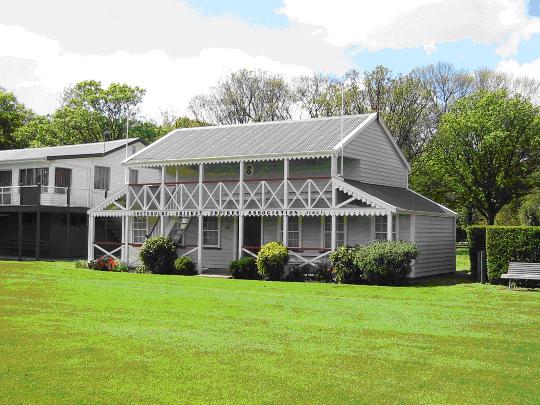
Canterbury Cricket Umpires' Association Pavilion | Pam Wilson | 01/10/2003 | NZ Historic Places Trust
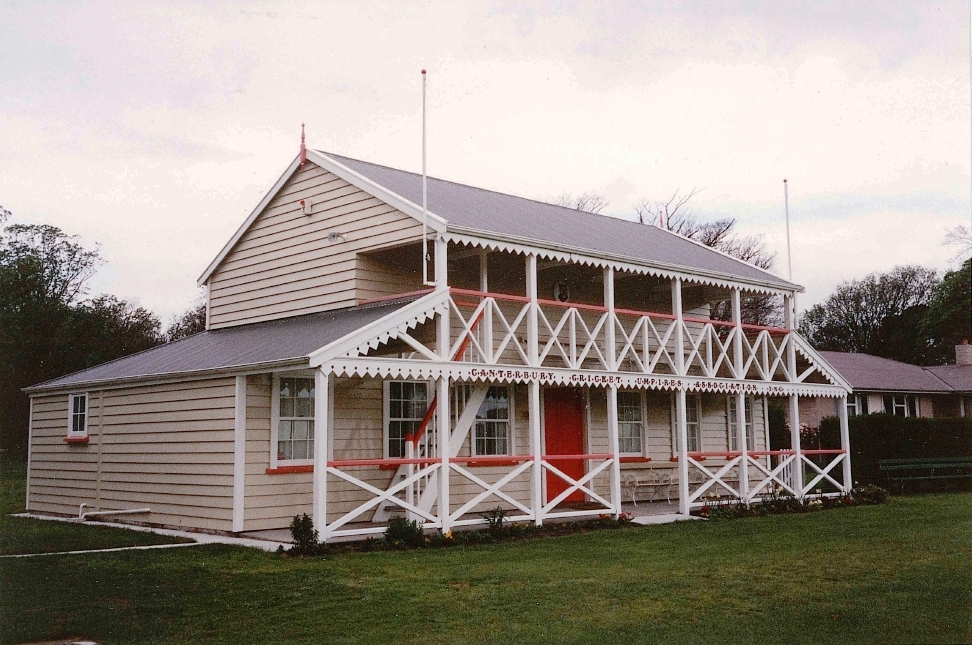
Original image submitted at time of registration | Ann McEwan | 16/10/1992 | NZHPT Field Record Form Collection
Canterbury Cricket Umpires' Association Pavilion | Pam Wilson | 01/10/2003 | NZ Historic Places Trust
Original image submitted at time of registration | Ann McEwan | 16/10/1992 | NZHPT Field Record Form Collection

List Entry Information

Overview

Status
Listed

List Entry Status
Historic Place Category 2

Access
Private/No Public Access

List Number
3656

Date Entered
11th December 2003

Date of Effect
11th December 2003

City/District Council
Christchurch City

Region
Canterbury Region

Extent of List Entry

Extent includes part of the land described as Pt RS 41182 (RTs CB24B/260, CB24B/460, CB24B/461, CB30A/95) Canterbury Land District and the building described as Canterbury Cricket Umpires’ Association Pavilion thereon. Refer to Extent Map tabled at the Rārangi Kōrero Committee Meeting on 1 June 2023.

Legal description

Pt RS 41182 (RTs CB24B/260, CB24B/460, CB24B/461, CB30A/95) Canterbury Land District

Detailed List Entry
Significance

Cultural Significance

The pavilion has important cultural and social significance as one of the earliest structures associated with sporting activities in the newly settled province.

Historic Significance

Historical Significance or Value The cricket pavilion has historical significance as the oldest such structure in Canterbury and probably the oldest in Australasia. These reflect the English traditions that surround the game, and the early Canterbury settlers' objectives to recreate an English atmosphere here.

Physical Significance

It also has technological and architectural value because of its form and styling.

Detail Of Assessed Criteria

The cricket pavilion can be assigned Category II status because it reflects the introduction of the sport of cricket in Canterbury, an important aspect of the province's cultural history. The building has been associated with important cricketing events since it was built for the first international cricket match held in Canterbury in 1864. The community esteem for the place was demonstrated in the early 1990s when the building's future was uncertain and great effort was put into ensuring it would be retained. The pavilion's design has value because of its specific links to traditional English cricketing structures. As the oldest cricket pavilion in New Zealand, it is important as a place known to date from the early periods of New Zealand settlement.

Construction Details

Start Year

1864

Type

Original Construction

Start Year

1866

Type

Relocation

Description

Shifted from original site to its present location.

Start Year

1990

Type

Modification

Description

Restored 1990 with assistance of some funding from New Zealand Historic Places Trust.

Construction Materials

Timber with corrugated iron roof

Physical Description

The pavilion is a two storeyed, gable roofed building with a single storyed lean to at the rear. It is of timber construction and has a corrugated iron roof. Across the frontage is a verandah with a balcony above it. Timber detailing enlivens the frontage and the balcony has a cross braced balustrade. The building had fallen into disrepair before its 1990s restoration and much new material was required when this wok was undertaken. A photo of the pavilion in 1869 provided a record of its original appearance.

Reference

Completion Date

6th September 2004

Report Written By

Pam Wilson

Information Sources

Brittenden, 1977

Dick Brittenden, 100 Years of cricket: a history of the Canterbury Cricket Association 1877-1977. Christchurch: Canterbury Cricket Association, 1977

Christchurch City Council

Christchurch City Council

New Zealand Historic Places Trust (NZHPT)

New Zealand Historic Places Trust

Report Written By

A fully referenced version of this report is available from the NZHPT Southern Region Office. Please note that entry on the New Zealand Heritage List/Rarangi Korero identifies only the heritage values of the property concerned, and should not be construed as advice on the state of the property, or as a comment of its soundness or safety, including in regard to earthquake risk, safety in the event of fire, or insanitary conditions.

Further Information

Current Usages

Uses: Civic Facilities

Specific Usage: Pavilion

Uses: Civic Facilities

Specific Usage: Sports ground/green/pitch

Former Usages

General Usage:: Civic Facilities

Specific Usage: Pavilion

General Usage:: Civic Facilities

Specific Usage: Sports ground/green/pitch

Themes

Sport

Web Links

Overview

Status

Listed

List Entry Status

Historic Place Category 2

Access

Private/No Public Access

List Number

3656

Date Entered

11th December 2003

Date of Effect

11th December 2003

City/District Council

Christchurch City

Region

Canterbury Region

Extent of List Entry

Extent includes part of the land described as Pt RS 41182 (RTs CB24B/260, CB24B/460, CB24B/461, CB30A/95) Canterbury Land District and the building described as Canterbury Cricket Umpires’ Association Pavilion thereon. Refer to Extent Map tabled at the Rārangi Kōrero Committee Meeting on 1 June 2023.

Legal description

Pt RS 41182 (RTs CB24B/260, CB24B/460, CB24B/461, CB30A/95) Canterbury Land District

Status

Listed

List Entry Status

Historic Place Category 2

Access

Private/No Public Access

List Number

3656

Date Entered

11th December 2003

Date of Effect

11th December 2003

City/District Council

Christchurch City

Region

Canterbury Region

Extent of List Entry

Extent includes part of the land described as Pt RS 41182 (RTs CB24B/260, CB24B/460, CB24B/461, CB30A/95) Canterbury Land District and the building described as Canterbury Cricket Umpires’ Association Pavilion thereon. Refer to Extent Map tabled at the Rārangi Kōrero Committee Meeting on 1 June 2023.

Legal description

Pt RS 41182 (RTs CB24B/260, CB24B/460, CB24B/461, CB30A/95) Canterbury Land District

Significance

Why is this place significant?

Cultural Significance

The pavilion has important cultural and social significance as one of the earliest structures associated with sporting activities in the newly settled province.

Historic Significance

Historical Significance or Value The cricket pavilion has historical significance as the oldest such structure in Canterbury and probably the oldest in Australasia. These reflect the English traditions that surround the game, and the early Canterbury settlers' objectives to recreate an English atmosphere here.

Physical Significance

It also has technological and architectural value because of its form and styling.

Why is this place Category 1 / Category 2?

Detail Of Assessed Criteria

The cricket pavilion can be assigned Category II status because it reflects the introduction of the sport of cricket in Canterbury, an important aspect of the province's cultural history. The building has been associated with important cricketing events since it was built for the first international cricket match held in Canterbury in 1864. The community esteem for the place was demonstrated in the early 1990s when the building's future was uncertain and great effort was put into ensuring it would be retained. The pavilion's design has value because of its specific links to traditional English cricketing structures. As the oldest cricket pavilion in New Zealand, it is important as a place known to date from the early periods of New Zealand settlement.

Why is this place significant?

Cultural Significance

The pavilion has important cultural and social significance as one of the earliest structures associated with sporting activities in the newly settled province.

Historic Significance

Historical Significance or Value The cricket pavilion has historical significance as the oldest such structure in Canterbury and probably the oldest in Australasia. These reflect the English traditions that surround the game, and the early Canterbury settlers' objectives to recreate an English atmosphere here.

Physical Significance

It also has technological and architectural value because of its form and styling.

Why is this place Category 1 / Category 2?

Detail Of Assessed Criteria

The cricket pavilion can be assigned Category II status because it reflects the introduction of the sport of cricket in Canterbury, an important aspect of the province's cultural history. The building has been associated with important cricketing events since it was built for the first international cricket match held in Canterbury in 1864. The community esteem for the place was demonstrated in the early 1990s when the building's future was uncertain and great effort was put into ensuring it would be retained. The pavilion's design has value because of its specific links to traditional English cricketing structures. As the oldest cricket pavilion in New Zealand, it is important as a place known to date from the early periods of New Zealand settlement.

Construction Information

Construction Details

Start Year

1864

Type

Original Construction

Start Year

1866

Type

Relocation

Description

Shifted from original site to its present location.

Start Year

1990

Type

Modification

Description

Restored 1990 with assistance of some funding from New Zealand Historic Places Trust.

Construction Materials

Timber with corrugated iron roof

Construction Details

Start Year

1864

Type

Original Construction

Start Year

1866

Type

Relocation

Description

Shifted from original site to its present location.

Start Year

1990

Type

Modification

Description

Restored 1990 with assistance of some funding from New Zealand Historic Places Trust.

Construction Materials

Timber with corrugated iron roof

Physical Description

The pavilion is a two storeyed, gable roofed building with a single storyed lean to at the rear. It is of timber construction and has a corrugated iron roof. Across the frontage is a verandah with a balcony above it. Timber detailing enlivens the frontage and the balcony has a cross braced balustrade. The building had fallen into disrepair before its 1990s restoration and much new material was required when this wok was undertaken. A photo of the pavilion in 1869 provided a record of its original appearance.

The pavilion is a two storeyed, gable roofed building with a single storyed lean to at the rear. It is of timber construction and has a corrugated iron roof. Across the frontage is a verandah with a balcony above it. Timber detailing enlivens the frontage and the balcony has a cross braced balustrade. The building had fallen into disrepair before its 1990s restoration and much new material was required when this wok was undertaken. A photo of the pavilion in 1869 provided a record of its original appearance.

Reference

Historical and Associated Iwi / Hapū / Whānau

Completion Date

6th September 2004

Report Written By

Pam Wilson

Information Sources

Brittenden, 1977

Dick Brittenden, 100 Years of cricket: a history of the Canterbury Cricket Association 1877-1977. Christchurch: Canterbury Cricket Association, 1977

Christchurch City Council

Christchurch City Council

New Zealand Historic Places Trust (NZHPT)

New Zealand Historic Places Trust

Other Information

A fully referenced version of this report is available from the NZHPT Southern Region Office. Please note that entry on the New Zealand Heritage List/Rarangi Korero identifies only the heritage values of the property concerned, and should not be construed as advice on the state of the property, or as a comment of its soundness or safety, including in regard to earthquake risk, safety in the event of fire, or insanitary conditions.

Historical and Associated Iwi / Hapū / Whānau

Completion Date

6th September 2004

Report Written By

Pam Wilson

Information Sources

Brittenden, 1977

Dick Brittenden, 100 Years of cricket: a history of the Canterbury Cricket Association 1877-1977. Christchurch: Canterbury Cricket Association, 1977

Christchurch City Council

Christchurch City Council

New Zealand Historic Places Trust (NZHPT)

New Zealand Historic Places Trust

Other Information

A fully referenced version of this report is available from the NZHPT Southern Region Office. Please note that entry on the New Zealand Heritage List/Rarangi Korero identifies only the heritage values of the property concerned, and should not be construed as advice on the state of the property, or as a comment of its soundness or safety, including in regard to earthquake risk, safety in the event of fire, or insanitary conditions.

Further Information

Current Usages

Uses: Civic Facilities

Specific Usage: Pavilion

Uses: Civic Facilities

Specific Usage: Sports ground/green/pitch

Former Usages

General Usage: Civic Facilities

Specific Usage: Pavilion

General Usage: Civic Facilities

Specific Usage: Sports ground/green/pitch

Themes

Sport

Current Usages

Uses: Civic Facilities

Specific Usage: Pavilion

Uses: Civic Facilities

Specific Usage: Sports ground/green/pitch

Former Usages

General Usage: Civic Facilities

Specific Usage: Pavilion

General Usage: Civic Facilities

Specific Usage: Sports ground/green/pitch

Themes

Sport

Location

Loading
Sign up to hear more

Get the latest heritage news, features and events delivered
straight to your inbox.

Subscribe