DonateMembershipVisit Heritage
  • Tūrangawaewae
    Places
  • Tira Māori
    Māori Heritage
  • Poutairangahia
    Archaeology
  • Rauemi
    Resources
  • Mō Tātou
    About Us
  • New Zealand Heritage List
  • Nominate and submit
  • Explore the List
  • National Historic Landmarks
  • Plaques
  • Rainbow List Project
  • Lost heritage
  • Visit Heritage
  • Our properties
  • Turnbull House Project
  • Collections
  • Shop
  • Tohu Whenua
  • Tira Māori
  • Conserving Māori heritage
  • Marae built heritage
  • Māori heritage on the List
  • Hinemihi—Te Hokinga Mai
  • What is archaeology?
  • Is there a site on my property?
  • What are my legal requirements?
  • Affecting an archaeological site
  • Declaring an archaeological site
  • Archaeology FAQs
  • Archaeology Digital Library
  • Archaeology guidelines and templates
  • Resources
  • Funding
  • Publications
  • Sustainable management guides
  • Disaster recovery
  • Podcasts & digital resources
  • Education Hub
  • Conservation plans
  • About
  • Board
  • Māori Heritage Council
  • Senior Staff
  • Offices
  • Contact us
  • Careers
  • Covenants
  • Fast-track
  • Corporate documents
  • Currently consulting on
  • Our submissions
  • News
  • Covid-19 response
Quick links
Rārangi Kōrero | The List
Explore the List
National Historic Landmarks
Ngā Manawhenua o Aotearoa me ōna Kōrero Tūturu
Quick links
Tapuwae
A Vision for Places of Māori Heritage
Funding for Māori Heritage
Resources
Quick links
Archaeological Authority Portal
Applying for an archaeological authority
Archaeology FAQs
Browse the most frequently asked questions about archaeological authorities and the archaeological process.
Quick links
Quick links
News
News Keep up to date with Heritage New Zealand Pouhere Taonga
Membership
Membership Find out more and sign up today
DonateMembershipVisit Heritage
  • Tūrangawaewae
    Places
  • Tira Māori
    Māori Heritage
  • Poutairangahia
    Archaeology
  • Rauemi
    Resources
  • Mō Tātou
    About Us
  • New Zealand Heritage List
  • Nominate and submit
  • Explore the List
  • National Historic Landmarks
  • Plaques
  • Rainbow List Project
  • Lost heritage
  • Visit Heritage
  • Our properties
  • Turnbull House Project
  • Collections
  • Shop
  • Tohu Whenua
  • Tira Māori
  • Conserving Māori heritage
  • Marae built heritage
  • Māori heritage on the List
  • Hinemihi—Te Hokinga Mai
  • What is archaeology?
  • Is there a site on my property?
  • What are my legal requirements?
  • Affecting an archaeological site
  • Declaring an archaeological site
  • Archaeology FAQs
  • Archaeology Digital Library
  • Archaeology guidelines and templates
  • Resources
  • Funding
  • Publications
  • Sustainable management guides
  • Disaster recovery
  • Podcasts & digital resources
  • Education Hub
  • Conservation plans
  • About
  • Board
  • Māori Heritage Council
  • Senior Staff
  • Offices
  • Contact us
  • Careers
  • Covenants
  • Fast-track
  • Corporate documents
  • Currently consulting on
  • Our submissions
  • News
  • Covid-19 response
Quick links
Rārangi Kōrero | The List
Explore the List
National Historic Landmarks
Ngā Manawhenua o Aotearoa me ōna Kōrero Tūturu
Quick links
Tapuwae
A Vision for Places of Māori Heritage
Funding for Māori Heritage
Resources
Quick links
Archaeological Authority Portal
Applying for an archaeological authority
Archaeology FAQs
Browse the most frequently asked questions about archaeological authorities and the archaeological process.
Quick links
Quick links
News
News Keep up to date with Heritage New Zealand Pouhere Taonga
Membership
Membership Find out more and sign up today
  • Places
  • Nominate and submit
  • National Historic Landmarks
  • Places
  • Nominate and submit
  • National Historic Landmarks
  • Tira Māori
  • Conserving Māori heritage
  • Marae built heritage
  • Tira Māori
  • Conserving Māori heritage
  • Marae built heritage
  • Archaeological authorities
  • Archaeology Digital Library
  • Archaeological authorities
  • Archaeology Digital Library
  • All resources
  • Publications
  • Funding
  • All resources
  • Publications
  • Funding
  • FAQs
  • FAQs
Follow us on:
Places
  • Places
  • Nominate and submit
  • National Historic Landmarks
Tira Māori
  • Tira Māori
  • Conserving Māori heritage
  • Marae built heritage
Archaeology
  • Archaeological authorities
  • Archaeology Digital Library
Resources
  • All resources
  • Publications
  • Funding
FAQs
  • FAQs
Follow us on
HomePrivacyTerms and conditionsAbout this site
© Heritage New Zealand Pouhere Taonga 2026.
 
New Zealand Express Company Building (Former)

7 Bond Street and 14 Crawford Street, DUNEDIN

Private

Historic Place Category 1

List No. 374

Quick links:
List GalleryLocationDetails
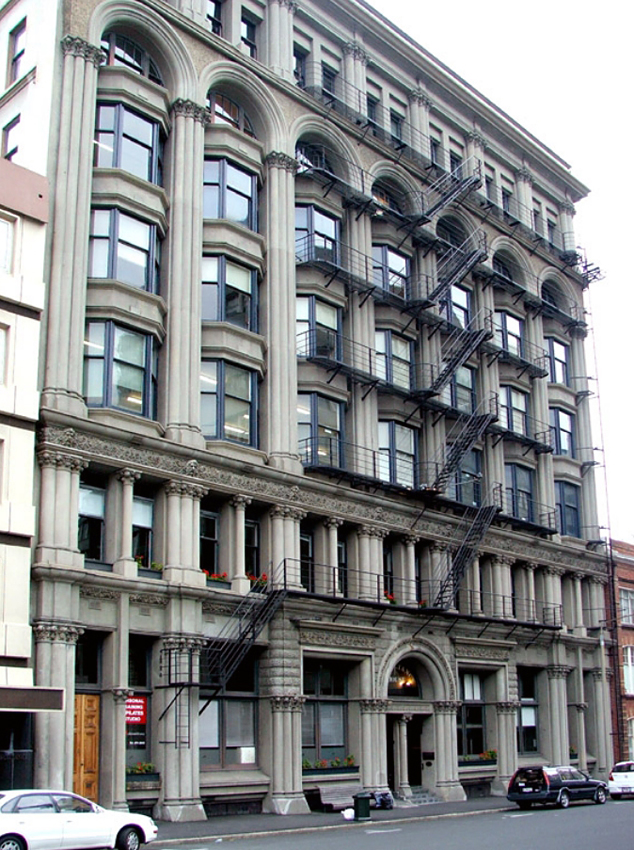
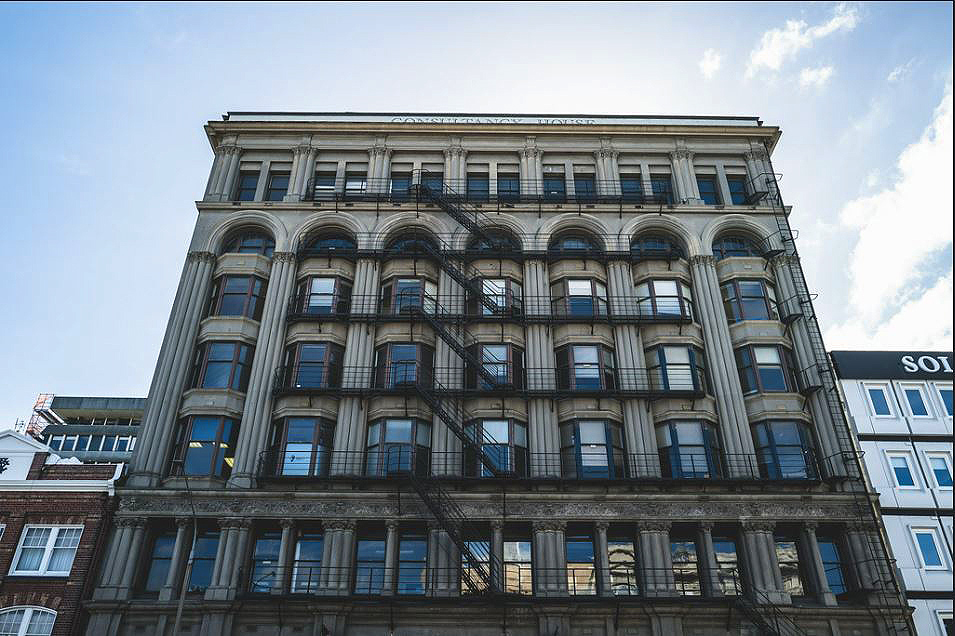
Dunedin’s New Zealand Express Company Building (Former), designed by Christchurch architects Sidney and Alfred Luttrell and built between 1908 and 1910, was New Zealand’s first skyscraper. It has architectural, aesthetic, historical and technological significance.

The New Zealand Express Company had its origins in Dunedin’s Campbell and Crust carrying company formed in 1867. In 1879, the company was renamed The New Zealand Express Company, at which time they took on the task of collecting and forwarding goods and parcels at varying rates. From Dunedin, the company extended to Christchurch, Wellington and Auckland, eventually having branches in most significant towns. By the twentieth century it was one of the country’s largest employers.

The company’s status was reflected in its office buildings – its 1905 Christchurch branch, and its 1908 Dunedin headquarters. The Dunedin site was a challenge because it was on reclaimed land, with the architects designing the building to float on a ferro-concrete raft foundation to support its reinforced concrete structural frame. It was the first building in New Zealand to make use of pre-cast concrete slabs constructed off-site, which is now a common technique.

The building represents the end of Dunedin's Victorian architectural era both in terms of its appearance and its construction techniques. At the time it was built it was Dunedin’s tallest building. It was New Zealand’s first 'skyscraper' and dominated the Dunedin skyline for 27 years. The building is well proportioned and has a Chicago Romanesque façade with oriel windows between the first and fifth storeys, columns and carved capitals. It was also one of the first buildings in New Zealand to be inspired by the Chicago style of architecture. The contractor, Charles Fleming McDonald, applied advanced techniques not previously used in New Zealand, including the use of pre-cast reinforced concrete slabs manufactured off the site. Built in the year Dunedin gained electrical power, it was the first major building in the city for which concrete mixing and hoisting were electrically powered.

Originally the building was used as offices for New Zealand Express Company, with sample rooms for commercial travellers on the sixth storey. Several other businesses operated in the building. One of them was the Dunedin Stock Exchange, which moved into the building in 1968. Another was A.H. Reed, the publisher and bookseller. The Express Company later merged with other companies and abandoned its name.

In 1971 the building was sold to MFL Mutual Funds, and became known by that name. MFL Mutual Funds is a superannuation scheme established in 1969 as a convenient way to help investors save for their retirement. After several changes of ownership in the 1980s and the 1990s, the premises became known as Consultancy House. In 2018, the former New Zealand Express Company Building largely provides office space for a range of tenants but has apartments on the top floor.
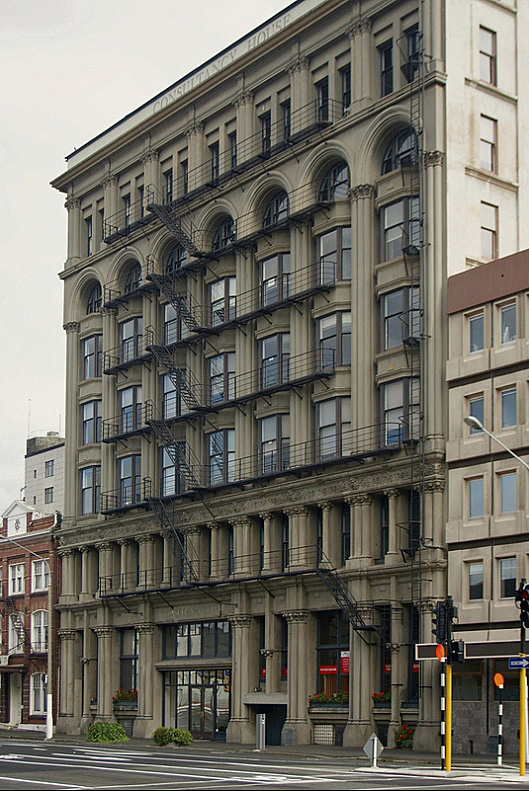
New Zealand Express Company Building (Former), Dunedin. (aka - Consultancy House) Rear. Image courtesy of www.flickr.com | PhilBee NZ - Phil Braithwaite | 06/04/2012 | Phil Braithwaite
New Zealand Express Company Building (Former), Dunedin. Front (aka - Consultancy House). CC Licence 3.0 Image courtesy of commons.wikimedia.org | James Digan | 23/10/2010 | James Digan - Wikimedia Commons
New Zealand Express Company Building (Former), Dunedin. (aka - Consultancy House) Image courtesy of www.flickr.com | Phil Clark | 20/02/2022 | phil1066photography.com
New Zealand Express Company Building (Former), Dunedin. (aka - Consultancy House) Rear. Image courtesy of www.flickr.com | PhilBee NZ - Phil Braithwaite | 06/04/2012 | Phil Braithwaite
New Zealand Express Company Building (Former), Dunedin. Front (aka - Consultancy House). CC Licence 3.0 Image courtesy of commons.wikimedia.org | James Digan | 23/10/2010 | James Digan - Wikimedia Commons
New Zealand Express Company Building (Former), Dunedin. (aka - Consultancy House) Image courtesy of www.flickr.com | Phil Clark | 20/02/2022 | phil1066photography.com

List Entry Information

Overview

Status
Listed

List Entry Status
Historic Place Category 1

Access
Private/No Public Access

List Number
374

Date Entered
24th November 1983

Date of Effect
24th November 1983

City/District Council
Dunedin City

Region
Otago Region

Extent of List Entry

Extent includes the land described as Secs 2-4 Blk XXXVIII Town of Dunedin (RT OT288/60), Otago Land District, and the building known as New Zealand Express Company Building (Former) thereon.

Legal description

Secs 2-4 Blk XXXVIII Town of Dunedin (RT OT288/60), Otago Land District

Detailed List Entry

Construction Professional

Name

Luttrell, Alfred Edgar And Edward Sidney

Type

Architectural Partnership

Biography

Alfred (1865-1924) and Sidney (1872-1932) Luttrell established one of New Zealand's foremost Edwardian architectural practices when they arrived in Christchurch in 1902. The brothers had left Australia on the eve of Federation to pursue a more rewarding career in New Zealand. Alfred had been based in Launceston, Tasmania, where he had been the apprentice of Harry Conway. In 1886 he stared his own firm. His younger brother into partnership in 1897. The two men assumed different responsibilities within the firm, with Alfred acting as the principal designer and engineer while Sidney co-ordinated building programmes and dealt with clients. Sidney served his apprenticeship whit his brother, and in 1897 they became partners of A. & S. Luttrell. By 1902 they had established themselves in New Zealand, where they were known as S. & A. Luttrell The Luttrells ran their own contracting firm for many years, designing a wide variety of building types throughout the country. They were the unofficial Diocesan architects for the Roman Catholic Church in Christchurch during the second decade of the twentieth century. Their chief contribution to New Zealand architecture was in the introduction of the Chicago "skyscraper" style, as seen in the New Zealand Express Company buildings in Christchurch (1905-7) and Dunedin (1908-10). Alfred's habitual use of concrete construction, both mass and reinforced, is another significant feature of his work. The grandstands at Trentham racecourse are his most important work in reinforced concrete, and reveal Sidney's close involvement with the racing world, which led to numerous commissions for the firm.

Name

Charles Fleming McDonald

Type

Engineer

Biography

Charles Fleming McDonald (1869-1922) was a builder and architect who was stationed in Dunedin… He had a great deal of experience in ferrocement construction. He was a partner in McDonald and Mullions, where he worked with Thomas Coulthard Mullions (1878-1957). The firm became known as McDonald, Mullions and Smith in 1920, when they were joined by Sholto Smith (1881-1936). The firm originally specialised in hotels and commercial architecture using modern materials including reinforced concrete, but dressing the modernist structure with historicist references. Other notable works by Fleming McDonald were the Councils’ Chambers in Auckland, the four-storied National Bank in Dunedin (1911) and the original Masonic Hotel in Napier (1897).

Name

C. Gardner Dunning

Type

Engineer

Biography

C. Gardner Dunning (unknown-1962) moved to Dunedin in 1908 with his father, William Henry Dunning, to supervise the building of the New Zealand Express Company building. He worked in the same office as Fleming McDonald. After his father died in 1933, Dunning cooperated with Owen Ernest MacFie during the 1950s, before the MacFie’s death in 1960.

Construction Details

Start Year

1908

Finish Year

1910

Type

Original Construction

Reference

Completion Date

1st May 2018

Report Written By

Janny Sjaaholm

Information Sources

Shaw, 1997 (2003)

Peter Shaw, A History of New Zealand Architecture, Auckland, 1997

Thornton, 1996

Geoffrey Thornton, Cast in Concrete: Concrete Construction in New Zealand 1850-1939, Auckland, 1996

Report Written By

This place was identified as significant under previous legislation with different information requirements. It remains significant under the current legislation. There is opportunity under our legislation and policies to add to this information. Further information about this place may be available from the Otago/Southland Office of Heritage New Zealand Pouhere Taonga. Please note that entry on the New Zealand Heritage List/Rarangi Korero identifies only the heritage values of the property concerned, and should not be construed as advice on the state of the property, or as a comment of its soundness or safety, including in regard to earthquake risk, safety in the event of fire, or insanitary conditions. A fully referenced upgrade report is available on request from the Otago/Southland Area Office of Heritage New Zealand

Further Information

Current Usages

Former Usages

General Usage:: Trade

Specific Usage: Office building/Offices

Themes

Web Links

description: Engineering NZ Heritage

url: https://www.engineeringnz.org/our-work/heritage/heritage-records/new-zealand-express-company-building/

Overview

Status

Listed

List Entry Status

Historic Place Category 1

Access

Private/No Public Access

List Number

374

Date Entered

24th November 1983

Date of Effect

24th November 1983

City/District Council

Dunedin City

Region

Otago Region

Extent of List Entry

Extent includes the land described as Secs 2-4 Blk XXXVIII Town of Dunedin (RT OT288/60), Otago Land District, and the building known as New Zealand Express Company Building (Former) thereon.

Legal description

Secs 2-4 Blk XXXVIII Town of Dunedin (RT OT288/60), Otago Land District

Status

Listed

List Entry Status

Historic Place Category 1

Access

Private/No Public Access

List Number

374

Date Entered

24th November 1983

Date of Effect

24th November 1983

City/District Council

Dunedin City

Region

Otago Region

Extent of List Entry

Extent includes the land described as Secs 2-4 Blk XXXVIII Town of Dunedin (RT OT288/60), Otago Land District, and the building known as New Zealand Express Company Building (Former) thereon.

Legal description

Secs 2-4 Blk XXXVIII Town of Dunedin (RT OT288/60), Otago Land District

Construction Information

Construction Professional

Name

Luttrell, Alfred Edgar And Edward Sidney

Type

Architectural Partnership

Biography

Alfred (1865-1924) and Sidney (1872-1932) Luttrell established one of New Zealand's foremost Edwardian architectural practices when they arrived in Christchurch in 1902. The brothers had left Australia on the eve of Federation to pursue a more rewarding career in New Zealand. Alfred had been based in Launceston, Tasmania, where he had been the apprentice of Harry Conway. In 1886 he stared his own firm. His younger brother into partnership in 1897. The two men assumed different responsibilities within the firm, with Alfred acting as the principal designer and engineer while Sidney co-ordinated building programmes and dealt with clients. Sidney served his apprenticeship whit his brother, and in 1897 they became partners of A. & S. Luttrell. By 1902 they had established themselves in New Zealand, where they were known as S. & A. Luttrell The Luttrells ran their own contracting firm for many years, designing a wide variety of building types throughout the country. They were the unofficial Diocesan architects for the Roman Catholic Church in Christchurch during the second decade of the twentieth century. Their chief contribution to New Zealand architecture was in the introduction of the Chicago "skyscraper" style, as seen in the New Zealand Express Company buildings in Christchurch (1905-7) and Dunedin (1908-10). Alfred's habitual use of concrete construction, both mass and reinforced, is another significant feature of his work. The grandstands at Trentham racecourse are his most important work in reinforced concrete, and reveal Sidney's close involvement with the racing world, which led to numerous commissions for the firm.

Name

Charles Fleming McDonald

Type

Engineer

Biography

Charles Fleming McDonald (1869-1922) was a builder and architect who was stationed in Dunedin… He had a great deal of experience in ferrocement construction. He was a partner in McDonald and Mullions, where he worked with Thomas Coulthard Mullions (1878-1957). The firm became known as McDonald, Mullions and Smith in 1920, when they were joined by Sholto Smith (1881-1936). The firm originally specialised in hotels and commercial architecture using modern materials including reinforced concrete, but dressing the modernist structure with historicist references. Other notable works by Fleming McDonald were the Councils’ Chambers in Auckland, the four-storied National Bank in Dunedin (1911) and the original Masonic Hotel in Napier (1897).

Name

C. Gardner Dunning

Type

Engineer

Biography

C. Gardner Dunning (unknown-1962) moved to Dunedin in 1908 with his father, William Henry Dunning, to supervise the building of the New Zealand Express Company building. He worked in the same office as Fleming McDonald. After his father died in 1933, Dunning cooperated with Owen Ernest MacFie during the 1950s, before the MacFie’s death in 1960.

Construction Details

Start Year

1908

Finish Year

1910

Type

Original Construction

Construction Professional

Name

Luttrell, Alfred Edgar And Edward Sidney

Type

Architectural Partnership

Biography

Alfred (1865-1924) and Sidney (1872-1932) Luttrell established one of New Zealand's foremost Edwardian architectural practices when they arrived in Christchurch in 1902. The brothers had left Australia on the eve of Federation to pursue a more rewarding career in New Zealand. Alfred had been based in Launceston, Tasmania, where he had been the apprentice of Harry Conway. In 1886 he stared his own firm. His younger brother into partnership in 1897. The two men assumed different responsibilities within the firm, with Alfred acting as the principal designer and engineer while Sidney co-ordinated building programmes and dealt with clients. Sidney served his apprenticeship whit his brother, and in 1897 they became partners of A. & S. Luttrell. By 1902 they had established themselves in New Zealand, where they were known as S. & A. Luttrell The Luttrells ran their own contracting firm for many years, designing a wide variety of building types throughout the country. They were the unofficial Diocesan architects for the Roman Catholic Church in Christchurch during the second decade of the twentieth century. Their chief contribution to New Zealand architecture was in the introduction of the Chicago "skyscraper" style, as seen in the New Zealand Express Company buildings in Christchurch (1905-7) and Dunedin (1908-10). Alfred's habitual use of concrete construction, both mass and reinforced, is another significant feature of his work. The grandstands at Trentham racecourse are his most important work in reinforced concrete, and reveal Sidney's close involvement with the racing world, which led to numerous commissions for the firm.

Name

Charles Fleming McDonald

Type

Engineer

Biography

Charles Fleming McDonald (1869-1922) was a builder and architect who was stationed in Dunedin… He had a great deal of experience in ferrocement construction. He was a partner in McDonald and Mullions, where he worked with Thomas Coulthard Mullions (1878-1957). The firm became known as McDonald, Mullions and Smith in 1920, when they were joined by Sholto Smith (1881-1936). The firm originally specialised in hotels and commercial architecture using modern materials including reinforced concrete, but dressing the modernist structure with historicist references. Other notable works by Fleming McDonald were the Councils’ Chambers in Auckland, the four-storied National Bank in Dunedin (1911) and the original Masonic Hotel in Napier (1897).

Name

C. Gardner Dunning

Type

Engineer

Biography

C. Gardner Dunning (unknown-1962) moved to Dunedin in 1908 with his father, William Henry Dunning, to supervise the building of the New Zealand Express Company building. He worked in the same office as Fleming McDonald. After his father died in 1933, Dunning cooperated with Owen Ernest MacFie during the 1950s, before the MacFie’s death in 1960.

Construction Details

Start Year

1908

Finish Year

1910

Type

Original Construction

Reference

Historical and Associated Iwi / Hapū / Whānau

Completion Date

1st May 2018

Report Written By

Janny Sjaaholm

Information Sources

Shaw, 1997 (2003)

Peter Shaw, A History of New Zealand Architecture, Auckland, 1997

Thornton, 1996

Geoffrey Thornton, Cast in Concrete: Concrete Construction in New Zealand 1850-1939, Auckland, 1996

Warehouse precinct website

Other Information

This place was identified as significant under previous legislation with different information requirements. It remains significant under the current legislation. There is opportunity under our legislation and policies to add to this information. Further information about this place may be available from the Otago/Southland Office of Heritage New Zealand Pouhere Taonga. Please note that entry on the New Zealand Heritage List/Rarangi Korero identifies only the heritage values of the property concerned, and should not be construed as advice on the state of the property, or as a comment of its soundness or safety, including in regard to earthquake risk, safety in the event of fire, or insanitary conditions. A fully referenced upgrade report is available on request from the Otago/Southland Area Office of Heritage New Zealand

Historical and Associated Iwi / Hapū / Whānau

Completion Date

1st May 2018

Report Written By

Janny Sjaaholm

Information Sources

Shaw, 1997 (2003)

Peter Shaw, A History of New Zealand Architecture, Auckland, 1997

Thornton, 1996

Geoffrey Thornton, Cast in Concrete: Concrete Construction in New Zealand 1850-1939, Auckland, 1996

Warehouse precinct website

Other Information

This place was identified as significant under previous legislation with different information requirements. It remains significant under the current legislation. There is opportunity under our legislation and policies to add to this information. Further information about this place may be available from the Otago/Southland Office of Heritage New Zealand Pouhere Taonga. Please note that entry on the New Zealand Heritage List/Rarangi Korero identifies only the heritage values of the property concerned, and should not be construed as advice on the state of the property, or as a comment of its soundness or safety, including in regard to earthquake risk, safety in the event of fire, or insanitary conditions. A fully referenced upgrade report is available on request from the Otago/Southland Area Office of Heritage New Zealand

Further Information

Former Usages

General Usage: Trade

Specific Usage: Office building/Offices

Web Links

description: Engineering NZ Heritage

url: https://www.engineeringnz.org/our-work/heritage/heritage-records/new-zealand-express-company-building/

Former Usages

General Usage: Trade

Specific Usage: Office building/Offices

Web Links

description: Engineering NZ Heritage

url: https://www.engineeringnz.org/our-work/heritage/heritage-records/new-zealand-express-company-building/

Location

Loading
Stay up to date with Heritage this month