DonateMembershipVisit Heritage
  • Tūrangawaewae
    Places
  • Tira Māori
    Māori Heritage
  • Poutairangahia
    Archaeology
  • Rauemi
    Resources
  • Mō Tātou
    About Us
  • New Zealand Heritage List
  • Nominate and submit
  • Explore the List
  • National Historic Landmarks
  • Plaques
  • Rainbow List Project
  • Lost heritage
  • Visit Heritage
  • Our properties
  • Turnbull House Project
  • Collections
  • Shop
  • Tohu Whenua
  • Tira Māori
  • Conserving Māori heritage
  • Marae built heritage
  • Māori heritage on the List
  • Hinemihi—Te Hokinga Mai
  • What is archaeology?
  • Is there a site on my property?
  • What are my legal requirements?
  • Affecting an archaeological site
  • Declaring an archaeological site
  • Archaeology FAQs
  • Archaeology Digital Library
  • Archaeology guidelines and templates
  • Resources
  • Funding
  • Publications
  • Sustainable management guides
  • Disaster recovery
  • Podcasts & digital resources
  • Education Hub
  • Conservation plans
  • About
  • Board
  • Māori Heritage Council
  • Senior Staff
  • Offices
  • Contact us
  • Careers
  • Covenants
  • Fast-track
  • Corporate documents
  • Currently consulting on
  • Our submissions
  • News
  • Covid-19 response
Quick links
Rārangi Kōrero | The List
Explore the List
National Historic Landmarks
Ngā Manawhenua o Aotearoa me ōna Kōrero Tūturu
Quick links
Tapuwae
A Vision for Places of Māori Heritage
Funding for Māori Heritage
Resources
Quick links
Archaeological Authority Portal
Applying for an archaeological authority
Archaeology FAQs
Browse the most frequently asked questions about archaeological authorities and the archaeological process.
Quick links
Quick links
News
News Keep up to date with Heritage New Zealand Pouhere Taonga
Membership
Membership Find out more and sign up today
DonateMembershipVisit Heritage
  • Tūrangawaewae
    Places
  • Tira Māori
    Māori Heritage
  • Poutairangahia
    Archaeology
  • Rauemi
    Resources
  • Mō Tātou
    About Us
  • New Zealand Heritage List
  • Nominate and submit
  • Explore the List
  • National Historic Landmarks
  • Plaques
  • Rainbow List Project
  • Lost heritage
  • Visit Heritage
  • Our properties
  • Turnbull House Project
  • Collections
  • Shop
  • Tohu Whenua
  • Tira Māori
  • Conserving Māori heritage
  • Marae built heritage
  • Māori heritage on the List
  • Hinemihi—Te Hokinga Mai
  • What is archaeology?
  • Is there a site on my property?
  • What are my legal requirements?
  • Affecting an archaeological site
  • Declaring an archaeological site
  • Archaeology FAQs
  • Archaeology Digital Library
  • Archaeology guidelines and templates
  • Resources
  • Funding
  • Publications
  • Sustainable management guides
  • Disaster recovery
  • Podcasts & digital resources
  • Education Hub
  • Conservation plans
  • About
  • Board
  • Māori Heritage Council
  • Senior Staff
  • Offices
  • Contact us
  • Careers
  • Covenants
  • Fast-track
  • Corporate documents
  • Currently consulting on
  • Our submissions
  • News
  • Covid-19 response
Quick links
Rārangi Kōrero | The List
Explore the List
National Historic Landmarks
Ngā Manawhenua o Aotearoa me ōna Kōrero Tūturu
Quick links
Tapuwae
A Vision for Places of Māori Heritage
Funding for Māori Heritage
Resources
Quick links
Archaeological Authority Portal
Applying for an archaeological authority
Archaeology FAQs
Browse the most frequently asked questions about archaeological authorities and the archaeological process.
Quick links
Quick links
News
News Keep up to date with Heritage New Zealand Pouhere Taonga
Membership
Membership Find out more and sign up today
  • Places
  • Nominate and submit
  • National Historic Landmarks
  • Places
  • Nominate and submit
  • National Historic Landmarks
  • Tira Māori
  • Conserving Māori heritage
  • Marae built heritage
  • Tira Māori
  • Conserving Māori heritage
  • Marae built heritage
  • Archaeological authorities
  • Archaeology Digital Library
  • Archaeological authorities
  • Archaeology Digital Library
  • All resources
  • Publications
  • Funding
  • All resources
  • Publications
  • Funding
  • FAQs
  • FAQs
Follow us on:
Places
  • Places
  • Nominate and submit
  • National Historic Landmarks
Tira Māori
  • Tira Māori
  • Conserving Māori heritage
  • Marae built heritage
Archaeology
  • Archaeological authorities
  • Archaeology Digital Library
Resources
  • All resources
  • Publications
  • Funding
FAQs
  • FAQs
Follow us on
HomePrivacyTerms and conditionsAbout this site
© Heritage New Zealand Pouhere Taonga 2026.
 
Otago Boys' High School (Tower Block)

2 Arthur Street, Dunedin Central, DUNEDIN

Private

Historic Place Category 1

List No. 375

Quick links:
List GalleryLocationDetails
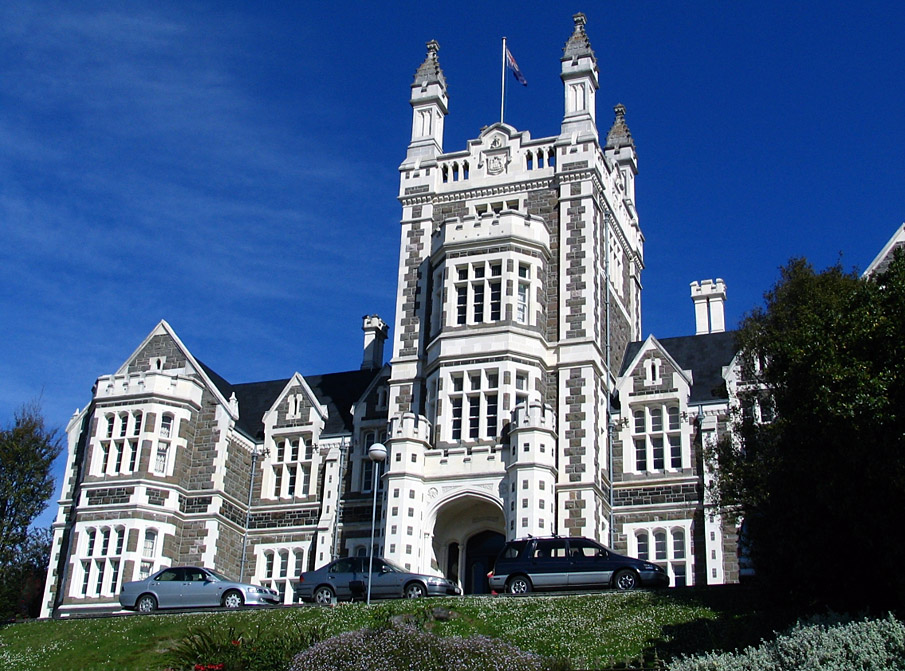
Work began on this building in July 1882 and it was completed by 1885. It replaced an earlier cottage built close to its present site in 1863-64.

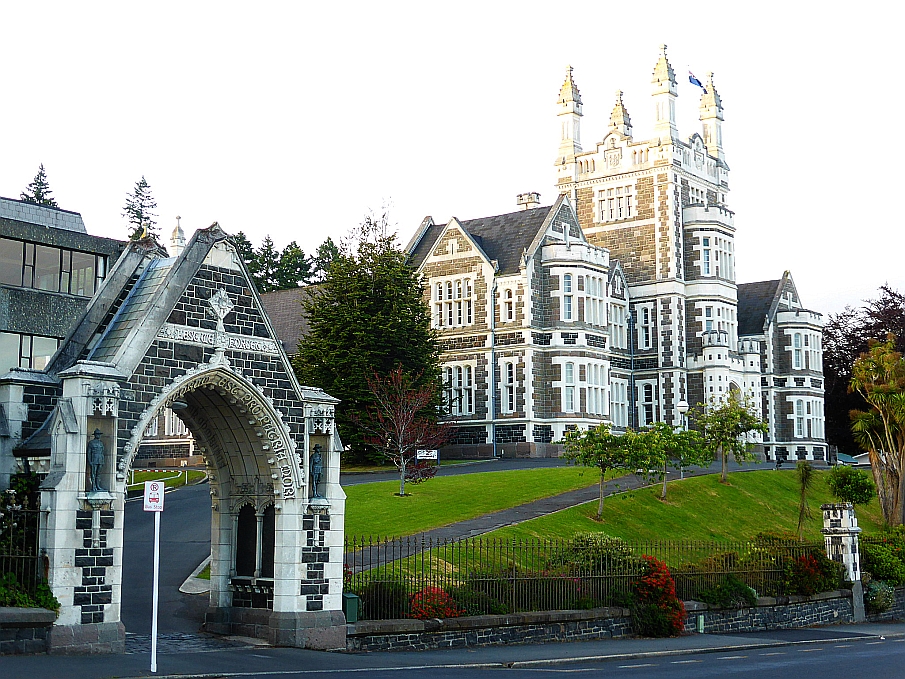
Otago Boys' High School is a famous Dunedin Landmark, situated on a hill above the city with the Town Belt as a backdrop. This handsome, neo-Gothic structure consists of a central block with projecting gabled wings and ornamental turrets, and is one of the best examples of late Victorian architecture to be found in Dunedin's rich heritage. It was designed by R.A. Lawson, one of Dunedin's foremost architects who was also responsible for what is probably New Zealand's finest neo-Gothic church, the First Church of Dunedin.

The school was built of three types of stone, dark Leith basalt, lighter Port Chalmers breccia and cream Oamaru limestone. This combination of contrasting materials adds a lively, picturesque appearance to the exterior, typical of much High Victorian architecture.

The building, constructed by W.A. Carlton, incorporates many examples of fine Victorian craftsmanship. Each of the towers have four elegant corner turrets with pierced parapets on the East Tower and battlements on the West. The overall effect of the front façade is reminiscent of a castle. Within the walls of the building is a new theatre, which replaced as Assembly Hall and four classrooms. The earthquake risk which necessitated the removal of these rooms has in turn provided an opportunity to give a safe, functional use to an old building.

Otago Boys' High School is an imposing and impressive legacy of Dunedin's prosperous past and one of the best examples of Dunedin's many fine public and educational buildings.
Otago Boys' High School (Tower Block), Dunedin. CC BY 2.0 Image courtesy of www.flickr.com | Stephen Colebourne | 19/12/2013 | Stephen Colebourne
Otago Boys' High School (Tower Block), Dunedin. CC BY-SA 3.0 Image courtesy of commons.wikimedia.org | Benchill | 25/10/2009 | Benchill - Wikimedia Commons
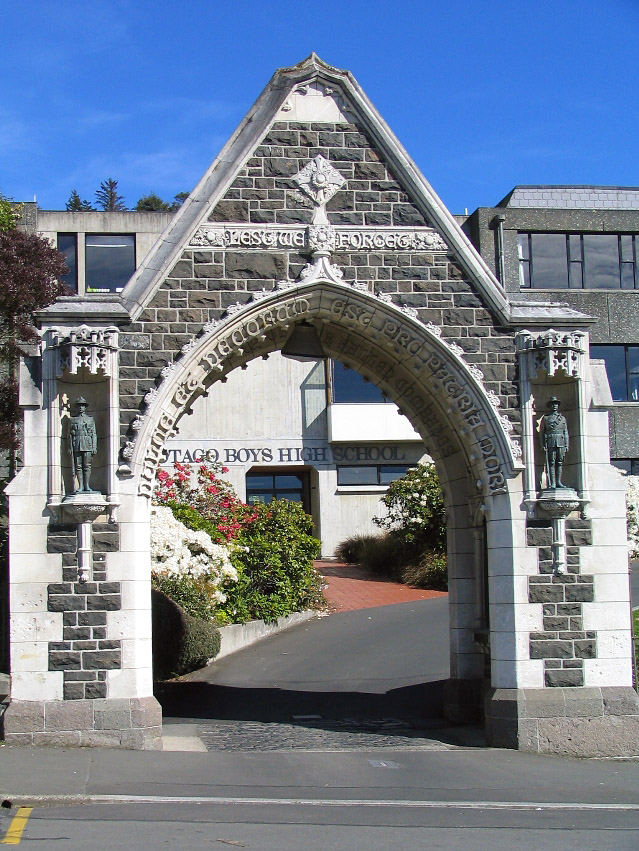
Otago Boys' High School (Tower Block), Dunedin. Memorial Arch. CC BY-SA 3.0 Image courtesy of commons.wikimedia.org | Benchill | 25/10/2009 | Benchill - Wikimedia Commons
Otago Boys' High School (Tower Block), Dunedin. CC BY 2.0 Image courtesy of www.flickr.com | Stephen Colebourne | 19/12/2013 | Stephen Colebourne
Otago Boys' High School (Tower Block), Dunedin. CC BY-SA 3.0 Image courtesy of commons.wikimedia.org | Benchill | 25/10/2009 | Benchill - Wikimedia Commons
Otago Boys' High School (Tower Block), Dunedin. Memorial Arch. CC BY-SA 3.0 Image courtesy of commons.wikimedia.org | Benchill | 25/10/2009 | Benchill - Wikimedia Commons

List Entry Information

Overview

Status
Listed

List Entry Status
Historic Place Category 1

Access
Private/No Public Access

List Number
375

Date Entered
28th June 1984

Date of Effect
28th June 1984

City/District Council
Dunedin City

Region
Otago Region

Extent of List Entry

Extent includes the part of the land described as Pt Sec 86 Blk 19 Town of Dunedin (NZ Gazette 1974 p.1599), Otago Land District and the building known as Otago Boys’ High School (Tower Block), thereon. Refer to the extent map tabled at the Heritage List/ Rārangi Kōrero Committee meeting on 4 June 2020.

Legal description

Pt Sec 86 Blk XIX Town of Dunedin (NZ Gazette 1974 p.1599), Otago Land District

Detailed List Entry

Construction Professional

Name

Lawson, Robert Arthur

Type

Architect

Biography

Born in Scotland, Lawson (1833-1902) began his professional career in Perth. At the age of 25 he moved to Melbourne and was engaged in goldmining and journalism before resuming architectural practice. In 1862 Lawson sailed for Dunedin, where his sketch plans had won the competition for the design of First Church. This was built 1867-73. Lawson went on to become one of the most important architects in New Zealand. First Church is regarded as his masterpiece and one of the finest nineteenth century churches in New Zealand. He was also responsible for the design of the Trinity Church (now Fortune Theatre), Dunedin (1869-70), the East Taieri Presbyterian Church (1870), and Knox Church, Dunedin (1874). He designed Park's School (1864) and the ANZ Bank (originally Union Bank, 1874). In Oamaru he designed the Bank of Otago (later National Bank building, 1870) and the adjoining Bank of New South Wales (now Forrester Gallery, 1881). See also: Ledgerwood, Norman, 2013. 'R.A. Lawson: Victorian Architect of Dunedin'. Historic Cemeteries Conservation NZ.

Construction Details

Start Year

1884

Type

Original Construction

Reference

Report Written By

This place was identified as significant under previous legislation with different information requirements. It remains significant under the current legislation. There is opportunity under our legislation and policies to add to this information. Further information about this place may be available from the Otago/Southland Office of Heritage New Zealand Pouhere Taonga. NZIA National Award Winners 1985 Please note that entry on the New Zealand Heritage List/Rarangi Korero identifies only the heritage values of the property concerned, and should not be construed as advice on the state of the property, or as a comment of its soundness or safety, including in regard to earthquake risk, safety in the event of fire, or insanitary conditions. This historic place was registered under the Historic Places Act 1980. The following text is the original citation considered by the NZHPT Board at the time of registration. Information in square brackets indicate modifications made after the paper was considered by the NZHPT Board.

Further Information

Current Usages

Former Usages

General Usage:: Education

Specific Usage: School

Themes

Web Links

Overview

Status

Listed

List Entry Status

Historic Place Category 1

Access

Private/No Public Access

List Number

375

Date Entered

28th June 1984

Date of Effect

28th June 1984

City/District Council

Dunedin City

Region

Otago Region

Extent of List Entry

Extent includes the part of the land described as Pt Sec 86 Blk 19 Town of Dunedin (NZ Gazette 1974 p.1599), Otago Land District and the building known as Otago Boys’ High School (Tower Block), thereon. Refer to the extent map tabled at the Heritage List/ Rārangi Kōrero Committee meeting on 4 June 2020.

Legal description

Pt Sec 86 Blk XIX Town of Dunedin (NZ Gazette 1974 p.1599), Otago Land District

Status

Listed

List Entry Status

Historic Place Category 1

Access

Private/No Public Access

List Number

375

Date Entered

28th June 1984

Date of Effect

28th June 1984

City/District Council

Dunedin City

Region

Otago Region

Extent of List Entry

Extent includes the part of the land described as Pt Sec 86 Blk 19 Town of Dunedin (NZ Gazette 1974 p.1599), Otago Land District and the building known as Otago Boys’ High School (Tower Block), thereon. Refer to the extent map tabled at the Heritage List/ Rārangi Kōrero Committee meeting on 4 June 2020.

Legal description

Pt Sec 86 Blk XIX Town of Dunedin (NZ Gazette 1974 p.1599), Otago Land District

Construction Information

Construction Professional

Name

Lawson, Robert Arthur

Type

Architect

Biography

Born in Scotland, Lawson (1833-1902) began his professional career in Perth. At the age of 25 he moved to Melbourne and was engaged in goldmining and journalism before resuming architectural practice. In 1862 Lawson sailed for Dunedin, where his sketch plans had won the competition for the design of First Church. This was built 1867-73. Lawson went on to become one of the most important architects in New Zealand. First Church is regarded as his masterpiece and one of the finest nineteenth century churches in New Zealand. He was also responsible for the design of the Trinity Church (now Fortune Theatre), Dunedin (1869-70), the East Taieri Presbyterian Church (1870), and Knox Church, Dunedin (1874). He designed Park's School (1864) and the ANZ Bank (originally Union Bank, 1874). In Oamaru he designed the Bank of Otago (later National Bank building, 1870) and the adjoining Bank of New South Wales (now Forrester Gallery, 1881). See also: Ledgerwood, Norman, 2013. 'R.A. Lawson: Victorian Architect of Dunedin'. Historic Cemeteries Conservation NZ.

Construction Details

Start Year

1884

Type

Original Construction

Construction Professional

Name

Lawson, Robert Arthur

Type

Architect

Biography

Born in Scotland, Lawson (1833-1902) began his professional career in Perth. At the age of 25 he moved to Melbourne and was engaged in goldmining and journalism before resuming architectural practice. In 1862 Lawson sailed for Dunedin, where his sketch plans had won the competition for the design of First Church. This was built 1867-73. Lawson went on to become one of the most important architects in New Zealand. First Church is regarded as his masterpiece and one of the finest nineteenth century churches in New Zealand. He was also responsible for the design of the Trinity Church (now Fortune Theatre), Dunedin (1869-70), the East Taieri Presbyterian Church (1870), and Knox Church, Dunedin (1874). He designed Park's School (1864) and the ANZ Bank (originally Union Bank, 1874). In Oamaru he designed the Bank of Otago (later National Bank building, 1870) and the adjoining Bank of New South Wales (now Forrester Gallery, 1881). See also: Ledgerwood, Norman, 2013. 'R.A. Lawson: Victorian Architect of Dunedin'. Historic Cemeteries Conservation NZ.

Construction Details

Start Year

1884

Type

Original Construction

Reference

Historical and Associated Iwi / Hapū / Whānau

Other Information

This place was identified as significant under previous legislation with different information requirements. It remains significant under the current legislation. There is opportunity under our legislation and policies to add to this information. Further information about this place may be available from the Otago/Southland Office of Heritage New Zealand Pouhere Taonga. NZIA National Award Winners 1985 Please note that entry on the New Zealand Heritage List/Rarangi Korero identifies only the heritage values of the property concerned, and should not be construed as advice on the state of the property, or as a comment of its soundness or safety, including in regard to earthquake risk, safety in the event of fire, or insanitary conditions. This historic place was registered under the Historic Places Act 1980. The following text is the original citation considered by the NZHPT Board at the time of registration. Information in square brackets indicate modifications made after the paper was considered by the NZHPT Board.

Historical and Associated Iwi / Hapū / Whānau

Other Information

This place was identified as significant under previous legislation with different information requirements. It remains significant under the current legislation. There is opportunity under our legislation and policies to add to this information. Further information about this place may be available from the Otago/Southland Office of Heritage New Zealand Pouhere Taonga. NZIA National Award Winners 1985 Please note that entry on the New Zealand Heritage List/Rarangi Korero identifies only the heritage values of the property concerned, and should not be construed as advice on the state of the property, or as a comment of its soundness or safety, including in regard to earthquake risk, safety in the event of fire, or insanitary conditions. This historic place was registered under the Historic Places Act 1980. The following text is the original citation considered by the NZHPT Board at the time of registration. Information in square brackets indicate modifications made after the paper was considered by the NZHPT Board.

Further Information

Former Usages

General Usage: Education

Specific Usage: School

Former Usages

General Usage: Education

Specific Usage: School

Location

Loading
Stay up to date with Heritage this month