DonateMembershipVisit Heritage
  • Tūrangawaewae
    Places
  • Tira Māori
    Māori Heritage
  • Poutairangahia
    Archaeology
  • Rauemi
    Resources
  • Mō Tātou
    About Us
  • New Zealand Heritage List
  • Nominate and submit
  • Explore the List
  • National Historic Landmarks
  • Plaques
  • Rainbow List Project
  • Lost heritage
  • Visit Heritage
  • Our properties
  • Turnbull House Project
  • Collections
  • Shop
  • Tohu Whenua
  • Tira Māori
  • Conserving Māori heritage
  • Marae built heritage
  • Māori heritage on the List
  • Hinemihi—Te Hokinga Mai
  • What is archaeology?
  • Is there a site on my property?
  • What are my legal requirements?
  • Affecting an archaeological site
  • Declaring an archaeological site
  • Archaeology FAQs
  • Archaeology Digital Library
  • Archaeology guidelines and templates
  • Resources
  • Funding
  • Publications
  • Sustainable management guides
  • Disaster recovery
  • Podcasts & digital resources
  • Education Hub
  • Conservation plans
  • About
  • Board
  • Māori Heritage Council
  • Senior Staff
  • Offices
  • Contact us
  • Careers
  • Covenants
  • Fast-track
  • Corporate documents
  • Currently consulting on
  • Our submissions
  • News
  • Covid-19 response
Quick links
Rārangi Kōrero | The List
Explore the List
National Historic Landmarks
Ngā Manawhenua o Aotearoa me ōna Kōrero Tūturu
Quick links
Tapuwae
A Vision for Places of Māori Heritage
Funding for Māori Heritage
Resources
Quick links
Archaeological Authority Portal
Applying for an archaeological authority
Archaeology FAQs
Browse the most frequently asked questions about archaeological authorities and the archaeological process.
Quick links
Quick links
News
News Keep up to date with Heritage New Zealand Pouhere Taonga
Membership
Membership Find out more and sign up today
DonateMembershipVisit Heritage
  • Tūrangawaewae
    Places
  • Tira Māori
    Māori Heritage
  • Poutairangahia
    Archaeology
  • Rauemi
    Resources
  • Mō Tātou
    About Us
  • New Zealand Heritage List
  • Nominate and submit
  • Explore the List
  • National Historic Landmarks
  • Plaques
  • Rainbow List Project
  • Lost heritage
  • Visit Heritage
  • Our properties
  • Turnbull House Project
  • Collections
  • Shop
  • Tohu Whenua
  • Tira Māori
  • Conserving Māori heritage
  • Marae built heritage
  • Māori heritage on the List
  • Hinemihi—Te Hokinga Mai
  • What is archaeology?
  • Is there a site on my property?
  • What are my legal requirements?
  • Affecting an archaeological site
  • Declaring an archaeological site
  • Archaeology FAQs
  • Archaeology Digital Library
  • Archaeology guidelines and templates
  • Resources
  • Funding
  • Publications
  • Sustainable management guides
  • Disaster recovery
  • Podcasts & digital resources
  • Education Hub
  • Conservation plans
  • About
  • Board
  • Māori Heritage Council
  • Senior Staff
  • Offices
  • Contact us
  • Careers
  • Covenants
  • Fast-track
  • Corporate documents
  • Currently consulting on
  • Our submissions
  • News
  • Covid-19 response
Quick links
Rārangi Kōrero | The List
Explore the List
National Historic Landmarks
Ngā Manawhenua o Aotearoa me ōna Kōrero Tūturu
Quick links
Tapuwae
A Vision for Places of Māori Heritage
Funding for Māori Heritage
Resources
Quick links
Archaeological Authority Portal
Applying for an archaeological authority
Archaeology FAQs
Browse the most frequently asked questions about archaeological authorities and the archaeological process.
Quick links
Quick links
News
News Keep up to date with Heritage New Zealand Pouhere Taonga
Membership
Membership Find out more and sign up today
  • Places
  • Nominate and submit
  • National Historic Landmarks
  • Places
  • Nominate and submit
  • National Historic Landmarks
  • Tira Māori
  • Conserving Māori heritage
  • Marae built heritage
  • Tira Māori
  • Conserving Māori heritage
  • Marae built heritage
  • Archaeological authorities
  • Archaeology Digital Library
  • Archaeological authorities
  • Archaeology Digital Library
  • All resources
  • Publications
  • Funding
  • All resources
  • Publications
  • Funding
  • FAQs
  • FAQs
Follow us on:
Places
  • Places
  • Nominate and submit
  • National Historic Landmarks
Tira Māori
  • Tira Māori
  • Conserving Māori heritage
  • Marae built heritage
Archaeology
  • Archaeological authorities
  • Archaeology Digital Library
Resources
  • All resources
  • Publications
  • Funding
FAQs
  • FAQs
Follow us on
HomePrivacyTerms and conditionsAbout this site
© Heritage New Zealand Pouhere Taonga 2026.
 
Lennel

102 Albert Street, INVERCARGILL

Private

Historic Place Category 1

List No. 389

Quick links:
List GalleryLocationDetails
Lennel provides a particularly fine example of a large Victorian house and its gardens. Built in 1880 Lennel has architectural value and outstanding historic values as the home of John Turnbull Thompson, a significant figure in the settlement of Otago and Southland during the 19th century.

Lennel is situated between two rivers, the Waihopai and the Ōtārewa Creek. Waihopai is the Māori name used today for Invercargill. Ōtārewa is the traditional Māori name for Ōtepuni Creek, which flows in a westerly direction through Invercargill and into the Waihōpai River. Southern Māori travelled extensively throughout the region via rivers. Traditionally, the river was a valuable food source for tuna (eels) and inanga as well as the shellfish found in the estuary. Other important resources included harakeke (flax) and tī kōuka (cabbage tree) used for clothing, footwear and weaving.

The arrival of European colonists saw the development of the area for permanent settlers. John Turnbull Thomson (1821-1884) surveyed Invercargill in 1856 and had himself purchased several blocks in the late 1850s. He had surveyed areas in Singapore and the jungles of Penang before he was offered the position of Chief Surveyor of Otago in the 1850s. His first priority in this role was to choose the site for the proposed town of Invercargill, where his subsequent plans included making the main streets twice the normal width. The system was so popular that it was adopted for the whole of New Zealand and Thomson was made Surveyor-General. When it was time for him to retire in 1880, he wound up his affairs in Wellington and moved to Invercargill to build a house, Lennel, similar to a house on a Northumbrian farm of Glororum where he was born. He died in 1884, two years after Lennel’s completion.

The original Thomson estate covered the area known as Gladstone which was later brought within the Invercargill City boundary in 1919. Tenders were advertised for the dwelling house on 16 July 1880 and a separate tender was advertised the next year for the outhouses and additions to Lennel. The architect and engineer of Lennel is uncertain and has been attributed to both Thomson himself and/or possibly the notable architect, Frederick William Burwell (1846-1915). The bricks were transported along the Waihopai River.

The house is two storied and extends back from the relatively narrow front which is the width of two rooms and a hall. The bottom floor consists of a drawing room, dining room, study, nursery, kitchen, scullery, wash house, garage and about six storerooms. The upper floor, which was reached by two staircases, and originally contained ten bedrooms, dressing rooms and bathrooms. The two front rooms still have their original fireplaces, black marble in the dining room and white marble in the drawing room. Both rooms have coffered ceilings - dark varnished wood in the dining room and white plaster in the drawing room. The hall was originally floored with Minton tiles and today the floors have been taken back to wood and polished in the hall and the drawing room. The exterior is largely unmodified except for the addition of a bay window to an upstairs bedroom before 1927. The walls are double brick plastered over. The roof was originally slate but has been recently reroofed and repaired. The back staircase in the servants' quarters has been removed at some point.

The gardens at Lennel are an integral part of the story of the house and the historic development of the original Thomson estate. The surviving portion of gardens are a direct remnant of the original planting scheme laid out by the Thomson family and head gardener Albert Newman (1852 - 1931), and as such hold as much historic significance as the house. The garden was used frequently for charity and public events as well as parties. The house still has approximately one and half acres of grounds with mature rhododendrons, limes, copper beeches, horse chestnuts and other trees.

Following the death of Turnbull Thomson’s wife Jane in 1908, two of their daughters remained in the house. Lennel went up for sale in 1925 and it was purchased by FG Hall-Jones. Majorie Hall-Jones was John Turnbull Thomson’s granddaughter, and the house remained in the family until 1992.

Jocelyn and Denys Finlayson, bought the house in 1998 for $90,000 ($168, 090 today) at a bank auction, and focused largely on renovating its interiors. Jocelyn envisaged passing the house on to subsequent generations, just as the Turnbull Thomson family had done. Their son Will and wife Laura Thompson purchased the property in. Laura has digitised historic garden records detailing more than 600 plants in the garden that Patricia Hall-Jones, the wife of John Turnbull Thomson’s great-grandson, had inventoried, and have added what now remains in the garden to these records.

Overall, through its architecture Lennel demonstrates a very significant example of late nineteenth century taste and affluence, which survives in a very intact and interpretable state today. It provides tangible evidence of the influence (even possibly design) and preferences of its original owner, John Turnbull Thomson, and with the garden, makes a significant contribution to the story of Invercargill and the Thomson family legacy.
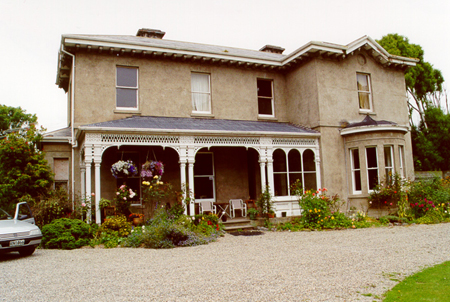
Lennel, 102 Albert St, Invercargill | Heritage New Zealand

List Entry Information

Overview

Status
Listed

List Entry Status
Historic Place Category 1

Access
Private/No Public Access

List Number
389

Date Entered
27th July 1988

Date of Effect
27th July 1988

City/District Council
Invercargill City

Region
Southland Region

Extent of List Entry

Extent includes the land/part of the land described as Lot 1 DP 4748 & Lot 2 DP 10893 (RT SL6C/774), Southland Land District and the building known as Lennel, thereon.

Legal description

Lot 1 DP 4748 & Lot 2 DP 10893 (RT SL6C/774),Southland Land District

Detailed List Entry
Significance

Historic Significance

Historical Significance or Value John Turnbull Thomson was a very important man in the settlement of Otago and Southland. His survey methods allowed for rapid settlement by run holders before the gold rushes began. The system had such advantages that it was adopted for the whole of New Zealand and Thomson was made Surveyor-General. Thomson had surveyed off Invercargill in 1856 and had himself purchased a number of blocks in the late 1850s. When it was time for him to retire in 1880, he wound up his affairs in Wellington and shifted to Invercargill to build a house similar to that on the Northumbrian farm of Glororum where he was born. Unfortunately he died in 1884, two years after its competition, but his descendants have lived in it ever since.

Physical Significance

ARCHITECTURAL SIGNIFICANCE: It is a particularly fine example of a large Victorian house. TOWNSCAPE/LANDMARK SIGNIFICANCE: The house is set down a drive in among its trees and cannot be seen from the road.

Construction Details

Start Year

1880

Type

Original Construction

Start Year

1881

Type

Addition

Description

Outhouses and additions, garden walls and gate pillars

Start Year

1893

Type

Modification

Description

Alteration and Painting

Start Year

1927

Type

Addition

Description

Bay Window

Start Year

2024

Type

Refurbishment/renovation

Description

Replacement of roof

Construction Materials

The walls are double brick plastered over. The roof is mostly slate but the veranda and the more recent garage are roofed with corrugated iron. There is flat iron over the front bay window. The numerous brackets under the eaves are concrete. The house is two storied and extends well back from the relatively narrow front which is the width of two rooms and a hall. The bottom floor consists of a drawing room, dining room, study, nursery, kitchen, scullery, wash house, garage and about six store rooms. The upper floor which was reached by two staircases contains about ten bedrooms, dressing rooms and bath rooms. The two front rooms still have their original fireplaces, black marble in the dining room and white marble in the drawing room. Both rooms have coffered ceilings - dark varnished wood in the dining room and white plaster in the drawing room. The hall is floored in coloured tiles. (The rest of the house was not examined because of a misunderstanding with a Regional Committee member). The house still has approx. one and half acres of grounds with mature rhododendrons, limes, copper beeches, horse chestnuts and other trees. There is a simply designed glasshouse on the north west corner of the house. The grounds included a tennis court, croquet green, orchard, stable, well and further greenhouses.

Notable Features

Its association with J T Thomson, its unmodified nature, its mature garden.

Physical Description

ARCHITECTURAL DESCRIPTION (Style): It is a plain, solid, Victorian house. It is said to be similar to the Northumberland house where Thomson was born. MODIFICATIONS: The exterior is largely unmodified except for the addition of a bay window to an upstairs bedroom before 1927. The garage and other back store rooms may be later additions. The back staircase in the servants' quarters has been removed. Any modifications to rooms other the two front rooms could not be documented. The building is in need of repair.

Reference

Completion Date

17th December 2024

Report Written By

Sarah Gallagher and Alison Breese

Information Sources

Heritage New Zealand

Heritage New Zealand

Hall-Jones, 1992

John Hall-Jones, John Turnbull Thomson: First Surveyor-General of New Zealand, McIndoe, Dunedin, 1992

Hall-Jones, 2013

Hall-Jones, John., Old Invercargill, New Zealand, 2013, p. 79.

Hall-Jones, 1990

Hall-Jones, John., 'Thomson, John Turnbull', Dictionary of New Zealand Biography, Te Ara - the Encyclopedia of New Zealand, https://teara.govt.nz/en/biographies/1t97/thomson-john-turnbull (accessed 30 October 2024)

Hall-Jones, 1971

Hall-Jones, John, Mr Surveyor Thomson – Early Days in Otago and Southland, Sydney, 1971.

Report Written By

A fully referenced copy of the Upgrade Report is available upon request from the Southern Area Office of Heritage New Zealand Pouhere Taonga Disclaimer Please note that entry on the New Zealand Heritage List/Rārangi Kōrero identifies only the heritage values of the property concerned, and should not be construed as advice on the state of the property, or as a comment of its soundness or safety, including in regard to earthquake risk, safety in the event of fire, or insanitary conditions. Archaeological sites are protected by the Heritage New Zealand Pouhere Taonga Act 2014, regardless of whether they are entered on the New Zealand Heritage List/Rārangi Kōrero or not. Archaeological sites include ‘places associated with pre-1900 human activity, where there may be evidence relating to the history of New Zealand’. This List entry report should not be read as a statement on whether or not the archaeological provisions of the Act apply to the property (s) concerned. Please contact your local Heritage New Zealand office for archaeological advice This historic place was registered under the Historic Places Act 1980. This report includes the text from the original Building Classification Committee report considered by the NZHPT Board at the time of registration. Please note that entry on the New Zealand Heritage List/Rarangi Korero identifies only the heritage values of the property concerned, and should not be construed as advice on the state of the property, or as a comment of its soundness or safety, including in regard to earthquake risk, safety in the event of fire, or insanitary conditions.

Further Information

Current Usages

Uses: Accommodation

Specific Usage: House

Former Usages

General Usage:: Accommodation

Specific Usage: House

Themes

Web Links

Overview

Status

Listed

List Entry Status

Historic Place Category 1

Access

Private/No Public Access

List Number

389

Date Entered

27th July 1988

Date of Effect

27th July 1988

City/District Council

Invercargill City

Region

Southland Region

Extent of List Entry

Extent includes the land/part of the land described as Lot 1 DP 4748 & Lot 2 DP 10893 (RT SL6C/774), Southland Land District and the building known as Lennel, thereon.

Legal description

Lot 1 DP 4748 & Lot 2 DP 10893 (RT SL6C/774),Southland Land District

Status

Listed

List Entry Status

Historic Place Category 1

Access

Private/No Public Access

List Number

389

Date Entered

27th July 1988

Date of Effect

27th July 1988

City/District Council

Invercargill City

Region

Southland Region

Extent of List Entry

Extent includes the land/part of the land described as Lot 1 DP 4748 & Lot 2 DP 10893 (RT SL6C/774), Southland Land District and the building known as Lennel, thereon.

Legal description

Lot 1 DP 4748 & Lot 2 DP 10893 (RT SL6C/774),Southland Land District

Significance

Why is this place significant?

Historic Significance

Historical Significance or Value John Turnbull Thomson was a very important man in the settlement of Otago and Southland. His survey methods allowed for rapid settlement by run holders before the gold rushes began. The system had such advantages that it was adopted for the whole of New Zealand and Thomson was made Surveyor-General. Thomson had surveyed off Invercargill in 1856 and had himself purchased a number of blocks in the late 1850s. When it was time for him to retire in 1880, he wound up his affairs in Wellington and shifted to Invercargill to build a house similar to that on the Northumbrian farm of Glororum where he was born. Unfortunately he died in 1884, two years after its competition, but his descendants have lived in it ever since.

Physical Significance

ARCHITECTURAL SIGNIFICANCE: It is a particularly fine example of a large Victorian house. TOWNSCAPE/LANDMARK SIGNIFICANCE: The house is set down a drive in among its trees and cannot be seen from the road.

Why is this place significant?

Historic Significance

Historical Significance or Value John Turnbull Thomson was a very important man in the settlement of Otago and Southland. His survey methods allowed for rapid settlement by run holders before the gold rushes began. The system had such advantages that it was adopted for the whole of New Zealand and Thomson was made Surveyor-General. Thomson had surveyed off Invercargill in 1856 and had himself purchased a number of blocks in the late 1850s. When it was time for him to retire in 1880, he wound up his affairs in Wellington and shifted to Invercargill to build a house similar to that on the Northumbrian farm of Glororum where he was born. Unfortunately he died in 1884, two years after its competition, but his descendants have lived in it ever since.

Physical Significance

ARCHITECTURAL SIGNIFICANCE: It is a particularly fine example of a large Victorian house. TOWNSCAPE/LANDMARK SIGNIFICANCE: The house is set down a drive in among its trees and cannot be seen from the road.

Construction Information

Construction Details

Start Year

1880

Type

Original Construction

Start Year

1881

Type

Addition

Description

Outhouses and additions, garden walls and gate pillars

Start Year

1893

Type

Modification

Description

Alteration and Painting

Start Year

1927

startYearCirca

Type

Addition

Description

Bay Window

Start Year

2024

Type

Refurbishment/renovation

Description

Replacement of roof

Construction Materials

The walls are double brick plastered over. The roof is mostly slate but the veranda and the more recent garage are roofed with corrugated iron. There is flat iron over the front bay window. The numerous brackets under the eaves are concrete. The house is two storied and extends well back from the relatively narrow front which is the width of two rooms and a hall. The bottom floor consists of a drawing room, dining room, study, nursery, kitchen, scullery, wash house, garage and about six store rooms. The upper floor which was reached by two staircases contains about ten bedrooms, dressing rooms and bath rooms. The two front rooms still have their original fireplaces, black marble in the dining room and white marble in the drawing room. Both rooms have coffered ceilings - dark varnished wood in the dining room and white plaster in the drawing room. The hall is floored in coloured tiles. (The rest of the house was not examined because of a misunderstanding with a Regional Committee member). The house still has approx. one and half acres of grounds with mature rhododendrons, limes, copper beeches, horse chestnuts and other trees. There is a simply designed glasshouse on the north west corner of the house. The grounds included a tennis court, croquet green, orchard, stable, well and further greenhouses.

Notable Features

Its association with J T Thomson, its unmodified nature, its mature garden.

Construction Details

Start Year

1880

Type

Original Construction

Start Year

1881

Type

Addition

Description

Outhouses and additions, garden walls and gate pillars

Start Year

1893

Type

Modification

Description

Alteration and Painting

Start Year

1927

startYearCirca

Type

Addition

Description

Bay Window

Start Year

2024

Type

Refurbishment/renovation

Description

Replacement of roof

Construction Materials

The walls are double brick plastered over. The roof is mostly slate but the veranda and the more recent garage are roofed with corrugated iron. There is flat iron over the front bay window. The numerous brackets under the eaves are concrete. The house is two storied and extends well back from the relatively narrow front which is the width of two rooms and a hall. The bottom floor consists of a drawing room, dining room, study, nursery, kitchen, scullery, wash house, garage and about six store rooms. The upper floor which was reached by two staircases contains about ten bedrooms, dressing rooms and bath rooms. The two front rooms still have their original fireplaces, black marble in the dining room and white marble in the drawing room. Both rooms have coffered ceilings - dark varnished wood in the dining room and white plaster in the drawing room. The hall is floored in coloured tiles. (The rest of the house was not examined because of a misunderstanding with a Regional Committee member). The house still has approx. one and half acres of grounds with mature rhododendrons, limes, copper beeches, horse chestnuts and other trees. There is a simply designed glasshouse on the north west corner of the house. The grounds included a tennis court, croquet green, orchard, stable, well and further greenhouses.

Notable Features

Its association with J T Thomson, its unmodified nature, its mature garden.

Physical Description

ARCHITECTURAL DESCRIPTION (Style): It is a plain, solid, Victorian house. It is said to be similar to the Northumberland house where Thomson was born. MODIFICATIONS: The exterior is largely unmodified except for the addition of a bay window to an upstairs bedroom before 1927. The garage and other back store rooms may be later additions. The back staircase in the servants' quarters has been removed. Any modifications to rooms other the two front rooms could not be documented. The building is in need of repair.

ARCHITECTURAL DESCRIPTION (Style): It is a plain, solid, Victorian house. It is said to be similar to the Northumberland house where Thomson was born. MODIFICATIONS: The exterior is largely unmodified except for the addition of a bay window to an upstairs bedroom before 1927. The garage and other back store rooms may be later additions. The back staircase in the servants' quarters has been removed. Any modifications to rooms other the two front rooms could not be documented. The building is in need of repair.

Reference

Historical and Associated Iwi / Hapū / Whānau

Completion Date

17th December 2024

Report Written By

Sarah Gallagher and Alison Breese

Information Sources

Heritage New Zealand

Heritage New Zealand

Hall-Jones, 1992

John Hall-Jones, John Turnbull Thomson: First Surveyor-General of New Zealand, McIndoe, Dunedin, 1992

Hall-Jones, 2013

Hall-Jones, John., Old Invercargill, New Zealand, 2013, p. 79.

Hall-Jones, 1990

Hall-Jones, John., 'Thomson, John Turnbull', Dictionary of New Zealand Biography, Te Ara - the Encyclopedia of New Zealand, https://teara.govt.nz/en/biographies/1t97/thomson-john-turnbull (accessed 30 October 2024)

Hall-Jones, 1971

Hall-Jones, John, Mr Surveyor Thomson – Early Days in Otago and Southland, Sydney, 1971.

Other Information

A fully referenced copy of the Upgrade Report is available upon request from the Southern Area Office of Heritage New Zealand Pouhere Taonga Disclaimer Please note that entry on the New Zealand Heritage List/Rārangi Kōrero identifies only the heritage values of the property concerned, and should not be construed as advice on the state of the property, or as a comment of its soundness or safety, including in regard to earthquake risk, safety in the event of fire, or insanitary conditions. Archaeological sites are protected by the Heritage New Zealand Pouhere Taonga Act 2014, regardless of whether they are entered on the New Zealand Heritage List/Rārangi Kōrero or not. Archaeological sites include ‘places associated with pre-1900 human activity, where there may be evidence relating to the history of New Zealand’. This List entry report should not be read as a statement on whether or not the archaeological provisions of the Act apply to the property (s) concerned. Please contact your local Heritage New Zealand office for archaeological advice This historic place was registered under the Historic Places Act 1980. This report includes the text from the original Building Classification Committee report considered by the NZHPT Board at the time of registration. Please note that entry on the New Zealand Heritage List/Rarangi Korero identifies only the heritage values of the property concerned, and should not be construed as advice on the state of the property, or as a comment of its soundness or safety, including in regard to earthquake risk, safety in the event of fire, or insanitary conditions.

Historical and Associated Iwi / Hapū / Whānau

Completion Date

17th December 2024

Report Written By

Sarah Gallagher and Alison Breese

Information Sources

Heritage New Zealand

Heritage New Zealand

Hall-Jones, 1992

John Hall-Jones, John Turnbull Thomson: First Surveyor-General of New Zealand, McIndoe, Dunedin, 1992

Hall-Jones, 2013

Hall-Jones, John., Old Invercargill, New Zealand, 2013, p. 79.

Hall-Jones, 1990

Hall-Jones, John., 'Thomson, John Turnbull', Dictionary of New Zealand Biography, Te Ara - the Encyclopedia of New Zealand, https://teara.govt.nz/en/biographies/1t97/thomson-john-turnbull (accessed 30 October 2024)

Hall-Jones, 1971

Hall-Jones, John, Mr Surveyor Thomson – Early Days in Otago and Southland, Sydney, 1971.

Other Information

A fully referenced copy of the Upgrade Report is available upon request from the Southern Area Office of Heritage New Zealand Pouhere Taonga Disclaimer Please note that entry on the New Zealand Heritage List/Rārangi Kōrero identifies only the heritage values of the property concerned, and should not be construed as advice on the state of the property, or as a comment of its soundness or safety, including in regard to earthquake risk, safety in the event of fire, or insanitary conditions. Archaeological sites are protected by the Heritage New Zealand Pouhere Taonga Act 2014, regardless of whether they are entered on the New Zealand Heritage List/Rārangi Kōrero or not. Archaeological sites include ‘places associated with pre-1900 human activity, where there may be evidence relating to the history of New Zealand’. This List entry report should not be read as a statement on whether or not the archaeological provisions of the Act apply to the property (s) concerned. Please contact your local Heritage New Zealand office for archaeological advice This historic place was registered under the Historic Places Act 1980. This report includes the text from the original Building Classification Committee report considered by the NZHPT Board at the time of registration. Please note that entry on the New Zealand Heritage List/Rarangi Korero identifies only the heritage values of the property concerned, and should not be construed as advice on the state of the property, or as a comment of its soundness or safety, including in regard to earthquake risk, safety in the event of fire, or insanitary conditions.

Further Information

Current Usages

Uses: Accommodation

Specific Usage: House

Former Usages

General Usage: Accommodation

Specific Usage: House

Current Usages

Uses: Accommodation

Specific Usage: House

Former Usages

General Usage: Accommodation

Specific Usage: House

Location

Loading
Related listings
John Turnbull Thomson Mausoleum and Family Plot, Invercargill
John Turnbull Thomson Mausoleum and Family Plot
John Turnbull Thomson Mausoleum and Family Plot, Invercargill
John Turnbull Thomson Mausoleum and Family Plot
Stay up to date with Heritage this month