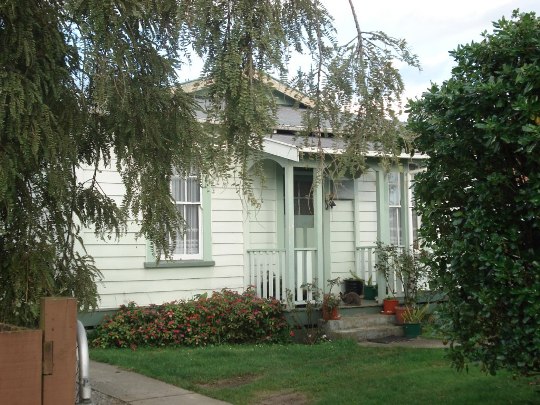
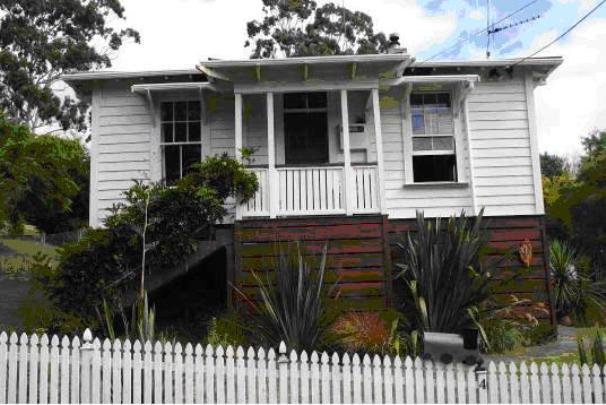
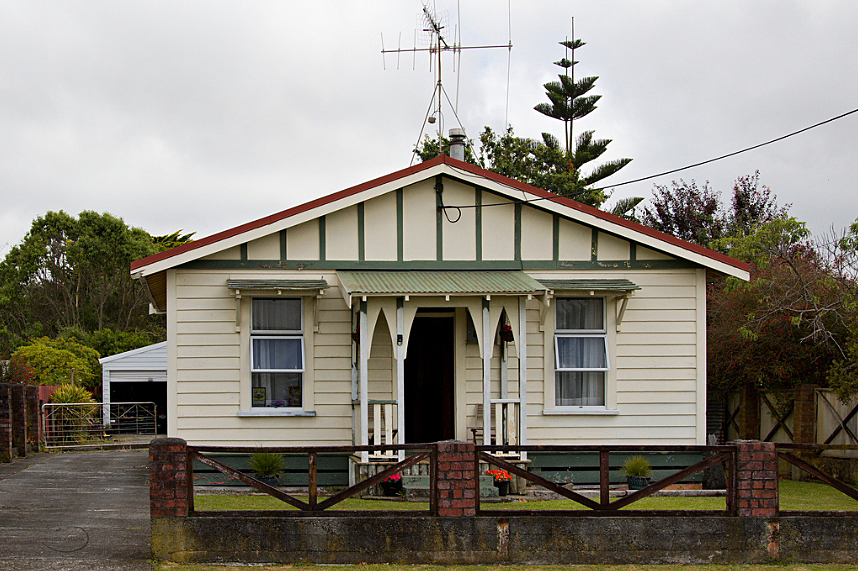
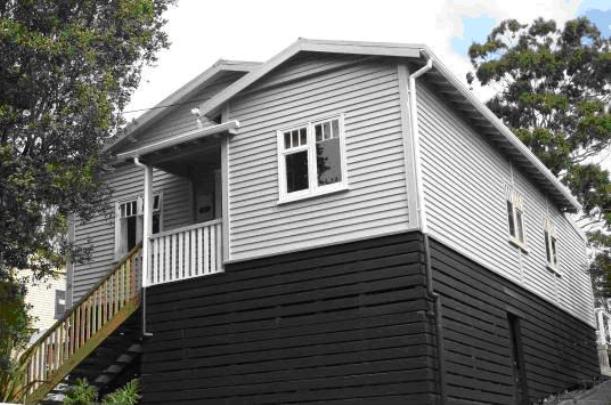
The former Railway House at 29 Keepa Street, Levin, is one of four built here in 1926 to the Frankton Railway House Factory’s standard pattern known as No.2 Class B Plan AB296. The Railway House is of historical, architectural, and social significance. The house is an example of the many specifically designed and built at Frankton Junction under the New Zealand Railway Housing Scheme and as such is significant in the history of state housing in New Zealand. These houses also played an important role in providing security and establishing an identifiable community for the railway workers.
The New Zealand Railways Department established the Railway Housing Scheme under William Ferguson Massey (1856-1925) to provide housing for its stationmasters and railway workers after a shortage of accommodation from 1900. An Architectural Branch was set up by the Railway Department in 1919, with George Troup (1863-1941) responsible for supervising the design and construction of the railway houses. In 1921-1922, a railway housing factory and saw mill were built in Frankton near Hamilton, to construct kitset houses that would be assembled on future housing sites around the North Island to house the Railways staff and their families.
800 acres of the Horowhenua block that was under the guardianship of Te Keepa Te Rangihiwinui (1820s-1898) was given to William Sievwright, a solicitor from Gisborne in 1886. Peter Bartholomew (1840-1918), a timber merchant from Levin, purchased a large amount of this land, bounded by Keepa Street, Oxford Street, Hokio Beach Road, and Mabel Street, in 1887. After Bartholomew’s death, in 1925 auctioneers Abraham & Williams Ltd approached New Zealand Railways offering Keepa Street lots 16, 18, 20, and 22 of the Bartholomew Estate land sale at £30 a lot, which New Zealand Railways accepted and bought in 1925-1926. After purchasing the lots, New Zealand Railways built the prefabricated houses cut from the Frankton Railway House Factory at Frankton Junction on the Keepa Street lots.
The Railway House at 29 Keepa Street (Lot 18), was built to a standardised factory plan (No.2 Class B Plan AB296) with a B style porch and roof on the 1217m² site in 1926. The bungalow style house is made from timber sourced from the Railways’ own forests in the central North Island, and has a hipped corrugated iron roof with a small gable at the top. The floor plan of this house reflects that it was purposely designed for families. It had three bedrooms, a parlour, kitchen, bathroom, laundry, front porch, and outhouse.
With a decline in the rail workforce in the 1980s, the distinctive railway communities began to diminish leaving New Zealand Railways to sell its houses to private buyers or find other uses for them. In 1983, New Zealand Railways sold 29 Keepa Street to a private buyer. Since its purchase, a garage has been installed on the property and the house has undergone several interior modifications, such as a kitchen/dining room extension, all to better suit a modern lifestyle.
The New Zealand Railways Department established the Railway Housing Scheme under William Ferguson Massey (1856-1925) to provide housing for its stationmasters and railway workers after a shortage of accommodation from 1900. An Architectural Branch was set up by the Railway Department in 1919, with George Troup (1863-1941) responsible for supervising the design and construction of the railway houses. In 1921-1922, a railway housing factory and saw mill were built in Frankton near Hamilton, to construct kitset houses that would be assembled on future housing sites around the North Island to house the Railways staff and their families.
800 acres of the Horowhenua block that was under the guardianship of Te Keepa Te Rangihiwinui (1820s-1898) was given to William Sievwright, a solicitor from Gisborne in 1886. Peter Bartholomew (1840-1918), a timber merchant from Levin, purchased a large amount of this land, bounded by Keepa Street, Oxford Street, Hokio Beach Road, and Mabel Street, in 1887. After Bartholomew’s death, in 1925 auctioneers Abraham & Williams Ltd approached New Zealand Railways offering Keepa Street lots 16, 18, 20, and 22 of the Bartholomew Estate land sale at £30 a lot, which New Zealand Railways accepted and bought in 1925-1926. After purchasing the lots, New Zealand Railways built the prefabricated houses cut from the Frankton Railway House Factory at Frankton Junction on the Keepa Street lots.
The Railway House at 29 Keepa Street (Lot 18), was built to a standardised factory plan (No.2 Class B Plan AB296) with a B style porch and roof on the 1217m² site in 1926. The bungalow style house is made from timber sourced from the Railways’ own forests in the central North Island, and has a hipped corrugated iron roof with a small gable at the top. The floor plan of this house reflects that it was purposely designed for families. It had three bedrooms, a parlour, kitchen, bathroom, laundry, front porch, and outhouse.
With a decline in the rail workforce in the 1980s, the distinctive railway communities began to diminish leaving New Zealand Railways to sell its houses to private buyers or find other uses for them. In 1983, New Zealand Railways sold 29 Keepa Street to a private buyer. Since its purchase, a garage has been installed on the property and the house has undergone several interior modifications, such as a kitchen/dining room extension, all to better suit a modern lifestyle.