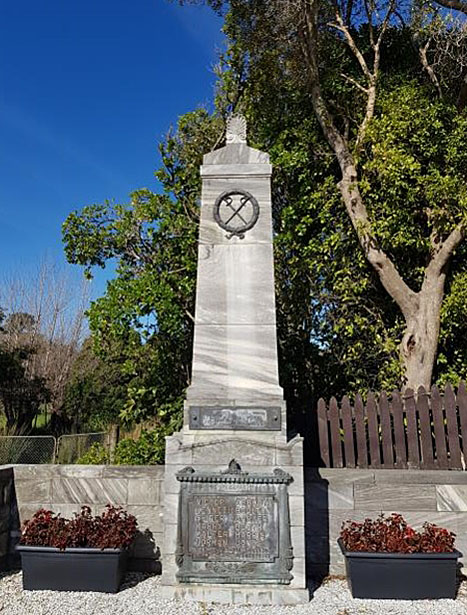
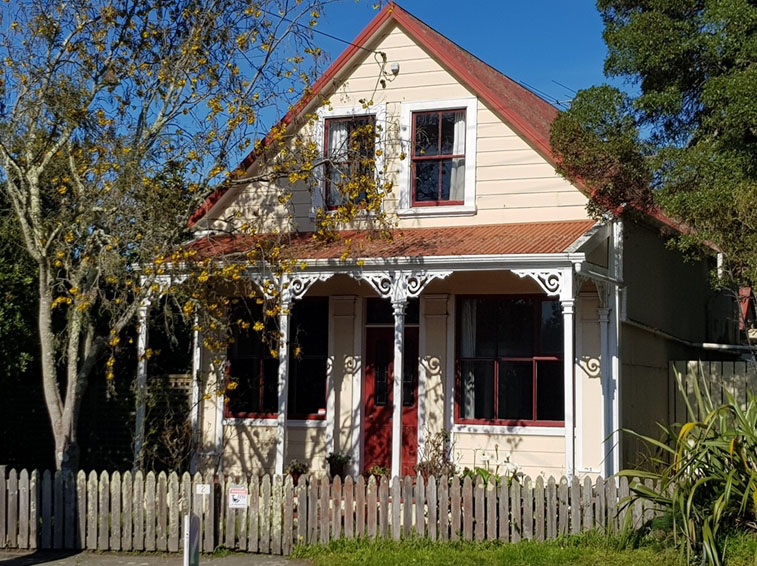
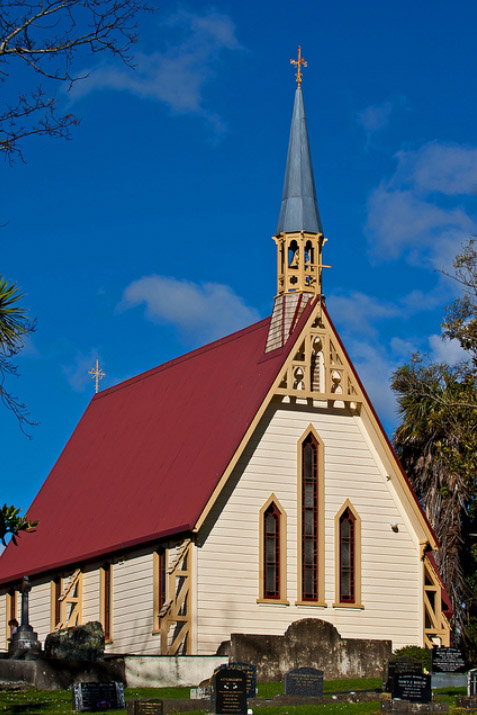
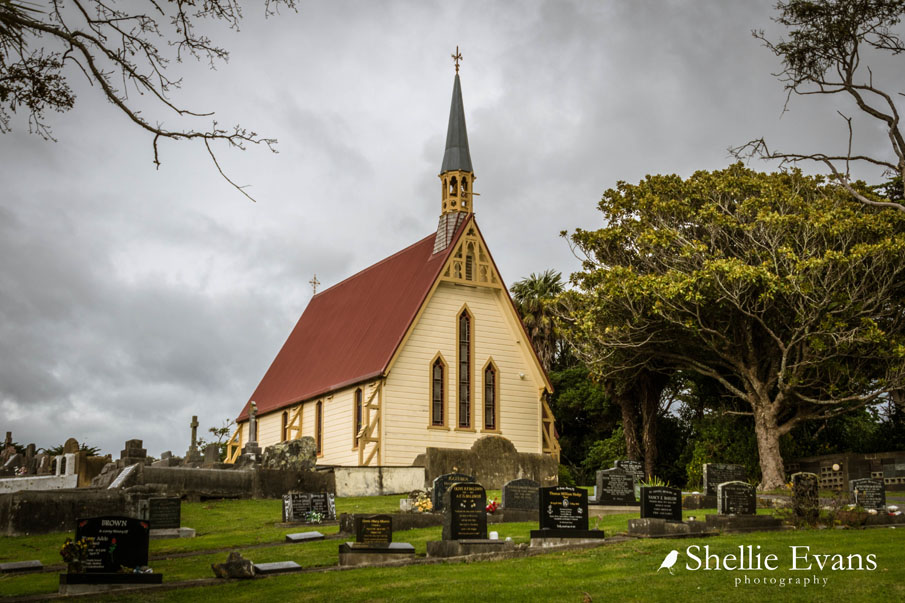
The Pāuatahanui War Memorial on Paekākāriki Hill Road, Pāuatahanui was unveiled in January 1922. The memorial has historical significance as a reminder of the devastating impact of the First World War in New Zealand, particularly in small rural villages like Pāuatahanui. The local community have a strong association with the memorial and it is the focus for the village’s Anzac Day service. It is a key contributing structure within the Pauatahanui Historic Area (List No. 7029), alongside the adjacent sites of Mataitaua pā, St Alban’s Church and Thomas Hollis Stace Cottage.
After the war, memorials were built in ‘virtually every township’ and Pāuatahanui was no different, with local residents wanting a place to remember their loved ones who lost their lives during the war. Thirty-eight Pāuatahanui men left for the war, and eight never returned. The Pāuatahanui War Memorial was built by construction firm Hansford and Mills on land donated by William Stace, and largely paid for public subscription, at a cost of almost £500. Governor-General Lord Jellicoe officially unveiled the memorial on 17 January 1922 with a large crowd in attendance, including a number of other dignitaries such as the Bishop of Wellington and Minister of Defence Sir Heaton Rhodes, as well as the families of the men honoured on the memorial.
A low marble wall with a cross motif at each end (facing Paekākāriki Hill Road) surrounds the Pāuatahanui War Memorial on three sides, with a metal chain fence running along the front of the memorial. The memorial is a Kairuru marble square obelisk topped by a small acanthus leaf finial. The front face has a wreath with crossed swords and there is a decorative bronze plaque at the bottom dedicated to six of the Pāuatahanui men who lost their lives during the First World War (Victor Abbott, Kenneth Boulton, Shirer Carter, Harry Death, Walter Harris and Norman Jones), with the inscription ‘They Fell in Distant Lands/That We Might Live in Peace’.
Shortly after the unveiling, family members requested that the plaque be redone to list the men’s names in alphabetical order and fix some spelling errors with the Christian names, and this was completed after considerable consultation. A World War Two brass plaque was subsequently added to the memorial which names four local men: Bill Fisher, Colin Hornig and brothers Lyle and Jack (John) Stuart. Around 1971 a further plaque was added in honour of Norman Griffiths, a long-serving member of the Plimmerton Returned Services Association (RSA). On Anzac Day 2006 a fourth plaque was added to commemorate service personnel who served in J-Force, Korea, Malaya and Vietnam. Both these plaques were removed in 2006 following concerns from local residents that they had a different purpose from the original intention of the memorial, which was to honour local men who had died serving in World War One and subsequently World War Two . Anzac Services were not held at the memorial for some time, but recommenced over recent years with ‘a resurgence of people from all over the district attending’.