DESCRIPTION:
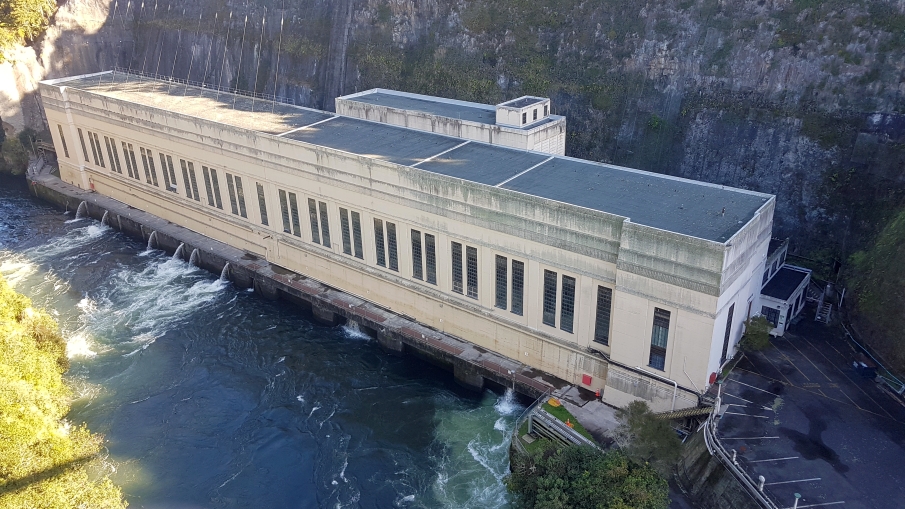
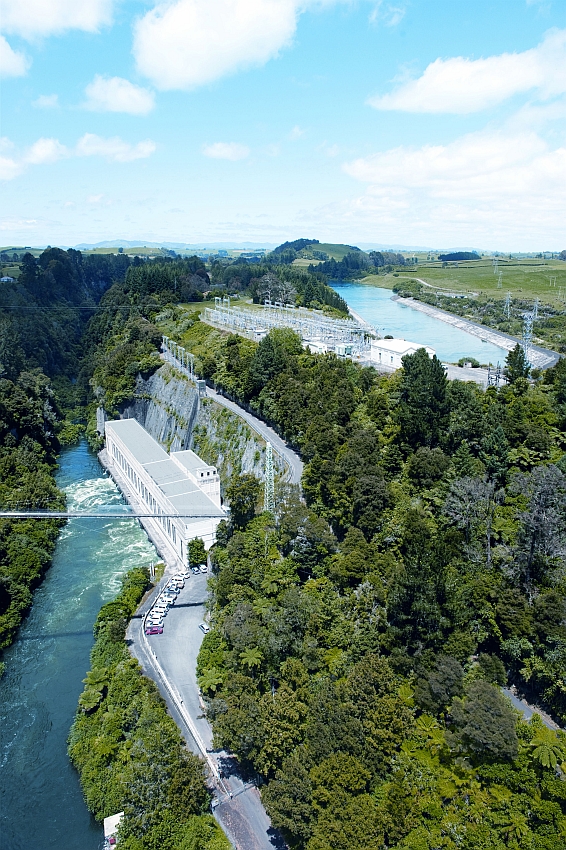
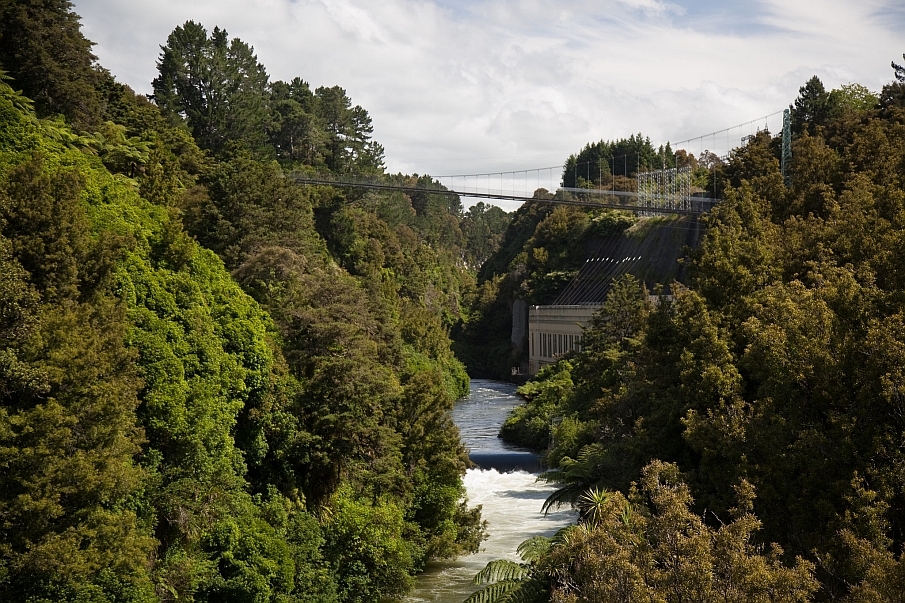
The bridge spans the Arapuni Gorge a mile downstream from the dam. As it was but a simple ancillary structure associated with what at the time was New Zealand's largest civil engineering undertaking, the suspension bridge itself received little mention in progress reports and media accounts of the project.
The structure, likely to have been shipped prefabricated from England, was erected by the British contractors for the Arapuni project, Armstrong and Whitworth. The concrete foundations were laid early in May 1925. By December of that year the steel tower was in place. However, as late as April 1926 the steel cables and decking had not been completed. The bridge, finished at some time during the following three months, seems not to have had a formal opening. It connected "top camp" (which eventually became the permanent Arapuni township) with the western-side of the gorge. Top camp accommodated the workmen employed on construction of the spillway, powerhouse, penstock and outdoor station. Two and a half years after the filling of the dam and headrace, rock near the penstock tunnels moved inwards towards the old gorge causing a slight sagging of the bridge on account of movement of one of the supporting towers.
Although the construction project was completed some sixty years ago the bridge continues to provide essential pedestrian access between the Arapuni village and the hydro-electric installation enabling efficient and convenient operation.
List Entry Information
Status
Listed
List Entry Status
Historic Place Category 2
Access
Private/No Public Access
List Number
4168
Date Entered
21st April 1994
Date of Effect
21st April 1994
City/District Council
South Waikato District
Region
Waikato Region
Status
Listed
List Entry Status
Historic Place Category 2
Access
Private/No Public Access
List Number
4168
Date Entered
21st April 1994
Date of Effect
21st April 1994
City/District Council
South Waikato District
Region
Waikato Region
Why is this place significant?
Historic Significance
Historical Significance or Value This report includes the text from the original Proposal for Classification report Jan 1992. The Arapuni Suspension Bridge derives its historical significance from its function as an ancillary structure serving the Arapuni power plant, a landmark in the history of hydro-electric development in New Zealand.
Physical Significance
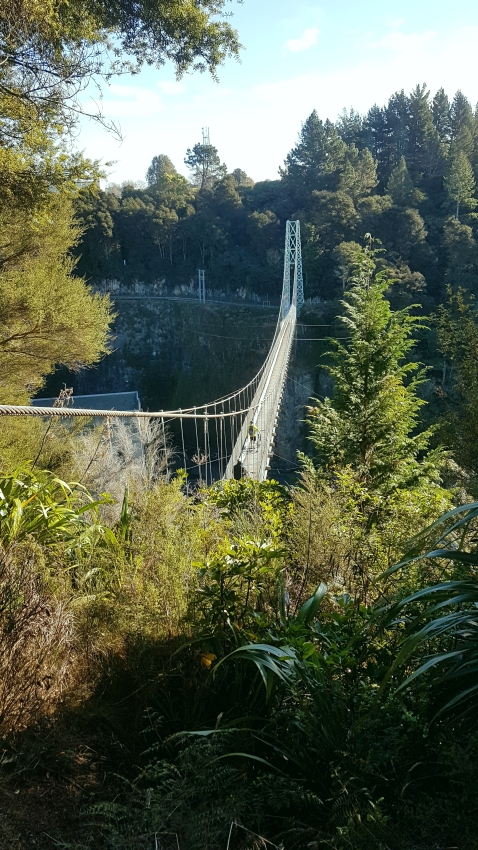
This report includes the text from the original Proposal for Classification report Jan 1992. ARCHITECTURAL QUALITY: The Arapuni Suspension Bridge has a certain rarity because of its substantial span and purpose as a permanent and frequently used pedestrian accessway. Few pedestrian swing bridges are as accessible to the general public. TOWNSCAPE/LANDMARK VALUE: Although hidden from the surrounding countryside because of its position in the river gorge the bridge is nevertheless visually impressive because of its considerable span and graceful profile.
Why is this place significant?
Historic Significance
Historical Significance or Value This report includes the text from the original Proposal for Classification report Jan 1992. The Arapuni Suspension Bridge derives its historical significance from its function as an ancillary structure serving the Arapuni power plant, a landmark in the history of hydro-electric development in New Zealand.
Physical Significance
This report includes the text from the original Proposal for Classification report Jan 1992. ARCHITECTURAL QUALITY: The Arapuni Suspension Bridge has a certain rarity because of its substantial span and purpose as a permanent and frequently used pedestrian accessway. Few pedestrian swing bridges are as accessible to the general public. TOWNSCAPE/LANDMARK VALUE: Although hidden from the surrounding countryside because of its position in the river gorge the bridge is nevertheless visually impressive because of its considerable span and graceful profile.
Construction Professional
Name
David Rowell & Co Ltd, Westminster
Type
Designer
Biography
No biography is currently available for this construction professional
Construction Details
Start Year
1925
Finish Year
1926
Type
Original Construction
Construction Materials
- One tower of bracked steelwork, and one tower of concrete - Steel cables attached to concrete anchors. - Steel hangers from cables to steel angles supporting deck - Timber deck and joists bolted to steel angles.
Construction Professional
Name
David Rowell & Co Ltd, Westminster
Type
Designer
Biography
No biography is currently available for this construction professional
Construction Details
Start Year
1925
Finish Year
1926
Type
Original Construction
Construction Materials
- One tower of bracked steelwork, and one tower of concrete - Steel cables attached to concrete anchors. - Steel hangers from cables to steel angles supporting deck - Timber deck and joists bolted to steel angles.
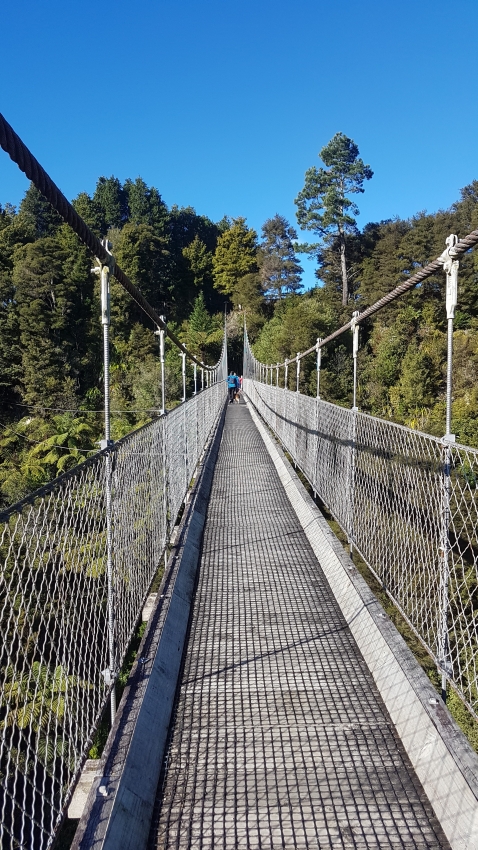
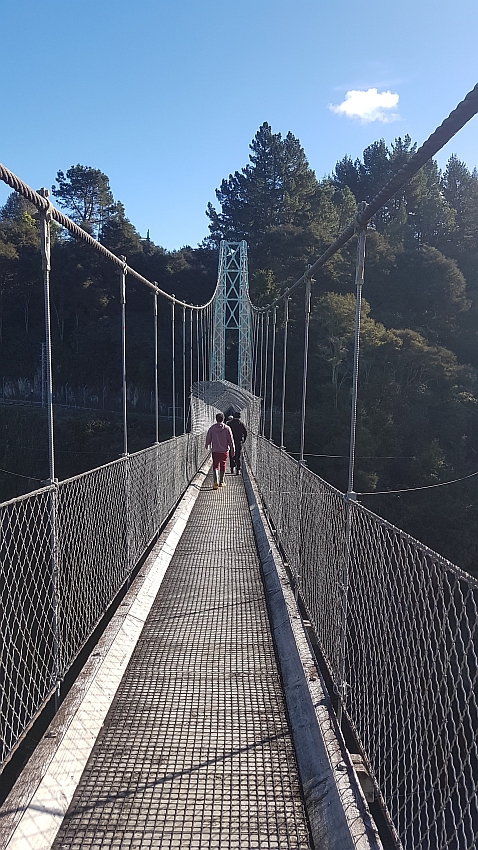
This report includes the text from the original Proposal for Classification report Jan 1992. DESIGNER: David Rowell & Co Ltd, Westminster ENGINEER/DESIGNER: The identity of the engineer responsible for the design of the bridge is not known. Clause 63 of the Arapuni contract document, prepared by the New Zealand Public Works Department, specified that the contractor provide a suspension bridge near the powerhouse site to the eastern side of the gorge. The clause stated that the bridge was to be of approved design and went on to set out a design brief. From steelwork plans prepared in 1924 and a name plate incorporated into the main tower, the designers appear to have been David Rowell & Co., Westminster. A site plan showing the layout and positions of anchors and foundation blocks was prepared by the New Zealand Public Works Department in 1925. ARCHITECTURAL DESCRIPTION: The bridge has a span of 152 metres between the towers and a grade of 1 in 10 descending from the eastern bank of the river. On the eastern bank a squat concrete "tower" supports the cable; on the opposite bank is a 21 metre high tower of open steelwork. The steel cables which pass over the towers are connected at each end to anchorages embedded in the hillside. The tar-coated timber deck is 1.2 metres wide. Suspender rods from the cables pass through the bridge deck and joists, and bolt onto steel angles. The bridge has a steel pipe handrail 1.2 metres above the deck. The sides between the deck and the handrail are enclosed by steel mesh. The bridge is approximately 50 metres above water level and is stabilised by four sets of wire guy ropes. MODIFICATIONS: Date Unknown - Rope handrails replaced with metal pipe.
This report includes the text from the original Proposal for Classification report Jan 1992. DESIGNER: David Rowell & Co Ltd, Westminster ENGINEER/DESIGNER: The identity of the engineer responsible for the design of the bridge is not known. Clause 63 of the Arapuni contract document, prepared by the New Zealand Public Works Department, specified that the contractor provide a suspension bridge near the powerhouse site to the eastern side of the gorge. The clause stated that the bridge was to be of approved design and went on to set out a design brief. From steelwork plans prepared in 1924 and a name plate incorporated into the main tower, the designers appear to have been David Rowell & Co., Westminster. A site plan showing the layout and positions of anchors and foundation blocks was prepared by the New Zealand Public Works Department in 1925. ARCHITECTURAL DESCRIPTION: The bridge has a span of 152 metres between the towers and a grade of 1 in 10 descending from the eastern bank of the river. On the eastern bank a squat concrete "tower" supports the cable; on the opposite bank is a 21 metre high tower of open steelwork. The steel cables which pass over the towers are connected at each end to anchorages embedded in the hillside. The tar-coated timber deck is 1.2 metres wide. Suspender rods from the cables pass through the bridge deck and joists, and bolt onto steel angles. The bridge has a steel pipe handrail 1.2 metres above the deck. The sides between the deck and the handrail are enclosed by steel mesh. The bridge is approximately 50 metres above water level and is stabilised by four sets of wire guy ropes. MODIFICATIONS: Date Unknown - Rope handrails replaced with metal pipe.
Historical and Associated Iwi / Hapū / Whānau
Completion Date
1st January 1992
Information Sources
Appendices to the Journals of the House of Representatives (AJHR)
Appendices to the Journals of the House of Representatives
Archives New Zealand (Auck)
Archives New Zealand (Auckland)
Auckland Weekly News
Auckland Weekly News
New Zealand Herald
New Zealand Herald, 12 July 1932, p. 6; 28 September 1933, p. 6.
Putaruru Press
Putaruru Press
Southwood, 1979
I J Southwood, The History of Arapuni, Wellington, 1979
Szigetvary, 1928
A. Szigetvary, Guide to Arapuni Dam and Hydro-Electric Works with Illustrations and Plan, Auckland, 1928
Engineer
The Engineer
Other Information
This historic place was registered under the Historic Places Act 1980. This report includes text from the original Proposal for Registration considered by the NZHPT Board at the time of registration. Please note that entry on the New Zealand Heritage List/Rarangi Korero identifies only the heritage values of the property concerned, and should not be construed as advice on the state of the property, or as a comment of its soundness or safety, including in regard to earthquake risk, safety in the event of fire, or insanitary conditions.
Historical and Associated Iwi / Hapū / Whānau
Completion Date
1st January 1992
Information Sources
Appendices to the Journals of the House of Representatives (AJHR)
Appendices to the Journals of the House of Representatives
Archives New Zealand (Auck)
Archives New Zealand (Auckland)
Auckland Weekly News
Auckland Weekly News
New Zealand Herald
New Zealand Herald, 12 July 1932, p. 6; 28 September 1933, p. 6.
Putaruru Press
Putaruru Press
Southwood, 1979
I J Southwood, The History of Arapuni, Wellington, 1979
Szigetvary, 1928
A. Szigetvary, Guide to Arapuni Dam and Hydro-Electric Works with Illustrations and Plan, Auckland, 1928
Engineer
The Engineer
Other Information
This historic place was registered under the Historic Places Act 1980. This report includes text from the original Proposal for Registration considered by the NZHPT Board at the time of registration. Please note that entry on the New Zealand Heritage List/Rarangi Korero identifies only the heritage values of the property concerned, and should not be construed as advice on the state of the property, or as a comment of its soundness or safety, including in regard to earthquake risk, safety in the event of fire, or insanitary conditions.
Former Usages
General Usage: Transport
Specific Usage: Bridge/ Viaduct
Former Usages
General Usage: Transport
Specific Usage: Bridge/ Viaduct