

John Hall became involved with Canterbury politics from 1853 and was a member of the Canterbury Provincial Council. As well as serving as a magistrate, he [was] the first chairman of the Christchurch City Council, and served on a number of local boards. He first entered Parliament in 1855. After a trip to England from 1860 to [1861], during which he married Rose Anne Dryden, [he made his home at Rakaia Terrace Station, but also retained a house in Christchurch.
In 1867 demolition began on the Studholmes' old homestead, [which was probably cob and definitely thatched. The Studholmes had also erected a three roomed house which had come precut from Australia. This is still extant within the homestead today. The 1867-1868 additions added a dining room, bedroom and lean-to study to the south of the earlier section.] Behind these rooms ran a corridor, off which lay a kitchen, pantry, scullery, store room and nursery. [A family bedroom, accessed from the front entrance hall, was built above the dining room, and also a servant's bedroom, accessed by a staircase from the kitchen area.] Another bedroom was built above the dining room, and a servant's bedroom which was accessed by a staircase at the back of the kitchen. Three dormer windows, which remain a feature of the front facade of the house, lit the two upstairs bedrooms and the staircase in the hall.
During the 1870s Hall commissioned William B. Armson, one of the foremost architects in nineteenth-century New Zealand, to design a new homestead for the station. Armson drew up plans for a new house, but it was never built, due to Hall's failing health and the economic downturn of the time.
After his resignation from the premiership in 1882, Hall decided to place [Rakaia] Terrace Station on the market and he and his family left for England [in 1883]. When they [returned in] 1886, the plan to sell the [property appears] to have been [abandoned] and two further rooms were added to the west of the homestead. Known in the family as 'big jericho' and 'little jericho', these rooms were moved four years later and [subsequently] attached to the two-storeyed extension of 1890.
Various internal alterations took place between 1887 and 1890, [the most significant being to the entrance hall. The staircase and upper floor in this area were removed.] Samuel Hurst Seager, a renowned Christchurch architect, designed the [hall panelling], which was made from alternating diagonal kauri and rimu boards. This use of native woods is typical of Seager's work and reflects his interest in the Arts and Crafts movement with its emphasis on the use of the vernacular.
In 1890 a two-storied wing was added to the west of the house. [It contained six bedrooms and various storerooms, two of which were converted into bathrooms in the twienth century]. The two 'jerichos' were moved to form a wing [at right angles to] the 1890 section. A set of Maori carvings was also purchased at this time and attached to the front wall of the homestead. These came from Ngati Pikiao and had been purchased by a Pakeha who had sold them to Hall, a sale brought about by Gilbert Mair (1843 - 1923). (see Notable Features)
In 1893, after the triumph of ushering the women's franchise bill through parliament, Hall retired from politics. In 1898 the last of the major changes to the homestead took place, with the addition of a [large] office and a new kitchen. [In 1898 an office for Hall's secretary was added. Prior to his death in 1907, Hall had sold most of Rakaia Terrace Station and thereafter the property has been known as Terrace Station. It is now vested in the Terrace Station Charitable Trust.]
The Terrace Station homestead is primarily significant due to its association with a prominent New Zealand statesman and runholder, Sir John Hall. Remembered principally for his role in the passing of the bill which gave New Zealand women the vote in 1893, a radical move for the time, he has also been described as 'the leading conservative politician in nineteenth century New Zealand'. While this may seem to be a contradiction in terms, it must be remembered that Hall, like many others, believed that women would tend to vote conservatively and thus maintain the status quo. It is said that he loved [Rakaia] Terrace Station and that this attachment to the run governed his politics and sustained his soul. [The homestead contains artifacts and curios collected by Hall, as well as portraits, paintings and other family possessions dating from the nineteenth century].
The homestead at Terrace Station is also important as a representative of many of the houses built for the large runholders of Canterbury and North Otago during the nineteenth century. These typically began as small cottages and were haphazardly added to as the runholders became more prosperous and as their families grew. The surrounding garden is also an important reminder of one of Hall's great interests, the use of trees as shelter belts on the Canterbury Plains. The Maori carvings attached to the front wall of the homestead are associated with Te Pokiha Taranui, nineteenth-century leader of Ngati Pikiao.
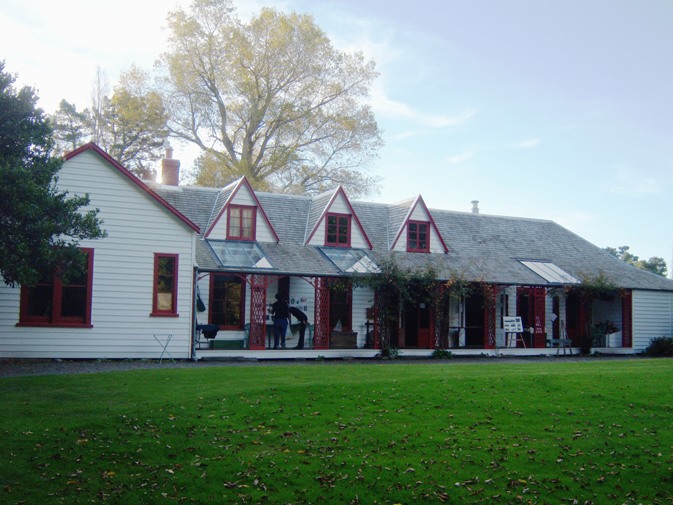
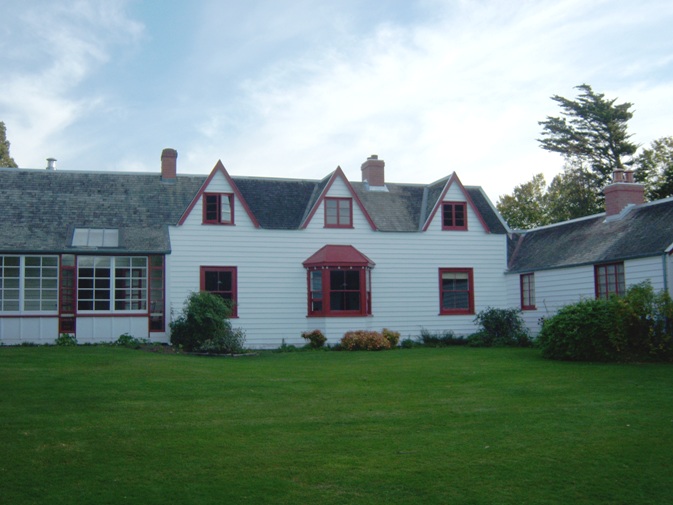
List Entry Information
Status
Listed
List Entry Status
Historic Place Category 1
Access
Private/No Public Access
List Number
42
Date Entered
23rd June 1983
Date of Effect
23rd June 1983
City/District Council
Selwyn District
Region
Canterbury Region
Extent of List Entry
Extent includes part of the land described as Lot 1 DP 400673 (RT 531033), Canterbury Land District and the building known as Terrace Station Homestead and garden setting thereon. Refer to extent map tabled at the Rārangi Kōrero Committee meeting on 8 March 2018.
Legal description
Lot 1 DP 400673 (RT 531033), Canterbury Land District
Status
Listed
List Entry Status
Historic Place Category 1
Access
Private/No Public Access
List Number
42
Date Entered
23rd June 1983
Date of Effect
23rd June 1983
City/District Council
Selwyn District
Region
Canterbury Region
Extent of List Entry
Extent includes part of the land described as Lot 1 DP 400673 (RT 531033), Canterbury Land District and the building known as Terrace Station Homestead and garden setting thereon. Refer to extent map tabled at the Rārangi Kōrero Committee meeting on 8 March 2018.
Legal description
Lot 1 DP 400673 (RT 531033), Canterbury Land District
Construction Professional
Name
Harrington, William
Type
Builder
Biography
No biography is currently available for this construction professional
Name
Seager, Samuel Hurst
Type
Architect
Biography
Seager (1855-1933) studied at Canterbury College between 1880-82. He trained in Christchurch in the offices of Benjamin Woolfield Mountfort (1825-1898) and Alfred William Simpson before completing his qualifications in London in 1884. In 1885, shortly after his return to Christchurch, he won a competition for the design of the new Municipal Chambers, and this launched his career. Seager achieved renown for his domestic architecture. He was one of the earliest New Zealand architects to move away from historical styles and seek design with a New Zealand character. The Sign of the Kiwi, Christchurch (1917) illustrates this aspect of his work. He is also known for his larger Arts and Crafts style houses such as Daresbury, Christchurch (1899). Between 1893 and 1903 Seager taught architecture and design at the Canterbury University College School of Art. He was a pioneer in town planning, having a particular interest in the "garden city" concept. Some of these ideas were expressed in a group of houses designed as a unified and landscaped precinct on Sumner Spur (1902-14). He became an authority on the lighting of art galleries. After World War I he was appointed by the Imperial War Graves Commission to design war memorials in Gallipoli, Belgium and France. In New Zealand he designed the Massey Memorial, Point Halswell, Wellington (1925).
Construction Details
Start Year
1854
startYearCirca
Type
Original Construction
Description
Built by the Studholme brothers
Start Year
1867
startYearCirca
Finish Year
1868
finishYearCirca
Type
Addition
Description
The first additions by the Halls.
Start Year
1886
Type
Addition
Description
Construction of 'big Jericho' and 'little Jericho'
Start Year
1889
Finish Year
1890
Type
Relocation
Description
'Big Jericho' and 'little Jericho' moved and attached to 1890 extension
Start Year
1887
Finish Year
1890
Type
Modification
Description
Various internal modifications. Hall by Samuel Hurst Seager
Start Year
1890
Type
Addition
Description
Two-storey wing added
Start Year
1898
Type
Addition
Description
Kitchen and office added
Start Year
1889
Finish Year
1890
Type
Relocation
Description
'Big Jericho' and 'little Jericho' moved and attached to 1890 extension
Start Year
1898
Type
Addition
Description
Secretary's office, lobby and cellar added
Notable Features
Maori carvings: Two letters to Hall from Gilbert Mair, indicate that the timber for the carvings now attached to the verandah originally came from a waka of Ngati Pikiao, and had been used as part of the urupa of Hemana Taranui. They had been sold by Te Pokiha Taranui to a Pakeha from whom Mair acquired them. These carvings can also be read as an halfway step between the earlier Victorian practice of collecting and cataloguing Maori artefacts, and the later trend, most noticeable from 1900 onwards, of including Maori imagery and names within Pakeha buildings. Garden: Sir John Hall is remembered for being the first person to plant trees on a large scale in Canterbury. During the [forty]-odd years he was resident at [Rakaia] Terrace Station he planted over 113 hectares of trees. During the 1870s, when Hall was planning to build a new homestead, he also designed and began to plant a new orchard and plantation. Although the planned homestead was never built [the oak plantation and remnants of the orchard still remain.] The garden around the house has remained largely unchanged and is notable for its collection of mainly exotic trees.
Construction Professional
Name
Harrington, William
Type
Builder
Biography
No biography is currently available for this construction professional
Name
Seager, Samuel Hurst
Type
Architect
Biography
Seager (1855-1933) studied at Canterbury College between 1880-82. He trained in Christchurch in the offices of Benjamin Woolfield Mountfort (1825-1898) and Alfred William Simpson before completing his qualifications in London in 1884. In 1885, shortly after his return to Christchurch, he won a competition for the design of the new Municipal Chambers, and this launched his career. Seager achieved renown for his domestic architecture. He was one of the earliest New Zealand architects to move away from historical styles and seek design with a New Zealand character. The Sign of the Kiwi, Christchurch (1917) illustrates this aspect of his work. He is also known for his larger Arts and Crafts style houses such as Daresbury, Christchurch (1899). Between 1893 and 1903 Seager taught architecture and design at the Canterbury University College School of Art. He was a pioneer in town planning, having a particular interest in the "garden city" concept. Some of these ideas were expressed in a group of houses designed as a unified and landscaped precinct on Sumner Spur (1902-14). He became an authority on the lighting of art galleries. After World War I he was appointed by the Imperial War Graves Commission to design war memorials in Gallipoli, Belgium and France. In New Zealand he designed the Massey Memorial, Point Halswell, Wellington (1925).
Construction Details
Start Year
1854
startYearCirca
Type
Original Construction
Description
Built by the Studholme brothers
Start Year
1867
startYearCirca
Finish Year
1868
finishYearCirca
Type
Addition
Description
The first additions by the Halls.
Start Year
1886
Type
Addition
Description
Construction of 'big Jericho' and 'little Jericho'
Start Year
1889
Finish Year
1890
Type
Relocation
Description
'Big Jericho' and 'little Jericho' moved and attached to 1890 extension
Start Year
1887
Finish Year
1890
Type
Modification
Description
Various internal modifications. Hall by Samuel Hurst Seager
Start Year
1890
Type
Addition
Description
Two-storey wing added
Start Year
1898
Type
Addition
Description
Kitchen and office added
Start Year
1889
Finish Year
1890
Type
Relocation
Description
'Big Jericho' and 'little Jericho' moved and attached to 1890 extension
Start Year
1898
Type
Addition
Description
Secretary's office, lobby and cellar added
Notable Features
Maori carvings: Two letters to Hall from Gilbert Mair, indicate that the timber for the carvings now attached to the verandah originally came from a waka of Ngati Pikiao, and had been used as part of the urupa of Hemana Taranui. They had been sold by Te Pokiha Taranui to a Pakeha from whom Mair acquired them. These carvings can also be read as an halfway step between the earlier Victorian practice of collecting and cataloguing Maori artefacts, and the later trend, most noticeable from 1900 onwards, of including Maori imagery and names within Pakeha buildings. Garden: Sir John Hall is remembered for being the first person to plant trees on a large scale in Canterbury. During the [forty]-odd years he was resident at [Rakaia] Terrace Station he planted over 113 hectares of trees. During the 1870s, when Hall was planning to build a new homestead, he also designed and began to plant a new orchard and plantation. Although the planned homestead was never built [the oak plantation and remnants of the orchard still remain.] The garden around the house has remained largely unchanged and is notable for its collection of mainly exotic trees.
Historical and Associated Iwi / Hapū / Whānau
Completion Date
14th December 2001
Report Written By
Melanie Lovell-Smith and Kate Foster
Information Sources
Acland, 1975
L.G.D. Acland, The Early Canterbury Runs, 4th ed., Christchurch, 1975
Broadbent, 1977
Coral Broadbent, 'The Rakaia Terrace Station, Hororata, Canterbury: homestead, woolshed and outbuildings: research report', Wellington, 1977.
Brookes, 2000
B. Brookes (ed.), 'At Home in New Zealand', Wellington, 2000
Dictionary of New Zealand Biography
Dictionary of New Zealand Biography
New Zealand Historic Places
New Zealand Historic Places
Strongman, 1984
Thelma Strongman, The Gardens of Canterbury: A History, Wellington, 1984
Conservation Plan
Conservation Plan
Other Information
This place was identified as significant under previous legislation with different information requirements. It remains significant under the current legislation. There is opportunity under our legislation and policies to add to this information. Further information about this place may be available from the Southern Regional Office of Heritage New Zealand Pouhere Taonga. Please note that entry on the New Zealand Heritage List/Rarangi Korero identifies only the heritage values of the property concerned, and should not be construed as advice on the state of the property, or as a comment of its soundness or safety, including in regard to earthquake risk, safety in the event of fire, or insanitary conditions.
Historical and Associated Iwi / Hapū / Whānau
Completion Date
14th December 2001
Report Written By
Melanie Lovell-Smith and Kate Foster
Information Sources
Acland, 1975
L.G.D. Acland, The Early Canterbury Runs, 4th ed., Christchurch, 1975
Broadbent, 1977
Coral Broadbent, 'The Rakaia Terrace Station, Hororata, Canterbury: homestead, woolshed and outbuildings: research report', Wellington, 1977.
Brookes, 2000
B. Brookes (ed.), 'At Home in New Zealand', Wellington, 2000
Dictionary of New Zealand Biography
Dictionary of New Zealand Biography
New Zealand Historic Places
New Zealand Historic Places
Strongman, 1984
Thelma Strongman, The Gardens of Canterbury: A History, Wellington, 1984
Conservation Plan
Conservation Plan
Other Information
This place was identified as significant under previous legislation with different information requirements. It remains significant under the current legislation. There is opportunity under our legislation and policies to add to this information. Further information about this place may be available from the Southern Regional Office of Heritage New Zealand Pouhere Taonga. Please note that entry on the New Zealand Heritage List/Rarangi Korero identifies only the heritage values of the property concerned, and should not be construed as advice on the state of the property, or as a comment of its soundness or safety, including in regard to earthquake risk, safety in the event of fire, or insanitary conditions.
Current Usages
Uses: Accommodation
Specific Usage: House
Former Usages
General Usage: Accommodation
Specific Usage: House
Themes
Women's Suffrage
Current Usages
Uses: Accommodation
Specific Usage: House
Former Usages
General Usage: Accommodation
Specific Usage: House
Themes
Women's Suffrage
Location
Sign up to hear more
Get the latest heritage news, features and events delivered
straight to your inbox.
