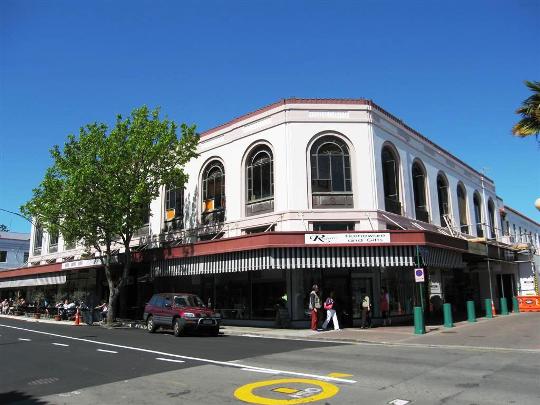
The Market Reserve Building, Napier, was the first major permanent building constructed in central Napier after the Hawke's Bay Earthquake 1931, and is considered to be a symbol of the Renaissance of Napier.
Plans for the construction of a Market Reserve Building began in July 1930 when the Treasury Department granted Napier Borough Council permission to raise three loans at rates above the normal Government limit of 5 ½ percent. This allowed for £29,000 to be raised on the erection of new buildings on the Market Reserve block. However, the Council found it difficult to raise funds. The Mayor, Vigor Brown, resorted to looking for funds in Australia and Britain. Eventually a promise of funds was raised. Ratepayers approved the loan in December 1930 and tenders were called for.
On 3 February 1931 a massive earthquake struck the Hawke's Bay region. At 7.8 on the Richter scale, the earthquake did huge damage and is considered to be the largest natural disaster to have occurred in New Zealand in the twentieth century. A total of 258 people died. In Napier, near the centre of the quake, the earthquake and subsequent fire destroyed most of the central business district. Following the earthquake a moratorium was placed on all rebuilding of business premises in order that the debris could be cleared and the future of the town's development could be considered. There was even some debate as to whether Napier should be abandoned and Hastings become the Government and business centre of Hawke's Bay, but this was eventually abandoned. In March 1931 the town was placed under the control of two commissioners who were to oversee the rehabilitation and reconstruction of Napier.
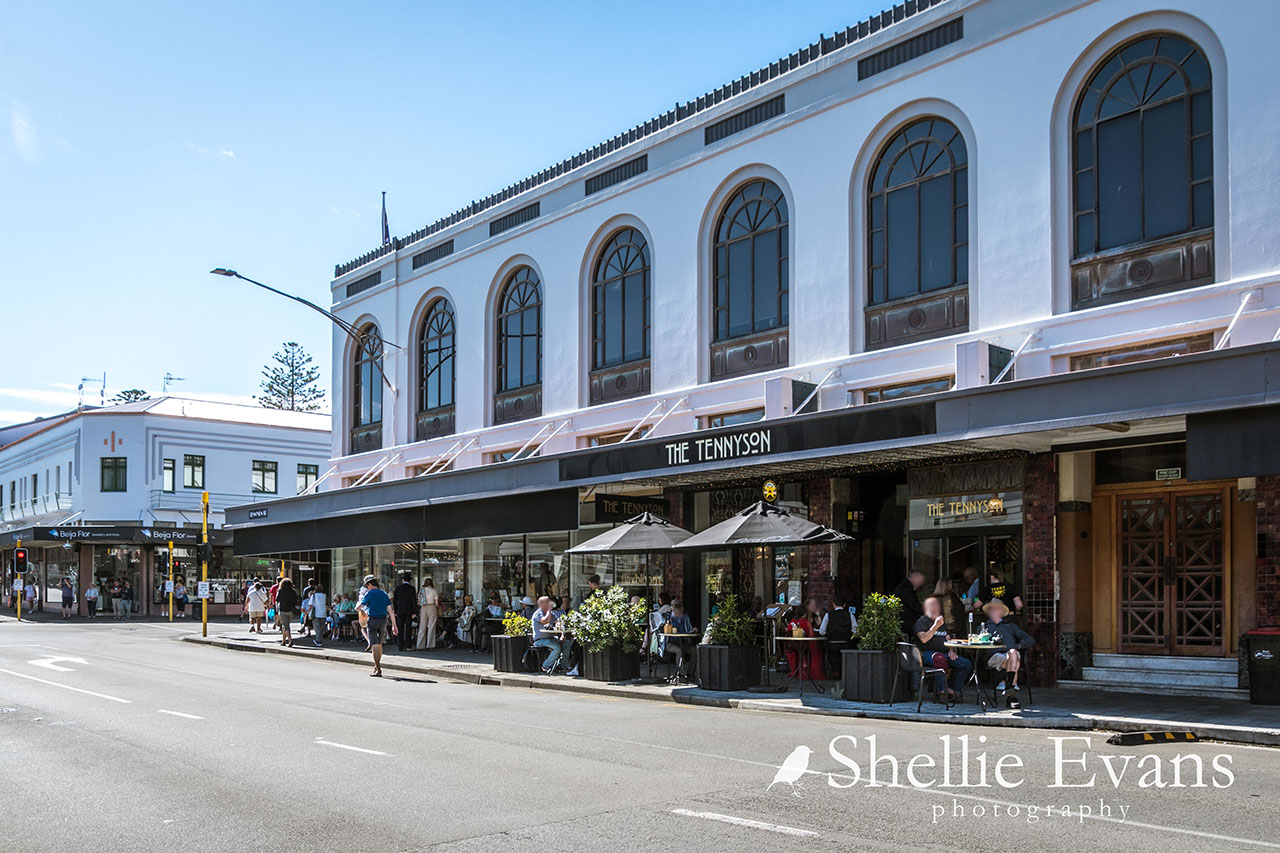
The rebuilding of Napier began in August 1931 with the decision to continue with the Market Reserve building. Associated Architects, a co-operative design office set up in Napier after the earthquake to assist with the reconstruction of the city, prepared new plans for the building. (The members of Associated Architects were the principals of the four major architectural practices in Napier at that time C.T. Natusch and Sons, Finch and Westholm, J. A. Loius Hay and E. A. Williams.) These plans were to be modified to take into account changes in building practices adopted after the earthquake. Since many people had been killed or injured by falling masonry during the earthquake, the new Standard Code of Building Bylaws required all new buildings to have minimal projecting decoration on the facade. However, it was found that the structural steel frame of the Market Reserve Building, as designed by Aleck Natusch of C.T.Natusch and Sons prior to the earthquake, did not require modification to meet the new standards. It allowed for the construction of the large arch windows that are a dominant feature of the building. The only change to the plans for the structure was its conversion from a welded structure to a riveted one, as it was flet that the noise this would create would The building also featured the first suspended verandah in Napier - again the result of the new building regulations, which specified that streets were to be clear of all obstructions along the curb line.
Tenders were called for a second time and Fletchers Construction Company was awarded the contract. The construction of the council-owned building was seen as a commitment to the future of Napier, and architect Rene Natusch even modified the specifications, calling for a riveted frame rather than a welded frame, in order that the noise from the construction would herald the renaissance of the city. Acknowledging the significance of the construction, the English manufacturers, Crittalls, provided bronze windows for the price of steel as a gift to the city. The building was completed in June 1932 and at the time "stood alone in the barren portion of Napier." Since 1932 the building has been used for a combination of retail and office space and more recently as the Napier Public Library.
The Market Reserve Building Napier is significant as the first building in the central business district of Napier to be erected after the earthquake of 1931. The building reflects the concerns over erecting structures that could withstand a disaster of a similar magnitude. It is also important as its construction signalled the community's resolve to rebuild Napier. Today, occupying half a block in the commercial heart of the city, it is a notable landmark in Napier.
Plans for the construction of a Market Reserve Building began in July 1930 when the Treasury Department granted Napier Borough Council permission to raise three loans at rates above the normal Government limit of 5 ½ percent. This allowed for £29,000 to be raised on the erection of new buildings on the Market Reserve block. However, the Council found it difficult to raise funds. The Mayor, Vigor Brown, resorted to looking for funds in Australia and Britain. Eventually a promise of funds was raised. Ratepayers approved the loan in December 1930 and tenders were called for.
On 3 February 1931 a massive earthquake struck the Hawke's Bay region. At 7.8 on the Richter scale, the earthquake did huge damage and is considered to be the largest natural disaster to have occurred in New Zealand in the twentieth century. A total of 258 people died. In Napier, near the centre of the quake, the earthquake and subsequent fire destroyed most of the central business district. Following the earthquake a moratorium was placed on all rebuilding of business premises in order that the debris could be cleared and the future of the town's development could be considered. There was even some debate as to whether Napier should be abandoned and Hastings become the Government and business centre of Hawke's Bay, but this was eventually abandoned. In March 1931 the town was placed under the control of two commissioners who were to oversee the rehabilitation and reconstruction of Napier.
The rebuilding of Napier began in August 1931 with the decision to continue with the Market Reserve building. Associated Architects, a co-operative design office set up in Napier after the earthquake to assist with the reconstruction of the city, prepared new plans for the building. (The members of Associated Architects were the principals of the four major architectural practices in Napier at that time C.T. Natusch and Sons, Finch and Westholm, J. A. Loius Hay and E. A. Williams.) These plans were to be modified to take into account changes in building practices adopted after the earthquake. Since many people had been killed or injured by falling masonry during the earthquake, the new Standard Code of Building Bylaws required all new buildings to have minimal projecting decoration on the facade. However, it was found that the structural steel frame of the Market Reserve Building, as designed by Aleck Natusch of C.T.Natusch and Sons prior to the earthquake, did not require modification to meet the new standards. It allowed for the construction of the large arch windows that are a dominant feature of the building. The only change to the plans for the structure was its conversion from a welded structure to a riveted one, as it was flet that the noise this would create would The building also featured the first suspended verandah in Napier - again the result of the new building regulations, which specified that streets were to be clear of all obstructions along the curb line.
Tenders were called for a second time and Fletchers Construction Company was awarded the contract. The construction of the council-owned building was seen as a commitment to the future of Napier, and architect Rene Natusch even modified the specifications, calling for a riveted frame rather than a welded frame, in order that the noise from the construction would herald the renaissance of the city. Acknowledging the significance of the construction, the English manufacturers, Crittalls, provided bronze windows for the price of steel as a gift to the city. The building was completed in June 1932 and at the time "stood alone in the barren portion of Napier." Since 1932 the building has been used for a combination of retail and office space and more recently as the Napier Public Library.
The Market Reserve Building Napier is significant as the first building in the central business district of Napier to be erected after the earthquake of 1931. The building reflects the concerns over erecting structures that could withstand a disaster of a similar magnitude. It is also important as its construction signalled the community's resolve to rebuild Napier. Today, occupying half a block in the commercial heart of the city, it is a notable landmark in Napier.