From its establishment in 1848, the Canterbury Association planned to make their settlement in Christchurch wholly Anglican. While this aim was not achieved, the Association always envisaged their colony as having a bishop and a cathedral at its centre. Since 1851 the central square in Christchurch has been known as Cathedral Square, although it was not until 1858 that a specific area of land within the square was set aside for the erection of a cathedral.
The realities of settling in Canterbury, and the lack of a bishop, meant that plans for the cathedral were delayed until 1856 when Henry John Chitty Harper (1804?-1893) was consecrated as the first Bishop of Christchurch. Sir George Gilbert Scott, (1811-1878), the distinguished British Gothic Revival architect, was asked to draw up plans for Christ Church Cathedral in 1859. Scott had earlier drawn plans for a timber church, the plans for which arrived with the Reverend Thomas Jackson in 1851, but were never used. Choosing an English architect to design a colonial cathedral was common practice within the British Empire, as it reflected well on the status of the Church, and Scott already had a reputation for discerning what was architecturally possible in colonial circumstances.
Scott's original design was a severe thirteenth-century Gothic-style cathedral and was intended to be primarily constructed in timber, due to both the cost and the ever-present earthquake risk in New Zealand. Bishop Harper, however, argued that the cathedral had be built from stone (also a matter of status), and by 1862 Scott's revised plans, as forwarded to the bishop, showed an internal timber frame with a stone exterior. The most interesting feature of Scott's design was the timber interior. According to architectural historian Ian Lochhead, the interior, if it had been built, 'would have ...surrounded [the congregation] by a forest of timber construction without parallel in the history of the Gothic Revival'. Continuing pressure from the Cathedral Commission for an all-stone church, and concerns over the lack of timber in Canterbury, led to Scott providing alternative plans for a stone arcade and clerestory. These plans arrived in New Zealand in 1864.
Foundations for the cathedral were laid in 1864, after much fundraising in Christchurch, and under the supervision of Robert Speechly (1840-1884). Speechly, who had trained as an architect in London and worked for several leading Gothic Revival architects including William Slater and Alfred Waterhouse, was appointed resident architect to supervise the construction of the ChristChurch Cathedral in 1864. The decision by the Cathedral Commission to appoint Speechly, rather than the leading local architect, Benjamin Woolfield Mountfort (1825-1898), led to an intense debate in the Christchurch newspapers. Scott supported the idea of appointing a local architect who would be familiar with the colony's conditions, and he was impressed by what he knew of Mountfort's buildings. However, the Cathedral Commission declined to accept Scott's advice, reiterating instead their concerns about the abilities of local architects. Conservative taste in architecture and concerns about Mountfort's known 'High Church' values may have also played a part in the commission's decision to appoint Speechly.
Lack of money halted construction on the cathedral in late 1865. Speechly then completed his four-year contract in New Zealand by acting as architect to the Anglican Church Property Trustees, supervising all buildings undertaken by them. In this capacity he was involved in the design of a number of churches, houses and schools in the Canterbury settlement, assisted by his pupil, and then partner, William Fitzjohn Crisp. Speechly left New Zealand in 1868.
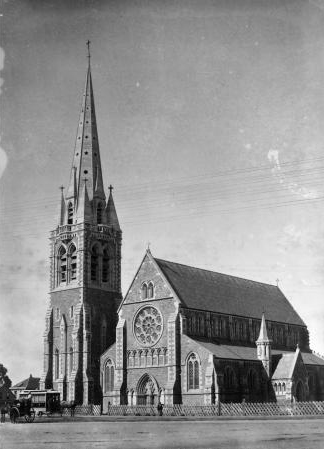
In 1873 interest in the partially complete cathedral was again renewed and Mountfort was finally appointed as supervising architect. Thereafter work progressed smoothly and the nave and tower were completed by 1881. The cathedral was consecrated in November of that year.
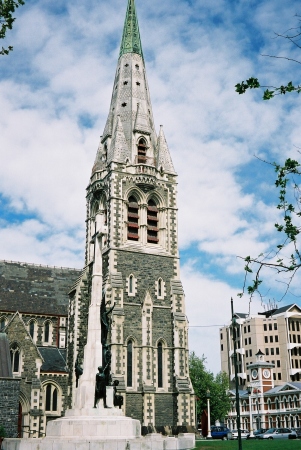
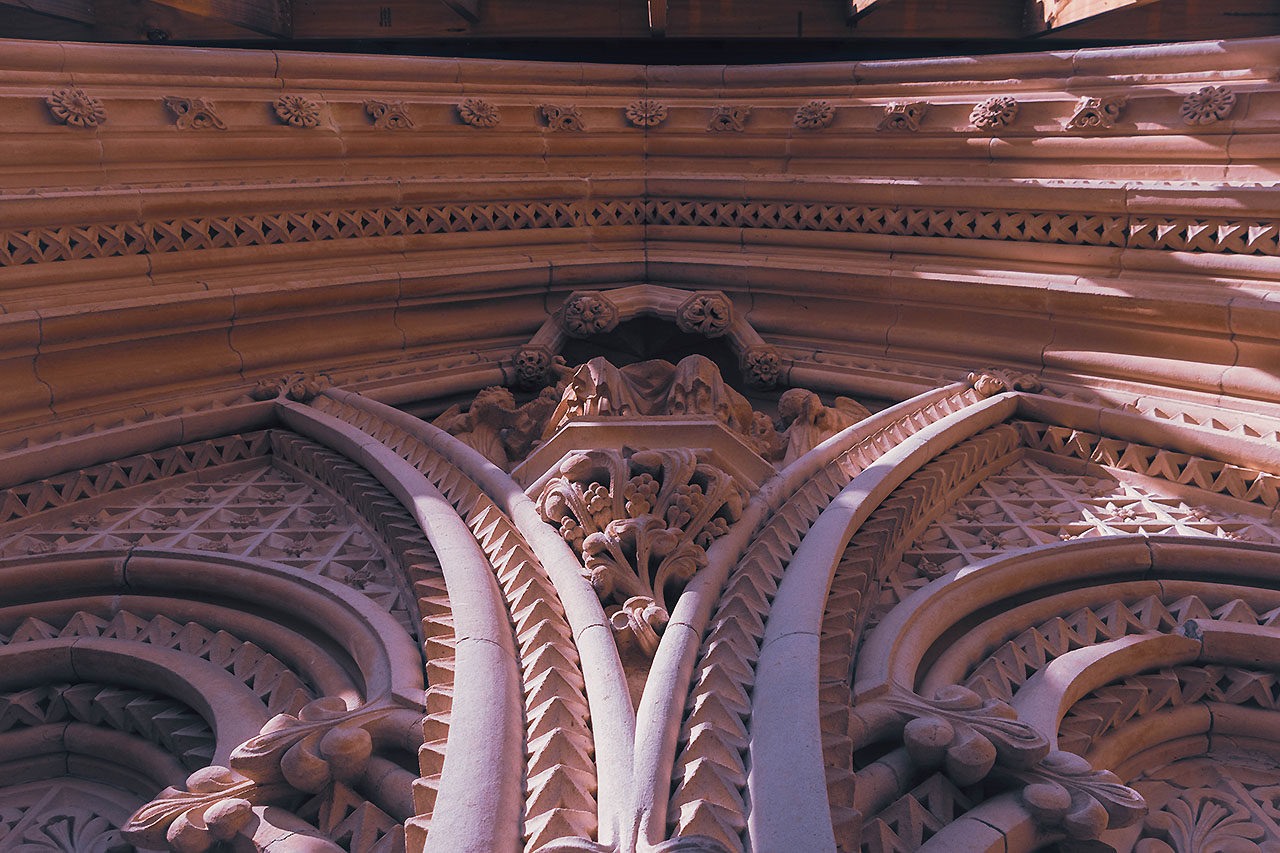
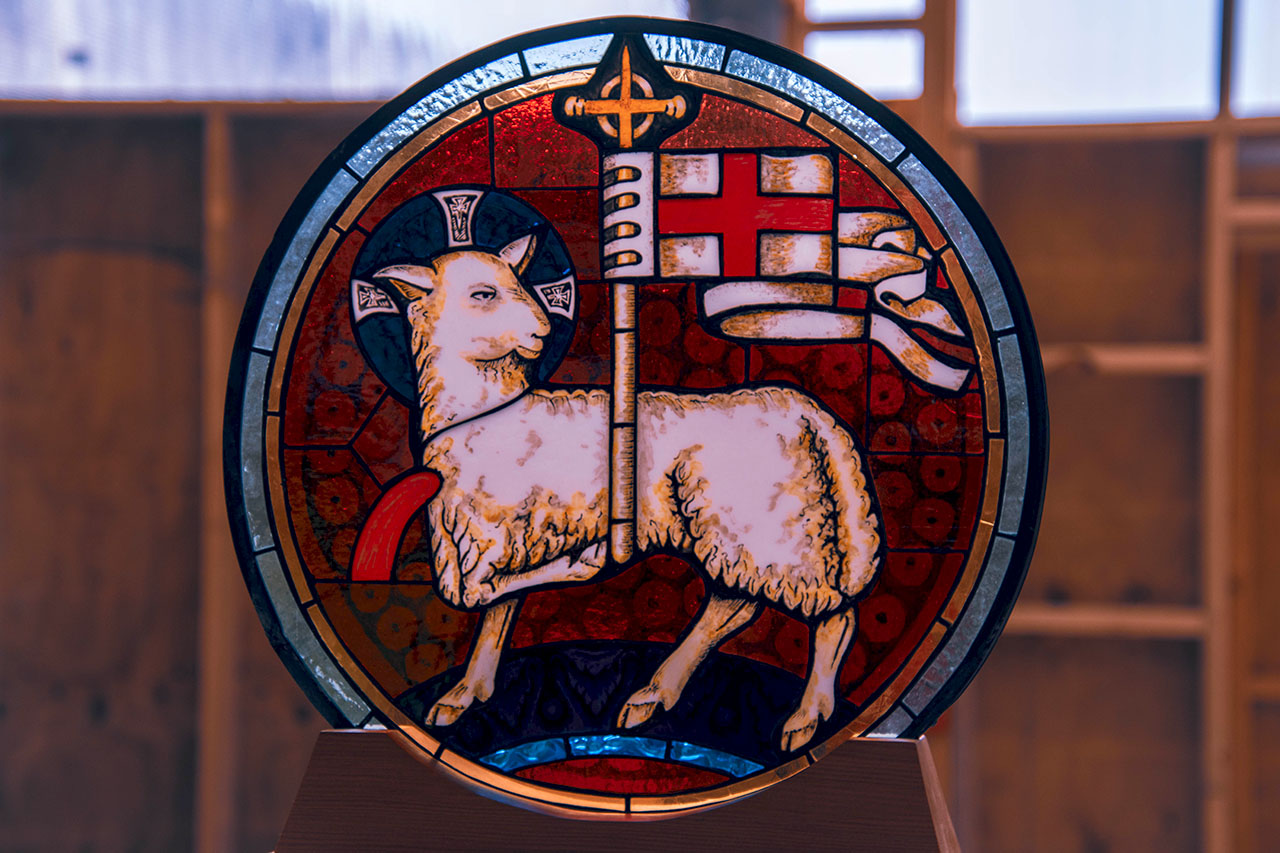
As well as supervising the project, Mountfort made significant changes to Scott's design. These changes included the use of stone rather than timber for the spire; the addition of balconies and pinnacles to the tower; the raising of the south porch roof, the addition of a turret to the junction between the south porch and aisle; and the enrichment of the decorative elements on both the exterior and interior. Mountfort also chose to sheath the roof in slates of different colours arranged in repetitive patterns. His contribution to the interior of the cathedral was particularly marked. He made general recommendations about the type and colour of stained glass the cathedral should contain and designed a number of the windows himself. He also designed the font, pulpit, bishop's throne and the Harper Memorial of 1897.
Soon after the cathedral was consecrated in 1881, an earthquake loosened the stonework of the tower, and repairs and further strengthening were required. Seven years later a more severe earthquake brought down the top 29 feet (8.8 m) of the spire. This was eventually rebuilt with firebricks, rather than stone, but a further earthquake, in 1901, damaged the spire again and the more successful solution was to reconstruct the upper portion of the spire in timber covered with copper.
When Mountfort died in 1898, the cathedral was still incomplete. His son, Cyril Mountfort (1852-1920), took over his father's role as supervising architect and oversaw the completion of the chancel, transepts and apse, all of which were finished by 1904. During the 1990s the addition of a visitors' centre and tearooms to the north façade of the cathedral aroused significant controversy.
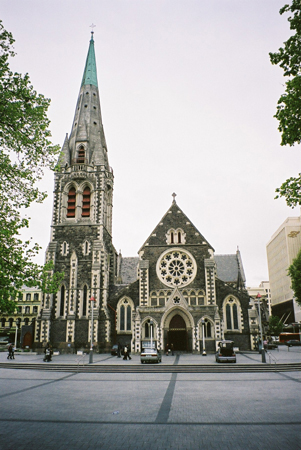
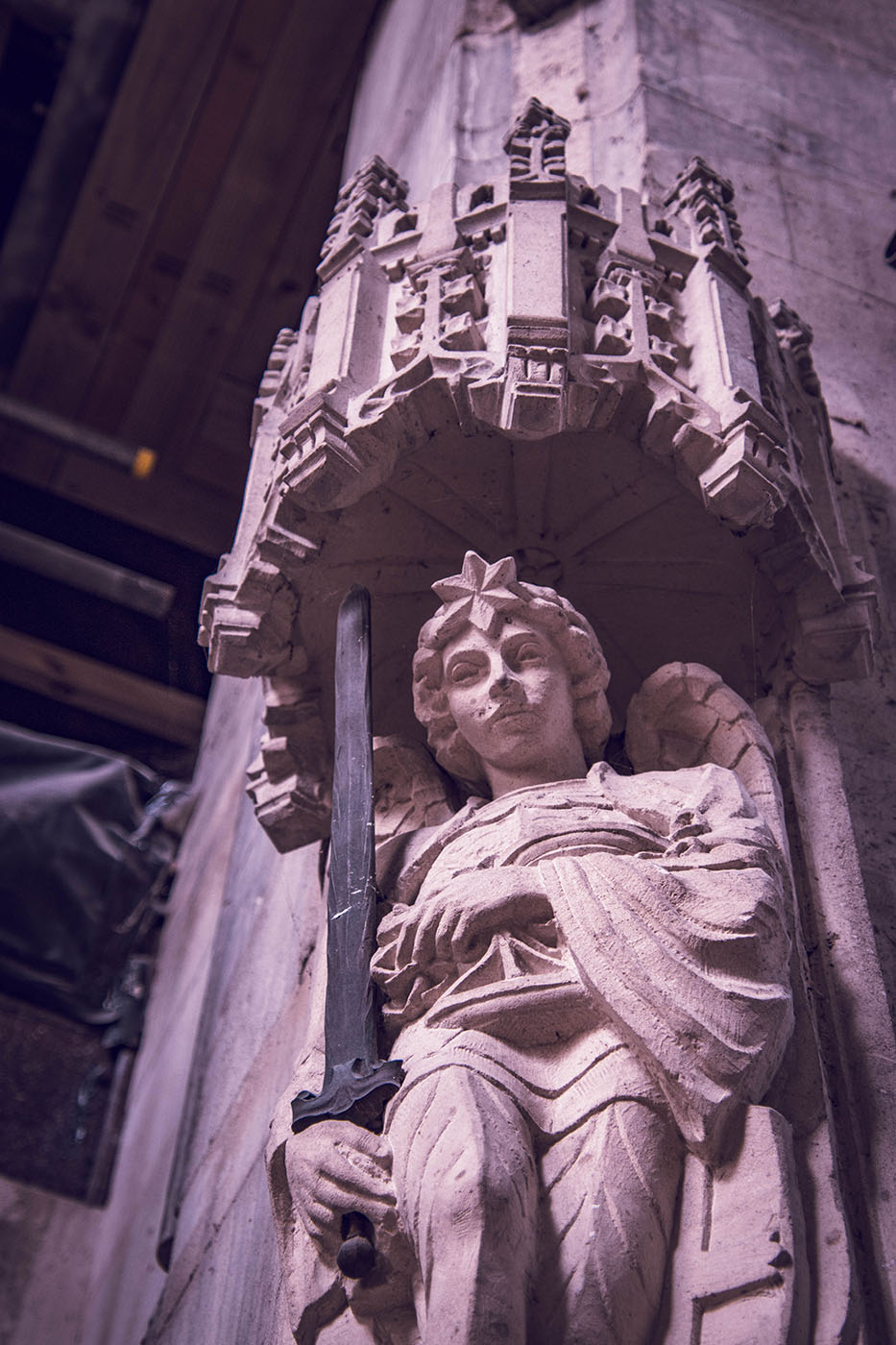
The ChristChurch Cathedral is a major landmark located at the heart of the city. It is seen by many as symbolising the city as well as reflecting the ideals of its Pakeha founders. It is the centre of the Anglican diocese, it is still used for worship as well as for concerts, and is a major tourist attraction. It is the only Scott-designed church in New Zealand. As one of several churches he designed for various colonies of the British Empire, it stands as a memorial to the empire's expansion and the spread of the Anglican church around the world. Although Mountfort did not design the cathedral, he had a significant influence on the final look, resulting in a greater High Victorian emphasis than the original 1864 design. The multitude of memorial windows, tablets and so forth, within and around the cathedral, create a living history of Canterbury's past and its people.
The realities of settling in Canterbury, and the lack of a bishop, meant that plans for the cathedral were delayed until 1856 when Henry John Chitty Harper (1804?-1893) was consecrated as the first Bishop of Christchurch. Sir George Gilbert Scott, (1811-1878), the distinguished British Gothic Revival architect, was asked to draw up plans for Christ Church Cathedral in 1859. Scott had earlier drawn plans for a timber church, the plans for which arrived with the Reverend Thomas Jackson in 1851, but were never used. Choosing an English architect to design a colonial cathedral was common practice within the British Empire, as it reflected well on the status of the Church, and Scott already had a reputation for discerning what was architecturally possible in colonial circumstances.
Scott's original design was a severe thirteenth-century Gothic-style cathedral and was intended to be primarily constructed in timber, due to both the cost and the ever-present earthquake risk in New Zealand. Bishop Harper, however, argued that the cathedral had be built from stone (also a matter of status), and by 1862 Scott's revised plans, as forwarded to the bishop, showed an internal timber frame with a stone exterior. The most interesting feature of Scott's design was the timber interior. According to architectural historian Ian Lochhead, the interior, if it had been built, 'would have ...surrounded [the congregation] by a forest of timber construction without parallel in the history of the Gothic Revival'. Continuing pressure from the Cathedral Commission for an all-stone church, and concerns over the lack of timber in Canterbury, led to Scott providing alternative plans for a stone arcade and clerestory. These plans arrived in New Zealand in 1864.
Foundations for the cathedral were laid in 1864, after much fundraising in Christchurch, and under the supervision of Robert Speechly (1840-1884). Speechly, who had trained as an architect in London and worked for several leading Gothic Revival architects including William Slater and Alfred Waterhouse, was appointed resident architect to supervise the construction of the ChristChurch Cathedral in 1864. The decision by the Cathedral Commission to appoint Speechly, rather than the leading local architect, Benjamin Woolfield Mountfort (1825-1898), led to an intense debate in the Christchurch newspapers. Scott supported the idea of appointing a local architect who would be familiar with the colony's conditions, and he was impressed by what he knew of Mountfort's buildings. However, the Cathedral Commission declined to accept Scott's advice, reiterating instead their concerns about the abilities of local architects. Conservative taste in architecture and concerns about Mountfort's known 'High Church' values may have also played a part in the commission's decision to appoint Speechly.
Lack of money halted construction on the cathedral in late 1865. Speechly then completed his four-year contract in New Zealand by acting as architect to the Anglican Church Property Trustees, supervising all buildings undertaken by them. In this capacity he was involved in the design of a number of churches, houses and schools in the Canterbury settlement, assisted by his pupil, and then partner, William Fitzjohn Crisp. Speechly left New Zealand in 1868.
In 1873 interest in the partially complete cathedral was again renewed and Mountfort was finally appointed as supervising architect. Thereafter work progressed smoothly and the nave and tower were completed by 1881. The cathedral was consecrated in November of that year.
As well as supervising the project, Mountfort made significant changes to Scott's design. These changes included the use of stone rather than timber for the spire; the addition of balconies and pinnacles to the tower; the raising of the south porch roof, the addition of a turret to the junction between the south porch and aisle; and the enrichment of the decorative elements on both the exterior and interior. Mountfort also chose to sheath the roof in slates of different colours arranged in repetitive patterns. His contribution to the interior of the cathedral was particularly marked. He made general recommendations about the type and colour of stained glass the cathedral should contain and designed a number of the windows himself. He also designed the font, pulpit, bishop's throne and the Harper Memorial of 1897.
Soon after the cathedral was consecrated in 1881, an earthquake loosened the stonework of the tower, and repairs and further strengthening were required. Seven years later a more severe earthquake brought down the top 29 feet (8.8 m) of the spire. This was eventually rebuilt with firebricks, rather than stone, but a further earthquake, in 1901, damaged the spire again and the more successful solution was to reconstruct the upper portion of the spire in timber covered with copper.
When Mountfort died in 1898, the cathedral was still incomplete. His son, Cyril Mountfort (1852-1920), took over his father's role as supervising architect and oversaw the completion of the chancel, transepts and apse, all of which were finished by 1904. During the 1990s the addition of a visitors' centre and tearooms to the north façade of the cathedral aroused significant controversy.
The ChristChurch Cathedral is a major landmark located at the heart of the city. It is seen by many as symbolising the city as well as reflecting the ideals of its Pakeha founders. It is the centre of the Anglican diocese, it is still used for worship as well as for concerts, and is a major tourist attraction. It is the only Scott-designed church in New Zealand. As one of several churches he designed for various colonies of the British Empire, it stands as a memorial to the empire's expansion and the spread of the Anglican church around the world. Although Mountfort did not design the cathedral, he had a significant influence on the final look, resulting in a greater High Victorian emphasis than the original 1864 design. The multitude of memorial windows, tablets and so forth, within and around the cathedral, create a living history of Canterbury's past and its people.