DonateSupporterVisit Heritage
  • Tūrangawaewae
    Places
  • Tira Māori
    Māori Heritage
  • Poutairangahia
    Archaeology
  • Rauemi
    Resources
  • Mō Tātou
    About Us
  • New Zealand Heritage List
  • Nominate and submit
  • Explore the List
  • National Historic Landmarks
  • Plaques
  • Rainbow List Project
  • Lost heritage
  • Visit Heritage
  • Our properties
  • Turnbull House Project
  • Collections
  • Shop
  • Tohu Whenua
  • Tira Māori
  • Conserving Māori heritage
  • Marae built heritage
  • Māori heritage on the List
  • Hinemihi—Te Hokinga Mai
  • What is archaeology?
  • Is there a site on my property?
  • What are my legal requirements?
  • Affecting an archaeological site
  • Declaring an archaeological site
  • Archaeology FAQs
  • Archaeology Digital Library
  • Archaeology guidelines and templates
  • Resources
  • Funding
  • Publications
  • Sustainable management guides
  • Disaster recovery
  • Podcasts & digital resources
  • Education Hub
  • Conservation plans
  • About
  • Board
  • Māori Heritage Council
  • Senior Staff
  • Offices
  • Contact us
  • Careers
  • Covenants
  • Fast-track
  • Corporate documents
  • Currently consulting on
  • Our submissions
  • News
Quick links
Rārangi Kōrero | The List
Explore the List
National Historic Landmarks
Ngā Manawhenua o Aotearoa me ōna Kōrero Tūturu
Quick links
Tapuwae
A Vision for Places of Māori Heritage
Funding for Māori Heritage
Resources
Quick links
Archaeological Authority Portal
Applying for an archaeological authority
Archaeology FAQs
Browse the most frequently asked questions about archaeological authorities and the archaeological process.
Quick links
Quick links
Contact us
Offices
DonateSupporterVisit Heritage
  • Tūrangawaewae
    Places
  • Tira Māori
    Māori Heritage
  • Poutairangahia
    Archaeology
  • Rauemi
    Resources
  • Mō Tātou
    About Us
  • New Zealand Heritage List
  • Nominate and submit
  • Explore the List
  • National Historic Landmarks
  • Plaques
  • Rainbow List Project
  • Lost heritage
  • Visit Heritage
  • Our properties
  • Turnbull House Project
  • Collections
  • Shop
  • Tohu Whenua
  • Tira Māori
  • Conserving Māori heritage
  • Marae built heritage
  • Māori heritage on the List
  • Hinemihi—Te Hokinga Mai
  • What is archaeology?
  • Is there a site on my property?
  • What are my legal requirements?
  • Affecting an archaeological site
  • Declaring an archaeological site
  • Archaeology FAQs
  • Archaeology Digital Library
  • Archaeology guidelines and templates
  • Resources
  • Funding
  • Publications
  • Sustainable management guides
  • Disaster recovery
  • Podcasts & digital resources
  • Education Hub
  • Conservation plans
  • About
  • Board
  • Māori Heritage Council
  • Senior Staff
  • Offices
  • Contact us
  • Careers
  • Covenants
  • Fast-track
  • Corporate documents
  • Currently consulting on
  • Our submissions
  • News
Quick links
Rārangi Kōrero | The List
Explore the List
National Historic Landmarks
Ngā Manawhenua o Aotearoa me ōna Kōrero Tūturu
Quick links
Tapuwae
A Vision for Places of Māori Heritage
Funding for Māori Heritage
Resources
Quick links
Archaeological Authority Portal
Applying for an archaeological authority
Archaeology FAQs
Browse the most frequently asked questions about archaeological authorities and the archaeological process.
Quick links
Quick links
Contact us
Offices
  • Places
  • Nominate and submit
  • National Historic Landmarks
  • Places
  • Nominate and submit
  • National Historic Landmarks
  • Tira Māori
  • Conserving Māori heritage
  • Marae built heritage
  • Tira Māori
  • Conserving Māori heritage
  • Marae built heritage
  • Archaeological authorities
  • Archaeology Digital Library
  • Archaeological authorities
  • Archaeology Digital Library
  • All resources
  • Publications
  • Funding
  • All resources
  • Publications
  • Funding
  • FAQs
  • FAQs
Follow us on:
Places
  • Places
  • Nominate and submit
  • National Historic Landmarks
Tira Māori
  • Tira Māori
  • Conserving Māori heritage
  • Marae built heritage
Archaeology
  • Archaeological authorities
  • Archaeology Digital Library
Resources
  • All resources
  • Publications
  • Funding
FAQs
  • FAQs
Follow us on
HomePrivacyTerms and conditionsAbout this site
© Heritage New Zealand Pouhere Taonga 2026.
 
Victoria Battery Cyanide Tank Holders

Pukekauri Road, WAIKINO

Public

Historic Place Category 1

List No. 4678

Quick links:
List GalleryLocationDetails
The Victoria Battery complex at Waikino was built in 1897, to process ore being produced at the Martha, Waihi and Grand Junction mines. The MacArthur-Forrest cyanide process for the extraction of gold and silver from crushed ores was developed in Scotland in 1886. The patent was owned by the Cassel Gold Extraction Company. In 1889 the Crown Company of Karangahake carried out the first field trials of the process by which 92% of the gold and 54% of the silver content of the ore was recovered, in contrast to the 60% of the gold and 3570 of the silver which was recovered by the previous pan amalgamation process. In 1897 the New Zealand Government purchased the patent rights for the process for £10,000. This money had been recouped by 1905 from the small royalty charged to the users.

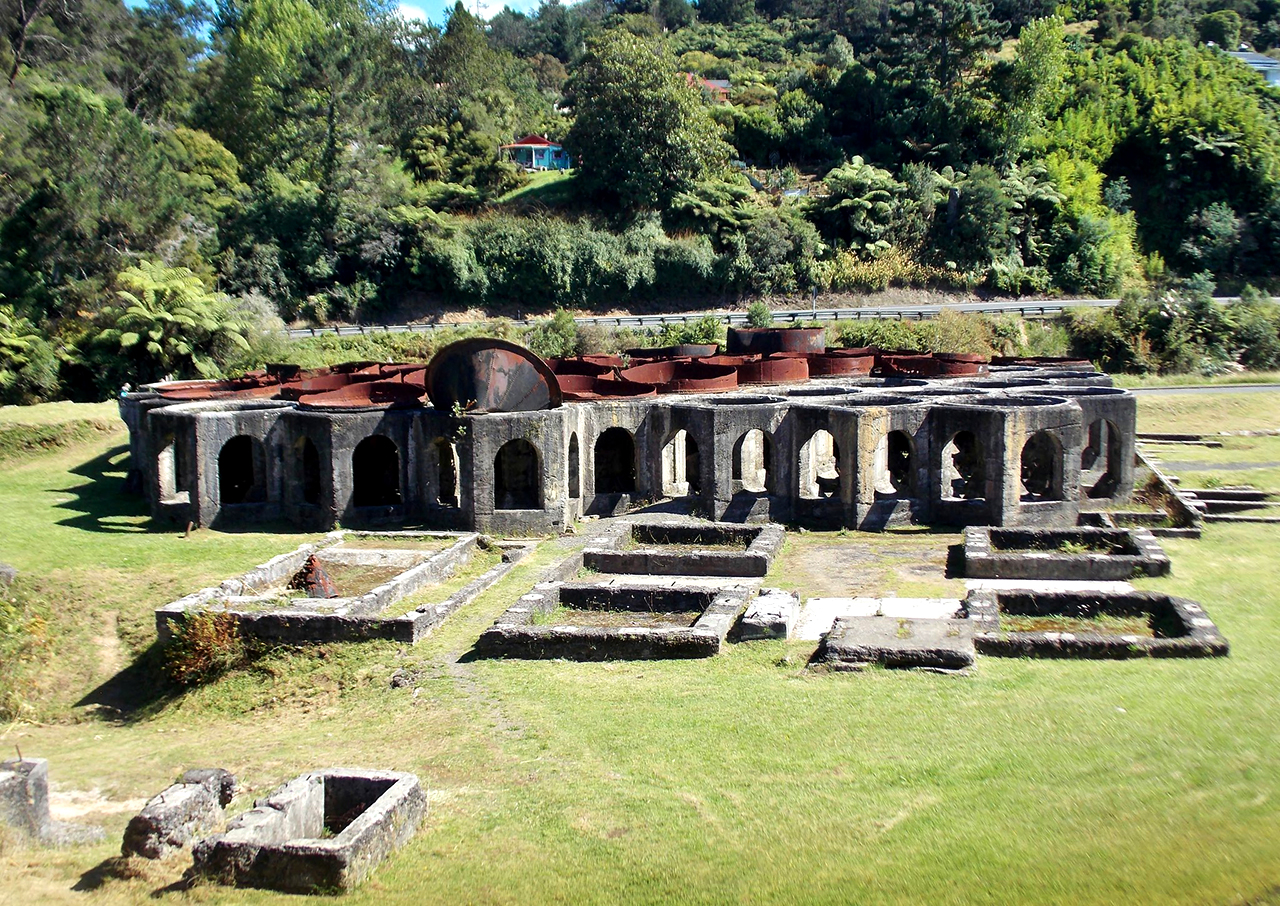
The local invention in 1902 of the Brown (or B and M) agitator tanks (known in some countries as Pachuca tanks), facilitated this increase in the extraction rate. The process involved cylindrical tanks in which the mix of pulverised ore and cyanide solution was agitated by charges of compressed air forced through the inverted conical bases. This air also provided a supply of - oxygen which further improved the extraction of the metals. The tanks which were built at the Victoria Battery between 1902 and 1910, were steel cylinders 4.5 metres in diameter and about 15.25 metres high which stood on the concrete holders or bases remaining at the site. Elsewhere tanks were made of wood or concrete. A spectacular set of concrete tanks survives at the Union Hill, Waihi.
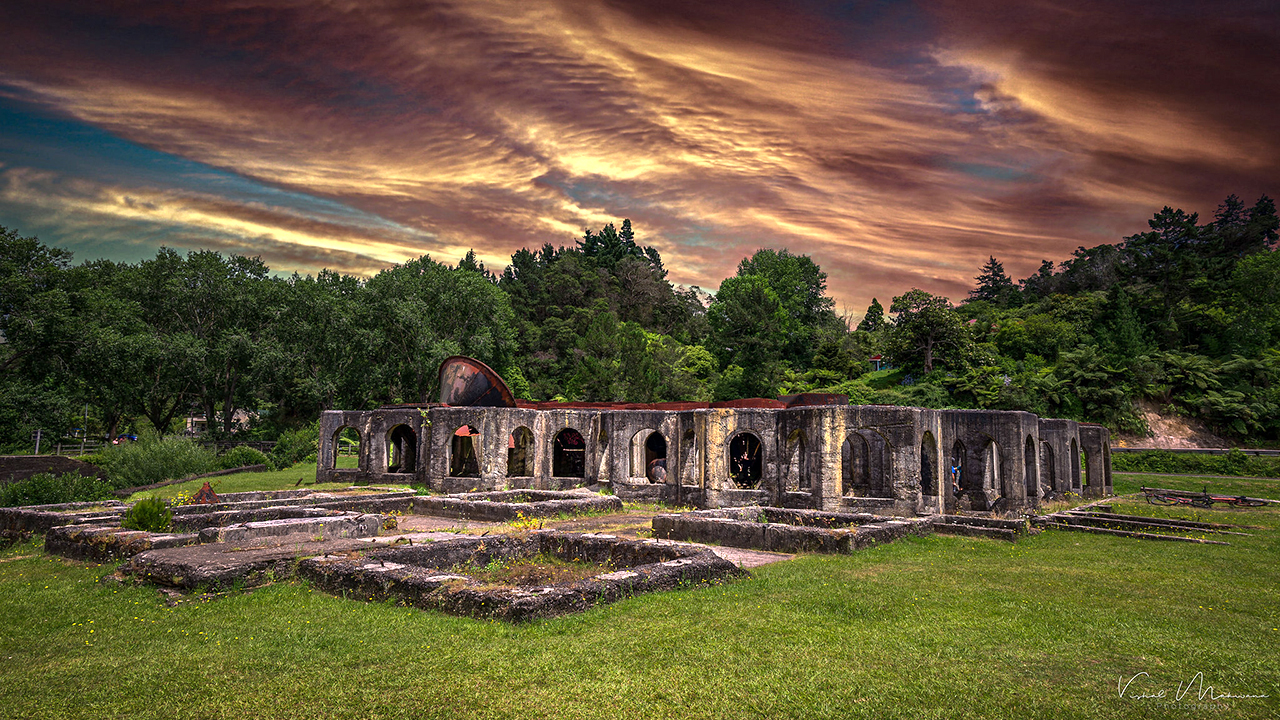
Victoria Battery Cyanide Tank Holders, Waikino. CC BY-SA 2.0 Image courtesy of www.flickr.com | gérard | 17/03/2017 | gérard
Victoria Battery Cyanide Tank Holders, Waikino. CC BY 2.0 Image courtesy of www.flickr.com | Vishal Makwana | 01/01/2023 | Vishal Makwana
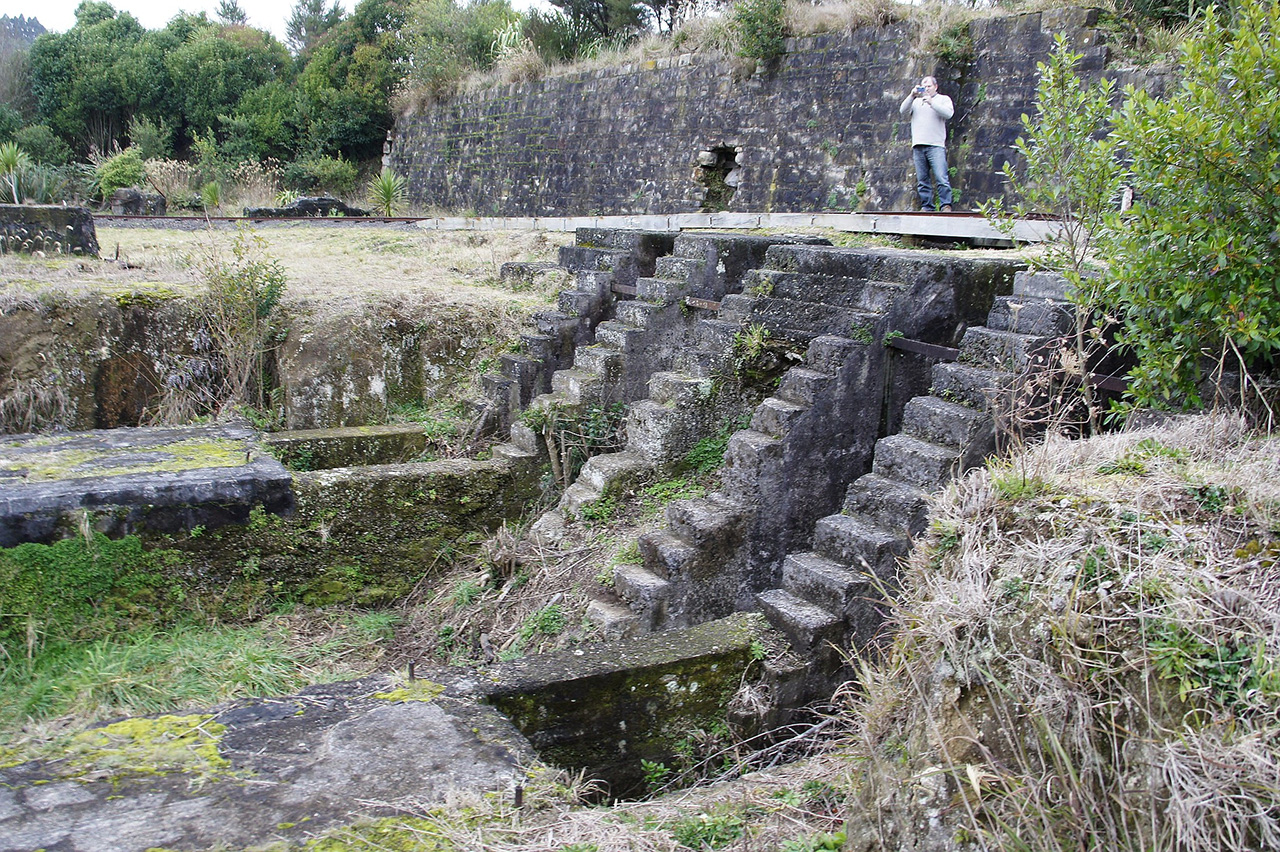
Victoria Battery Cyanide Tank Holders, Waikino. CC BY 2.0 Image courtesy of www.flickr.com | Natalia Volna - itravelNZ® | 21/07/2012 | Natalia Volna
Victoria Battery Cyanide Tank Holders, Waikino. Image courtesy of www.flickr.com | Derek Smith - travelling-light | 02/07/2005 | Derek Smith
Victoria Battery Cyanide Tank Holders, Waikino. CC BY-SA 2.0 Image courtesy of www.flickr.com | gérard | 17/03/2017 | gérard
Victoria Battery Cyanide Tank Holders, Waikino. CC BY 2.0 Image courtesy of www.flickr.com | Vishal Makwana | 01/01/2023 | Vishal Makwana
Victoria Battery Cyanide Tank Holders, Waikino. CC BY 2.0 Image courtesy of www.flickr.com | Natalia Volna - itravelNZ® | 21/07/2012 | Natalia Volna
Victoria Battery Cyanide Tank Holders, Waikino. Image courtesy of www.flickr.com | Derek Smith - travelling-light | 02/07/2005 | Derek Smith

List Entry Information

Overview

Status
Listed

List Entry Status
Historic Place Category 1

Access
Able to Visit

List Number
4678

Date Entered
28th June 1990

Date of Effect
28th June 1990

City/District Council
Hauraki District

Region
Waikato Region

Legal description

Sec 1 SO 59644 Blk XIV Ohinemuri SD Rec Res

Detailed List Entry
Significance

Historic Significance

Historical Significance or Value This historic place was registered under the Historic Places Act 1980. This report includes the text from the original Building Classification Committee report considered by the NZHPT Board at the time of registration. The cyanide tank holders at the Victoria Battery site, Waikino, are a visible reminder of the successful field application of an improved method of extracting gold and silver from crushed ores. The method had been discovered in Scotland, but its industrial application was a local development. The holders and adjacent ruins indicate the large scale of the gold mining enterprise at Waihi and Karangahake.

Physical Significance

This historic place was registered under the Historic Places Act 1980. This report includes the text from the original Building Classification Committee report considered by the NZHPT Board at the time of registration. ARCHITECTURAL QUALITY: These cyanide tank holders make full use of the plastic qualities of poured concrete in the form of interlocking hexagonal elements. It achieves a compact industrial design, making effective use of the restricted space within the former industrial complex. This is a unique structure not repeated at other gold producing plants. TOWNSCAPE/LANDMARK VALUE: This remnant of industrial architecture is a prominent feature of the Ohinemuri River flat at the entrance to the Karangahake Gorge. It is clearly visible from State Highway 2.

Construction Details

Start Year

1902

Finish Year

1910

Type

Original Construction

Description

Between 1902-1910

Construction Materials

Concrete

Notable Features

Its considerable visual appeal, from close-up

Physical Description

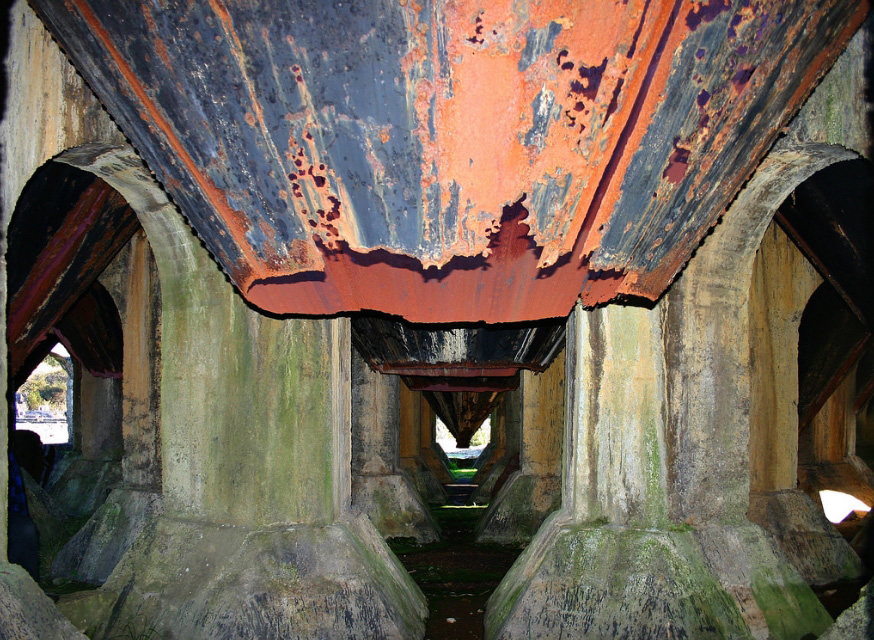
This historic place was registered under the Historic Places Act 1980. This report includes the text from the original Building Classification Committee report considered by the NZHPT Board at the time of registration. ARCHITECTURAL DESCRIPTION: The ruins consist of a number of hexagonal supports for the cylindrical cyanide tanks. Between the angles each vertical side has an arched opening. The whole complex is an integrated construction in concrete. In the top of each unit is a circular seating for the steel tanks. In many of these remain the inverted conical floors of the tanks through which the air which agitated the slimes and cyanide solution was forced. MODIFICATIONS: All superstructure and ancillary plant has been removed.

Reference

Completion Date

4th January 1990

Information Sources

McAra, J. B., 1988

J B McAra, Gold Mining at Waihi 1878-1952, Waihi, 1988

Thornton, 1982

Geoffrey G. Thornton, New Zealand's Industrial Heritage, A.H. & A.W. Reed, Wellington, 1982

Report Written By

A copy of this report is available from the NZHPT Northern Region office Please note that entry on the New Zealand Heritage List/Rarangi Korero identifies only the heritage values of the property concerned, and should not be construed as advice on the state of the property, or as a comment of its soundness or safety, including in regard to earthquake risk, safety in the event of fire, or insanitary conditions. This historic place was registered under the Historic Places Act 1980. This report includes the text from the original Building Classification Committee report considered by the NZHPT Board at the time of registration. This historic place was registered under the Historic Places Act 1980. This report includes the text from the original Building Classification Committee report considered by the NZHPT Board at the time of registration.

Further Information

Current Usages

Uses: Civic Facilities

Specific Usage: Historic or recreation reserve

Former Usages

Themes

Web Links

description: Engineering NZ Heritage

url: https://www.engineeringnz.org/our-work/heritage/heritage-records/victoria-battery/
Overview

Status

Listed

List Entry Status

Historic Place Category 1

Access

Able to Visit

List Number

4678

Date Entered

28th June 1990

Date of Effect

28th June 1990

City/District Council

Hauraki District

Region

Waikato Region

Legal description

Sec 1 SO 59644 Blk XIV Ohinemuri SD Rec Res

Status

Listed

List Entry Status

Historic Place Category 1

Access

Able to Visit

List Number

4678

Date Entered

28th June 1990

Date of Effect

28th June 1990

City/District Council

Hauraki District

Region

Waikato Region

Legal description

Sec 1 SO 59644 Blk XIV Ohinemuri SD Rec Res

Significance

Why is this place significant?

Historic Significance

Historical Significance or Value This historic place was registered under the Historic Places Act 1980. This report includes the text from the original Building Classification Committee report considered by the NZHPT Board at the time of registration. The cyanide tank holders at the Victoria Battery site, Waikino, are a visible reminder of the successful field application of an improved method of extracting gold and silver from crushed ores. The method had been discovered in Scotland, but its industrial application was a local development. The holders and adjacent ruins indicate the large scale of the gold mining enterprise at Waihi and Karangahake.

Physical Significance

This historic place was registered under the Historic Places Act 1980. This report includes the text from the original Building Classification Committee report considered by the NZHPT Board at the time of registration. ARCHITECTURAL QUALITY: These cyanide tank holders make full use of the plastic qualities of poured concrete in the form of interlocking hexagonal elements. It achieves a compact industrial design, making effective use of the restricted space within the former industrial complex. This is a unique structure not repeated at other gold producing plants. TOWNSCAPE/LANDMARK VALUE: This remnant of industrial architecture is a prominent feature of the Ohinemuri River flat at the entrance to the Karangahake Gorge. It is clearly visible from State Highway 2.

Why is this place significant?

Historic Significance

Historical Significance or Value This historic place was registered under the Historic Places Act 1980. This report includes the text from the original Building Classification Committee report considered by the NZHPT Board at the time of registration. The cyanide tank holders at the Victoria Battery site, Waikino, are a visible reminder of the successful field application of an improved method of extracting gold and silver from crushed ores. The method had been discovered in Scotland, but its industrial application was a local development. The holders and adjacent ruins indicate the large scale of the gold mining enterprise at Waihi and Karangahake.

Physical Significance

This historic place was registered under the Historic Places Act 1980. This report includes the text from the original Building Classification Committee report considered by the NZHPT Board at the time of registration. ARCHITECTURAL QUALITY: These cyanide tank holders make full use of the plastic qualities of poured concrete in the form of interlocking hexagonal elements. It achieves a compact industrial design, making effective use of the restricted space within the former industrial complex. This is a unique structure not repeated at other gold producing plants. TOWNSCAPE/LANDMARK VALUE: This remnant of industrial architecture is a prominent feature of the Ohinemuri River flat at the entrance to the Karangahake Gorge. It is clearly visible from State Highway 2.

Construction Information

Construction Details

Start Year

1902

Finish Year

1910

Type

Original Construction

Description

Between 1902-1910

Construction Materials

Concrete

Notable Features

Its considerable visual appeal, from close-up

Construction Details

Start Year

1902

Finish Year

1910

Type

Original Construction

Description

Between 1902-1910

Construction Materials

Concrete

Notable Features

Its considerable visual appeal, from close-up

Physical Description

This historic place was registered under the Historic Places Act 1980. This report includes the text from the original Building Classification Committee report considered by the NZHPT Board at the time of registration. ARCHITECTURAL DESCRIPTION: The ruins consist of a number of hexagonal supports for the cylindrical cyanide tanks. Between the angles each vertical side has an arched opening. The whole complex is an integrated construction in concrete. In the top of each unit is a circular seating for the steel tanks. In many of these remain the inverted conical floors of the tanks through which the air which agitated the slimes and cyanide solution was forced. MODIFICATIONS: All superstructure and ancillary plant has been removed.

This historic place was registered under the Historic Places Act 1980. This report includes the text from the original Building Classification Committee report considered by the NZHPT Board at the time of registration. ARCHITECTURAL DESCRIPTION: The ruins consist of a number of hexagonal supports for the cylindrical cyanide tanks. Between the angles each vertical side has an arched opening. The whole complex is an integrated construction in concrete. In the top of each unit is a circular seating for the steel tanks. In many of these remain the inverted conical floors of the tanks through which the air which agitated the slimes and cyanide solution was forced. MODIFICATIONS: All superstructure and ancillary plant has been removed.

Reference

Historical and Associated Iwi / Hapū / Whānau

Completion Date

4th January 1990

Information Sources

McAra, J. B., 1988

J B McAra, Gold Mining at Waihi 1878-1952, Waihi, 1988

Thornton, 1982

Geoffrey G. Thornton, New Zealand's Industrial Heritage, A.H. & A.W. Reed, Wellington, 1982

Other Information

A copy of this report is available from the NZHPT Northern Region office Please note that entry on the New Zealand Heritage List/Rarangi Korero identifies only the heritage values of the property concerned, and should not be construed as advice on the state of the property, or as a comment of its soundness or safety, including in regard to earthquake risk, safety in the event of fire, or insanitary conditions. This historic place was registered under the Historic Places Act 1980. This report includes the text from the original Building Classification Committee report considered by the NZHPT Board at the time of registration. This historic place was registered under the Historic Places Act 1980. This report includes the text from the original Building Classification Committee report considered by the NZHPT Board at the time of registration.

Historical and Associated Iwi / Hapū / Whānau

Completion Date

4th January 1990

Information Sources

McAra, J. B., 1988

J B McAra, Gold Mining at Waihi 1878-1952, Waihi, 1988

Thornton, 1982

Geoffrey G. Thornton, New Zealand's Industrial Heritage, A.H. & A.W. Reed, Wellington, 1982

Other Information

A copy of this report is available from the NZHPT Northern Region office Please note that entry on the New Zealand Heritage List/Rarangi Korero identifies only the heritage values of the property concerned, and should not be construed as advice on the state of the property, or as a comment of its soundness or safety, including in regard to earthquake risk, safety in the event of fire, or insanitary conditions. This historic place was registered under the Historic Places Act 1980. This report includes the text from the original Building Classification Committee report considered by the NZHPT Board at the time of registration. This historic place was registered under the Historic Places Act 1980. This report includes the text from the original Building Classification Committee report considered by the NZHPT Board at the time of registration.

Further Information

Current Usages

Uses: Civic Facilities

Specific Usage: Historic or recreation reserve

Web Links

description: Engineering NZ Heritage

url: https://www.engineeringnz.org/our-work/heritage/heritage-records/victoria-battery/
Current Usages

Uses: Civic Facilities

Specific Usage: Historic or recreation reserve

Web Links

description: Engineering NZ Heritage

url: https://www.engineeringnz.org/our-work/heritage/heritage-records/victoria-battery/

Location

Loading
Related listings
Powerhouse
Powerhouse
Battery Foundations
Battery Foundations
Battery Foundations
Battery Foundations
Powerhouse
Powerhouse
Sign up to hear more

Get the latest heritage news, features and events delivered
straight to your inbox.

Subscribe