

owned by the church for 102 years.
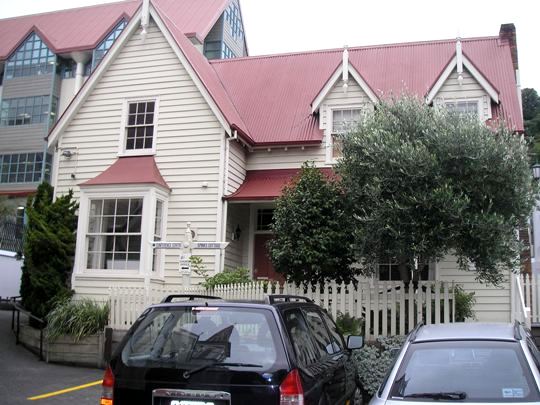
Typical, though large, cottage of the 1860s rare in Wellington now and in remarkable original condition. One of the oldest surviving examples of early domestic architecture in the city.
Spinks Cottage forms an integral part of a precinct of historic wooden buildings with the church and church hall.
List Entry Information
Status
Listed
List Entry Status
Historic Place Category 1
Access
Private/No Public Access
List Number
4704
Date Entered
25th September 1986
Date of Effect
25th September 1986
City/District Council
Wellington City
Region
Wellington Region
Legal description
Pt Lot 1 DP 72762 - Spinks Cottage
Status
Listed
List Entry Status
Historic Place Category 1
Access
Private/No Public Access
List Number
4704
Date Entered
25th September 1986
Date of Effect
25th September 1986
City/District Council
Wellington City
Region
Wellington Region
Legal description
Pt Lot 1 DP 72762 - Spinks Cottage
Why is this place significant?
Historic Significance
Historical Significance or Value The cottage was built for William Spinks, an early Wellington storekeeper, and from 1862 the first Wharfinger (Wharf Manager) of Queen's Wharf. The cottage has strong links with the early history of education in Wellington. For many years part of the house was used by Mr Spinks daughter as a school for young ladies. The school closed in 1879 and in 1884 the cottage was bought by St John's Presbyterian Church. The cottage had been owned by the church for 102 years.
Physical Significance
ARCHITECTURAL SIGNIFICANCE Typical, though large, cottage of the 1860s rare in Wellington now and in remarkable original condition. One of the oldest surviving examples of early domestic architecture in the city. Construction methods are of interest. SPECIAL FEATURES Has original windows. The large ones are unusual by being four panes wide by four deep. Finials, finely moulded beadings and a tight staircase leading to four heavily coved bedrooms are other features. TOWNSCAPE/LANDSCAPE SIGNIFICANCE Forms an integral part of a precinct of historic wooden buildings with the church and church hall.
Why is this place significant?
Historic Significance
Historical Significance or Value The cottage was built for William Spinks, an early Wellington storekeeper, and from 1862 the first Wharfinger (Wharf Manager) of Queen's Wharf. The cottage has strong links with the early history of education in Wellington. For many years part of the house was used by Mr Spinks daughter as a school for young ladies. The school closed in 1879 and in 1884 the cottage was bought by St John's Presbyterian Church. The cottage had been owned by the church for 102 years.
Physical Significance
ARCHITECTURAL SIGNIFICANCE Typical, though large, cottage of the 1860s rare in Wellington now and in remarkable original condition. One of the oldest surviving examples of early domestic architecture in the city. Construction methods are of interest. SPECIAL FEATURES Has original windows. The large ones are unusual by being four panes wide by four deep. Finials, finely moulded beadings and a tight staircase leading to four heavily coved bedrooms are other features. TOWNSCAPE/LANDSCAPE SIGNIFICANCE Forms an integral part of a precinct of historic wooden buildings with the church and church hall.
Construction Details
Start Year
1863
startYearCirca
Type
Original Construction
Construction Materials
Weatherboard pit-sawn, with corrugated iron roof.
Construction Details
Start Year
1863
startYearCirca
Type
Original Construction
Construction Materials
Weatherboard pit-sawn, with corrugated iron roof.
Architectural Description (Style): Two-storey building with steep pitched gable roofs, dormer windows, finials and multi-paned sash windows. Modifications: Interior recently restored by owners and verandah added to exterior following style of original one.
Architectural Description (Style): Two-storey building with steep pitched gable roofs, dormer windows, finials and multi-paned sash windows. Modifications: Interior recently restored by owners and verandah added to exterior following style of original one.
Historical and Associated Iwi / Hapū / Whānau
Other Information
A fully referenced registration report is available from the NZHPT Central region office Please note that entry on the New Zealand Heritage List/Rarangi Korero identifies only the heritage values of the property concerned, and should not be construed as advice on the state of the property, or as a comment of its soundness or safety, including in regard to earthquake risk, safety in the event of fire, or insanitary conditions. This historic place was registered under the Historic Places Act 1980. This report includes the text from the original Building Classification Committee report considered by the NZHPT Board at the time of registration.
Historical and Associated Iwi / Hapū / Whānau
Other Information
A fully referenced registration report is available from the NZHPT Central region office Please note that entry on the New Zealand Heritage List/Rarangi Korero identifies only the heritage values of the property concerned, and should not be construed as advice on the state of the property, or as a comment of its soundness or safety, including in regard to earthquake risk, safety in the event of fire, or insanitary conditions. This historic place was registered under the Historic Places Act 1980. This report includes the text from the original Building Classification Committee report considered by the NZHPT Board at the time of registration.
Current Usages
Uses: Health
Specific Usage: Health Services - other
Uses: Trade
Specific Usage: Office building/Offices
Former Usages
General Usage: Accommodation
Specific Usage: House
General Usage: Religion
Specific Usage: Vicarage/Manse/Presbytery/Rectory
Current Usages
Uses: Health
Specific Usage: Health Services - other
Uses: Trade
Specific Usage: Office building/Offices
Former Usages
General Usage: Accommodation
Specific Usage: House
General Usage: Religion
Specific Usage: Vicarage/Manse/Presbytery/Rectory
