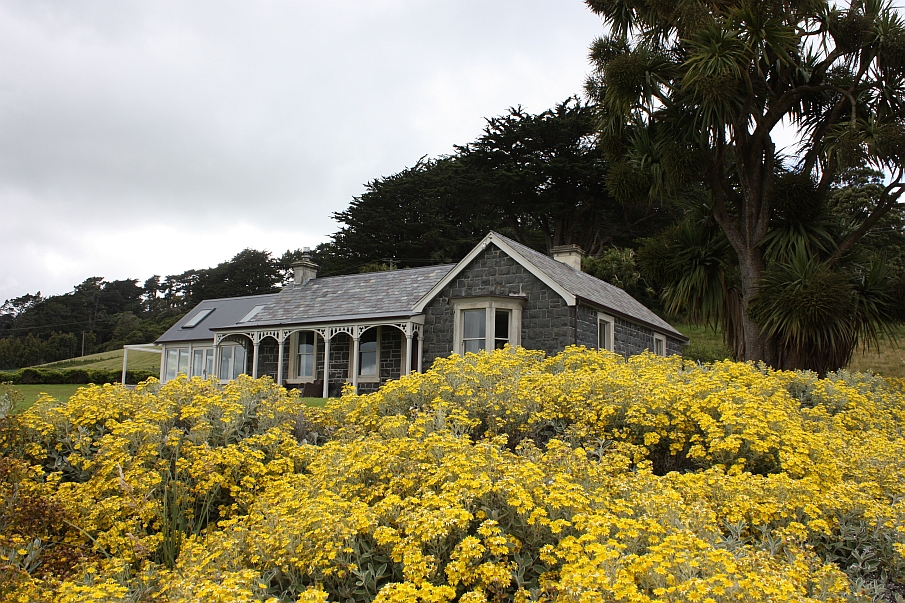
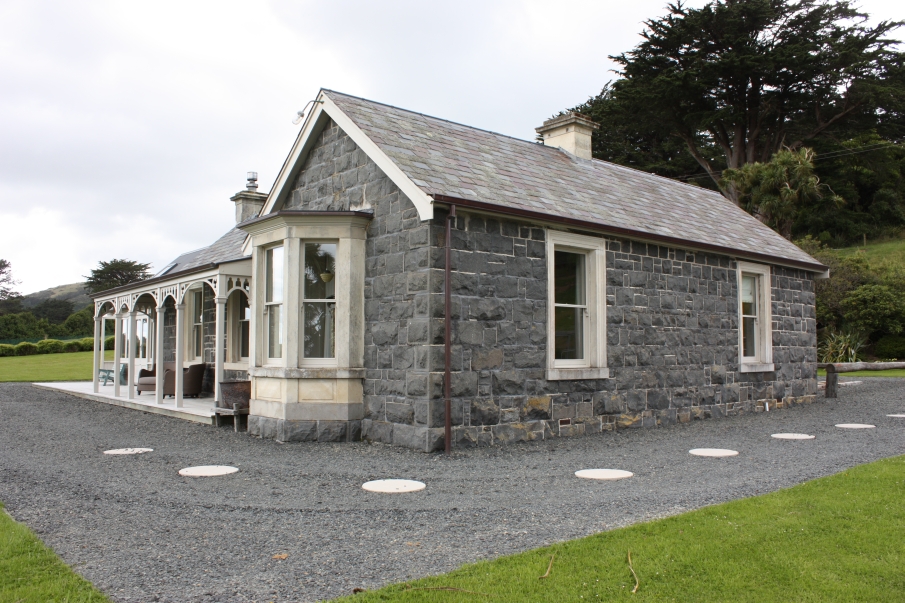
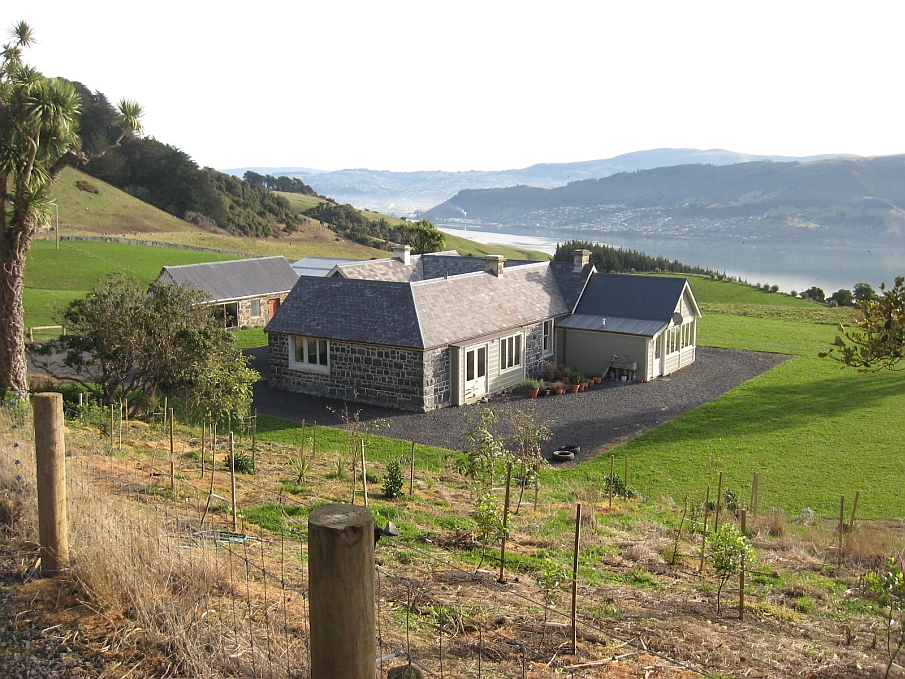
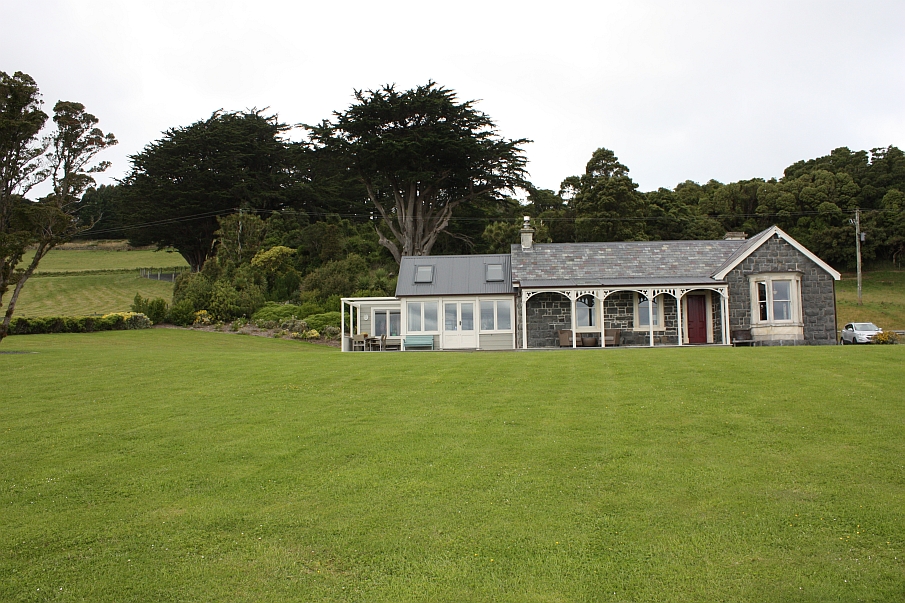
Springfield, located at 949 Highcliff Road, Otago Peninsula, has outstanding historical value as the site of the first New Zealand co-operative cheese factory, established in August 1871. With high architectural values, Springfield is a well-preserved, good quality farmstead of the 1860s, with bluestone buildings typical of those erected by farmers of moderate wealth around Dunedin.
Both iwi history and archaeological evidence show Māori occupation in the Ōtākou / Otago region since the twelfth century. The Otago Peninsula (Muaupoko) holds an important and unique place in the history of Dunedin and the larger region and is a stronghold of both Kāti Māmoe and Kāi Tahu. Continuous settlement has been identified at Little Papanui and at Kōkōmuka or Harwood, which Jill Hamel described as ‘one of the most continually occupied places’ since humans arrived in Aotearoa. Ōtākou is considered to have had one of the highest populations in the south from 1769 to 1836, and is said to have had up to 2000 inhabitants in the early nineteenth century. By the time of Europeans’ arrival, the descendants of Waitaha and Kāti Māmoe had largely integrated with Kāi Tahu to form a single iwi entity. Only a small number of European settlers settled on the Otago Peninsula at first, as communication was a critical issue and the isolation of many farms hindered their economic development. The construction of the road system opened the land to be developed, and land in the area was mainly taken up in the 1860s. Dairying was the dominant farming on the peninsula.
John Mathieson and his wife Catherine arrived in Dunedin in 1858 and established a small dairy farm in Grants Braes, with Catherine making cheese and butter. With the profits and his capital brought over from Scotland, John bought the 78-acre Springfield property in 1864. In 1871, a group of eight settlers from the Highcliff area met at the Mathiesons’ place, with the intention of establishing a co-operative dairy company to produce cheese for market. The Otago Peninsula Cheese Factory Company Limited was established on 22 August 1871, with the basis of supply being that each £1 share would represent a daily supply of 10 quarts (10.4 litres) of milk. The first cheese making premises were set up in an outbuilding on the Mathiesons’ farm, where production of Dunlop cheese (a Scottish style of cheese) started in September. Mathieson offered the use of his home to make the cheese, with Catherine heating the whey in her kitchen and teaching the manager, John McGregor, the methods she had used for years. Three enamelled, cast iron tubs, each holding 40-50 pounds of curd (18-22kg), were set in the kitchen wing, and a wooden vat holding 100 gallons of milk (378 litres) was installed in the barn. The barn was also used as the curing room. In 1875, John left the company, and the factory was relocated to a new brick and concrete factory at Pukehiki under the name of the ‘New Otago Peninsula Cheese Making Company’. John tried sheep farming, but by 1878 returned to the more successful dairy farming. Catherine Mathieson died in 1883, aged 63, and John died in 1887, aged 65, leaving son James to farm the property until 1917.
Springfield is a vernacular Scottish cottage with simple gables and one bay window, and a roof covered with Welsh tiles. The architect was likely John Mathieson himself, and he presumably copied the design from farmsteads in Scotland. The walls are built from basalt quarried from the property, the window facings are Ōamaru stone, and the interior woodwork is rimu and Baltic pine bought from Larnach and Guthrie. The house is built around an inner courtyard, which is almost completely enclosed by the building. A large wooden bedroom extension was added in 1884 and removed around 1950. The buildings underwent a major renovation and restoration in 2006 by then-owners Marly and Peter Wheen, who worked with a conservation architect under HNZPT guidance. Further additions were made to the house in 2014.
Both iwi history and archaeological evidence show Māori occupation in the Ōtākou / Otago region since the twelfth century. The Otago Peninsula (Muaupoko) holds an important and unique place in the history of Dunedin and the larger region and is a stronghold of both Kāti Māmoe and Kāi Tahu. Continuous settlement has been identified at Little Papanui and at Kōkōmuka or Harwood, which Jill Hamel described as ‘one of the most continually occupied places’ since humans arrived in Aotearoa. Ōtākou is considered to have had one of the highest populations in the south from 1769 to 1836, and is said to have had up to 2000 inhabitants in the early nineteenth century. By the time of Europeans’ arrival, the descendants of Waitaha and Kāti Māmoe had largely integrated with Kāi Tahu to form a single iwi entity. Only a small number of European settlers settled on the Otago Peninsula at first, as communication was a critical issue and the isolation of many farms hindered their economic development. The construction of the road system opened the land to be developed, and land in the area was mainly taken up in the 1860s. Dairying was the dominant farming on the peninsula.
John Mathieson and his wife Catherine arrived in Dunedin in 1858 and established a small dairy farm in Grants Braes, with Catherine making cheese and butter. With the profits and his capital brought over from Scotland, John bought the 78-acre Springfield property in 1864. In 1871, a group of eight settlers from the Highcliff area met at the Mathiesons’ place, with the intention of establishing a co-operative dairy company to produce cheese for market. The Otago Peninsula Cheese Factory Company Limited was established on 22 August 1871, with the basis of supply being that each £1 share would represent a daily supply of 10 quarts (10.4 litres) of milk. The first cheese making premises were set up in an outbuilding on the Mathiesons’ farm, where production of Dunlop cheese (a Scottish style of cheese) started in September. Mathieson offered the use of his home to make the cheese, with Catherine heating the whey in her kitchen and teaching the manager, John McGregor, the methods she had used for years. Three enamelled, cast iron tubs, each holding 40-50 pounds of curd (18-22kg), were set in the kitchen wing, and a wooden vat holding 100 gallons of milk (378 litres) was installed in the barn. The barn was also used as the curing room. In 1875, John left the company, and the factory was relocated to a new brick and concrete factory at Pukehiki under the name of the ‘New Otago Peninsula Cheese Making Company’. John tried sheep farming, but by 1878 returned to the more successful dairy farming. Catherine Mathieson died in 1883, aged 63, and John died in 1887, aged 65, leaving son James to farm the property until 1917.
Springfield is a vernacular Scottish cottage with simple gables and one bay window, and a roof covered with Welsh tiles. The architect was likely John Mathieson himself, and he presumably copied the design from farmsteads in Scotland. The walls are built from basalt quarried from the property, the window facings are Ōamaru stone, and the interior woodwork is rimu and Baltic pine bought from Larnach and Guthrie. The house is built around an inner courtyard, which is almost completely enclosed by the building. A large wooden bedroom extension was added in 1884 and removed around 1950. The buildings underwent a major renovation and restoration in 2006 by then-owners Marly and Peter Wheen, who worked with a conservation architect under HNZPT guidance. Further additions were made to the house in 2014.