DonateMembershipVisit Heritage
  • Tūrangawaewae
    Places
  • Tira Māori
    Māori Heritage
  • Poutairangahia
    Archaeology
  • Rauemi
    Resources
  • Mō Tātou
    About Us
  • New Zealand Heritage List
  • Nominate and submit
  • Explore the List
  • National Historic Landmarks
  • Plaques
  • Rainbow List Project
  • Lost heritage
  • Visit Heritage
  • Our properties
  • Turnbull House Project
  • Collections
  • Shop
  • Tohu Whenua
  • Tira Māori
  • Conserving Māori heritage
  • Marae built heritage
  • Māori heritage on the List
  • Hinemihi—Te Hokinga Mai
  • What is archaeology?
  • Is there a site on my property?
  • What are my legal requirements?
  • Affecting an archaeological site
  • Declaring an archaeological site
  • Archaeology FAQs
  • Archaeology Digital Library
  • Archaeology guidelines and templates
  • Resources
  • Funding
  • Publications
  • Sustainable management guides
  • Disaster recovery
  • Podcasts & digital resources
  • Education Hub
  • Conservation plans
  • About
  • Board
  • Māori Heritage Council
  • Senior Staff
  • Offices
  • Contact us
  • Careers
  • Covenants
  • Fast-track
  • Corporate documents
  • Currently consulting on
  • Our submissions
  • News
  • Covid-19 response
Quick links
Rārangi Kōrero | The List
Explore the List
National Historic Landmarks
Ngā Manawhenua o Aotearoa me ōna Kōrero Tūturu
Quick links
Tapuwae
A Vision for Places of Māori Heritage
Funding for Māori Heritage
Resources
Quick links
Archaeological Authority Portal
Applying for an archaeological authority
Archaeology FAQs
Browse the most frequently asked questions about archaeological authorities and the archaeological process.
Quick links
Quick links
News
News Keep up to date with Heritage New Zealand Pouhere Taonga
Membership
Membership Find out more and sign up today
DonateMembershipVisit Heritage
  • Tūrangawaewae
    Places
  • Tira Māori
    Māori Heritage
  • Poutairangahia
    Archaeology
  • Rauemi
    Resources
  • Mō Tātou
    About Us
  • New Zealand Heritage List
  • Nominate and submit
  • Explore the List
  • National Historic Landmarks
  • Plaques
  • Rainbow List Project
  • Lost heritage
  • Visit Heritage
  • Our properties
  • Turnbull House Project
  • Collections
  • Shop
  • Tohu Whenua
  • Tira Māori
  • Conserving Māori heritage
  • Marae built heritage
  • Māori heritage on the List
  • Hinemihi—Te Hokinga Mai
  • What is archaeology?
  • Is there a site on my property?
  • What are my legal requirements?
  • Affecting an archaeological site
  • Declaring an archaeological site
  • Archaeology FAQs
  • Archaeology Digital Library
  • Archaeology guidelines and templates
  • Resources
  • Funding
  • Publications
  • Sustainable management guides
  • Disaster recovery
  • Podcasts & digital resources
  • Education Hub
  • Conservation plans
  • About
  • Board
  • Māori Heritage Council
  • Senior Staff
  • Offices
  • Contact us
  • Careers
  • Covenants
  • Fast-track
  • Corporate documents
  • Currently consulting on
  • Our submissions
  • News
  • Covid-19 response
Quick links
Rārangi Kōrero | The List
Explore the List
National Historic Landmarks
Ngā Manawhenua o Aotearoa me ōna Kōrero Tūturu
Quick links
Tapuwae
A Vision for Places of Māori Heritage
Funding for Māori Heritage
Resources
Quick links
Archaeological Authority Portal
Applying for an archaeological authority
Archaeology FAQs
Browse the most frequently asked questions about archaeological authorities and the archaeological process.
Quick links
Quick links
News
News Keep up to date with Heritage New Zealand Pouhere Taonga
Membership
Membership Find out more and sign up today
  • Places
  • Nominate and submit
  • National Historic Landmarks
  • Places
  • Nominate and submit
  • National Historic Landmarks
  • Tira Māori
  • Conserving Māori heritage
  • Marae built heritage
  • Tira Māori
  • Conserving Māori heritage
  • Marae built heritage
  • Archaeological authorities
  • Archaeology Digital Library
  • Archaeological authorities
  • Archaeology Digital Library
  • All resources
  • Publications
  • Funding
  • All resources
  • Publications
  • Funding
  • FAQs
  • FAQs
Follow us on:
Places
  • Places
  • Nominate and submit
  • National Historic Landmarks
Tira Māori
  • Tira Māori
  • Conserving Māori heritage
  • Marae built heritage
Archaeology
  • Archaeological authorities
  • Archaeology Digital Library
Resources
  • All resources
  • Publications
  • Funding
FAQs
  • FAQs
Follow us on
HomePrivacyTerms and conditionsAbout this site
© Heritage New Zealand Pouhere Taonga 2026.
 
Ross Creek Valve Tower

Off Burma Road, Ross Creek Water Reserve, DUNEDIN

Public

Historic Place Category 1

List No. 4722

Quick links:
List GalleryLocationDetails
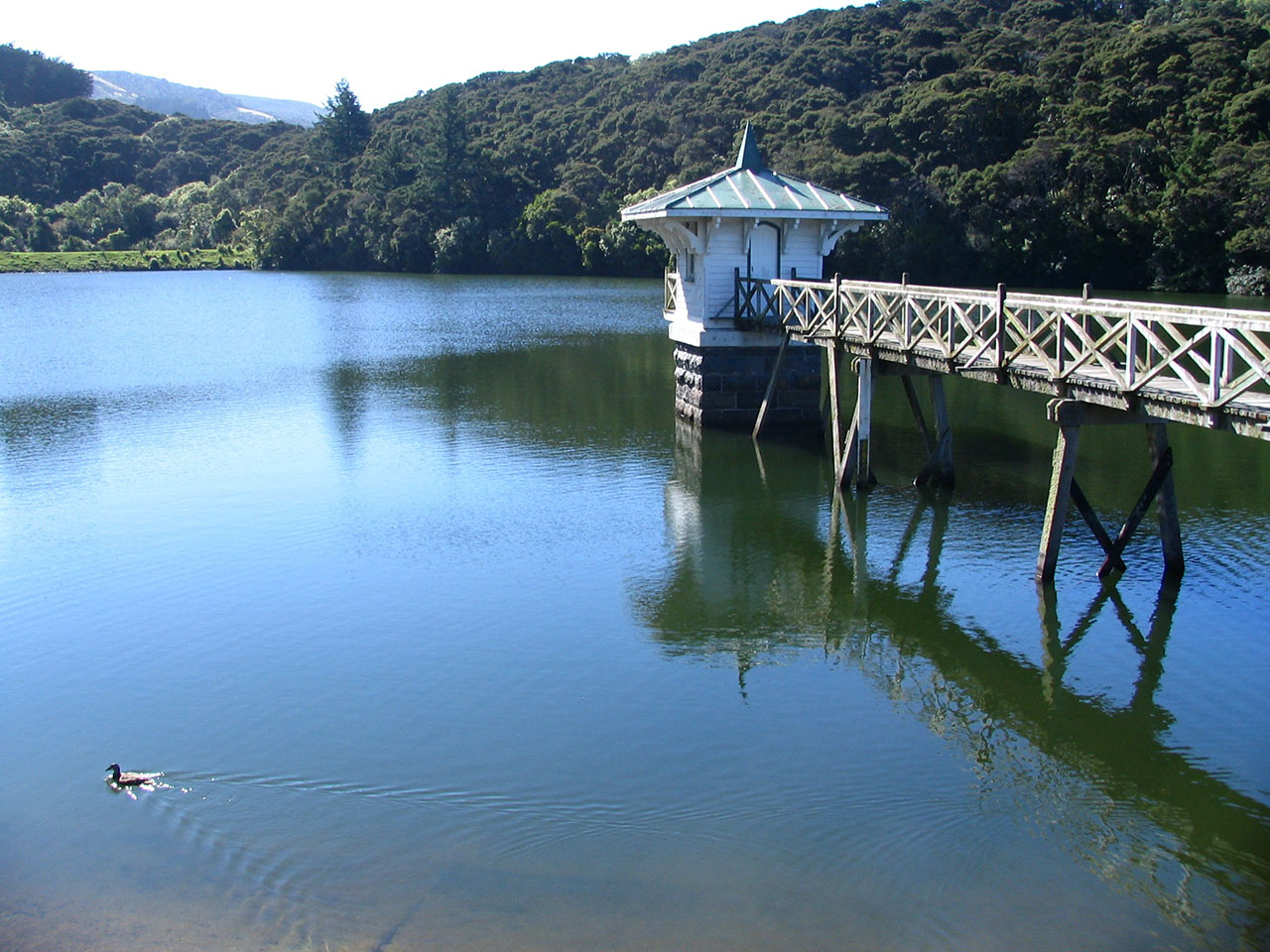
Located in a beautiful bush clad reserve in the north end of Dunedin, the Ross Creek Valve Tower is a lightly ornamented Victorian industrial structure. Designed in 1864 and completed in 1867 as part of the development of Ross Creek Reservoir, this is a rare example of a manual valve tower on a city reservoir. It is an important component of part of the oldest earth dam in New Zealand, and as the country’s first major urban water supply, it is one of Dunedin’s oldest amenity assets. The valve tower has historic and technological significance.

After settlement by the Scots in 1848, Dunedin’s population expanded rapidly. In 1859 John Turnbull Thompson, the City Engineer, believed a population of 10,000 could be serviced by the plentiful water running down from the city’s streams. By 1864 the population had expanded to over 15,000 and the need for a reliable water management system became a necessity, both for public health and the protection of property from fire. Richard Woolley an engineer with the private Water Works Company established in 1863, produced plans to use Ross Creek but the company folded before any progress was made. The reservoir was formally opened on 9 December 1867 as the Royal Albert Reservoir. The name didn’t stick however, and it eventually became known as Ross Creek Reservoir, named after Archibald Hilson Ross (1821-1900), who was Mayor of Dunedin from 1880-1881.

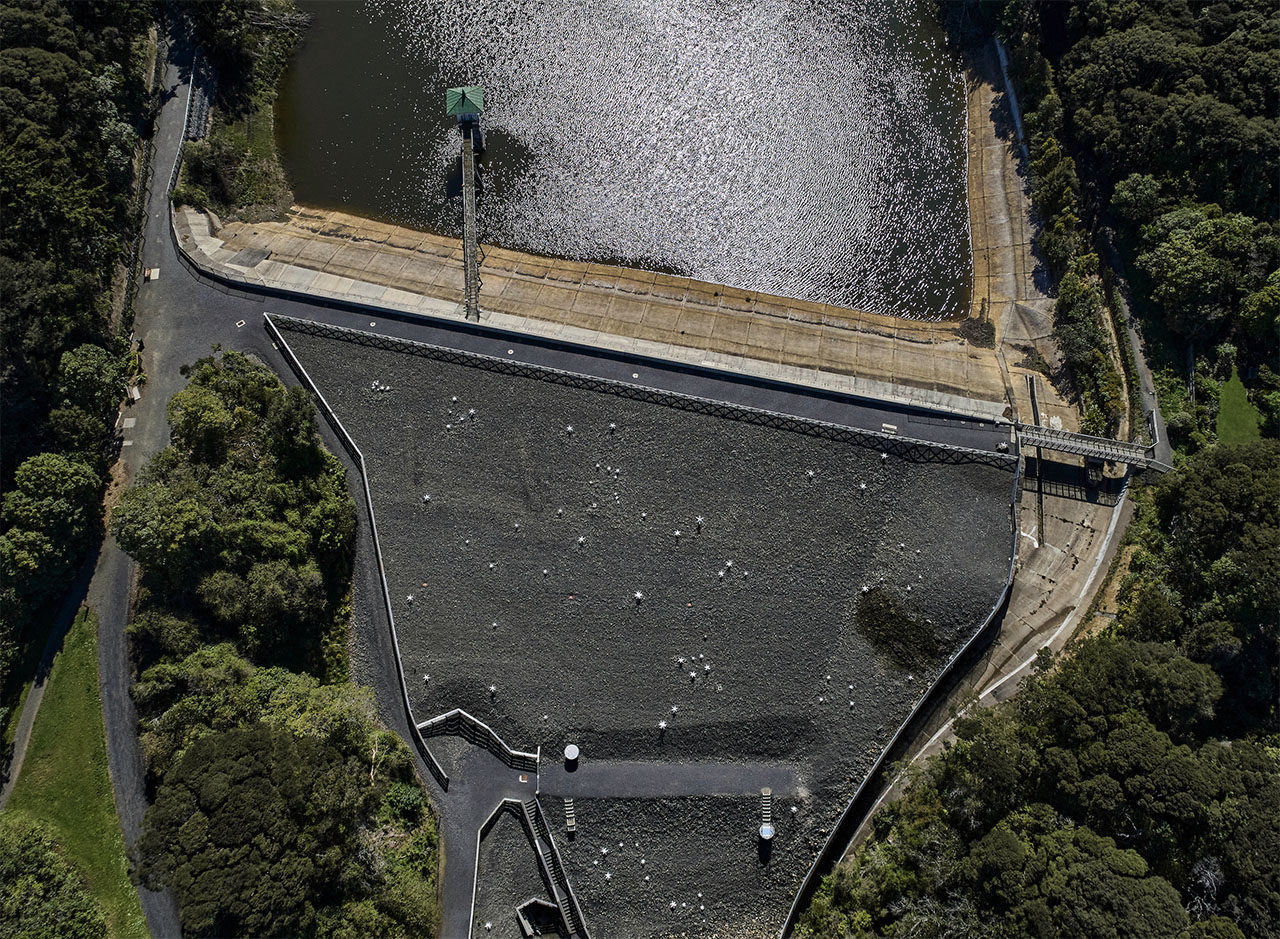
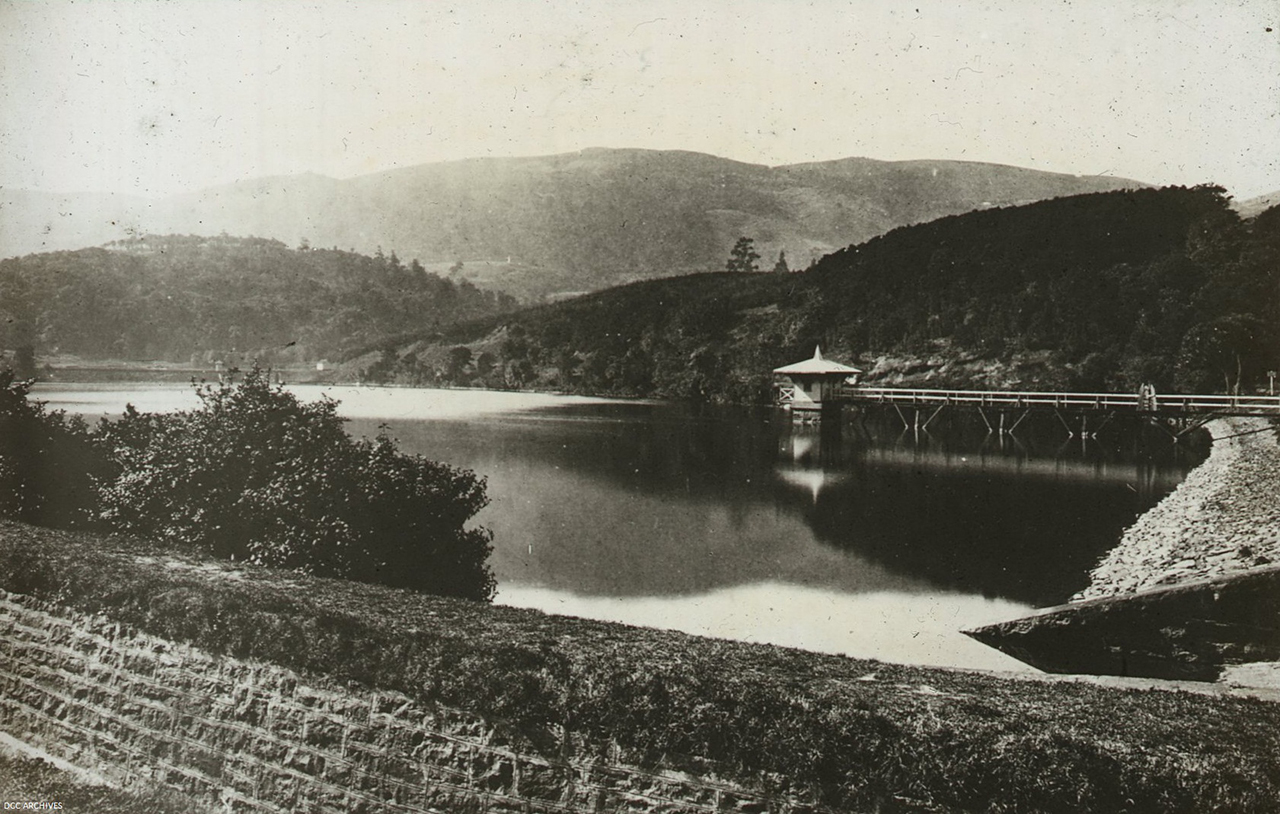
Ross Creek flows from the Leith Saddle towards Leith Valley and the Ross Creek Reservoir sits between two spurs, created by the Dunedin volcano, where the Ross and Sherriff Creeks meet. Ralph Donkin's undated drawing, presumably made about 1864, shows a stone hut with open classical arches on top of the pedestal. It had a corniced and pointed roof. Later, Mr David Proudfoot was contracted for the construction at a rate of £13,286 ($1,527,196 NZD in 2020). John McGregor's drawings in 1870, which appear to be of the completed structure show a wooden enclosure on top of a similar shape to Donkin's with the wide eaves replacing the cornice and a pointed roof. McGregor also drew a plan of the dam in 1870 showing the valve tower and present pipes all in place. It is unlikely that there has been any substantial change to the structure since it was built. The valves are still in place underwater.

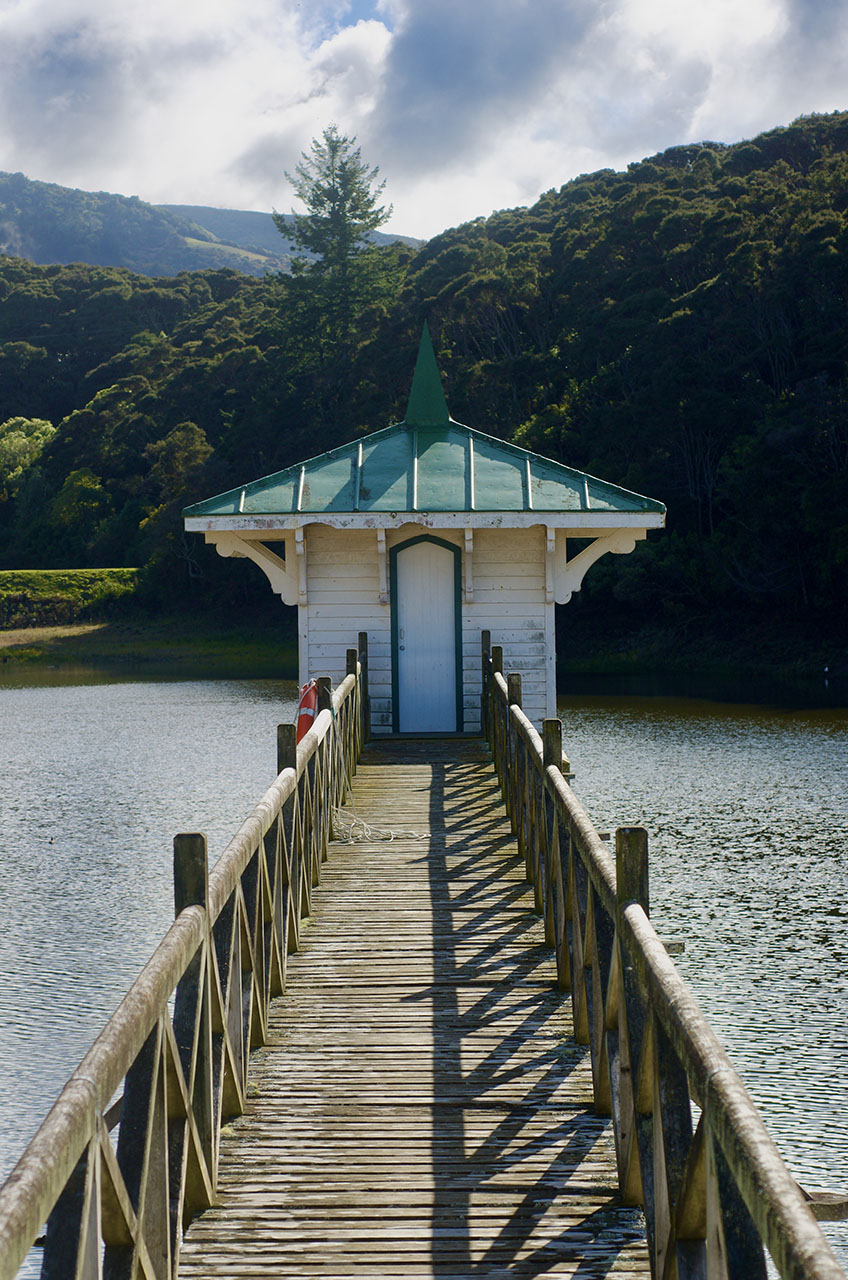
The tower rises approximately 17 metres from a plinth of Port Chalmers breccia which is founded on the gravel of the old stream bed. The stone blocks of the plinth measure about two feet long by one foot high. The tower near its base is approximately 4 metres square reducing under water and again just above water level. Above this level it is well detailed with alternating bands of darker Leith Valley andesite and lighter Port Chalmers breccia. This part of the tower supports a wooden enclosure with closely spaced ornate wooden brackets holding up the wide eaves of the small roof which is made of flat 'pan' iron. The centre of the pyramidal roof has a cone shaped pinnacle in the centre which may once have had an ornate wrought iron finial, judging by an 1870 drawing. The valve tower houses the mechanism for manually opening and closing the outlet from the reservoir and is situated at the end of a small jetty. The hut containing the mechanism is built of overlapping weather boards and the door has a pointed top.

The valves were manually operated, likely by Mr Karl Gillies, the live-in caretaker of the Ross Creek Reservoir for many years. In 1889 alleged leaks was reported and extensive investigations were undertaken to determine the source. During the 1980s the tower was protected from public access by a fan of white wooden palings. By the time a major refurbishment was required in the 2010s, the reservoir had been decommissioned for a couple of decades. In 2010 large cracks were found in the Earth Dam (List No. 4922, Historic Place Category 1) which prompted the lowering of the water level to relieve pressure on the dam, and frequent monitoring began.

The restoration of the dam restores the City of Dunedin with a crucial back-up drinking water supply. Work began in 2016 and was expected to be completed in 2018. The cost of repairs escalated by $2 million and the project experienced delays. The completion of the refurbishment in October 2019 reopened access to the public to the area and the valve tower and jetty. While swimming is prohibited in the reservoir, access to reserve which continues to be a very popular recreation spot for Dunedinites.
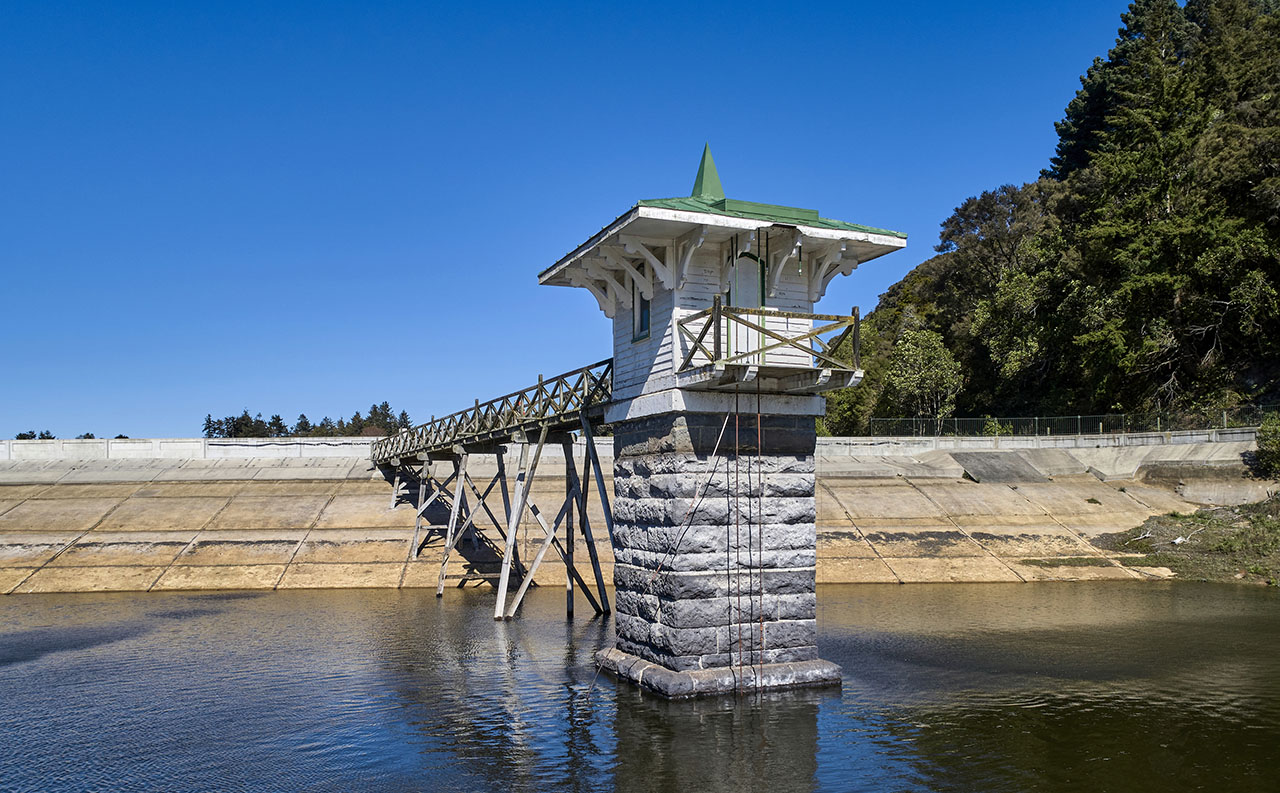
Ross Creek Valve Tower, Dunedin. CC BY Licence | Trevor Douglas | 25/09/2023 | Trevor Douglas
Ross Creek Valve Tower, Dunedin. CC BY-SA 3.0 Image courtesy of commons.wikimedia.org | Benchill | 23/03/2009 | Benchill - Wikimedia Commons
Ross Creek Valve Tower, Dunedin. CC BY Licence | Pam Murray | 17/03/2023 | Pam Murray
Ross Creek Valve Tower, Dunedin. CC BY Licence | Trevor Douglas | 25/09/2023 | Trevor Douglas
Ross Creek Valve Tower, Dunedin. c.1920, CC0, Dunedin City Council Archives Photo 330-70 Street Works Lantern Slide Collection | Public Domain
Ross Creek Valve Tower, Dunedin. CC BY Licence | Trevor Douglas | 25/09/2023 | Trevor Douglas
Ross Creek Valve Tower, Dunedin. CC BY-SA 3.0 Image courtesy of commons.wikimedia.org | Benchill | 23/03/2009 | Benchill - Wikimedia Commons
Ross Creek Valve Tower, Dunedin. CC BY Licence | Pam Murray | 17/03/2023 | Pam Murray
Ross Creek Valve Tower, Dunedin. CC BY Licence | Trevor Douglas | 25/09/2023 | Trevor Douglas
Ross Creek Valve Tower, Dunedin. c.1920, CC0, Dunedin City Council Archives Photo 330-70 Street Works Lantern Slide Collection | Public Domain

List Entry Information

Overview

Status
Listed

List Entry Status
Historic Place Category 1

Access
Able to Visit

List Number
4722

Date Entered
27th July 1988

Date of Effect
27th July 1988

City/District Council
Dunedin City

Region
Otago Region

Extent of List Entry

Extent includes part of the land described as Sec 94 Wakari SD (RT OT301/38), Otago Land District and the building known as Ross Creek Valve Tower thereon. Refer to the extent map tabled at the Heritage List/ Rārangi Kōrero Committee meeting on 4 June 2020.

Legal description

Sec 94 Wakari SD (RT OT301/38), Otago Land District

Detailed List Entry
Significance

Historic Significance

Historical Significance or Value The Ross Creek Reservoir was brought into commission in 1867, after abortive attempts by a private company to build it in 1863. A new plan, designed by the engineer Ralph Donkin, was put forward in January 1864 by another private company, The Water Works Company, which was backed by a provincial guarantee. The work was eventually begun in September 1865 and finished in 1867. (It is the oldest large earth dam still in use in New Zealand and was christened the Royal Albert Dam, a name which was promptly forgotten.) In 1870 the town engineer, John McGregor, drew the tower and its inlet and scour pipes (see DCC Archives), presumably to provide working drawings of the dam and tower as they were actually built. This type of manual valve tower has been superseded by other mechanisms and though towers such as this were once common on public reservoirs many, with the exception of Karori, Wellington, have been demolished. It is a relatively early industrial structure.

Physical Significance

Architectural Significance: The tower is a well detailed Victorian industrial structure. Townscape/Landmark Significance: This is a pleasant addition to a favourite walking ad jogging area close to Dunedin suburbs.

Construction Professional

Name

Donkin, Ralph

Type

Designer

Biography

Donkin (1836-1904) was born and educated in England, where he trained as a civil engineer. In 1864 he was Engineer to the Dunedin Waterworks Company having previously worked at Yan Yean Waterworks, Victoria. Donkin favoured Ross Creek as the source of Dunedin's water supply and was responsible for the design of the Ross Creek Earth Dam (1865-67). In 1893 he was engaged to carry out a survey for the railway to connect New Plymouth with the Main Trunk Railway. In 1894 he left New Zealand to go to Coolgardie where he practised engineering. He died in Perth.

Name

Proudfoot, David

Type

Builder

Biography

Builder of the Ross Creek Valve Tower, Dunedin - c.1864-67.

Name

McGregor, John

Type

Engineer

Biography

http://www.ipenz.org.nz/heritage/bio-detail.cfm?id=62

Construction Details

Start Year

1988

Type

Modification

Description

Wooden hand rail and decking reinstated

Start Year

1997

Type

Modification

Description

Addition of safety modifications to handrail on jetty (mid rail and kick rail)

Start Year

2016

Type

Other

Description

Refurbishment work began on the dam

Start Year

2019

Type

Other

Description

Reservoir dam was reopened following refurbishment

Start Year

1864

Finish Year

1867

Type

Original Construction

Description

The Valve Tower was designed in 1864 and completed in 1867

Construction Materials

The valve tower rises approximately 17 metres from a plinth of Port Chalmers breccia which is founded on the gravel of the old stream bed. The tower near its base is approximately 4 metres square on each side reducing under water and again just above water level. Above this level it is well detailed with alternating blocks of darker leith Valley andesite and lighter Port Chalmers breccia, supporting a wooden enclosure with closely spaced ornate wooden brackets holding up the wide eaves of the small roof which is made of flat 'pan' iron. The centre of the pyramidal roof has a cone shaped pinnacle in the centre which may once have had an ornate wrought iron finial, judging by an 1870 drawing. The hut containing the ends of the valve mechanism is built of overlapping weather boards and the door has a pointed top. The stone blocks of the plinth are massive, about two feet long by one foot high. The valve tower is at the end of a small jetty protected from public access by a fan of white wooden palings.

Notable Features

The rarity of such manual valve towers now on city reservoirs, the strong stonework and its status as part of the oldest large dam in New Zealand.

Physical Description

Significance of Architect/Engineer/Designer: The Dunedin Water Works Company employed Ralph Donkin, and engineer, to draw up the plans for the Ross Creek Reservoir. Architectural Description (Style): A lightly ornamented Victorian structure. Modifications: Ralph Donkin's undated drawing, presumably made about 1864, shows a stone hut with open classical arches on top of the pedestal. It had a corniced and pointed roof. John McGregor's drawings in 1870, which appear to be of the completed structure show a wooden enclosure on top of a similar shape to Donkin's with the wide eaves replacing the cornice and a pointed roof. McGregor also drew a plan of the dam in 1870 showing the valve tower and present pipes all in place. It is unlikely that there has been any substantial change to the structure since it was built. The valves are still in place underwater.

Reference

Public NZAA Number

I44/567

Completion Date

20th April 2020

Report Written By

Sarah Gallagher

Information Sources

Dunedin City Council

Dunedin City Council, Building Records

McDonald, 1965

K C McDonald, City of Dunedin: A Century of Civic Enterprise, Dunedin City Corporation, Dunedin, 1965

New Zealand Historic Places

New Zealand Historic Places

Kurman, nd

Kurman, Sam., Ross Creek Reservoir, Dunedin. Final Monitoring Report Authority 214/742 [Draft] (Dunedin Office file: 12020.034)

Rule, nd

Rule, Grant., A Brief History of the Ross Creek Reservoir (Dunedin Office file: 12020.034)

Report Written By

This historic place was registered under the Historic Places Act 1980. This report includes the text from the original Building Classification Committee report considered by the NZHPT Board at the time of registration. Please note that entry on the New Zealand Heritage List/Rarangi Korero identifies only the heritage values of the property concerned, and should not be construed as advice on the state of the property, or as a comment of its soundness or safety, including in regard to earthquake risk, safety in the event of fire, or insanitary conditions. A fully referenced upgrade report is available on request from the Otago/Southland Office of Heritage New Zealand.

Further Information

Current Usages

Uses: Utilities

Specific Usage: Water Tower

Former Usages

Themes

Web Links

Overview

Status

Listed

List Entry Status

Historic Place Category 1

Access

Able to Visit

List Number

4722

Date Entered

27th July 1988

Date of Effect

27th July 1988

City/District Council

Dunedin City

Region

Otago Region

Extent of List Entry

Extent includes part of the land described as Sec 94 Wakari SD (RT OT301/38), Otago Land District and the building known as Ross Creek Valve Tower thereon. Refer to the extent map tabled at the Heritage List/ Rārangi Kōrero Committee meeting on 4 June 2020.

Legal description

Sec 94 Wakari SD (RT OT301/38), Otago Land District

Status

Listed

List Entry Status

Historic Place Category 1

Access

Able to Visit

List Number

4722

Date Entered

27th July 1988

Date of Effect

27th July 1988

City/District Council

Dunedin City

Region

Otago Region

Extent of List Entry

Extent includes part of the land described as Sec 94 Wakari SD (RT OT301/38), Otago Land District and the building known as Ross Creek Valve Tower thereon. Refer to the extent map tabled at the Heritage List/ Rārangi Kōrero Committee meeting on 4 June 2020.

Legal description

Sec 94 Wakari SD (RT OT301/38), Otago Land District

Significance

Why is this place significant?

Historic Significance

Historical Significance or Value The Ross Creek Reservoir was brought into commission in 1867, after abortive attempts by a private company to build it in 1863. A new plan, designed by the engineer Ralph Donkin, was put forward in January 1864 by another private company, The Water Works Company, which was backed by a provincial guarantee. The work was eventually begun in September 1865 and finished in 1867. (It is the oldest large earth dam still in use in New Zealand and was christened the Royal Albert Dam, a name which was promptly forgotten.) In 1870 the town engineer, John McGregor, drew the tower and its inlet and scour pipes (see DCC Archives), presumably to provide working drawings of the dam and tower as they were actually built. This type of manual valve tower has been superseded by other mechanisms and though towers such as this were once common on public reservoirs many, with the exception of Karori, Wellington, have been demolished. It is a relatively early industrial structure.

Physical Significance

Architectural Significance: The tower is a well detailed Victorian industrial structure. Townscape/Landmark Significance: This is a pleasant addition to a favourite walking ad jogging area close to Dunedin suburbs.

Why is this place significant?

Historic Significance

Historical Significance or Value The Ross Creek Reservoir was brought into commission in 1867, after abortive attempts by a private company to build it in 1863. A new plan, designed by the engineer Ralph Donkin, was put forward in January 1864 by another private company, The Water Works Company, which was backed by a provincial guarantee. The work was eventually begun in September 1865 and finished in 1867. (It is the oldest large earth dam still in use in New Zealand and was christened the Royal Albert Dam, a name which was promptly forgotten.) In 1870 the town engineer, John McGregor, drew the tower and its inlet and scour pipes (see DCC Archives), presumably to provide working drawings of the dam and tower as they were actually built. This type of manual valve tower has been superseded by other mechanisms and though towers such as this were once common on public reservoirs many, with the exception of Karori, Wellington, have been demolished. It is a relatively early industrial structure.

Physical Significance

Architectural Significance: The tower is a well detailed Victorian industrial structure. Townscape/Landmark Significance: This is a pleasant addition to a favourite walking ad jogging area close to Dunedin suburbs.

Construction Information

Construction Professional

Name

Donkin, Ralph

Type

Designer

Biography

Donkin (1836-1904) was born and educated in England, where he trained as a civil engineer. In 1864 he was Engineer to the Dunedin Waterworks Company having previously worked at Yan Yean Waterworks, Victoria. Donkin favoured Ross Creek as the source of Dunedin's water supply and was responsible for the design of the Ross Creek Earth Dam (1865-67). In 1893 he was engaged to carry out a survey for the railway to connect New Plymouth with the Main Trunk Railway. In 1894 he left New Zealand to go to Coolgardie where he practised engineering. He died in Perth.

Name

Proudfoot, David

Type

Builder

Biography

Builder of the Ross Creek Valve Tower, Dunedin - c.1864-67.

Name

McGregor, John

Type

Engineer

Biography

http://www.ipenz.org.nz/heritage/bio-detail.cfm?id=62

Construction Details

Start Year

1988

Type

Modification

Description

Wooden hand rail and decking reinstated

Start Year

1997

Type

Modification

Description

Addition of safety modifications to handrail on jetty (mid rail and kick rail)

Start Year

2016

Type

Other

Description

Refurbishment work began on the dam

Start Year

2019

Type

Other

Description

Reservoir dam was reopened following refurbishment

Start Year

1864

Finish Year

1867

Type

Original Construction

Description

The Valve Tower was designed in 1864 and completed in 1867

Construction Materials

The valve tower rises approximately 17 metres from a plinth of Port Chalmers breccia which is founded on the gravel of the old stream bed. The tower near its base is approximately 4 metres square on each side reducing under water and again just above water level. Above this level it is well detailed with alternating blocks of darker leith Valley andesite and lighter Port Chalmers breccia, supporting a wooden enclosure with closely spaced ornate wooden brackets holding up the wide eaves of the small roof which is made of flat 'pan' iron. The centre of the pyramidal roof has a cone shaped pinnacle in the centre which may once have had an ornate wrought iron finial, judging by an 1870 drawing. The hut containing the ends of the valve mechanism is built of overlapping weather boards and the door has a pointed top. The stone blocks of the plinth are massive, about two feet long by one foot high. The valve tower is at the end of a small jetty protected from public access by a fan of white wooden palings.

Notable Features

The rarity of such manual valve towers now on city reservoirs, the strong stonework and its status as part of the oldest large dam in New Zealand.

Construction Professional

Name

Donkin, Ralph

Type

Designer

Biography

Donkin (1836-1904) was born and educated in England, where he trained as a civil engineer. In 1864 he was Engineer to the Dunedin Waterworks Company having previously worked at Yan Yean Waterworks, Victoria. Donkin favoured Ross Creek as the source of Dunedin's water supply and was responsible for the design of the Ross Creek Earth Dam (1865-67). In 1893 he was engaged to carry out a survey for the railway to connect New Plymouth with the Main Trunk Railway. In 1894 he left New Zealand to go to Coolgardie where he practised engineering. He died in Perth.

Name

Proudfoot, David

Type

Builder

Biography

Builder of the Ross Creek Valve Tower, Dunedin - c.1864-67.

Name

McGregor, John

Type

Engineer

Biography

http://www.ipenz.org.nz/heritage/bio-detail.cfm?id=62

Construction Details

Start Year

1988

Type

Modification

Description

Wooden hand rail and decking reinstated

Start Year

1997

Type

Modification

Description

Addition of safety modifications to handrail on jetty (mid rail and kick rail)

Start Year

2016

Type

Other

Description

Refurbishment work began on the dam

Start Year

2019

Type

Other

Description

Reservoir dam was reopened following refurbishment

Start Year

1864

Finish Year

1867

Type

Original Construction

Description

The Valve Tower was designed in 1864 and completed in 1867

Construction Materials

The valve tower rises approximately 17 metres from a plinth of Port Chalmers breccia which is founded on the gravel of the old stream bed. The tower near its base is approximately 4 metres square on each side reducing under water and again just above water level. Above this level it is well detailed with alternating blocks of darker leith Valley andesite and lighter Port Chalmers breccia, supporting a wooden enclosure with closely spaced ornate wooden brackets holding up the wide eaves of the small roof which is made of flat 'pan' iron. The centre of the pyramidal roof has a cone shaped pinnacle in the centre which may once have had an ornate wrought iron finial, judging by an 1870 drawing. The hut containing the ends of the valve mechanism is built of overlapping weather boards and the door has a pointed top. The stone blocks of the plinth are massive, about two feet long by one foot high. The valve tower is at the end of a small jetty protected from public access by a fan of white wooden palings.

Notable Features

The rarity of such manual valve towers now on city reservoirs, the strong stonework and its status as part of the oldest large dam in New Zealand.

Physical Description

Significance of Architect/Engineer/Designer: The Dunedin Water Works Company employed Ralph Donkin, and engineer, to draw up the plans for the Ross Creek Reservoir. Architectural Description (Style): A lightly ornamented Victorian structure. Modifications: Ralph Donkin's undated drawing, presumably made about 1864, shows a stone hut with open classical arches on top of the pedestal. It had a corniced and pointed roof. John McGregor's drawings in 1870, which appear to be of the completed structure show a wooden enclosure on top of a similar shape to Donkin's with the wide eaves replacing the cornice and a pointed roof. McGregor also drew a plan of the dam in 1870 showing the valve tower and present pipes all in place. It is unlikely that there has been any substantial change to the structure since it was built. The valves are still in place underwater.

Significance of Architect/Engineer/Designer: The Dunedin Water Works Company employed Ralph Donkin, and engineer, to draw up the plans for the Ross Creek Reservoir. Architectural Description (Style): A lightly ornamented Victorian structure. Modifications: Ralph Donkin's undated drawing, presumably made about 1864, shows a stone hut with open classical arches on top of the pedestal. It had a corniced and pointed roof. John McGregor's drawings in 1870, which appear to be of the completed structure show a wooden enclosure on top of a similar shape to Donkin's with the wide eaves replacing the cornice and a pointed roof. McGregor also drew a plan of the dam in 1870 showing the valve tower and present pipes all in place. It is unlikely that there has been any substantial change to the structure since it was built. The valves are still in place underwater.

Reference

Historical and Associated Iwi / Hapū / Whānau

Public NZAA Number

I44/567

Completion Date

20th April 2020

Report Written By

Sarah Gallagher

Information Sources

Dunedin City Council

Dunedin City Council, Building Records

McDonald, 1965

K C McDonald, City of Dunedin: A Century of Civic Enterprise, Dunedin City Corporation, Dunedin, 1965

New Zealand Historic Places

New Zealand Historic Places

Kurman, nd

Kurman, Sam., Ross Creek Reservoir, Dunedin. Final Monitoring Report Authority 214/742 [Draft] (Dunedin Office file: 12020.034)

Rule, nd

Rule, Grant., A Brief History of the Ross Creek Reservoir (Dunedin Office file: 12020.034)

Other Information

This historic place was registered under the Historic Places Act 1980. This report includes the text from the original Building Classification Committee report considered by the NZHPT Board at the time of registration. Please note that entry on the New Zealand Heritage List/Rarangi Korero identifies only the heritage values of the property concerned, and should not be construed as advice on the state of the property, or as a comment of its soundness or safety, including in regard to earthquake risk, safety in the event of fire, or insanitary conditions. A fully referenced upgrade report is available on request from the Otago/Southland Office of Heritage New Zealand.

Historical and Associated Iwi / Hapū / Whānau

Public NZAA Number

I44/567

Completion Date

20th April 2020

Report Written By

Sarah Gallagher

Information Sources

Dunedin City Council

Dunedin City Council, Building Records

McDonald, 1965

K C McDonald, City of Dunedin: A Century of Civic Enterprise, Dunedin City Corporation, Dunedin, 1965

New Zealand Historic Places

New Zealand Historic Places

Kurman, nd

Kurman, Sam., Ross Creek Reservoir, Dunedin. Final Monitoring Report Authority 214/742 [Draft] (Dunedin Office file: 12020.034)

Rule, nd

Rule, Grant., A Brief History of the Ross Creek Reservoir (Dunedin Office file: 12020.034)

Other Information

This historic place was registered under the Historic Places Act 1980. This report includes the text from the original Building Classification Committee report considered by the NZHPT Board at the time of registration. Please note that entry on the New Zealand Heritage List/Rarangi Korero identifies only the heritage values of the property concerned, and should not be construed as advice on the state of the property, or as a comment of its soundness or safety, including in regard to earthquake risk, safety in the event of fire, or insanitary conditions. A fully referenced upgrade report is available on request from the Otago/Southland Office of Heritage New Zealand.

Further Information

Current Usages

Uses: Utilities

Specific Usage: Water Tower

Current Usages

Uses: Utilities

Specific Usage: Water Tower

Location

Loading
Related listings
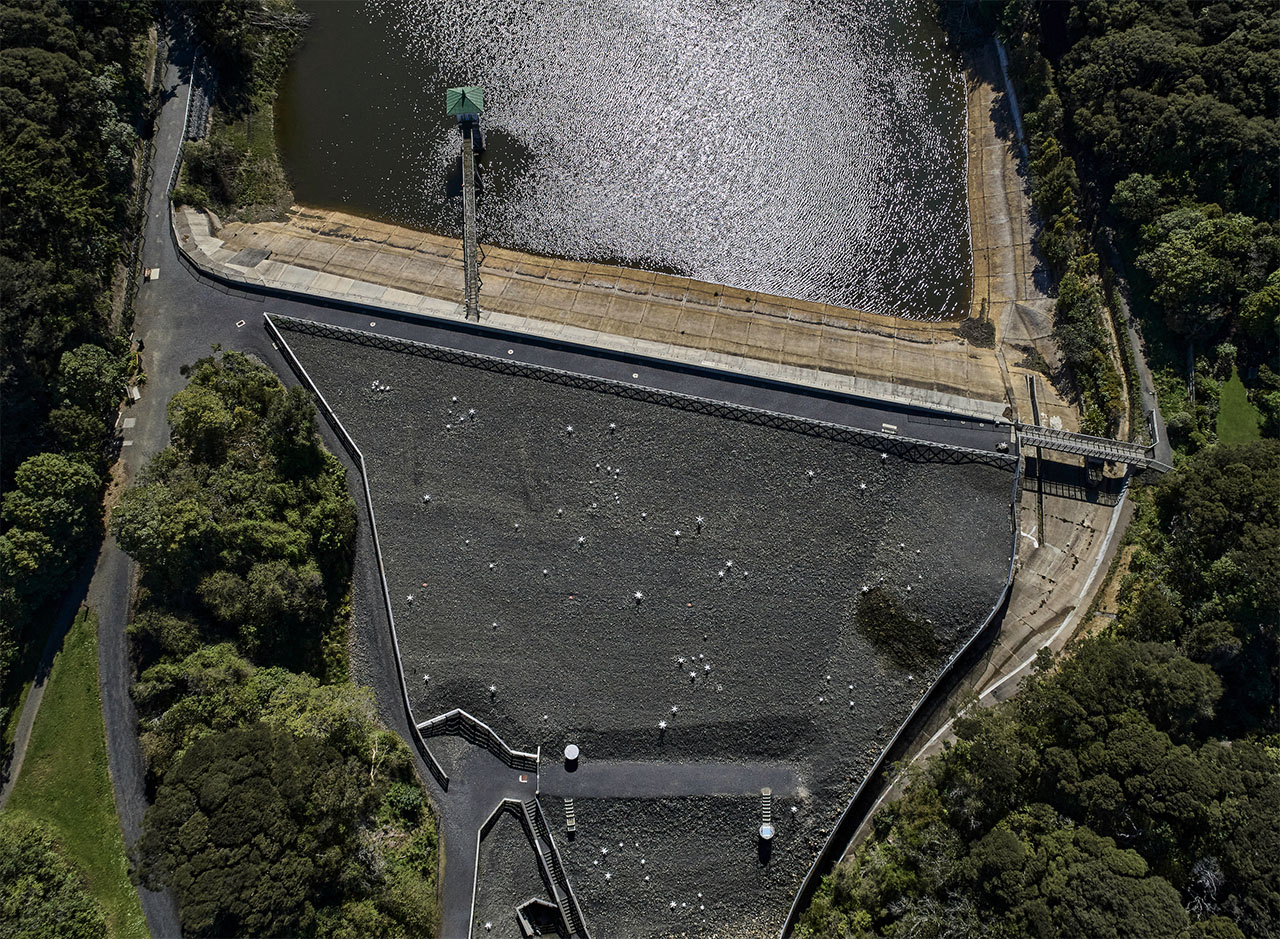
Ross Creek Earth Dam, Dunedin. CC BY Licence
Ross Creek Earth Dam
Ross Creek Earth Dam, Dunedin. CC BY Licence
Ross Creek Earth Dam
Stay up to date with Heritage this month