

List Entry Information
Status
Listed
List Entry Status
Historic Place Category 1
Access
Private/No Public Access
List Number
4729
Date Entered
27th July 1988
Date of Effect
27th July 1988
City/District Council
Dunedin City
Region
Otago Region
Legal description
Secs 22-23 Blk VI Town of Dunedin (RTs OT292/108 and OT8B/105), Otago Land District
Status
Listed
List Entry Status
Historic Place Category 1
Access
Private/No Public Access
List Number
4729
Date Entered
27th July 1988
Date of Effect
27th July 1988
City/District Council
Dunedin City
Region
Otago Region
Legal description
Secs 22-23 Blk VI Town of Dunedin (RTs OT292/108 and OT8B/105), Otago Land District
Why is this place significant?
Historic Significance
Historical Significance or Value The land on which the building stands was granted to Eliza Symons of Bloomsbury, London, in 1862 and she had leased it through Mathew Holmes in 1861 to John Lewis, a master mariner of Dunedin, Miss Symons may have lived in Dunedin at some stage - she made her will in Dutch in Sourabaya, Java, in 1878 and died in 1889. Her executors transferred the land to a local lawyer, E P Kenyon, and an accountant J J Hall, in 1890. They sold three years later to Charles Sew Hoy, whose dredging and gold mining activities had been very successful. Charles Sew Hoy himself died in 1901 and various members of the family have held the land since, until it passed to Sew Hoy and Sons in 1956. Stafford Street to Carol St was an urban centre for Chinese in Dunedin from quite early on and the Sew Hoy family held other sections on Stafford Street. The chemical manufacturers, Kempthorne Prossers, for whom the building was erected, were like Sew Hoy another of the business successes of nineteenth century Dunedin, being founded in 1863. Thomas W Kempthorne was trained by a wholesale druggist and chemist in Melbourne and sent across to New Zealand at the start of the gold rush to evaluate the potential for a new business in Otago. Liking what he saw, he took Evan Prosser, a welsh chemist, into partnership and started his own business. West coast gold mining was an important part of their market and Prosser became Mayor of Hokitika and eventually Westland's representative in the Canterbury Provincial Council. Judging by early street directories, the firm at first occupied the site of the smaller buildings in Stafford St below the big warehouse where the head office of Sew Hoy and Sons is at present. Another drug merchant H E Youngman and Co occupied the warehouse site until about 1870s when Kempthornes took over. In 1879 business was so good that they formed a public company with a nominal capital of 200,000 pounds which was quickly subscribed. In 1881 the firm set up the first sulphuric acid works in New Zealand at Burnside, and expanded to Auckland, Christchurch and Wellington where they built warehouses similar to the Stafford St building, the Auckland one having a very similar classical façade. At the height of their activities Kempthorne Prossers occupied most of the buildings from St Matthews church down to the Provincial Hotel. Fertiliser production became a major part of the business and the Hornby works were set up in 1922 and the Wanganui works in 1926. The company seemed to run out of steam in the 1970s and the local works are now owned by Ravensdown Fertiliser Co-op Ltd and the warehouse building is used by the long term landowner, the Sew Hoy family.
Physical Significance
Architectural Significance: A well preserved example of Victorian industrial building with fine architectural detailing showing pride in the physical representation of the firm. Townscape/Landmark significance: This tall warehouse building is an important element of the older buildings on the west side of Stafford Street, in the first block above the main street.
Why is this place significant?
Historic Significance
Historical Significance or Value The land on which the building stands was granted to Eliza Symons of Bloomsbury, London, in 1862 and she had leased it through Mathew Holmes in 1861 to John Lewis, a master mariner of Dunedin, Miss Symons may have lived in Dunedin at some stage - she made her will in Dutch in Sourabaya, Java, in 1878 and died in 1889. Her executors transferred the land to a local lawyer, E P Kenyon, and an accountant J J Hall, in 1890. They sold three years later to Charles Sew Hoy, whose dredging and gold mining activities had been very successful. Charles Sew Hoy himself died in 1901 and various members of the family have held the land since, until it passed to Sew Hoy and Sons in 1956. Stafford Street to Carol St was an urban centre for Chinese in Dunedin from quite early on and the Sew Hoy family held other sections on Stafford Street. The chemical manufacturers, Kempthorne Prossers, for whom the building was erected, were like Sew Hoy another of the business successes of nineteenth century Dunedin, being founded in 1863. Thomas W Kempthorne was trained by a wholesale druggist and chemist in Melbourne and sent across to New Zealand at the start of the gold rush to evaluate the potential for a new business in Otago. Liking what he saw, he took Evan Prosser, a welsh chemist, into partnership and started his own business. West coast gold mining was an important part of their market and Prosser became Mayor of Hokitika and eventually Westland's representative in the Canterbury Provincial Council. Judging by early street directories, the firm at first occupied the site of the smaller buildings in Stafford St below the big warehouse where the head office of Sew Hoy and Sons is at present. Another drug merchant H E Youngman and Co occupied the warehouse site until about 1870s when Kempthornes took over. In 1879 business was so good that they formed a public company with a nominal capital of 200,000 pounds which was quickly subscribed. In 1881 the firm set up the first sulphuric acid works in New Zealand at Burnside, and expanded to Auckland, Christchurch and Wellington where they built warehouses similar to the Stafford St building, the Auckland one having a very similar classical façade. At the height of their activities Kempthorne Prossers occupied most of the buildings from St Matthews church down to the Provincial Hotel. Fertiliser production became a major part of the business and the Hornby works were set up in 1922 and the Wanganui works in 1926. The company seemed to run out of steam in the 1970s and the local works are now owned by Ravensdown Fertiliser Co-op Ltd and the warehouse building is used by the long term landowner, the Sew Hoy family.
Physical Significance
Architectural Significance: A well preserved example of Victorian industrial building with fine architectural detailing showing pride in the physical representation of the firm. Townscape/Landmark significance: This tall warehouse building is an important element of the older buildings on the west side of Stafford Street, in the first block above the main street.
Construction Details
Start Year
1901
startYearCirca
Type
Original Construction
Description
1896-1902 According to the Sew Hoy family, the building was constructed some time between 1896 and 1902. A building permit in the City archives for a new chimney on this site dated 1902 shows a wall marked 'New Factory"
Start Year
1901
startYearCirca
Type
Original Construction
Description
The best estimate for the date of the building would be 1901.
Construction Materials
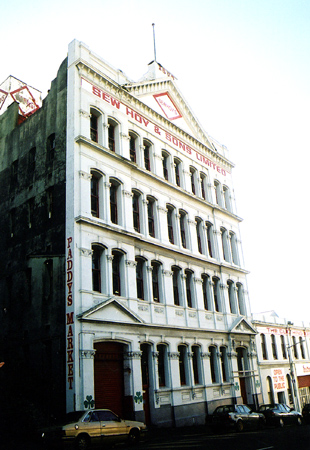
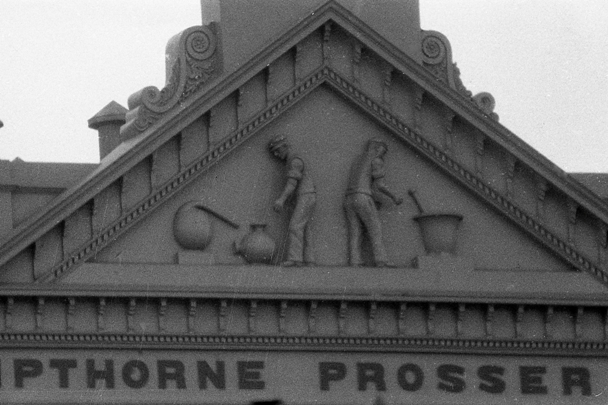
The building is a high, narrow, four storied structure in triple brick, plastered on the façade and south wall. The long north wall is painted brick. The façade has classical detailing with a pedimented door on each side of the ground floor and a high central pediment at the roof line which originally had figures of workmen in it. A date of 1869 is painted above the pediment to match the Sew Hoy signs on the building, the date of the founding of the Sew Hoy business in New Zealand. The façade is relatively simple in pattern, consisting of three lines of 10 windows on the upper stories and six similar windows and the two lateral doors on the ground floor. The eastern door has two massive double doors and a large square fan light. The western door is a vehicle bay. The windows and doors are arched and keystoned with flanking pilasters carrying ornate capitals. The parapet is relatively plain.
Notable Features
The association of the building with Sew Hoys and with Kempthorne Prosser, local industries which began in the 1860s.
Construction Details
Start Year
1901
startYearCirca
Type
Original Construction
Description
1896-1902 According to the Sew Hoy family, the building was constructed some time between 1896 and 1902. A building permit in the City archives for a new chimney on this site dated 1902 shows a wall marked 'New Factory"
Start Year
1901
startYearCirca
Type
Original Construction
Description
The best estimate for the date of the building would be 1901.
Construction Materials
The building is a high, narrow, four storied structure in triple brick, plastered on the façade and south wall. The long north wall is painted brick. The façade has classical detailing with a pedimented door on each side of the ground floor and a high central pediment at the roof line which originally had figures of workmen in it. A date of 1869 is painted above the pediment to match the Sew Hoy signs on the building, the date of the founding of the Sew Hoy business in New Zealand. The façade is relatively simple in pattern, consisting of three lines of 10 windows on the upper stories and six similar windows and the two lateral doors on the ground floor. The eastern door has two massive double doors and a large square fan light. The western door is a vehicle bay. The windows and doors are arched and keystoned with flanking pilasters carrying ornate capitals. The parapet is relatively plain.
Notable Features
The association of the building with Sew Hoys and with Kempthorne Prosser, local industries which began in the 1860s.
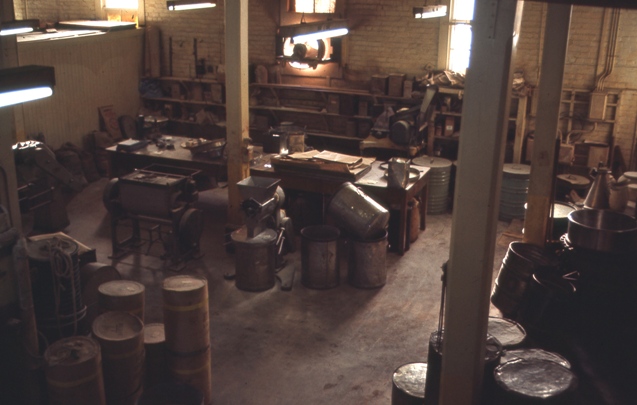
Architect/Engineer/Designer: The strong similarity of this building to a Kempthorne Prosser building in Auckland suggests that both may have been designed by and Auckland architect. It is, however, more likely to have been a Dunedin architect as Dunedin was the Head Office at that time. Architectural Description (style): A Victorian classical façade, incorporating arched and keystoned windows flanked by pilasters with ornate capitals. Modifications: The plaster figures of men working set in the pediment at roof level have been removed and the name of Sew Hoy painted on instead. The interior has been little modified from its original use as a chemicals laboratory and warehouse to its present use as a more general warehouse.
Architect/Engineer/Designer: The strong similarity of this building to a Kempthorne Prosser building in Auckland suggests that both may have been designed by and Auckland architect. It is, however, more likely to have been a Dunedin architect as Dunedin was the Head Office at that time. Architectural Description (style): A Victorian classical façade, incorporating arched and keystoned windows flanked by pilasters with ornate capitals. Modifications: The plaster figures of men working set in the pediment at roof level have been removed and the name of Sew Hoy painted on instead. The interior has been little modified from its original use as a chemicals laboratory and warehouse to its present use as a more general warehouse.
Historical and Associated Iwi / Hapū / Whānau
Information Sources
Cyclopedia of New Zealand, 1905
Cyclopedia Company, Industrial, descriptive, historical, biographical facts, figures, illustrations, Wellington, N.Z, 1897-1908, Vol. 4 Otago and Southland, Cyclopedia Company, Christchurch, 1905
Other Information
This historic place was registered under the Historic Places Act 1980. This report includes the text from the original Building Classification Committee report considered by the NZHPT Board at the time of registration. Please note that entry on the New Zealand Heritage List/Rarangi Korero identifies only the heritage values of the property concerned, and should not be construed as advice on the state of the property, or as a comment of its soundness or safety, including in regard to earthquake risk, safety in the event of fire, or insanitary conditions.
Historical and Associated Iwi / Hapū / Whānau
Information Sources
Cyclopedia of New Zealand, 1905
Cyclopedia Company, Industrial, descriptive, historical, biographical facts, figures, illustrations, Wellington, N.Z, 1897-1908, Vol. 4 Otago and Southland, Cyclopedia Company, Christchurch, 1905
Other Information
This historic place was registered under the Historic Places Act 1980. This report includes the text from the original Building Classification Committee report considered by the NZHPT Board at the time of registration. Please note that entry on the New Zealand Heritage List/Rarangi Korero identifies only the heritage values of the property concerned, and should not be construed as advice on the state of the property, or as a comment of its soundness or safety, including in regard to earthquake risk, safety in the event of fire, or insanitary conditions.
Former Usages
General Usage: Trade
Specific Usage: Warehouse/storage area
Former Usages
General Usage: Trade
Specific Usage: Warehouse/storage area
Location
Sign up to hear more
Get the latest heritage news, features and events delivered
straight to your inbox.
