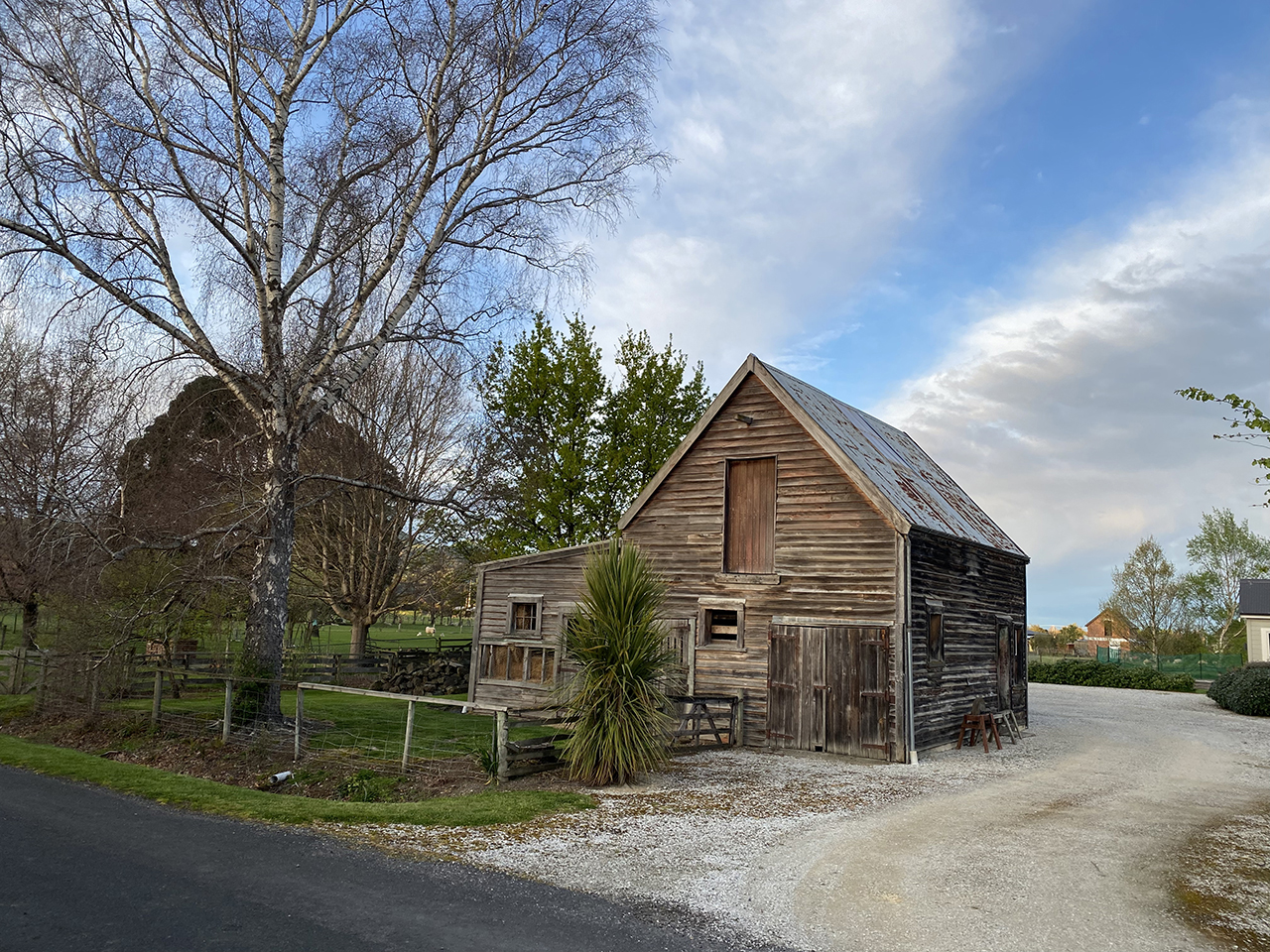
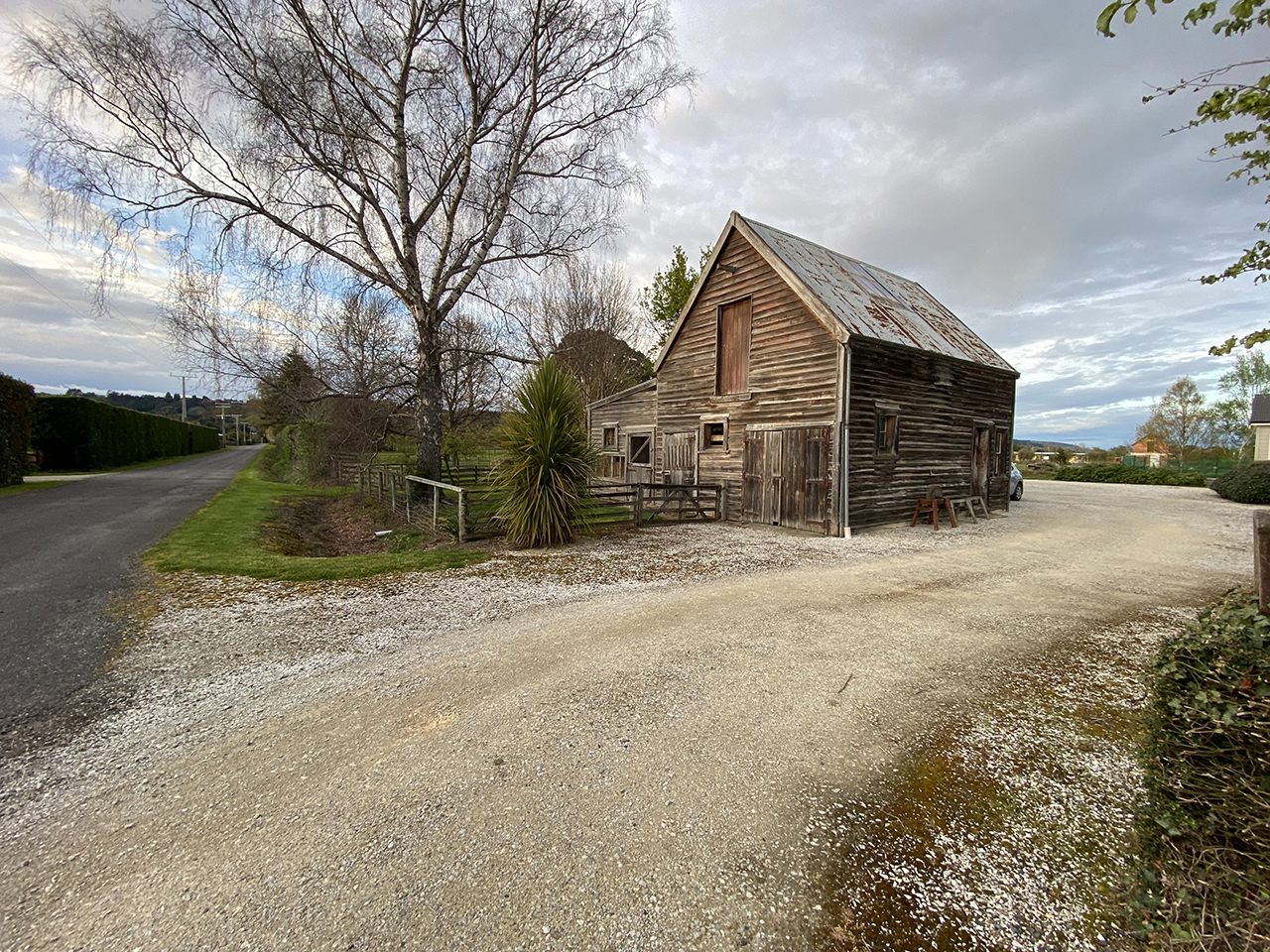
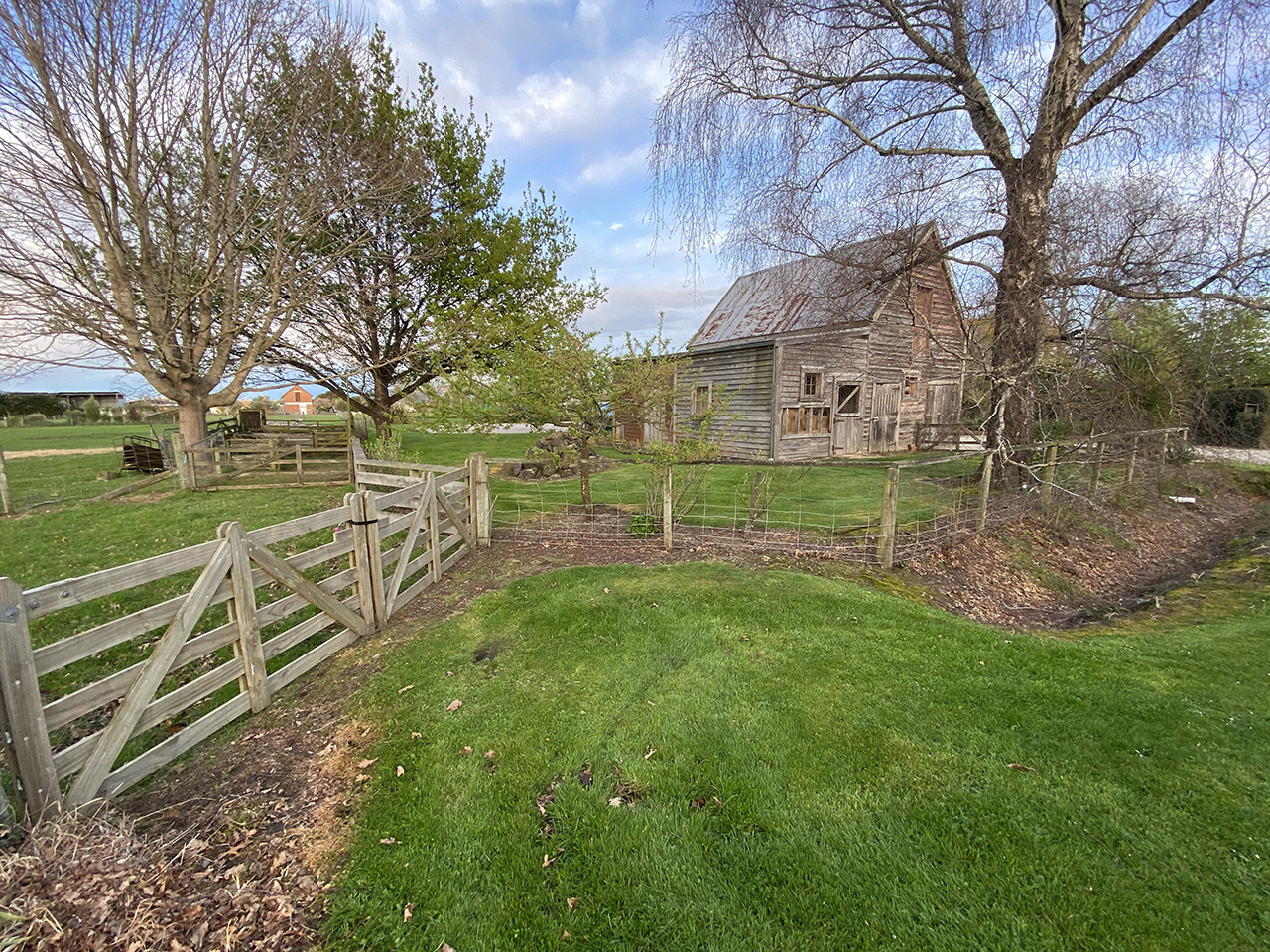
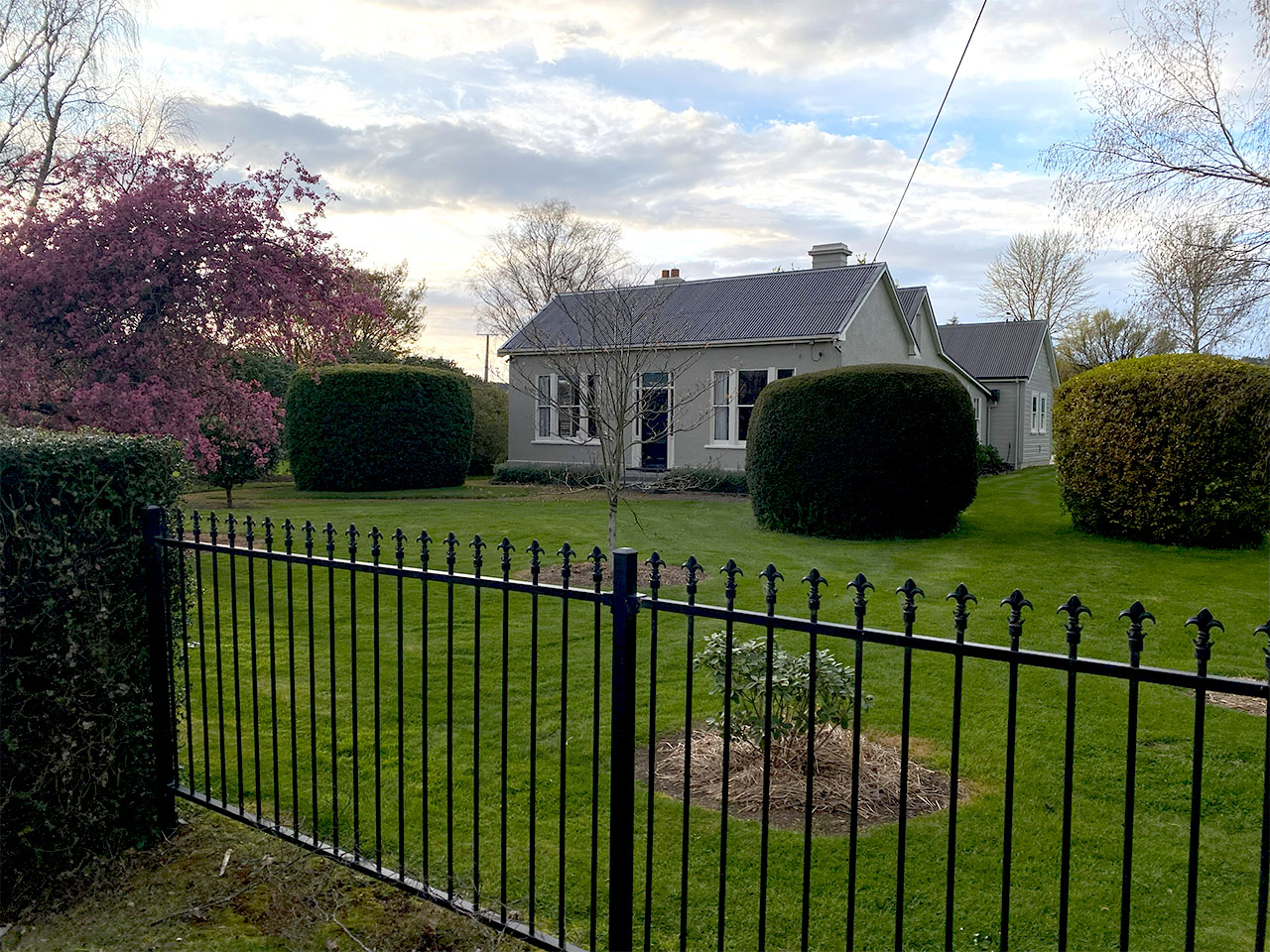
The Taieri Plain has few surviving early European domestic dwellings associated with the establishment of the small settlements. Janefield Barn and Janefield Farm (List no. 4736) is an early example of one of the settlements by the Oughton family which has historical and architectural significance and forms part of the wider historical landscape of the Taieri Plain. The barn is the only survivor of the original outbuildings.
From its source, the Taiari [Taieri] River flows almost entirely around Pātearoa (the Rock & Pillar Range) before discharging into Te Tai-o-Āraiteuru (the Otago coastline). Tradition tells us the Taiari and its various waterways was created by the taniwha Makaka who is immortalised as Pukemakamaka / Saddle Hill. Kāi Tahu ki Otago used all areas of the Taiari / Taieri Plain as evidenced by the hundreds of mahika kai sites associated with the numerous waterways, lakes and wetlands in the area, which was one of the most significant food baskets of the Otago region. Ngāi Tahu kaumātua recorded Taiari specifically as a kāinga mahinga tuna and kāinga nohoanga (settlement). Whakaehu (Silver Stream) rises in the Silverpeaks north of Dunedin and flows initially southwards through a steep-sided forested valley. It then turns west at the eastern edge of the Taieri Plains, before reaching the Taieri River.
As the Taieri Plain was originally wetlands, few European settlers took on the daunting task of converting the land to agricultural fields in the 1850s for the fledgling Dunedin settlement. David Oughton, a settler from Banff, Scotland was one who took on the challenge. Oughton built the wooden homestead c1852 and named it Janefield after his wife Jane who he married in 1855. When Jane died in 1860, Oughton returned to Scotland, married again and returned to build Boghead (now known as Duddingston List No. 332) at East Taieri. The property was leased to Alexander Mollison until J. Robertson took over the lease in 1869-1879. The children were given further education in Scotland and Oughton's first son, James, returned after an education in farming to New Zealand in 1881 after being left Janefield in his father’s will. James farmed Janefield from 1882 until he offered the land to the Crown in 1898 for workers housing and left for Southland. He died at the age of 45 in 1902 leaving a widow and 9 children.
At this time Janefield's 143 acres was subdivided into 31 sections. The 'Janefield Settlement' provided smallholdings for predominantly working men, with “all partly or wholly engaged in railway, factory or farm work in surrounding districts”. Section 27a with the house and outbuildings of Janefield was broken down into 10 acre lot and was leased to James Bates. By 1903 19 houses had been built and 92 people lived in the Janefield settlement. When James Bates defaulted in 1902 the house and surrounding section (around four hectares) was leased to the Department of Agriculture who used it to house the local stock inspectors. The outbuildings were sold by tender in 1903 with the cow byre also removed the same year. In 1912, one of the stock inspectors, Hector McLeod, purchased the cottage and the barn. In 1923 the front part of the stables sold while the wood and iron stables and loft removed in 1925. Descendants of Hector McLeod still own it today as a family house.
From its source, the Taiari [Taieri] River flows almost entirely around Pātearoa (the Rock & Pillar Range) before discharging into Te Tai-o-Āraiteuru (the Otago coastline). Tradition tells us the Taiari and its various waterways was created by the taniwha Makaka who is immortalised as Pukemakamaka / Saddle Hill. Kāi Tahu ki Otago used all areas of the Taiari / Taieri Plain as evidenced by the hundreds of mahika kai sites associated with the numerous waterways, lakes and wetlands in the area, which was one of the most significant food baskets of the Otago region. Ngāi Tahu kaumātua recorded Taiari specifically as a kāinga mahinga tuna and kāinga nohoanga (settlement). Whakaehu (Silver Stream) rises in the Silverpeaks north of Dunedin and flows initially southwards through a steep-sided forested valley. It then turns west at the eastern edge of the Taieri Plains, before reaching the Taieri River.
As the Taieri Plain was originally wetlands, few European settlers took on the daunting task of converting the land to agricultural fields in the 1850s for the fledgling Dunedin settlement. David Oughton, a settler from Banff, Scotland was one who took on the challenge. Oughton built the wooden homestead c1852 and named it Janefield after his wife Jane who he married in 1855. When Jane died in 1860, Oughton returned to Scotland, married again and returned to build Boghead (now known as Duddingston List No. 332) at East Taieri. The property was leased to Alexander Mollison until J. Robertson took over the lease in 1869-1879. The children were given further education in Scotland and Oughton's first son, James, returned after an education in farming to New Zealand in 1881 after being left Janefield in his father’s will. James farmed Janefield from 1882 until he offered the land to the Crown in 1898 for workers housing and left for Southland. He died at the age of 45 in 1902 leaving a widow and 9 children.
At this time Janefield's 143 acres was subdivided into 31 sections. The 'Janefield Settlement' provided smallholdings for predominantly working men, with “all partly or wholly engaged in railway, factory or farm work in surrounding districts”. Section 27a with the house and outbuildings of Janefield was broken down into 10 acre lot and was leased to James Bates. By 1903 19 houses had been built and 92 people lived in the Janefield settlement. When James Bates defaulted in 1902 the house and surrounding section (around four hectares) was leased to the Department of Agriculture who used it to house the local stock inspectors. The outbuildings were sold by tender in 1903 with the cow byre also removed the same year. In 1912, one of the stock inspectors, Hector McLeod, purchased the cottage and the barn. In 1923 the front part of the stables sold while the wood and iron stables and loft removed in 1925. Descendants of Hector McLeod still own it today as a family house.