DonateMembershipVisit Heritage
  • Tūrangawaewae
    Places
  • Tira Māori
    Māori Heritage
  • Poutairangahia
    Archaeology
  • Rauemi
    Resources
  • Mō Tātou
    About Us
  • New Zealand Heritage List
  • Nominate and submit
  • Explore the List
  • National Historic Landmarks
  • Plaques
  • Rainbow List Project
  • Lost heritage
  • Visit Heritage
  • Our properties
  • Turnbull House Project
  • Collections
  • Shop
  • Tohu Whenua
  • Tira Māori
  • Conserving Māori heritage
  • Marae built heritage
  • Māori heritage on the List
  • Hinemihi—Te Hokinga Mai
  • What is archaeology?
  • Is there a site on my property?
  • What are my legal requirements?
  • Affecting an archaeological site
  • Declaring an archaeological site
  • Archaeology FAQs
  • Archaeology Digital Library
  • Archaeology guidelines and templates
  • Resources
  • Funding
  • Publications
  • Sustainable management guides
  • Disaster recovery
  • Podcasts & digital resources
  • Education Hub
  • Conservation plans
  • About
  • Board
  • Māori Heritage Council
  • Senior Staff
  • Offices
  • Contact us
  • Careers
  • Covenants
  • Fast-track
  • Corporate documents
  • Currently consulting on
  • Our submissions
  • News
  • Covid-19 response
Quick links
Rārangi Kōrero | The List
Explore the List
National Historic Landmarks
Ngā Manawhenua o Aotearoa me ōna Kōrero Tūturu
Quick links
Tapuwae
A Vision for Places of Māori Heritage
Funding for Māori Heritage
Resources
Quick links
Archaeological Authority Portal
Applying for an archaeological authority
Archaeology FAQs
Browse the most frequently asked questions about archaeological authorities and the archaeological process.
Quick links
Quick links
News
News Keep up to date with Heritage New Zealand Pouhere Taonga
Membership
Membership Find out more and sign up today
DonateMembershipVisit Heritage
  • Tūrangawaewae
    Places
  • Tira Māori
    Māori Heritage
  • Poutairangahia
    Archaeology
  • Rauemi
    Resources
  • Mō Tātou
    About Us
  • New Zealand Heritage List
  • Nominate and submit
  • Explore the List
  • National Historic Landmarks
  • Plaques
  • Rainbow List Project
  • Lost heritage
  • Visit Heritage
  • Our properties
  • Turnbull House Project
  • Collections
  • Shop
  • Tohu Whenua
  • Tira Māori
  • Conserving Māori heritage
  • Marae built heritage
  • Māori heritage on the List
  • Hinemihi—Te Hokinga Mai
  • What is archaeology?
  • Is there a site on my property?
  • What are my legal requirements?
  • Affecting an archaeological site
  • Declaring an archaeological site
  • Archaeology FAQs
  • Archaeology Digital Library
  • Archaeology guidelines and templates
  • Resources
  • Funding
  • Publications
  • Sustainable management guides
  • Disaster recovery
  • Podcasts & digital resources
  • Education Hub
  • Conservation plans
  • About
  • Board
  • Māori Heritage Council
  • Senior Staff
  • Offices
  • Contact us
  • Careers
  • Covenants
  • Fast-track
  • Corporate documents
  • Currently consulting on
  • Our submissions
  • News
  • Covid-19 response
Quick links
Rārangi Kōrero | The List
Explore the List
National Historic Landmarks
Ngā Manawhenua o Aotearoa me ōna Kōrero Tūturu
Quick links
Tapuwae
A Vision for Places of Māori Heritage
Funding for Māori Heritage
Resources
Quick links
Archaeological Authority Portal
Applying for an archaeological authority
Archaeology FAQs
Browse the most frequently asked questions about archaeological authorities and the archaeological process.
Quick links
Quick links
News
News Keep up to date with Heritage New Zealand Pouhere Taonga
Membership
Membership Find out more and sign up today
  • Places
  • Nominate and submit
  • National Historic Landmarks
  • Places
  • Nominate and submit
  • National Historic Landmarks
  • Tira Māori
  • Conserving Māori heritage
  • Marae built heritage
  • Tira Māori
  • Conserving Māori heritage
  • Marae built heritage
  • Archaeological authorities
  • Archaeology Digital Library
  • Archaeological authorities
  • Archaeology Digital Library
  • All resources
  • Publications
  • Funding
  • All resources
  • Publications
  • Funding
  • FAQs
  • FAQs
Follow us on:
Places
  • Places
  • Nominate and submit
  • National Historic Landmarks
Tira Māori
  • Tira Māori
  • Conserving Māori heritage
  • Marae built heritage
Archaeology
  • Archaeological authorities
  • Archaeology Digital Library
Resources
  • All resources
  • Publications
  • Funding
FAQs
  • FAQs
Follow us on
HomePrivacyTerms and conditionsAbout this site
© Heritage New Zealand Pouhere Taonga 2026.
 
Ross & Glendining Ltd Building (Former)

65 Tennyson Street and 17 Cathedral Lane, NAPIER

Private

Historic Place Category 2

List No. 4815

Quick links:
List GalleryLocationDetails
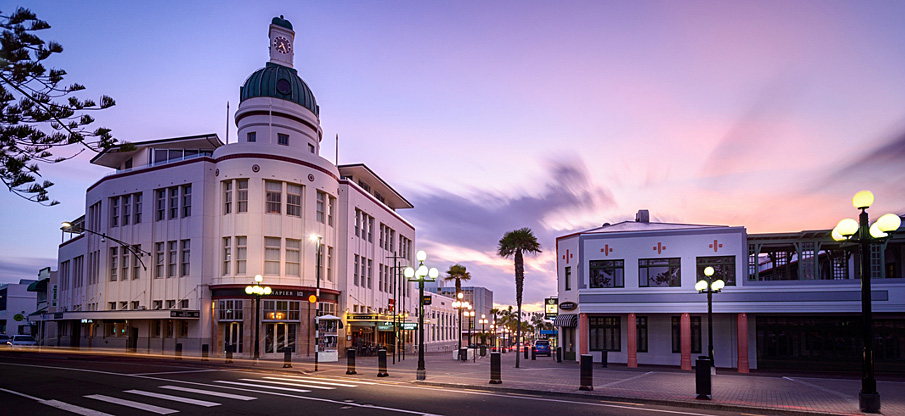
Designed by Ernest Arthur Williams in 1932 for Ross & Glendining Ltd, this single-storey commercial building in Napier’s Tennyson Street has architectural and historical significance for being a rare example of an art deco building incorporating Māori motifs. Constructed in reinforced concrete following the devastating 1931 Hawke’s Bay earthquake, the building is now part of Napier’s celebrated heritage precinct and is an example of the restrained art deco style strongly associated with the city’s rebuild.

Napier is within the rohe of Ngāti Kahungunu, whose ancestors arrived in what is now known as Hawke’s Bay during the sixteenth century, and it is also within the area of interest of Ahuriri Hapū. The area was regarded as highly suitable for settlement due to its climate, fertile soil, hills, waterways, and coast. Pākehā whalers, traders, and missionaries had arrived in the region by the 1830s, but it was the purchase of land by the government from 1851 and the founding of principal towns that spurred European settlement and the growth of the region’s economy. Napier was established by the government in 1855 and it remained Hawke’s Bay’s leading town until the early twentieth century.

On 3 February 1931, a magnitude 7.8 earthquake and resulting fires led to the devastation of Napier and Hastings, and a death toll of 256. The city centre was rebuilt with improvements such as wider streets and underground power and telephone lines, and architects opted for Spanish mission and art deco styles, the latter of which ‘emphasised spare, lean lines and geometric motifs.’ Ross & Glendining’s Emerson Street premises were ruined by the earthquake, and they rebuilt on a site long occupied (from around 1860) by the Hawke’s Bay Herald. The newspaper’s store, garage and printing press were also destroyed by the earthquake and subsequent fires.

A call for tenders was made in October 1932 and the contract for the construction of the Ross & Glendining Building (Former) was let to Fox and Hillen, Napier-based building contractors who collaborated with E A Williams on at least one other building. Upon completion, the building was praised for its ‘simple but very effective design’ and was seen as ‘undoubtedly one of the finest buildings in the new business area of Napier.’ Originally serving as a warehouse and offices for the Napier proprietors of Roslyn Worsted and Woollen Mills, it included a warehouse, offices, a packing room, and a sample room, and the exterior had a light grey stone finish with Māori motifs that provided ‘a novel touch.’ Only four other art deco structures in Hawke’s Bay incorporated Māori design, the most prominent of which is Napier’s Bank of New Zealand (Former), List No. 1112.

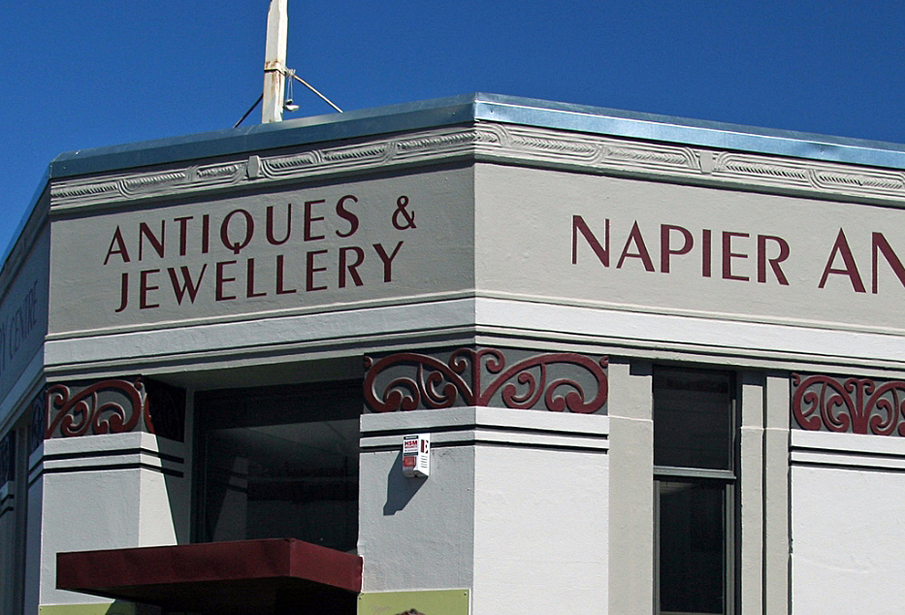
There is no evidence that Williams collaborated with Māori in the design of this place. It is believed that the architect drew upon the work of South Island carver and farmer John Henry Menzies, who collected Māori designs, published a selection in 1910, and built the heavily decorated house Rehutai and St Luke’s Church, Little Akaloa, List No. 7094. Both the kōwhaiwhai (meeting house rafter) pattern between the windows, based on the pītau (fern frond), and the narrow frieze running along the parapet strongly resemble designs in Menzies’ church and in his publication.

The building’s interior was modified when its occupancy changed to the Social Security Department in 1960. The owners and tenants of this building have changed numerous times since, housing advertising agency Adplus Ltd and the Ministry of Transport in the mid-1980s, and Clive Ralph Photographer. Napier Antique & Jewellery Centre has operated from the building since 1995. Although the building’s art deco embellishment is very limited, its incorporation of Māori design suggests either the architect or client was striving for a point of difference and opted for local influences rather than more commonly adopted international and geometric motifs.
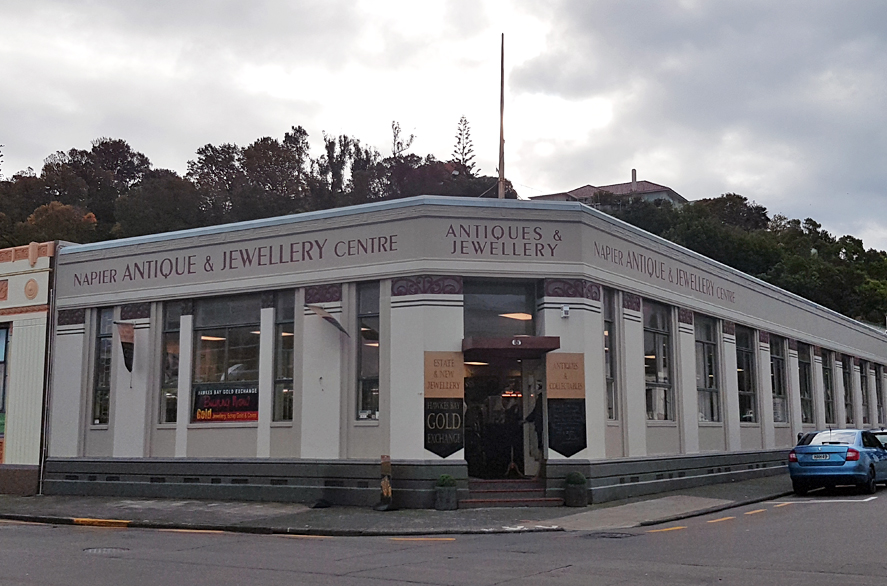
Ministry of Transport Building, Napier | Deirdre Byrne | 12/05/2017 | Heritage New Zealand
Ministry of Transport Building. Image courtesy of www.flickr.com | Margarita Haruspex | 15/02/2009 | Margarita Haruspex
Ministry of Transport Building, Napier | Deirdre Byrne | 12/05/2017 | Heritage New Zealand
Ministry of Transport Building. Image courtesy of www.flickr.com | Margarita Haruspex | 15/02/2009 | Margarita Haruspex

List Entry Information

Overview

Status
Listed

List Entry Status
Historic Place Category 2

Access
Private/No Public Access

List Number
4815

Date Entered
27th November 1986

Date of Effect
27th November 1986

City/District Council
Napier City

Region
Hawke's Bay Region

Extent of List Entry

Extent includes the land described as Lot 4-5 DP 6117 (RT HBM2/985), Hawkes Bay Land District, and the building known as Ross & Glendining Ltd Building (Former) thereon.

Legal description

Lot 4-5 DP 6117 (HBM2/985), Hawkes Bay Land District

Location Description

Included in the Napier City Centre Historic Area (Register no. 7022). Church Lane now Cathedral Lane, Napier.

Detailed List Entry

Construction Professional

Name

Fox and Hillen

Type

Builder

Biography

Building contractors Fox and Hillen were based in Napier during the early 1930s and were responsible for the construction of numerous buildings following the Hawke’s Bay earthquake, including Rice’s Building and Roger’s Building, both in Emerson Street; Ross & Glendining Building, Tennyson Street; and Chisholm’s Building, Dalton Street.

Name

Williams, Ernest Arthur (1875-1962)

Type

Architect

Biography

Williams was an architect and engineer who was prominent in Hawkes Bay as a result of his contribution towards the reconstruction of Napier following the 1931 earthquake. Born in London he immigrated to New Zealand with his family early in 1908, spending a few months in Christchurch before settling in Napier. Initially he joined the Napier firm of architects W P Finch and Company as an architectural draughtsman, employing the skills he had learned during his training in architecture and joinery in England. He was a member of the engineering staff of the Napier Borough Council until 1912, holding the position of Clerk of Works. He held this position during the building of the Napier Municipal Baths. Williams set up his own architectural practice in 1912. He was, however, co-opted as Napier Borough Engineer during World War 1, resuming independent architectural practice in 1921. After the 1931 earthquake his practice expanded to include eight architectural draughtsmen to cope with the large number of commissions to replace buildings which had been destroyed. His completed works include the Criterion Hotel (192), the Central Hotel (1931), Harston's Building (1930 and 1932), the Daily Telegraph Building (1932), the Napier Harbour Board Offices, and hospital buildings on Bluff Hill.

Construction Details

Start Year

1932

Type

Original Construction

Description

Art Deco (Maori motifs)

Start Year

1960

Type

Modification

Description

Conversion to Social Security Department

Construction Materials

Reinforced concrete; single storey

Reference

Completion Date

8th July 2025

Report Written By

Natalie Marshall

Information Sources

Shaw, 1987

Shaw, Peter and Peter Hallett. Art Deco Napier: Styles of the Thirties, Reed Methuen, Auckland, 1987.

Menzies, 1910

Menzies, John Henry. Maori Patterns Painted and Carved, Smith and Anthony Ltd, Christchurch, 1910.

Napier City Council

Napier City Council. 'Art Deco Inventory: Information & Photographs', Napier City Council and The Art Deco Trust, 2004 (Second Edition).

McGregor, 1990

McGregor, Robert. ‘‘Indigenous Art Deco’ in New Zealand’, New Zealand Historic Places, no. 31, Dec 1990.

Report Written By

A fully referenced copy of the Upgrade Report is available upon request from the Central Regional Office of Heritage New Zealand Pouhere Taonga Disclaimer Please note that entry on the New Zealand Heritage List/Rārangi Kōrero identifies only the heritage values of the property concerned, and should not be construed as advice on the state of the property, or as a comment of its soundness or safety, including in regard to earthquake risk, safety in the event of fire, or insanitary conditions. Archaeological sites are protected by the Heritage New Zealand Pouhere Taonga Act 2014, regardless of whether they are entered on the New Zealand Heritage List/Rārangi Kōrero or not. Archaeological sites include ‘places associated with pre-1900 human activity, where there may be evidence relating to the history of New Zealand’. This List entry report should not be read as a statement on whether or not the archaeological provisions of the Act apply to the property (s) concerned. Please contact your local Heritage New Zealand office for archaeological advice. This place was identified as significant under previous legislation with different information requirements. It remains significant under the current legislation. There is opportunity under our legislation and policies to add to this information. Further information about this place may be available from the Central Regional Office of Heritage New Zealand Pouhere Taonga.

Further Information

Current Usages

Uses: Trade

Specific Usage: Retail and Commercial - other

Uses: Trade

Specific Usage: Shop

Former Usages

General Usage:: Civic Facilities

Specific Usage: Studio - photography/film/television/music

General Usage:: Government

Specific Usage: Government office building

General Usage:: Trade

Specific Usage: Office building/Offices

General Usage:: Trade

Specific Usage: Warehouse/storage area

Themes

Web Links

Overview

Status

Listed

List Entry Status

Historic Place Category 2

Access

Private/No Public Access

List Number

4815

Date Entered

27th November 1986

Date of Effect

27th November 1986

City/District Council

Napier City

Region

Hawke's Bay Region

Extent of List Entry

Extent includes the land described as Lot 4-5 DP 6117 (RT HBM2/985), Hawkes Bay Land District, and the building known as Ross & Glendining Ltd Building (Former) thereon.

Legal description

Lot 4-5 DP 6117 (HBM2/985), Hawkes Bay Land District

Location Description

Included in the Napier City Centre Historic Area (Register no. 7022). Church Lane now Cathedral Lane, Napier.

Status

Listed

List Entry Status

Historic Place Category 2

Access

Private/No Public Access

List Number

4815

Date Entered

27th November 1986

Date of Effect

27th November 1986

City/District Council

Napier City

Region

Hawke's Bay Region

Extent of List Entry

Extent includes the land described as Lot 4-5 DP 6117 (RT HBM2/985), Hawkes Bay Land District, and the building known as Ross & Glendining Ltd Building (Former) thereon.

Legal description

Lot 4-5 DP 6117 (HBM2/985), Hawkes Bay Land District

Location Description

Included in the Napier City Centre Historic Area (Register no. 7022). Church Lane now Cathedral Lane, Napier.

Construction Information

Construction Professional

Name

Fox and Hillen

Type

Builder

Biography

Building contractors Fox and Hillen were based in Napier during the early 1930s and were responsible for the construction of numerous buildings following the Hawke’s Bay earthquake, including Rice’s Building and Roger’s Building, both in Emerson Street; Ross & Glendining Building, Tennyson Street; and Chisholm’s Building, Dalton Street.

Name

Williams, Ernest Arthur (1875-1962)

Type

Architect

Biography

Williams was an architect and engineer who was prominent in Hawkes Bay as a result of his contribution towards the reconstruction of Napier following the 1931 earthquake. Born in London he immigrated to New Zealand with his family early in 1908, spending a few months in Christchurch before settling in Napier. Initially he joined the Napier firm of architects W P Finch and Company as an architectural draughtsman, employing the skills he had learned during his training in architecture and joinery in England. He was a member of the engineering staff of the Napier Borough Council until 1912, holding the position of Clerk of Works. He held this position during the building of the Napier Municipal Baths. Williams set up his own architectural practice in 1912. He was, however, co-opted as Napier Borough Engineer during World War 1, resuming independent architectural practice in 1921. After the 1931 earthquake his practice expanded to include eight architectural draughtsmen to cope with the large number of commissions to replace buildings which had been destroyed. His completed works include the Criterion Hotel (192), the Central Hotel (1931), Harston's Building (1930 and 1932), the Daily Telegraph Building (1932), the Napier Harbour Board Offices, and hospital buildings on Bluff Hill.

Construction Details

Start Year

1932

Type

Original Construction

Description

Art Deco (Maori motifs)

Start Year

1960

Type

Modification

Description

Conversion to Social Security Department

Construction Materials

Reinforced concrete; single storey

Construction Professional

Name

Fox and Hillen

Type

Builder

Biography

Building contractors Fox and Hillen were based in Napier during the early 1930s and were responsible for the construction of numerous buildings following the Hawke’s Bay earthquake, including Rice’s Building and Roger’s Building, both in Emerson Street; Ross & Glendining Building, Tennyson Street; and Chisholm’s Building, Dalton Street.

Name

Williams, Ernest Arthur (1875-1962)

Type

Architect

Biography

Williams was an architect and engineer who was prominent in Hawkes Bay as a result of his contribution towards the reconstruction of Napier following the 1931 earthquake. Born in London he immigrated to New Zealand with his family early in 1908, spending a few months in Christchurch before settling in Napier. Initially he joined the Napier firm of architects W P Finch and Company as an architectural draughtsman, employing the skills he had learned during his training in architecture and joinery in England. He was a member of the engineering staff of the Napier Borough Council until 1912, holding the position of Clerk of Works. He held this position during the building of the Napier Municipal Baths. Williams set up his own architectural practice in 1912. He was, however, co-opted as Napier Borough Engineer during World War 1, resuming independent architectural practice in 1921. After the 1931 earthquake his practice expanded to include eight architectural draughtsmen to cope with the large number of commissions to replace buildings which had been destroyed. His completed works include the Criterion Hotel (192), the Central Hotel (1931), Harston's Building (1930 and 1932), the Daily Telegraph Building (1932), the Napier Harbour Board Offices, and hospital buildings on Bluff Hill.

Construction Details

Start Year

1932

Type

Original Construction

Description

Art Deco (Maori motifs)

Start Year

1960

Type

Modification

Description

Conversion to Social Security Department

Construction Materials

Reinforced concrete; single storey

Reference

Historical and Associated Iwi / Hapū / Whānau

Completion Date

8th July 2025

Report Written By

Natalie Marshall

Information Sources

Shaw, 1987

Shaw, Peter and Peter Hallett. Art Deco Napier: Styles of the Thirties, Reed Methuen, Auckland, 1987.

Menzies, 1910

Menzies, John Henry. Maori Patterns Painted and Carved, Smith and Anthony Ltd, Christchurch, 1910.

Napier City Council

Napier City Council. 'Art Deco Inventory: Information & Photographs', Napier City Council and The Art Deco Trust, 2004 (Second Edition).

McGregor, 1990

McGregor, Robert. ‘‘Indigenous Art Deco’ in New Zealand’, New Zealand Historic Places, no. 31, Dec 1990.

Other Information

A fully referenced copy of the Upgrade Report is available upon request from the Central Regional Office of Heritage New Zealand Pouhere Taonga Disclaimer Please note that entry on the New Zealand Heritage List/Rārangi Kōrero identifies only the heritage values of the property concerned, and should not be construed as advice on the state of the property, or as a comment of its soundness or safety, including in regard to earthquake risk, safety in the event of fire, or insanitary conditions. Archaeological sites are protected by the Heritage New Zealand Pouhere Taonga Act 2014, regardless of whether they are entered on the New Zealand Heritage List/Rārangi Kōrero or not. Archaeological sites include ‘places associated with pre-1900 human activity, where there may be evidence relating to the history of New Zealand’. This List entry report should not be read as a statement on whether or not the archaeological provisions of the Act apply to the property (s) concerned. Please contact your local Heritage New Zealand office for archaeological advice. This place was identified as significant under previous legislation with different information requirements. It remains significant under the current legislation. There is opportunity under our legislation and policies to add to this information. Further information about this place may be available from the Central Regional Office of Heritage New Zealand Pouhere Taonga.

Historical and Associated Iwi / Hapū / Whānau

Completion Date

8th July 2025

Report Written By

Natalie Marshall

Information Sources

Shaw, 1987

Shaw, Peter and Peter Hallett. Art Deco Napier: Styles of the Thirties, Reed Methuen, Auckland, 1987.

Menzies, 1910

Menzies, John Henry. Maori Patterns Painted and Carved, Smith and Anthony Ltd, Christchurch, 1910.

Napier City Council

Napier City Council. 'Art Deco Inventory: Information & Photographs', Napier City Council and The Art Deco Trust, 2004 (Second Edition).

McGregor, 1990

McGregor, Robert. ‘‘Indigenous Art Deco’ in New Zealand’, New Zealand Historic Places, no. 31, Dec 1990.

Other Information

A fully referenced copy of the Upgrade Report is available upon request from the Central Regional Office of Heritage New Zealand Pouhere Taonga Disclaimer Please note that entry on the New Zealand Heritage List/Rārangi Kōrero identifies only the heritage values of the property concerned, and should not be construed as advice on the state of the property, or as a comment of its soundness or safety, including in regard to earthquake risk, safety in the event of fire, or insanitary conditions. Archaeological sites are protected by the Heritage New Zealand Pouhere Taonga Act 2014, regardless of whether they are entered on the New Zealand Heritage List/Rārangi Kōrero or not. Archaeological sites include ‘places associated with pre-1900 human activity, where there may be evidence relating to the history of New Zealand’. This List entry report should not be read as a statement on whether or not the archaeological provisions of the Act apply to the property (s) concerned. Please contact your local Heritage New Zealand office for archaeological advice. This place was identified as significant under previous legislation with different information requirements. It remains significant under the current legislation. There is opportunity under our legislation and policies to add to this information. Further information about this place may be available from the Central Regional Office of Heritage New Zealand Pouhere Taonga.

Further Information

Current Usages

Uses: Trade

Specific Usage: Retail and Commercial - other

Uses: Trade

Specific Usage: Shop

Former Usages

General Usage: Civic Facilities

Specific Usage: Studio - photography/film/television/music

General Usage: Government

Specific Usage: Government office building

General Usage: Trade

Specific Usage: Office building/Offices

General Usage: Trade

Specific Usage: Warehouse/storage area

Current Usages

Uses: Trade

Specific Usage: Retail and Commercial - other

Uses: Trade

Specific Usage: Shop

Former Usages

General Usage: Civic Facilities

Specific Usage: Studio - photography/film/television/music

General Usage: Government

Specific Usage: Government office building

General Usage: Trade

Specific Usage: Office building/Offices

General Usage: Trade

Specific Usage: Warehouse/storage area

Location

Loading
Related listings
Napier City Centre Historic Area. Marine Parade, Napier. Image courtesy of www.flickr.com
Napier City Centre Historic Area
Napier City Centre Historic Area. Marine Parade, Napier. Image courtesy of www.flickr.com
Napier City Centre Historic Area
Stay up to date with Heritage this month