The Golding Building was constructed in the period immediately before the 3 February 1931 Hawke’s Bay Earthquake - New Zealand’s deadliest natural disaster. Built using reinforced concrete framing in-filled with brick, the Golding Building has Spanish Mission Style architectural features and contributes to the architectural and historic significance of Napier’s central city Art Deco precinct. It also has rarity value as a surviving pre-earthquake building in the Napier city centre.
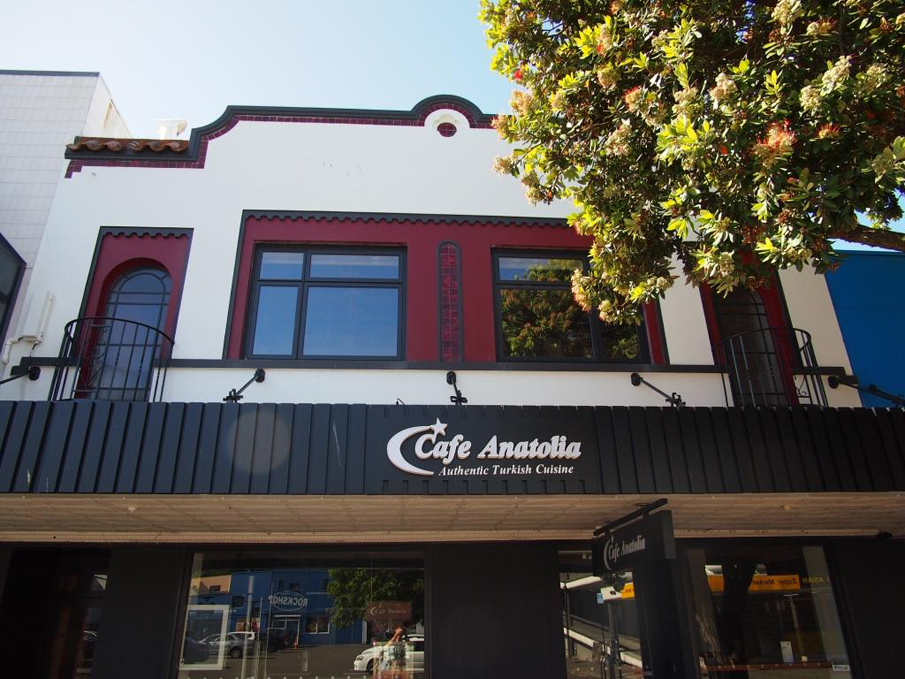
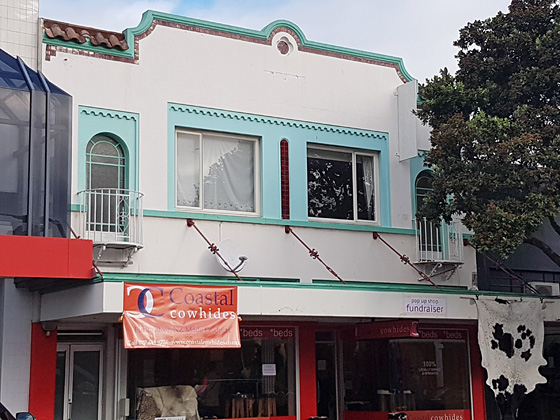
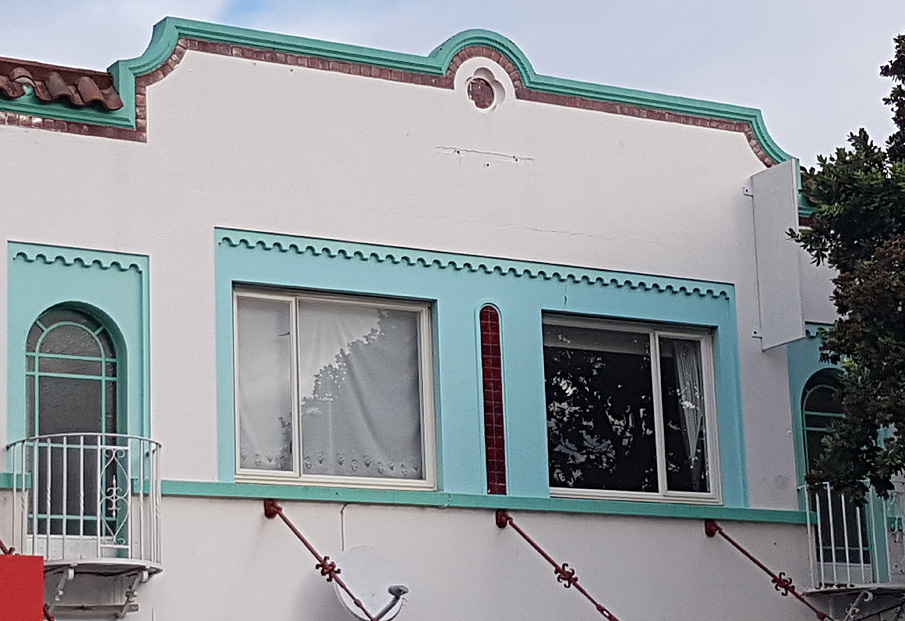
The Golding Building was constructed for a local bootmaker, James Samuel Golding, around 1930. Based on its style, Herbert Alexander Westerholm (1890–1972) may have designed the building. He arrived in Napier in 1925 and particularly favoured Spanish Mission Style architecture. The Golding Building foreshadowed the popularity of the style in Napier’s post-earthquake re-build phase. Typical features of the style included in the Golding Building’s upper façade include Juliet balconies, round-headed windows, and sloping cordova tiles flanking a curving parapet and continuing around the building’s western side. Westerholm and Walter Phillip Finch (1860–1943), who had been practicing in Napier since the 1880s, formed an architectural partnership soon after the Hawke’s Bay earthquake and played a prominent part in the rebuild of the city. After the earthquake the practice designed replacement buildings at some of Goldings other central city properties.
In 1931 Napier’s population was around 16,000, and 157 people died as a result of the magnitude 7.8 earthquake. The high level of destruction in Napier’s central business district was compounded by a subsequent fire. The Golding Building appears to have sustained little damage, aside from some scorching. It is notable as being one of only a few central city buildings to come through the earthquake and fire relatively unscathed. When the earthquake occurred the building appears to have been occupied by auctioneers, Eames and Company, as well as Nicholas Paxie’s restaurant and a hairdressing business.
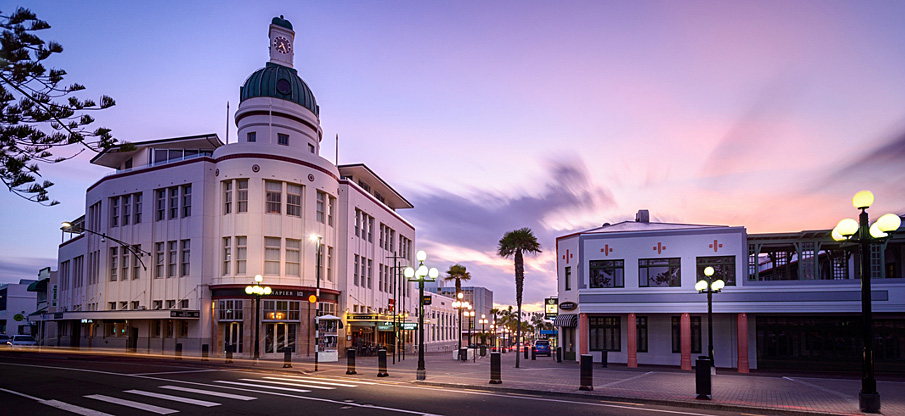
This building is included as a contributing feature within the Napier City Centre Historic Area (List No.7022) and is comparable to other Spanish Mission Style buildings designed by Finch and Westerholm therein, such as the Emerson Building and the more flamboyant Gaiety de Luxe Picture Theatre, Provincial Hotel and State Theatre (List No.2812). Reinforced concrete was the primary material for re-building Napier’s commercial district. The Golding Building’s pre-earthquake brick and reinforced concrete construction demonstrates that the transition towards reinforced concrete as a preferred material for commercial buildings was underway at it and other contemporary buildings, such as Napier’s Chief Post Office. However, this was accelerated in response to the earthquake.
The building stayed in Golding family ownership until 1981 and then the new owners, Peter and Jennifer Yee, opened the Golden Crown Chinese Restaurant. A separate, rear, single storey brick building seems to have been contemporary with the street-front section of Golding Building, and this rear building appears to have been extended with a two storey addition by the mid-twentieth century. The buildings were connected to form one by the time the Golding Building was added to the New Zealand Heritage List/Rārangi Kōrero in 1986.
The Golding Building was constructed for a local bootmaker, James Samuel Golding, around 1930. Based on its style, Herbert Alexander Westerholm (1890–1972) may have designed the building. He arrived in Napier in 1925 and particularly favoured Spanish Mission Style architecture. The Golding Building foreshadowed the popularity of the style in Napier’s post-earthquake re-build phase. Typical features of the style included in the Golding Building’s upper façade include Juliet balconies, round-headed windows, and sloping cordova tiles flanking a curving parapet and continuing around the building’s western side. Westerholm and Walter Phillip Finch (1860–1943), who had been practicing in Napier since the 1880s, formed an architectural partnership soon after the Hawke’s Bay earthquake and played a prominent part in the rebuild of the city. After the earthquake the practice designed replacement buildings at some of Goldings other central city properties.
In 1931 Napier’s population was around 16,000, and 157 people died as a result of the magnitude 7.8 earthquake. The high level of destruction in Napier’s central business district was compounded by a subsequent fire. The Golding Building appears to have sustained little damage, aside from some scorching. It is notable as being one of only a few central city buildings to come through the earthquake and fire relatively unscathed. When the earthquake occurred the building appears to have been occupied by auctioneers, Eames and Company, as well as Nicholas Paxie’s restaurant and a hairdressing business.
This building is included as a contributing feature within the Napier City Centre Historic Area (List No.7022) and is comparable to other Spanish Mission Style buildings designed by Finch and Westerholm therein, such as the Emerson Building and the more flamboyant Gaiety de Luxe Picture Theatre, Provincial Hotel and State Theatre (List No.2812). Reinforced concrete was the primary material for re-building Napier’s commercial district. The Golding Building’s pre-earthquake brick and reinforced concrete construction demonstrates that the transition towards reinforced concrete as a preferred material for commercial buildings was underway at it and other contemporary buildings, such as Napier’s Chief Post Office. However, this was accelerated in response to the earthquake.
The building stayed in Golding family ownership until 1981 and then the new owners, Peter and Jennifer Yee, opened the Golden Crown Chinese Restaurant. A separate, rear, single storey brick building seems to have been contemporary with the street-front section of Golding Building, and this rear building appears to have been extended with a two storey addition by the mid-twentieth century. The buildings were connected to form one by the time the Golding Building was added to the New Zealand Heritage List/Rārangi Kōrero in 1986.