

The lighthouse was constructed at a time when shipping was the country’s main form of transportation and shipwrecks were an ever-present risk. The systematic building of lighthouses from the mid-1860s reduced this risk, cementing the lighthouse as a symbol of security and technological development. The original site for the lighthouse, on the southern tip of Portland Island off the Mahia Peninsula, was selected in 1874. Construction began on the lighthouse and keepers residences in October 1877 and on 10 February 1878 the light was first illuminated.
The Portland Island Lighthouse was the fifteenth lighthouse erected in New Zealand and the first on the east coast of the North Island. The 12.7m tall hexagonal tower was built by a team headed by H. M. Shepard and constructed entirely out of kauri timber. In March 1879 it was one of several Blackett lighthouses to have its tower strutted for greater structural stability after storm damage. The first lamp was a kerosene-powered second-order dioptric revolving white light. In 1918 a second red light was fixed to the lower section of the tower and shone on nearby Bull Rock. The Portland Island Lighthouse was one of the last two in the country to use a kerosene-powered lamp and clockwork mechanism.
Lighthouse principal keeper Tom Smith wrote a damming report in 1947 on the poor condition of the Portland Island Lighthouse, detailing the extensive amount of maintenance work that needed to be done and how it was affecting productivity and working conditions. Based on Smith’s report, the Marine Department decommissioned the lighthouse and built a new prefabricated galvanised steel structure with a diesel-electric operated light, which was operational by 1957. After learning that the Marine Department planned to dump the first lighthouse, Wairoa Mayor Robert Shortt, who saw the lighthouse’s tourism potential, petitioned to have it moved to the town. The lighthouse was dismantled and transported from Portland Island to its new home in Wairoa in 1959.
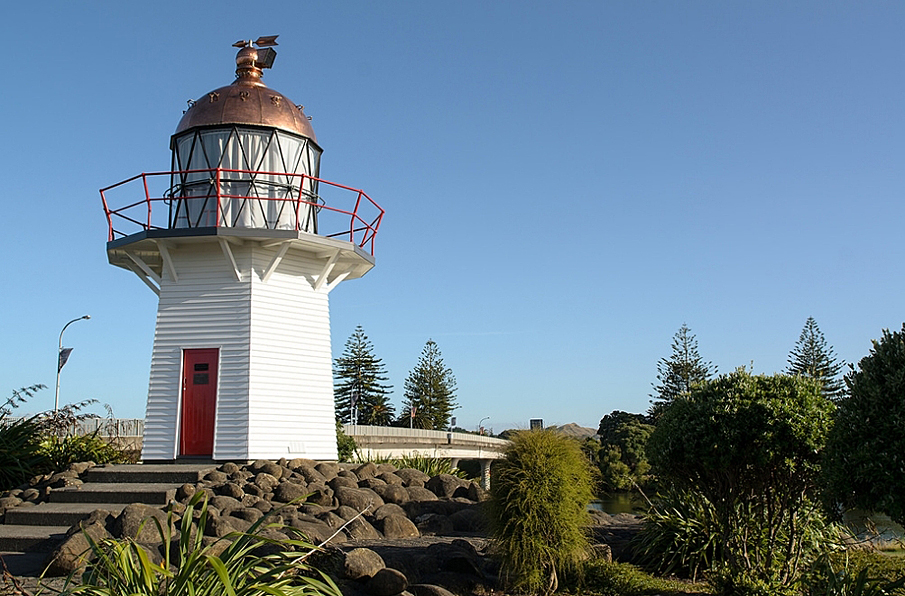
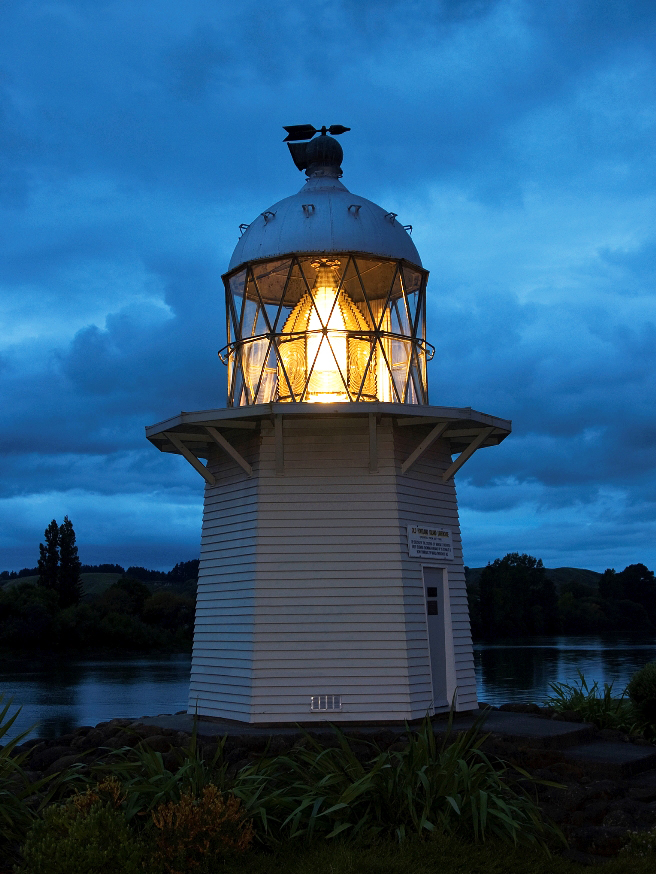
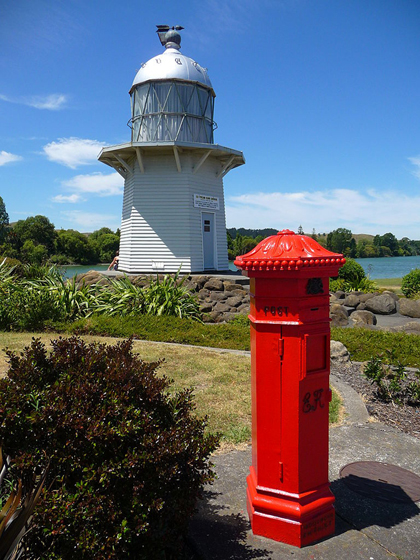
Reconstruction of the lighthouse in Wairoa was completed in 1960 with specialist supervision from the Marine Department and kept to Blackett’s design, with the original lenses and lantern. Its physical appearance was slightly altered with the reduction of the tower height and balcony placement. On 10 June 1961 the Wairoa Lighthouse was officially opened as a town monument by the Mayor at a public ceremony. The lighthouse has become part of the heritage landscape of Marine Parade and is a valuable icon for Wairoa; it is used as a symbol of the town in marketing publications. During restoration and maintenance work in 2016 the original copper dome was exposed.
List Entry Information
Status
Listed
List Entry Status
Historic Place Category 2
Access
Able to Visit
List Number
4852
Date Entered
27th November 1986
Date of Effect
27th November 1986
City/District Council
Wairoa District
Region
Hawke's Bay Region
Extent of List Entry
Extent includes part of the land described as Town Sec 851 Clyde (RT HBM3/277), Hawkes Bay Land District, and the building known as Wairoa Lighthouse including the land extending ten metres from the base thereon. Refer to the extent map tabled at the Rārangi Kōrero Committee meeting on 30 April 2019.
Legal description
Town Sec 851 Clyde (RT HBM3/277), Hawkes Bay Land District
Status
Listed
List Entry Status
Historic Place Category 2
Access
Able to Visit
List Number
4852
Date Entered
27th November 1986
Date of Effect
27th November 1986
City/District Council
Wairoa District
Region
Hawke's Bay Region
Extent of List Entry
Extent includes part of the land described as Town Sec 851 Clyde (RT HBM3/277), Hawkes Bay Land District, and the building known as Wairoa Lighthouse including the land extending ten metres from the base thereon. Refer to the extent map tabled at the Rārangi Kōrero Committee meeting on 30 April 2019.
Legal description
Town Sec 851 Clyde (RT HBM3/277), Hawkes Bay Land District
Construction Professional
Name
Blackett, John
Type
Engineer
Biography
John Blackett (1818-93) was one of New Zealand's leading nineteenth century civil engineers and the chief designer of many of the public works undertaken during the Vogel era. Born in Newcastle-on-Tyne, he served his apprenticeship with R. & W. Hawthorne, Engineers from 1834-40, and then became a draughtsman and office engineer with the Great Western Railway Company. In 1844 Blackett was made head engineer of a London firm of ship builders and railway contractors, and from 1846 he worked for a copper mining company in Wales. Blackett established his own practice in 1849 but two years later he emigrated to New Zealand and settled near New Plymouth. In 1856 Blackett moved to Nelson where he was appointed Provincial Engineer in 1859. Six years later he became the first Commissioner for the West Coast Goldfields. After a decade of working in the civil service at a provincial level John Blackett was appointed Marine Engineer and Acting Engineer-in-Chief for the Colony on 1 October 1870. As Marine Engineer, he was responsible for the design of twenty-five lighthouses which were erected during one of the most prolific periods of lighthouse construction in New Zealand. This achievement is considered to be his most significant contribution to engineering in this country, although his work for the Public Works Department was also very important, particularly as it related to the development of the national rail network. Engineer-in-Charge of the North Island Public Works Department from 1878, Blackett was promoted to the office of Engineer-in-Chief of New Zealand in 1884. In this capacity he ran the Engineering Branch of the Public Works Department until 1890 when he was appointed Consulting and Inspecting Engineer for the Colony, resident in London. Blackett returned to New Zealand just before his death in 1893 and he is remembered for the skill with which he realised the ambitious public works programmes fostered by Vogel and his successors.
Name
Shepard, H.M.
Type
Builder
Biography
No biography is currently available for this construction professional
Construction Details
Start Year
1877
Finish Year
1878
Type
Original Construction
Finish Year
1878
Type
Other
Description
Lighthouse first lit
Finish Year
1879
Type
Maintenance/repairs
Description
Tower strutted for greater stability after storm damage
Finish Year
1918
Type
Modification
Description
Incandescent light installed
Finish Year
1957
Type
Additional building added to site
Description
Lighthouse decommissioned and replaced with a prefabricated galvanised steel structure and diesel-electric operated light
Finish Year
1959
Type
Relocation
Description
Lighthouse dismantled and transported to Wairoa
Finish Year
1960
Type
Reconstruction
Description
Tower reconstructed with original lenses and lantern on Marine Parade, Wairoa
Finish Year
1989
finishYearCirca
Type
Relocation
Description
Moved slightly inland after the Wairoa River flooded during Cyclone Bola (March 1988)
Finish Year
2016
Type
Restoration
Description
Lighthouse restored and original copper dome revealed
Construction Professional
Name
Blackett, John
Type
Engineer
Biography
John Blackett (1818-93) was one of New Zealand's leading nineteenth century civil engineers and the chief designer of many of the public works undertaken during the Vogel era. Born in Newcastle-on-Tyne, he served his apprenticeship with R. & W. Hawthorne, Engineers from 1834-40, and then became a draughtsman and office engineer with the Great Western Railway Company. In 1844 Blackett was made head engineer of a London firm of ship builders and railway contractors, and from 1846 he worked for a copper mining company in Wales. Blackett established his own practice in 1849 but two years later he emigrated to New Zealand and settled near New Plymouth. In 1856 Blackett moved to Nelson where he was appointed Provincial Engineer in 1859. Six years later he became the first Commissioner for the West Coast Goldfields. After a decade of working in the civil service at a provincial level John Blackett was appointed Marine Engineer and Acting Engineer-in-Chief for the Colony on 1 October 1870. As Marine Engineer, he was responsible for the design of twenty-five lighthouses which were erected during one of the most prolific periods of lighthouse construction in New Zealand. This achievement is considered to be his most significant contribution to engineering in this country, although his work for the Public Works Department was also very important, particularly as it related to the development of the national rail network. Engineer-in-Charge of the North Island Public Works Department from 1878, Blackett was promoted to the office of Engineer-in-Chief of New Zealand in 1884. In this capacity he ran the Engineering Branch of the Public Works Department until 1890 when he was appointed Consulting and Inspecting Engineer for the Colony, resident in London. Blackett returned to New Zealand just before his death in 1893 and he is remembered for the skill with which he realised the ambitious public works programmes fostered by Vogel and his successors.
Name
Shepard, H.M.
Type
Builder
Biography
No biography is currently available for this construction professional
Construction Details
Start Year
1877
Finish Year
1878
Type
Original Construction
Finish Year
1878
Type
Other
Description
Lighthouse first lit
Finish Year
1879
Type
Maintenance/repairs
Description
Tower strutted for greater stability after storm damage
Finish Year
1918
Type
Modification
Description
Incandescent light installed
Finish Year
1957
Type
Additional building added to site
Description
Lighthouse decommissioned and replaced with a prefabricated galvanised steel structure and diesel-electric operated light
Finish Year
1959
Type
Relocation
Description
Lighthouse dismantled and transported to Wairoa
Finish Year
1960
Type
Reconstruction
Description
Tower reconstructed with original lenses and lantern on Marine Parade, Wairoa
Finish Year
1989
finishYearCirca
Type
Relocation
Description
Moved slightly inland after the Wairoa River flooded during Cyclone Bola (March 1988)
Finish Year
2016
Type
Restoration
Description
Lighthouse restored and original copper dome revealed
Historical and Associated Iwi / Hapū / Whānau
Completion Date
26th March 2019
Report Written By
Jessica McDonnell-Buwalda
Information Sources
Beaglehole, 2006
H Beaglehole, Lighting the Coast: a history of New Zealand's coastal lighthouse system, Canterbury UP, 2006
Te Ara - The Encyclopedia of New Zealand
www.TeAra.govt.nz
Wairoa District Council
Wairoa District Council
Other Information
This place was identified as significant under previous legislation with different information requirements. It remains significant under the current legislation. There is opportunity under our legislation and policies to add to this information. Further information about this place may be available from the Central Regional Office of Heritage New Zealand Pouhere Taonga. A fully referenced upgrade report is available on request from the Central Regional Office of Heritage New Zealand. Please note that entry on the New Zealand Heritage List/Rarangi Korero identifies only the heritage values of the property concerned, and should not be construed as advice on the state of the property, or as a comment of its soundness or safety, including in regard to earthquake risk, safety in the event of fire, or insanitary conditions.
Historical and Associated Iwi / Hapū / Whānau
Completion Date
26th March 2019
Report Written By
Jessica McDonnell-Buwalda
Information Sources
Beaglehole, 2006
H Beaglehole, Lighting the Coast: a history of New Zealand's coastal lighthouse system, Canterbury UP, 2006
Te Ara - The Encyclopedia of New Zealand
www.TeAra.govt.nz
Wairoa District Council
Wairoa District Council
Other Information
This place was identified as significant under previous legislation with different information requirements. It remains significant under the current legislation. There is opportunity under our legislation and policies to add to this information. Further information about this place may be available from the Central Regional Office of Heritage New Zealand Pouhere Taonga. A fully referenced upgrade report is available on request from the Central Regional Office of Heritage New Zealand. Please note that entry on the New Zealand Heritage List/Rarangi Korero identifies only the heritage values of the property concerned, and should not be construed as advice on the state of the property, or as a comment of its soundness or safety, including in regard to earthquake risk, safety in the event of fire, or insanitary conditions.
Current Usages
Uses: Civic Facilities
Specific Usage: Historic Property
Former Usages
General Usage: Transport
Specific Usage: Lighthouse
Current Usages
Uses: Civic Facilities
Specific Usage: Historic Property
Former Usages
General Usage: Transport
Specific Usage: Lighthouse
Location
Sign up to hear more
Get the latest heritage news, features and events delivered
straight to your inbox.
