Quick links


Quick links
Quick links
Quick links
Quick links
Quick links
Post Box (Former)
Marine Parade and Paul Street (State Highway 2), WAIROA
Public
Historic Place Category 2
List No. 4853
Quick links:
List GalleryLocationDetails
Marine Parade and Paul Street (State Highway 2), WAIROA
Public
Historic Place Category 2
List No. 4853
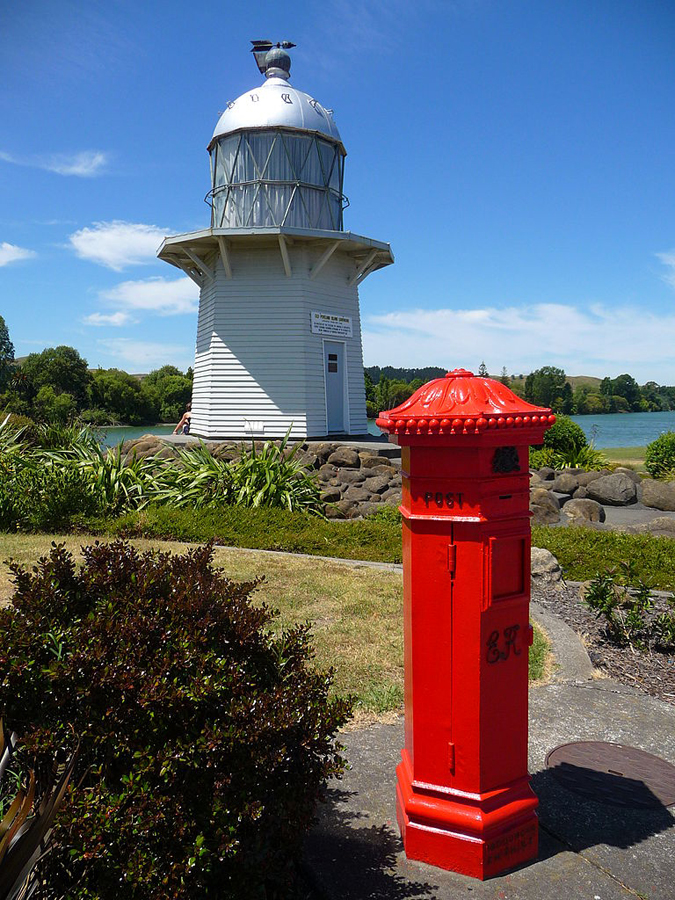
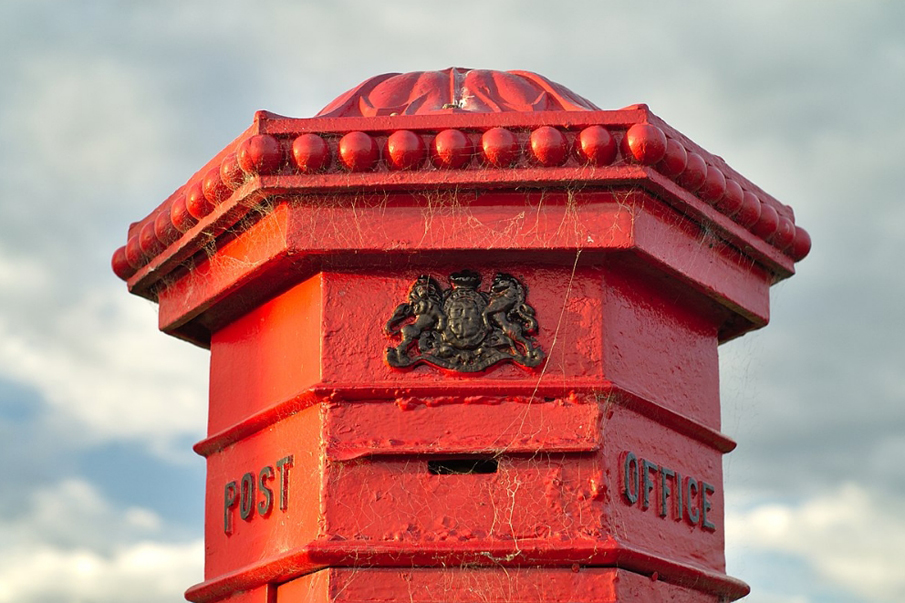
List Entry Information
Status
Listed
List Entry Status
Historic Place Category 2
Access
Able to Visit
List Number
4853
Date Entered
27th November 1986
Date of Effect
27th November 1986
City/District Council
Wairoa District
Region
Hawke's Bay Region
Extent of List Entry
Extent includes part of the land described as Town Sec 851 Clyde (RT HBM3/277), Hawkes Bay Land District, and the structure known as Post Box (Former) thereon. Refer to the extent map tabled at the Rārangi Kōrero Committee meeting on 30 April 2019.
Legal description
Town Sec 851 Clyde (RT HBM3/277), Hawkes Bay Land District
Status
Listed
List Entry Status
Historic Place Category 2
Access
Able to Visit
List Number
4853
Date Entered
27th November 1986
Date of Effect
27th November 1986
City/District Council
Wairoa District
Region
Hawke's Bay Region
Extent of List Entry
Extent includes part of the land described as Town Sec 851 Clyde (RT HBM3/277), Hawkes Bay Land District, and the structure known as Post Box (Former) thereon. Refer to the extent map tabled at the Rārangi Kōrero Committee meeting on 30 April 2019.
Legal description
Town Sec 851 Clyde (RT HBM3/277), Hawkes Bay Land District
Construction Professional
Name
P & D Duncan Limited
Type
Builder
Biography
The Duncan brothers, Peter (1838-1907) and David (1832-1897), emigrated from Scotland, arriving in Lyttelton in 1863 and 1867 respectively. They each had solid work experience in smithing and fitting by this time. The company was based in Christchurch, with a branch later opening in Ashburton. Despite going into partnership in 1870 it was not until 1874 that they adopted the name P & D Duncan. In 1894 P & D Duncan became a limited liability company. In the same year the company began manufacturing pillar boxes for the Post Office Department. However, the main focus of the business from its earliest period, and what it was most well-known for, was the repair, development and manufacture of farm machinery. Their farm implements and machines were distributed all around New Zealand by the early twentieth century. Peter retired from the company four years after his elder brother’s death, at which time the business was continued by people who were mostly relatives. Source: Registration Report for Post Box (Former), Karen Astwood, Sep 2013.
Name
Penfold, John Wornham (1828-1909)
Type
Designer
Biography
Penfold was an English surveyor and architect famous for his British Post Office Department pillar box designs. There were three types of Penfold boxes produced in the 1860s and 1870s. Penfold boxes were subsequently adopted for pillar boxes manufactured in various British colonies, such as New Zealand. Although he was best known for his pillar box design Penfold was also a leading figure in his respective professional fields, becoming the President of the Architectural Association as well as being a founding member and longstanding honorary secretary of the Royal Institute of Chartered Surveyors. Source: Registration Report for Post Box (Former), Karen Astwood, 2013
Construction Details
Finish Year
1902
Type
Original Construction
Description
Installed in Wairoa
Finish Year
1989
finishYearCirca
Type
Relocation
Description
Moved to current location
Construction Professional
Name
P & D Duncan Limited
Type
Builder
Biography
The Duncan brothers, Peter (1838-1907) and David (1832-1897), emigrated from Scotland, arriving in Lyttelton in 1863 and 1867 respectively. They each had solid work experience in smithing and fitting by this time. The company was based in Christchurch, with a branch later opening in Ashburton. Despite going into partnership in 1870 it was not until 1874 that they adopted the name P & D Duncan. In 1894 P & D Duncan became a limited liability company. In the same year the company began manufacturing pillar boxes for the Post Office Department. However, the main focus of the business from its earliest period, and what it was most well-known for, was the repair, development and manufacture of farm machinery. Their farm implements and machines were distributed all around New Zealand by the early twentieth century. Peter retired from the company four years after his elder brother’s death, at which time the business was continued by people who were mostly relatives. Source: Registration Report for Post Box (Former), Karen Astwood, Sep 2013.
Name
Penfold, John Wornham (1828-1909)
Type
Designer
Biography
Penfold was an English surveyor and architect famous for his British Post Office Department pillar box designs. There were three types of Penfold boxes produced in the 1860s and 1870s. Penfold boxes were subsequently adopted for pillar boxes manufactured in various British colonies, such as New Zealand. Although he was best known for his pillar box design Penfold was also a leading figure in his respective professional fields, becoming the President of the Architectural Association as well as being a founding member and longstanding honorary secretary of the Royal Institute of Chartered Surveyors. Source: Registration Report for Post Box (Former), Karen Astwood, 2013
Construction Details
Finish Year
1902
Type
Original Construction
Description
Installed in Wairoa
Finish Year
1989
finishYearCirca
Type
Relocation
Description
Moved to current location
Historical and Associated Iwi / Hapū / Whānau
Completion Date
26th March 2019
Report Written By
Jessica McDonnell-Buwalda
Information Sources
Te Ara - The Encyclopedia of New Zealand
www.TeAra.govt.nz
Other Information
This place was identified as significant under previous legislation with different information requirements. It remains significant under the current legislation. There is opportunity under our legislation and policies to add to this information. Further information about this place may be available from the Central Regional Office of Heritage New Zealand Pouhere Taonga. A fully referenced upgrade report is available on request from the Central Regional Office of Heritage New Zealand. Please note that entry on the New Zealand Heritage List/Rarangi Korero identifies only the heritage values of the property concerned, and should not be construed as advice on the state of the property, or as a comment of its soundness or safety, including in regard to earthquake risk, safety in the event of fire, or insanitary conditions.
Historical and Associated Iwi / Hapū / Whānau
Completion Date
26th March 2019
Report Written By
Jessica McDonnell-Buwalda
Information Sources
Te Ara - The Encyclopedia of New Zealand
www.TeAra.govt.nz
Other Information
This place was identified as significant under previous legislation with different information requirements. It remains significant under the current legislation. There is opportunity under our legislation and policies to add to this information. Further information about this place may be available from the Central Regional Office of Heritage New Zealand Pouhere Taonga. A fully referenced upgrade report is available on request from the Central Regional Office of Heritage New Zealand. Please note that entry on the New Zealand Heritage List/Rarangi Korero identifies only the heritage values of the property concerned, and should not be construed as advice on the state of the property, or as a comment of its soundness or safety, including in regard to earthquake risk, safety in the event of fire, or insanitary conditions.
Current Usages
Uses: Miscellaneous
Specific Usage: Street furniture
Former Usages
General Usage: Communication
Specific Usage: Post Box
Current Usages
Uses: Miscellaneous
Specific Usage: Street furniture
Former Usages
General Usage: Communication
Specific Usage: Post Box
Location
Get the latest heritage news, features and events delivered
straight to your inbox.
