

The land on which these structures sit was first granted to Frederick Collis in 1867, part of a larger land holding Collis called Fortification Farm – taking its name from the limestone outcrops that provided building stone for the property. The farm is located some 10 kilometres from Oamaru in an area variously known as ‘White Rocks’, Fortification and later Alma. Frederick Collis was born in Ealing, England in 1834. He was educated at Jersey in the Channel Islands. He was a cousin of New Zealand Company founder Edward Gibbon Wakefield, and his obituary posits that this relationship inspired his journey to New Zealand. He arrived on the William and Mary in 1853 and moved to Oamaru shortly afterwards, making him one of the early settlers. He was swept away in the tide of the 1860s gold rushes, but as a bullock driver rather than a gold seeker, after which he bought the farm at White Rocks.
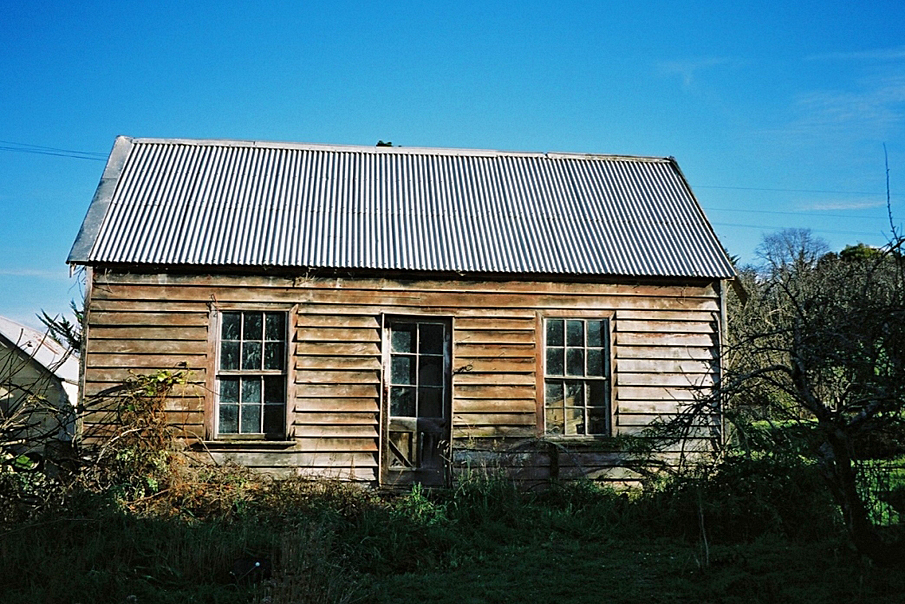
An 1866 newspaper article on a fire in a wheat stack at the farm reports that the Collis brothers lived in a hut at this time – possibly the existing early timber cottage on the property, known as Cumbria Cottage. The Collis’ grew wheat, ran a dairy herd, and cropped potatoes. While newspaper reports put both brothers at the farm in the mid-1860s, this was Frederick’s farm – Edwin ran a store in Oamaru for some years. Frederick advertised for staff, sold stock and harvested crops. Frederick owned the land till his death in 1910. His obituary records that he was one of the few early ‘original holders of land’ in the district.
There is little historical information about Fortification Farm – the most detail coming from oral history passed on by former owners Pam and Wilson Spite. The Spites understood that Allan and Lindsay were the carpenters for the homestead and that Gustav Diehl was the stonemason. Allan and Lindsay were contractors operating in Oamaru and North Otago in the nineteenth century. Gustav Diehl was the owner and builder of the Herbert Hotel (1865), and the flour mill at Waianakarua though little else is known about him. A 1994 article mentions Robert Doak as stone mason. A William Doak (c.1839-1906) lived at Fortification and ran the quarry of the same name, as well as acting as manager for other quarries at Weston. He had a son Robert (1859-1948) – noted as working for at his father’s quarry so it is possible that he could have been involved in building the house. Who designed the house and the outbuildings is not known.
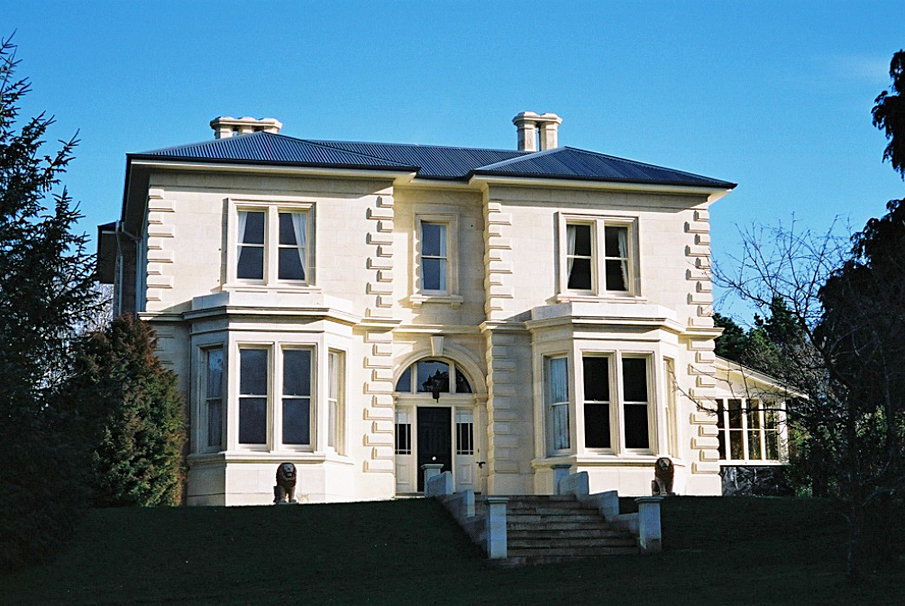
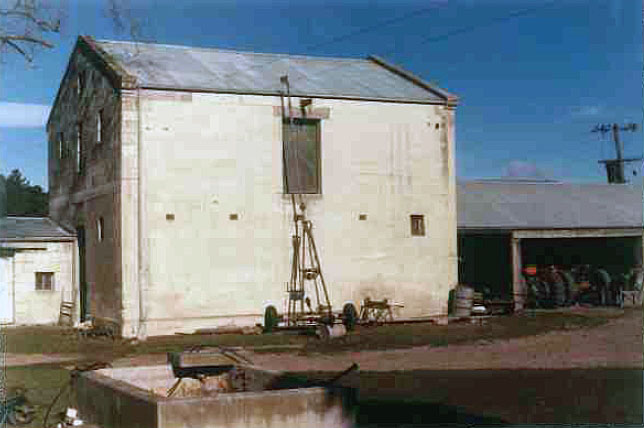
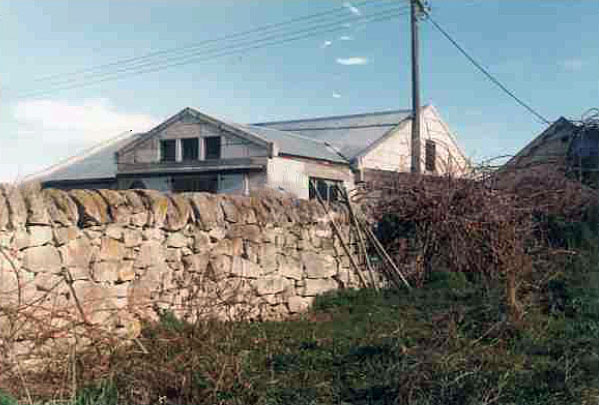
The order in which the buildings were constructed is also uncertain – though it is clear that the timber cottage is likely to be the earliest dwelling. The cottage is a single-gabled with a cat slide roof. With its central door and flanking multi-pane windows, it is likely to date from the 1860s. The large stone house, the homestead of Fortification Farm, is said to have been built 1885-1887. The Spites considered that the outbuildings and stone walls were built before the homestead reflecting the need for the animals to be taken care of and to enable Collis to run the farm. The outbuildings include a stable and a dairy – there is a tender notice for the erection of the dairy in 1880. The stable is an imposing utilitarian two-storey stone structure with an attached single storey implement shed, while the dairy is a single storey building. The stone walls are extensive – they partition the spaces around the buildings, provide a grand entrance way and line the main road.
Fortification Farm was sold to George Ruddenklau in 1911. After changes of ownership in the 1920s the farm was sold to Walter Spite in 1943. The Spite family owned the property until 2003, renaming it Cumbria, recalling their own ancestry and reflecting the peaceful rural surroundings. In 2016, Cumbria remains a private residence.
List Entry Information
Status
Listed
List Entry Status
Historic Place Category 2
Access
Private/No Public Access
List Number
4888
Date Entered
25th September 1986
Date of Effect
25th September 1986
City/District Council
Waitaki District
Region
Otago Region
Extent of List Entry
Extent includes part of the land described as Lot 2 DP 505187 (RT 762578), Otago Land District, and the building known as Cumbria Homestead, thereon.
Legal description
Lot 2 DP 505187 (RT 762578), Otago Land District
Status
Listed
List Entry Status
Historic Place Category 2
Access
Private/No Public Access
List Number
4888
Date Entered
25th September 1986
Date of Effect
25th September 1986
City/District Council
Waitaki District
Region
Otago Region
Extent of List Entry
Extent includes part of the land described as Lot 2 DP 505187 (RT 762578), Otago Land District, and the building known as Cumbria Homestead, thereon.
Legal description
Lot 2 DP 505187 (RT 762578), Otago Land District
Construction Professional
Name
Allan and Lindsay
Type
Builder
Biography
John Allan and Robert Lindsay operated as contractors and carpenters in North Otago in the 1880s and 1890s. John was born in Whitburn, Linlithgow Scotland. He arrived with his family at Port Chalmers aboard the Mataura around 1863, settling in Oamaru. He was a carpenter and builder (as was his brother James) and worked on many early buildings in Oamaru. He was noted as a freeholder in Oamaru in the 1870-1871 electoral roll. In 1883-1884 he appears in the Wises Directory living in Hull Street Oamaru, and is described as a builder. In later years he lived in the Newborough area of Oamaru. Robert Lindsay (1839- 1925) was an Oamaru carpenter and contractor who worked in association with John Allan in the 1880s and 1890s.
Construction Professional
Name
Allan and Lindsay
Type
Builder
Biography
John Allan and Robert Lindsay operated as contractors and carpenters in North Otago in the 1880s and 1890s. John was born in Whitburn, Linlithgow Scotland. He arrived with his family at Port Chalmers aboard the Mataura around 1863, settling in Oamaru. He was a carpenter and builder (as was his brother James) and worked on many early buildings in Oamaru. He was noted as a freeholder in Oamaru in the 1870-1871 electoral roll. In 1883-1884 he appears in the Wises Directory living in Hull Street Oamaru, and is described as a builder. In later years he lived in the Newborough area of Oamaru. Robert Lindsay (1839- 1925) was an Oamaru carpenter and contractor who worked in association with John Allan in the 1880s and 1890s.
Historical and Associated Iwi / Hapū / Whānau
Completion Date
14th February 2017
Report Written By
Heather Bauchop
Information Sources
New Zealand Historic Places
New Zealand Historic Places
Other Information
This place was identified as significant under previous legislation with different information requirements. It remains significant under the current legislation. There is opportunity under our legislation and policies to add to this information. Further information about this place may be available from the Otago/Southland Office of Heritage New Zealand Pouhere Taonga. Please note that entry on the New Zealand Heritage List/Rarangi Korero identifies only the heritage values of the property concerned, and should not be construed as advice on the state of the property, or as a comment of its soundness or safety, including in regard to earthquake risk, safety in the event of fire, or insanitary conditions. A fully referenced upgrade report is available on request from the Otago/Southland Office of Heritage New Zealand.
Historical and Associated Iwi / Hapū / Whānau
Completion Date
14th February 2017
Report Written By
Heather Bauchop
Information Sources
New Zealand Historic Places
New Zealand Historic Places
Other Information
This place was identified as significant under previous legislation with different information requirements. It remains significant under the current legislation. There is opportunity under our legislation and policies to add to this information. Further information about this place may be available from the Otago/Southland Office of Heritage New Zealand Pouhere Taonga. Please note that entry on the New Zealand Heritage List/Rarangi Korero identifies only the heritage values of the property concerned, and should not be construed as advice on the state of the property, or as a comment of its soundness or safety, including in regard to earthquake risk, safety in the event of fire, or insanitary conditions. A fully referenced upgrade report is available on request from the Otago/Southland Office of Heritage New Zealand.
Current Usages
Uses: Accommodation
Specific Usage: House
Former Usages
General Usage: Accommodation
Specific Usage: House
Current Usages
Uses: Accommodation
Specific Usage: House
Former Usages
General Usage: Accommodation
Specific Usage: House
Sign up to hear more
Get the latest heritage news, features and events delivered
straight to your inbox.
